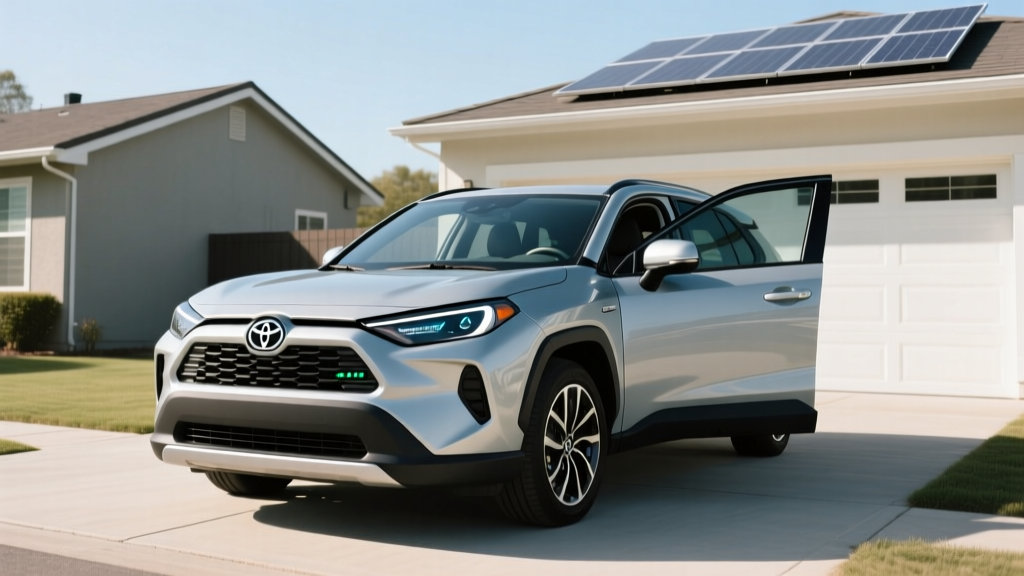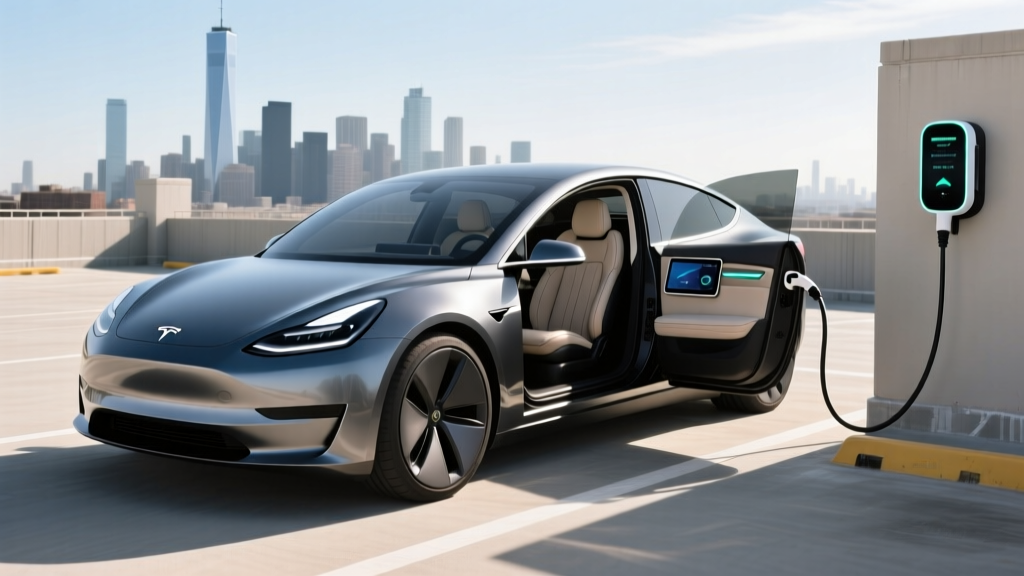
If you've been searching for a hybrid Tesla, the short answer is straightforward: Tesla does not manufacture a conventional hybrid (HEV) or a plug-in hybrid (PHEV) in 2026. Every vehicle Tesla sells is a fully electric vehicle (BEV). But that doesn't mean the search is pointless — understanding why Tesla skipped hybrids, and knowing which alternatives actually fill that gap, is essential for buyers who want Tesla-adjacent technology with the range-extension safety net of a hybrid powertrain.
This guide breaks down the hybrid vs. PHEV vs. EV landscape as it stands today, profiles the best hybrid and plug-in hybrid alternatives for Tesla-curious shoppers, and gives you the exact numbers — MPG, electric-only range, pricing, and tax-credit eligibility — to make a confident decision.
Why Tesla Has Never Built a Hybrid
Tesla's founding strategy, outlined in the company's earliest master plans, was to accelerate the transition to fully electric transportation. CEO Elon Musk has repeatedly stated that hybrids represent a "transitional" technology that complicates engineering with two full powertrains — an internal combustion engine and an electric drivetrain — while delivering neither the full efficiency of an EV nor the low cost of a gas car.
There's also a manufacturing argument: Tesla's gigafactories are optimized for battery cell production at scale (currently producing 4680-format cells for the Model Y and Cybertruck). Diverting resources to develop a smaller battery pack paired with a combustion engine would dilute that focus. As of 2026, Tesla has not announced any hybrid or PHEV model, and industry analysts do not expect one.
For buyers, this means if you want a hybrid powertrain, you'll be looking at other manufacturers — but the options are stronger than ever.
HEV vs. PHEV vs. BEV: Which Powertrain Fits You?
Before comparing specific models, it's critical to understand the three main electrified vehicle categories. Confusing them is the single most common mistake hybrid shoppers make.
| Feature | HEV (Conventional Hybrid) | PHEV (Plug-In Hybrid) | BEV (Battery Electric) |
|---|---|---|---|
| Plugs in to charge? | No — self-charging via regen + engine | Yes — plug in for electric-only miles | Yes — sole propulsion source |
| Electric-only range | ~1 mile or less (low-speed assist) | 20–50 miles (typical 2026 models) | 250–400+ miles |
| Gas engine | Yes (primary + regenerative assist) | Yes (kicks in after battery depletes) | None |
| Battery size | 1–2 kWh | 10–25 kWh (usable) | 60–120+ kWh |
| Fuel needed? | Yes — gasoline | Yes — gasoline (after electric range) | No — electricity only |
| Home charging needed? | No | Recommended for full benefit | Essential |
| Best for | No charging access, want better MPG | Short commute + occasional road trips | Home charging + daily driving |
The key distinction: a conventional hybrid (HEV) like the Toyota RAV4 Hybrid never plugs in — it recovers energy through regenerative braking and uses the engine to recharge its small battery. A plug-in hybrid (PHEV) like the Toyota RAV4 Prime has a larger battery you charge by plugging in, giving you 20–50 miles of electric-only driving before the gas engine activates.
Best Hybrid Alternatives for Tesla-Curious Buyers
If you were searching for a hybrid Tesla because you want the tech-forward experience Tesla is known for — large touchscreen, over-the-air updates, advanced driver assistance — but need a gas backup, here are the top contenders in 2026.
Toyota RAV4 Prime (PHEV) — The Practicality King
| Spec | 2026 Toyota RAV4 Prime |
|---|---|
| Powertrain | 2.5L 4-cyl + front/rear electric motors |
| Combined horsepower | 302 hp |
| EPA electric-only range | 42 miles |
| Total combined range | ~600 miles |
| Battery (usable) | 18.1 kWh, lithium-ion |
| Level 2 charge time (0–100%) | ~2.5 hours at 6.6 kW |
| DC fast charging | Not available |
| EPA MPG (hybrid mode) | 38 city / 35 hwy / 36 combined |
| MPGe (electric + gas) | 94 MPGe combined |
| 0–60 mph | 5.7 seconds |
| Starting MSRP | $44,475 (SE trim) |
The RAV4 Prime remains one of the most compelling PHEVs available. With 42 miles of electric-only range, most daily commutes are fully covered without burning gas. When the battery depletes, it operates as a conventional hybrid at 36 MPG combined — genuinely efficient for a 302-hp crossover. The 5.7-second 0–60 time is closer to Tesla Model Y performance than most buyers expect from a Toyota SUV.
Hyundai Tucson PHEV — Tech-Forward and Well-Priced
| Spec | 2026 Hyundai Tucson PHEV |
|---|---|
| Powertrain | 1.6L turbo 4-cyl + electric motor, AWD |
| Combined horsepower | 261 hp |
| EPA electric-only range | 33 miles |
| Total combined range | ~440 miles |
| Battery (usable) | 13.8 kWh, lithium-ion polymer |
| Level 2 charge time (0–100%) | ~2 hours at 7.2 kW |
| DC fast charging | Not available |
| EPA MPG (hybrid mode) | 35 city / 33 hwy / 34 combined |
| MPGe (electric + gas) | 80 MPGe combined |
| 0–60 mph | 7.1 seconds |
| Starting MSRP | $39,750 (SEL trim) |
The Tucson PHEV delivers a more tech-heavy cabin experience — dual 12.3-inch displays, Hyundai's Digital Key 2, and a comprehensive ADAS suite (Highway Driving Assist 2) that rivals Tesla's Autopilot in real-world usability, though it remains an SAE Level 2 system requiring driver supervision.
Toyota RAV4 Hybrid (HEV) — No Plug Required
| Spec | 2026 Toyota RAV4 Hybrid |
|---|---|
| Powertrain | 2.5L 4-cyl + front/rear electric motors |
| Combined horsepower | 219 hp |
| EPA MPG | 41 city / 38 hwy / 39 combined |
| Total range | ~580 miles per tank |
| Battery | 1.6 kWh, NiMH (sealed, self-charging) |
| Plugs in? | No |
| 0–60 mph | 7.4 seconds |
| Starting MSRP | $33,425 (LE trim) |
If you don't have access to home or workplace charging, the conventional RAV4 Hybrid is the pragmatic pick. It delivers 39 MPG combined without ever plugging in — and in real-world city driving, many owners report 42–45 MPG thanks to aggressive regenerative braking in stop-and-go traffic. Hybrids often exceed their EPA city rating because the electric motor handles low-speed driving where gas engines are least efficient.
Real-World MPG: What Hybrid Owners Actually Report
EPA estimates are a starting point, not a guarantee. Here's what hybrid and PHEV owners typically experience:
| Model | EPA Combined | Real-World Typical | Notes |
|---|---|---|---|
| RAV4 Hybrid (HEV) | 39 MPG | 37–45 MPG | City-heavy driving boosts MPG; highway-only drops to ~35 |
| RAV4 Prime (PHEV) | 36 MPG (hybrid mode) | 34–40 MPG | Depends on how often you recharge; frequent charging = less gas |
| Tucson PHEV | 34 MPG (hybrid mode) | 31–37 MPG | AWD system adds slight drag; winter tires reduce MPG ~2–3 |
| Honda CR-V Hybrid | 40 MPG | 38–44 MPG | Excellent city efficiency; highway drops to ~36 at 75+ mph |
A critical variable for PHEVs: if you don't plug in regularly, you're carrying a heavy battery you never use, and your fuel economy will be worse than a conventional hybrid. The RAV4 Prime in hybrid-only mode (battery depleted) gets 36 MPG — good, but the lighter RAV4 Hybrid gets 39 MPG doing the same job. Only buy a PHEV if you'll actually charge it.
Pricing, Tax Credits, and Total Cost of Ownership
Hybrid pricing spans a wide range, and tax-credit eligibility is where many buyers get confused.
Federal Tax Credit Rules for PHEVs (2026)
Under the IRS §30D Clean Vehicle Credit, qualifying PHEVs may be eligible for up to $7,500 — but the rules are strict:
- Battery capacity: Must be at least 7 kWh (most 2026 PHEVs qualify)
- MSRP caps: SUVs/pickups/vans ≤ $80,000; sedans ≤ $55,000
- Buyer income limits: AGI ≤ $150,000 (single), $225,000 (head of household), $300,000 (joint)
- Battery sourcing: Critical minerals and battery components must meet phased-in domestic/free-trade sourcing requirements (stricter each year through 2029)
- Point-of-sale transfer: Eligible buyers can transfer the credit to the dealer at purchase, reducing the sale price directly
Important: Conventional hybrids (HEVs) like the RAV4 Hybrid do not qualify for the §30D federal tax credit — the battery is too small. Only PHEVs and BEVs are eligible, and even among PHEVs, eligibility varies by model year and sourcing compliance. Always verify with the EPA's qualified vehicles list and consult a tax professional before relying on the credit.
5-Year Cost Comparison: Hybrid vs. PHEV vs. Tesla Model Y
| Cost Factor (5 yr / 75K mi) | RAV4 Hybrid (HEV) | RAV4 Prime (PHEV) | Tesla Model Y (BEV) |
|---|---|---|---|
| Purchase price (base MSRP) | $33,425 | $44,475 | $44,990 |
| Federal tax credit | $0 | Up to $7,500* | Up to $7,500* |
| Effective purchase price | $33,425 | ~$36,975 | ~$37,490 |
| Fuel/energy cost (5 yr) | ~$5,800 (gas) | ~$3,200 (gas + electric)** | ~$2,800 (electric) |
| Maintenance (5 yr) | ~$2,800 | ~$3,100 | ~$1,500 |
| Insurance (5 yr avg) | ~$7,500 | ~$8,200 | ~$9,500 |
| Estimated 5-yr total cost | ~$49,525 | ~$51,475 | ~$50,990 |
* Tax credit eligibility depends on income, MSRP caps, and battery sourcing. ** PHEV fuel cost assumes 70% of miles driven on electric (regular charging). Source: fueleconomy.gov cost-to-drive tool, national avg gas/electricity prices.
The numbers reveal a tight race. The RAV4 Hybrid wins on pure purchase price and simplicity. The RAV4 Prime narrows the gap significantly with the tax credit, and the Model Y is competitive when the credit applies — but carries higher insurance premiums. For a buyer without reliable home charging, the HEV is the lowest-risk, lowest-complexity option.
Hybrid Battery Reliability and Replacement Costs
Hybrid battery longevity is consistently the top concern among prospective buyers — and the data is reassuring.
- Toyota: 10 years / 150,000 miles (all hybrid and PHEV models)
- Hyundai/Kia: 10 years / 100,000 miles (hybrid battery)
- Honda: 8 years / 100,000 miles (hybrid battery, 10 yr in CARB states)
- Ford: 8 years / 100,000 miles (hybrid/PHEV battery)
Modern hybrid batteries — whether nickel-metal hydride (NiMH, used in Toyota's conventional hybrids) or lithium-ion (used in PHEVs) — are engineered for longevity. Toyota's hybrid system, in particular, has an exceptional track record: the Prius has been in production since 1997, and battery failures within the warranty period are rare. Independent data from fleet operators shows most hybrid batteries retain 85–90% of original capacity at 150,000 miles.
If a replacement is needed out of warranty:
- Conventional hybrid (HEV) battery: $2,000–$4,000 (OEM), $1,000–$2,500 (refurbished/aftermarket)
- PHEV battery: $4,000–$8,000 (OEM), depending on capacity and model
For context, a conventional automatic transmission replacement on a gas car often costs $3,500–$7,000 — a component hybrids avoid entirely since most use planetary-gear eCVT systems with no traditional clutch packs or bands to wear out.
Who Should Buy a Hybrid, PHEV, or Full EV?
Choose a conventional hybrid (HEV) if:
- You don't have access to home or workplace charging
- You want better fuel economy with zero behavior change
- You drive a mix of city and highway and want 38–44 MPG real-world
- You want the lowest purchase price among electrified options
Choose a plug-in hybrid (PHEV) if:
- You can charge at home (Level 1 or Level 2) and your daily commute is under 40 miles
- You regularly take road trips exceeding 300 miles and don't want to plan around chargers
- You want to drive on electricity daily but need gas flexibility for longer trips
- You qualify for the §30D tax credit, which can make a PHEV cost-competitive with an HEV
Choose a full EV (like Tesla Model Y) if:
- You have reliable home Level 2 charging
- Your daily driving is under 250 miles (covers 95%+ of American drivers)
- You want the lowest per-mile energy cost and minimal maintenance
- You value instant torque, one-pedal driving, and the quiet EV experience
Frequently Asked Questions
Does Tesla make a hybrid car in 2026?
No. Tesla manufactures only battery electric vehicles (BEVs) — the Model 3, Model Y, Model S, Model X, and Cybertruck. Tesla has never produced a hybrid or plug-in hybrid and has no announced plans to do so.
How many MPG does a hybrid SUV get?
Top-selling hybrid SUVs in 2026 achieve 34–41 MPG combined (EPA). The Toyota RAV4 Hybrid leads at 39 MPG combined (41 city / 38 highway), while the Honda CR-V Hybrid achieves 40 MPG combined. In real-world city driving with frequent stops, many owners report exceeding EPA estimates by 3–5 MPG.
How far can a PHEV go on electric only?
2026 PHEVs offer 20–50 miles of electric-only range. The Toyota RAV4 Prime leads the compact SUV segment at 42 miles. The Hyundai Tucson PHEV delivers 33 miles. Once the battery depletes, the gas engine engages and the vehicle operates as a conventional hybrid.
Do hybrid batteries need to be replaced, and what does it cost?
Hybrid battery failure is uncommon within the warranty period (typically 8–10 years / 100,000–150,000 miles). If replacement is needed out of warranty, expect $2,000–$4,000 for a conventional hybrid battery (OEM) or $4,000–$8,000 for a PHEV battery. Refurbished options are available for significantly less.
Does a hybrid qualify for a federal tax credit?
Conventional hybrids (HEVs) do not qualify for the §30D federal tax credit. Only plug-in hybrids (PHEVs) with batteries of at least 7 kWh and battery electric vehicles (BEVs) are eligible — and even then, eligibility depends on buyer income limits, vehicle MSRP caps, and battery component/critical mineral sourcing requirements. Check IRS guidelines and consult a tax professional.
Is a PHEV worth it if I can't charge at home?
Generally, no. Without regular plug-in charging, a PHEV operates as a heavier, less efficient conventional hybrid. You'll pay a purchase premium and carry battery weight you never benefit from. If you can't charge at home or work, a conventional hybrid (HEV) is the better choice.
Is Tesla's Autopilot or FSD available on hybrid cars?
No — Autopilot and Full Self-Driving (Supervised) are exclusive to Tesla vehicles. However, competitors offer comparable SAE Level 2 driver-assist systems: Hyundai's Highway Driving Assist 2, Toyota's Toyota Safety Sense 3.0 with Proactive Driving Assist, and Ford's BlueCruise. All require active driver supervision — none are self-driving.
- No range anxiety — gas engine provides 400–600+ total miles
- HEVs need no charging infrastructure
- 39–41 MPG combined cuts fuel costs 30–40% vs. gas-only
- PHEVs qualify for up to $7,500 federal tax credit
- Proven reliability with 8–10 year battery warranties
- Two powertrains = more components to maintain long-term
- PHEVs are heavier, reducing efficiency when battery is depleted
- HEVs don't qualify for federal tax credits
- Less instant torque and quieter driving vs. a full EV
- Still requires oil changes, spark plugs, and emissions maintenance