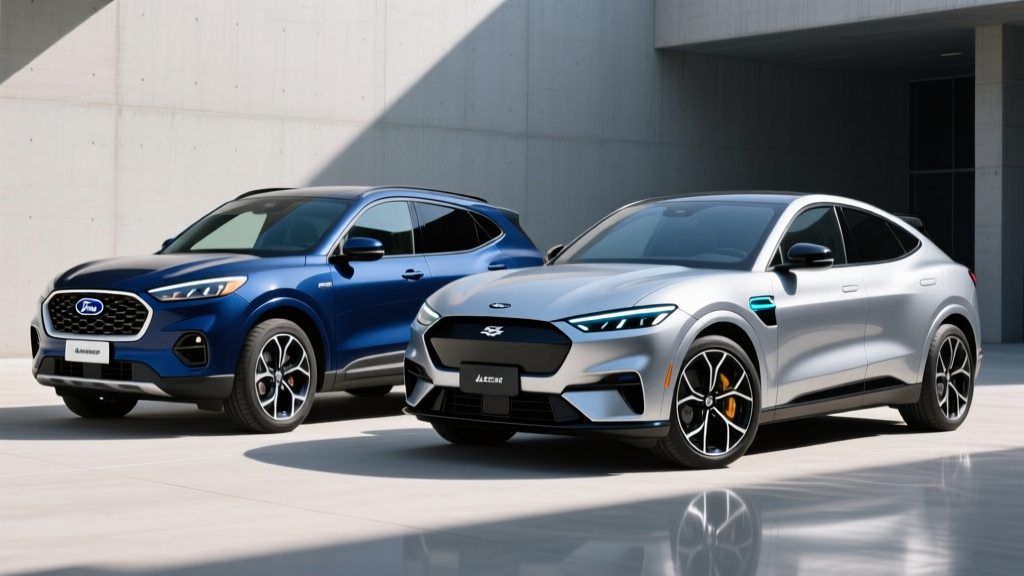
If you've been searching for a hybrid Mustang SUV, you've likely hit a wall: Ford doesn't make one. The Mustang nameplate now lives on two very different vehicles — the gas-powered Mustang coupe/convertible and the all-electric Mustang Mach-E crossover. Neither is a conventional hybrid. But that doesn't mean Ford lacks a compelling hybrid SUV in this size class. The 2026 Ford Escape Hybrid fills that role with strong fuel economy, practical cargo space, and no plug required.
This guide breaks down why the "hybrid Mustang SUV" doesn't exist, what to buy instead, and how Ford's hybrid and electric crossovers stack up on MPG, range, cost, and ownership reality.
The "Hybrid Mustang SUV" Problem: What Ford Actually Offers
Ford's current SUV lineup splits cleanly along powertrain lines. Understanding this prevents costly confusion at the dealership:
Ford's Electrified SUV Options (2026)
| Model | Powertrain | Type | Plug Required? |
|---|---|---|---|
| Ford Escape Hybrid | 2.5L 4-cyl + electric motor | HEV (conventional hybrid) | No — self-charging via regen |
| Ford Escape PHEV | 2.5L 4-cyl + larger motor/battery | PHEV (plug-in hybrid) | Yes — plug in for EV range |
| Ford Mustang Mach-E | Battery electric (BEV) | Full EV | Yes — plug in always |
| Ford Bronco Sport | 1.5L EcoBoost (gas) | ICE (no hybrid option) | No |
The Mustang badge is exclusive to the Mach-E (BEV) and the sports car. If you want a Ford hybrid crossover with similar dimensions to the Mach-E, the Escape Hybrid and Escape PHEV are your answers.
2026 Ford Escape Hybrid: MPG, Powertrain, and Real-World Economy
The Escape Hybrid pairs a 2.5-liter Atkinson-cycle four-cylinder with an electric motor integrated into the transmission, delivering a combined 192 horsepower through an electronic CVT. Front-wheel drive is standard; AWD is available (AWD drops MPG slightly).
| Configuration | City MPG | Highway MPG | Combined MPG |
|---|---|---|---|
| FWD | 42 | 36 | 39 |
| AWD | 40 | 34 | 37 |
Real-world note: Toyota-style hybrids like the Escape's powertrain often exceed EPA city estimates in stop-and-go traffic, where regenerative braking and electric-only low-speed operation shine. Expect 40–44 MPG in urban driving on the FWD model. Highway-heavy commutes at 75+ mph may return 32–34 MPG, as aerodynamic drag and engine-only cruising reduce the hybrid advantage. In mixed driving, owners commonly report 37–41 MPG — right at or slightly above the EPA combined figure. Source: fueleconomy.gov.
Powertrain Specs at a Glance
| Spec | Escape Hybrid FWD | Escape PHEV FWD |
|---|---|---|
| Engine | 2.5L I4 Atkinson | 2.5L I4 Atkinson |
| Combined HP | 192 hp | 210 hp |
| Transmission | eCVT | eCVT |
| Battery (traction) | ~1.1 kWh (sealed) | 14.4 kWh usable (NMC) |
| EPA EV-only range | N/A (HEV) | 37 miles |
| Total range | ~560 miles | ~520 miles (EV + gas) |
| 0-60 mph | ~7.5 sec | ~7.0 sec |
| Plug-in charging | No | Yes (Level 1/2 only) |
2026 Ford Escape PHEV: Electric-Only Range and Charging
The Escape PHEV uses the same 2.5L engine but pairs it with a larger electric motor and a 14.4 kWh usable battery (nickel-manganese-cobalt, NMC chemistry). This enables 37 miles of EPA-rated electric-only driving — enough for most daily commutes without burning a drop of gasoline.
Charging the Escape PHEV
| Charging Level | Power | Time (0–100%) | Notes |
|---|---|---|---|
| Level 1 (120V household) | ~1.4 kW | ~10–11 hours | Overnight; adequate for daily top-off |
| Level 2 (240V home/public) | ~3.6 kW (limited by onboard charger) | ~3.5–4 hours | No DC fast charging |
| DC Fast Charging | Not supported | N/A | CCS/NACS port not present |
The Escape PHEV's onboard charger maxes out at 3.6 kW, meaning even a 48-amp Level 2 home station won't charge it faster. This is standard for PHEVs in this class — the small battery simply doesn't need high-speed charging. If your commute is under 37 miles round-trip and you charge nightly, you may visit a gas station only on road trips.
Combined MPGe: The EPA rates the Escape PHEV at 105 MPGe when operating on electricity, and 40 MPG combined once the battery depletes and the gas engine takes over. (fueleconomy.gov)
Mustang Mach-E: The All-Electric Alternative
If the Mustang badge is non-negotiable, the 2026 Mustang Mach-E is a battery-electric crossover — not a hybrid. It requires plugging in and has no gasoline engine. Here's how it compares to the Escape hybrids:
| Spec | Escape Hybrid FWD | Escape PHEV FWD | Mach-E Select RWD | Mach-E Premium AWD ER |
|---|---|---|---|---|
| Powertrain | HEV | PHEV | BEV | BEV |
| EPA range / total | ~560 mi (gas) | 37 mi EV + ~483 mi gas | 250 mi (EPA) | 320 mi (EPA) |
| Combined MPGe / MPG | 39 MPG | 105 MPGe / 40 MPG | 101 MPGe | 98 MPGe |
| Battery capacity | ~1.1 kWh | 14.4 kWh | 75.7 kWh (LFP) | 91 kWh (NMC) |
| Max DC charge rate | N/A | N/A | 150 kW | 150 kW |
| 10–80% DC charge | N/A | N/A | ~30 min | ~38 min |
| Horsepower | 192 hp | 210 hp | 266 hp | 346 hp |
| 0–60 mph | ~7.5 sec | ~7.0 sec | ~6.1 sec | ~4.8 sec |
| Base MSRP | $34,995 | $40,995 | $41,995 | $51,995 |
| Federal tax credit | Not eligible (§30D) | Up to $7,500* | Up to $7,500* | Up to $7,500* |
*Federal §30D tax credit eligibility depends on MSRP caps, buyer income limits, battery critical-mineral sourcing, and point-of-sale transfer rules. The Mach-E and Escape PHEV have historically qualified, but always verify current-year rules at IRS.gov. The conventional Escape Hybrid does not qualify for the federal new clean vehicle credit.
Battery Longevity, Warranty, and Replacement Costs
Ford Hybrid & PHEV Battery Warranty (2026)
| Model | Battery Warranty | Capacity Retention Threshold | Est. Replacement Cost |
|---|---|---|---|
| Escape Hybrid | 8 years / 100,000 miles | Below 70% capacity (if applicable) | $2,500–$4,000 (small pack) |
| Escape PHEV | 8 years / 100,000 miles | Below 70% capacity | $6,000–$9,000 |
| Mustang Mach-E | 8 years / 100,000 miles | Below 70% capacity | $12,000–$18,000 (large pack) |
Hybrid batteries in the Escape are small (~1.1 kWh) and experience shallow charge cycles, meaning they degrade far more slowly than full EV packs. Many Toyota and Ford hybrids exceed 150,000 miles on the original traction battery. The Escape PHEV's larger 14.4 kWh pack undergoes deeper cycles but still benefits from conservative charge management by Ford's battery management system.
The Mach-E's 75.7–91 kWh battery is the most expensive to replace out of warranty, though LFP chemistry (on Select trim) offers longer cycle life and less degradation than NMC. Real-world data from Recurrent Auto shows most modern EV batteries retain 90%+ capacity at 100,000 miles under normal use.
Who Should Choose Which? A Decision Framework
Choose the Escape Hybrid (HEV) if:
- You have no access to plug-in charging at home or work
- Your priority is low cost of ownership with zero behavior change from a gas car
- You drive 12,000–15,000 miles/year in mixed city/highway conditions
- You want a lower purchase price (~$35K) and don't need tax credits
Choose the Escape PHEV if:
- You can charge at home (even a standard 120V outlet works overnight)
- Your daily commute is under 35 miles round-trip
- You want EV-like daily driving but gas flexibility for road trips
- You qualify for the up-to-$7,500 federal tax credit, bringing effective price near the HEV
Choose the Mustang Mach-E (BEV) if:
- You have reliable Level 2 home charging and access to DC fast chargers for road trips
- You want Mustang-badged performance (up to 346 hp, sub-5-second 0–60)
- You're ready to fully eliminate gasoline
- You drive under 250–300 miles between charges in normal conditions
Real-World Ownership Costs: 5-Year Snapshot
| Cost Category | Escape Hybrid FWD | Escape PHEV FWD | Mach-E Select RWD |
|---|---|---|---|
| Purchase price (MSRP) | $34,995 | $40,995 | $41,995 |
| Federal tax credit | $0 | –$7,500* | –$7,500* |
| Effective purchase | $34,995 | $33,495 | $34,495 |
| Fuel / electricity (60K mi) | $5,400 (gas @ $3.30/gal) | $3,100 (mix) | $2,700 (electric) |
| Maintenance (est.) | $2,800 | $2,600 | $1,800 |
| 5-year total (purchase + fuel + maint) | $43,195 | $39,195 | $38,995 |
Assumes 15,000 mi/yr, $3.30/gal gasoline, $0.14/kWh electricity. Tax credit eligibility varies — confirm at IRS.gov. State incentives not included.
Escape Hybrid Pros
- No plug-in required; zero lifestyle change
- 39 MPG combined exceeds many competitors
- Lower base price than PHEV or Mach-E
- Proven hybrid reliability track record
Escape Hybrid Cons
- No federal tax credit eligibility
- 192 hp feels modest for highway merging
- No EV-only driving mode for zero-emission zones
- AWD penalty of 2 MPG combined
Frequently Asked Questions
Does a hybrid Mustang SUV exist?
No. Ford does not produce a Mustang-branded hybrid SUV. The Mustang Mach-E is a fully electric (BEV) crossover with no gas engine. The closest Ford hybrid SUV is the Escape Hybrid (HEV) or Escape PHEV.
How many MPG does the Ford Escape Hybrid get?
The 2026 Escape Hybrid FWD is EPA-rated at 42 city / 36 highway / 39 combined MPG. AWD drops this to 40/34/37. Real-world city driving often exceeds the EPA city figure due to regenerative braking.
How far can the Escape PHEV go on electric only?
The 2026 Escape PHEV delivers 37 miles of EPA-rated electric-only range. Once depleted, the gas engine provides an additional ~483 miles for a total range of approximately 520 miles.
Is the Escape Hybrid reliable, and what does battery replacement cost?
Ford's hybrid system is mechanically simple — the eCVT has no traditional transmission bands or clutches to wear. The hybrid battery is covered for 8 years/100,000 miles. Out-of-warranty replacement for the small ~1.1 kWh pack typically costs $2,500–$4,000, far less than a full EV battery.
Does the Escape Hybrid or PHEV qualify for a tax credit?
The conventional Escape Hybrid (HEV) does not qualify for the federal §30D clean vehicle credit. The Escape PHEV may qualify for up to $7,500, subject to buyer income caps, MSRP limits, and battery sourcing requirements. Always verify current eligibility at IRS.gov.
Can the Escape PHEV use DC fast chargers?
No. The Escape PHEV supports Level 1 (120V) and Level 2 (240V) charging only, with a maximum onboard charge rate of 3.6 kW. DC fast charging (CCS/NACS) is not available on any PHEV in this class.
Hybrid vs PHEV vs EV — which fits me?
If you can't plug in at home, choose the HEV (Escape Hybrid). If you can plug in and commute under 35 miles daily, the PHEV gives you electric weekdays and gas road trips. If you have Level 2 home charging and want zero gas, the Mach-E BEV offers the lowest running costs and strongest performance.