Quick Verdict: A Rugged Hybrid That Actually Delivers at the Pump
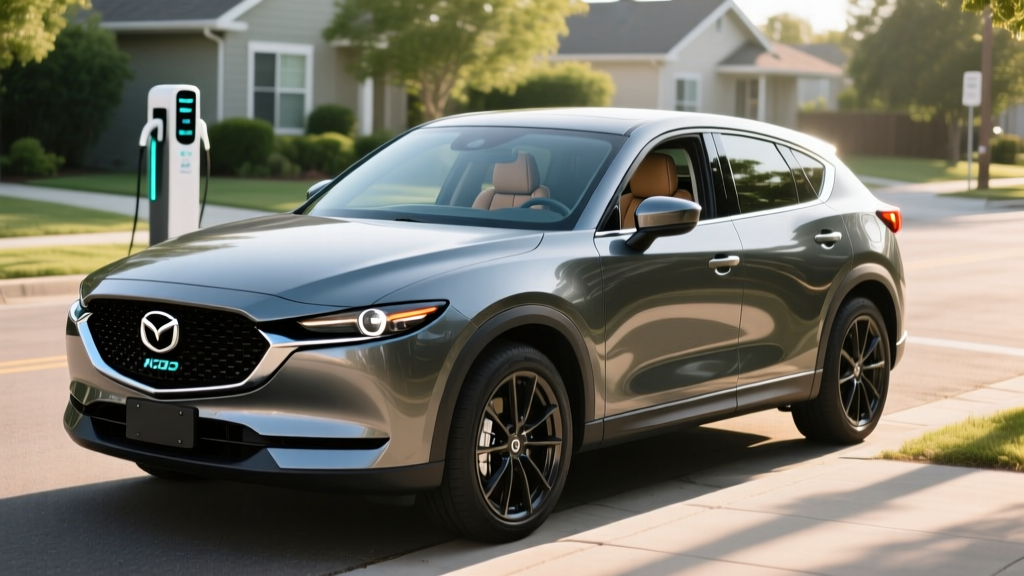
The Mazda CX-50 Hybrid pairs Toyota's proven hybrid powertrain with Mazda's outdoorsy styling and premium interior. For the 2026 model year, it returns an EPA-estimated 38 MPG combined — a meaningful jump over the non-hybrid CX-50's 27 MPG combined — while adding 219 combined horsepower and standard all-wheel drive. Starting at $35,395, it undercuts several hybrid compact SUV rivals on price while offering a cabin that punches above its segment.
This is a conventional hybrid (HEV), not a plug-in hybrid. You never plug it in. It generates electricity through regenerative braking and the gasoline engine, storing energy in a small battery to assist acceleration and enable brief electric-only driving at low speeds. If you're looking for plug-in electric range, this isn't the vehicle — but if you want dramatically better fuel economy without changing your fueling habits, the CX-50 Hybrid is one of the strongest options in the compact SUV class.
HEV vs. PHEV: What the CX-50 Hybrid Actually Is
Conventional Hybrid (HEV) — This Vehicle
- No plug required. The battery charges via regenerative braking and the gas engine.
- Battery size: ~1.6 kWh (small, designed for assist, not standalone driving)
- Electric-only driving: Very brief, low-speed moments (parking lots, stop-and-go creep)
- Fuel economy gain: 30-40% improvement over the gas-only equivalent
- Best for: Drivers without reliable home or workplace charging access
Plug-In Hybrid (PHEV) — Not Offered on CX-50
- Plugs in to a standard outlet or Level 2 charger
- Battery size: Typically 12-20 kWh for 25-40 miles of electric-only range
- Electric-only driving: Full highway-capable driving on battery alone
- Fuel economy: Near-zero gas use on short commutes; rated in MPGe when charged
- Best for: Drivers with home charging and commutes under 30 miles
Mazda has not announced a PHEV variant of the CX-50 for 2026. If plug-in capability is essential to you, consider the Toyota RAV4 Prime (42 miles electric-only) or the Hyundai Tucson PHEV (33 miles electric-only) as alternatives.
Fuel Economy: EPA Numbers and Real-World MPG
| Metric | EPA Estimate | Real-World Expectation |
|---|---|---|
| City | 39 MPG | 40-44 MPG |
| Highway | 37 MPG | 33-36 MPG |
| Combined | 38 MPG | 36-40 MPG |
| Annual Fuel Cost | ~$1,550 | Varies by region |
Source: fueleconomy.gov
Real-World MPG Insight
Toyota's hybrid system excels in city driving, where regenerative braking and frequent engine shut-off maximize efficiency. Expect to exceed the EPA city estimate in stop-and-go traffic and suburban driving. Highway fuel economy is the opposite story: at sustained 70-80 MPH speeds, the engine runs more often and aerodynamic drag reduces the hybrid advantage. On a 300-mile highway trip at 75 MPH, expect 33-35 MPG. In cold weather (below 30°F), the engine runs more frequently to maintain cabin heat, reducing city MPG by roughly 10-15%.
Powertrain: Toyota Hybrid Muscle in a Mazda Shell
| Specification | Detail |
|---|---|
| Engine | 2.5L inline-4 (Atkinson cycle) |
| Electric Motors | 2 (front + rear, enabling AWD) |
| Combined Horsepower | 219 hp |
| Drivetrain | AWD (electronic, no mechanical driveshaft) |
| Transmission | eCVT (planetary gearset) |
| 0-60 MPH | ~7.3 seconds |
| Hybrid Battery | ~1.6 kWh, sealed NiMH |
| Towing Capacity | 1,500 lbs |
| Fuel Tank | 14.5 gallons |
The 219 hp figure represents the combined peak output of the gasoline engine and electric motors — not a simple addition of individual ratings. This is the same hybrid architecture found in the Toyota RAV4 Hybrid and Toyota Highlander Hybrid, which collectively have accumulated billions of real-world miles. The rear electric motor provides on-demand AWD without a traditional driveshaft, reducing weight and mechanical complexity.
Compared to the non-hybrid CX-50's turbocharged 2.5L (256 hp on premium fuel), the hybrid sacrifices some peak power but delivers noticeably better low-end torque from the electric motors. Around town, the hybrid feels quicker than its 7.3-second 0-60 time suggests because electric torque is instantaneous.
Pricing, Trims, and Tax Credit Eligibility
| Trim Level | MSRP (incl. destination) |
|---|---|
| Preferred Hybrid | $35,395 |
| Premium Hybrid | $38,595 |
| Premium Plus Hybrid | $41,795 |
| Turbo Premium Plus (non-hybrid) | $44,595 |
Federal Tax Credit: Not Eligible
The CX-50 Hybrid is a conventional HEV, not a plug-in vehicle. Under IRS §30D rules, only plug-in electric vehicles (BEVs and PHEVs with at least 7 kWh of battery capacity) qualify for the federal clean vehicle credit. The CX-50 Hybrid does not qualify for the $7,500 federal tax credit, nor does it qualify for the $4,000 used clean vehicle credit. Some states offer their own hybrid incentives — check your state's energy office or department of revenue for current programs, as these vary widely and change frequently.
Battery Warranty, Reliability, and Replacement Cost
Hybrid Battery Coverage
- Hybrid battery warranty: 10 years / 150,000 miles (whichever comes first)
- Hybrid system warranty: 8 years / 100,000 miles
- Powertrain warranty: 5 years / 60,000 miles
- Battery chemistry: Sealed nickel-metal hydride (NiMH)
The CX-50 Hybrid's battery and hybrid system are sourced from Toyota, which has built more than 25 million hybrid vehicles worldwide since 1997. The Prius, RAV4 Hybrid, and Camry Hybrid share this architecture, and long-term reliability data is extensive. Hybrid battery failures before 150,000 miles are uncommon based on fleet and owner data across Toyota's hybrid lineup.
If the hybrid battery does require replacement outside of warranty, expect a cost of approximately $3,000 to $4,500 for a new OEM unit, including labor. Refurbished or reconditioned batteries are available from third-party suppliers for $1,500 to $2,500 installed. Individual battery modules can sometimes be replaced for $500-$1,000 if only a subset has degraded. These costs have declined steadily as the hybrid fleet ages and the aftermarket matures.
The 1.6 kWh NiMH battery in this HEV operates in a narrow state-of-charge window (roughly 40-80%) managed by the vehicle's computer. This shallow cycling significantly extends battery life compared to the deeper cycles seen in PHEVs and BEVs. Degradation in conventional hybrids is gradual and typically manifests as a small reduction in fuel economy over 150,000+ miles, not a sudden failure.
Who Should Choose the CX-50 Hybrid vs. a Full EV or Gas Car
Choose the CX-50 Hybrid If:
- You want 38 MPG without changing any fueling habits
- You lack access to home or workplace EV charging
- You take regular road trips and don't want to plan around chargers
- You want AWD for snow or light off-road use
- You prefer Mazda's interior quality over Toyota's RAV4 Hybrid
- Your annual mileage is high enough that fuel savings offset the hybrid premium
Consider a Full EV or PHEV Instead If:
- You have reliable home Level 2 charging and a commute under 30 miles (a PHEV eliminates most gas use)
- You want the $7,500 federal tax credit (only available for BEVs and qualifying PHEVs)
- Your daily driving is mostly city — a BEV like the Hyundai Ioniq 5 or Tesla Model Y offers lower per-mile cost and zero tailpipe emissions
- You want maximum acceleration (EVs deliver instant torque with no engine noise)
- You want to eliminate oil changes and engine maintenance entirely
Decision Framework: Hybrid vs. PHEV vs. BEV
| Factor | HEV (CX-50 Hybrid) | PHEV (e.g., RAV4 Prime) | BEV (e.g., Ioniq 5) |
|---|---|---|---|
| Home charging needed? | No | Yes (strongly recommended) | Yes (essential) |
| Federal tax credit | None | Up to $7,500* | Up to $7,500* |
| Fuel cost per mile | ~$0.09 | ~$0.04 (electric) / $0.09 (gas) | ~$0.04 |
| Road trip ease | Excellent | Excellent | Requires planning |
| Maintenance cost | Moderate | Moderate | Low |
*PHEV/BEV tax credit eligibility depends on MSRP caps, buyer income limits, and battery sourcing requirements. Verify at IRS.gov before purchasing.
How the CX-50 Hybrid Compares to Rivals
| Vehicle | Combined MPG | HP | Starting MSRP | AWD |
|---|---|---|---|---|
| Mazda CX-50 Hybrid | 38 | 219 | $35,395 | Standard |
| Toyota RAV4 Hybrid | 39 | 219 | $33,975 | Standard |
| Honda CR-V Hybrid | 37 | 204 | $36,395 | Standard |
| Ford Escape Hybrid | 39 | 210 | $35,095 | Optional |
| Subaru Forester Hybrid | 35 | 194 | $36,490 | Standard |
The CX-50 Hybrid trades 1 MPG combined versus the RAV4 Hybrid for a more upscale interior, slightly more rugged exterior styling, and Mazda's driving dynamics. The RAV4 Hybrid also offers the RAV4 Prime PHEV variant (42 miles electric-only, eligible for the $7,500 federal credit) if you want plug-in capability in a similar package.
Frequently Asked Questions
How many MPG does the hybrid Mazda CX-50 get?
The 2026 Mazda CX-50 Hybrid is EPA-rated at 39 MPG city, 37 MPG highway, and 38 MPG combined. In real-world city driving with frequent stops, many owners report 40-44 MPG thanks to the hybrid system's regenerative braking. Highway driving at sustained speeds above 70 MPH typically returns 33-36 MPG.
Does the CX-50 Hybrid need to be plugged in?
No. The CX-50 Hybrid is a conventional hybrid (HEV). It charges its own battery through regenerative braking and the gasoline engine. You fuel it exactly like a regular gas car — just with significantly fewer trips to the pump.
How far can the CX-50 Hybrid drive on electric power alone?
As a conventional hybrid, the CX-50 can only travel very short distances (under 1 mile) at low speeds on electric power alone — think parking lots and slow stop-and-go traffic. It is not designed for sustained electric-only driving. If you want meaningful electric-only range, you need a PHEV like the Toyota RAV4 Prime (42 miles) or a full BEV.
Is the CX-50 Hybrid reliable, and what does a battery replacement cost?
The hybrid powertrain is sourced from Toyota, which has built over 25 million hybrids since 1997 with an excellent reliability track record. Mazda covers the hybrid battery for 10 years/150,000 miles. Out-of-warranty replacement costs approximately $3,000-$4,500 for a new OEM battery, or $1,500-$2,500 for a refurbished unit. Failures before 150,000 miles are uncommon.
Does the CX-50 Hybrid qualify for any tax credit?
No federal tax credit is available. The IRS §30D clean vehicle credit applies only to plug-in vehicles (BEVs and qualifying PHEVs). The CX-50 Hybrid, as a conventional HEV, does not qualify. Some states offer their own incentives for hybrid purchases — check your state's energy or revenue department for current programs.
How much does it cost to fill up the CX-50 Hybrid?
With a 14.5-gallon fuel tank and regular unleaded fuel (premium not required), a fill-up costs approximately $48-$55 at current national average prices of $3.30-$3.80 per gallon. At 38 MPG combined, that's roughly 550 miles of range per tank — about 160 miles more than the non-hybrid CX-50 on a single tank.
Can the CX-50 Hybrid tow?
Yes, but modestly. The hybrid is rated for 1,500 pounds of towing capacity — adequate for a small utility trailer, a pair of dirt bikes, or a light pop-up camper. The non-hybrid turbo CX-50 is rated for up to 3,500 pounds, so if towing is a priority, the gas turbo model is the better choice.