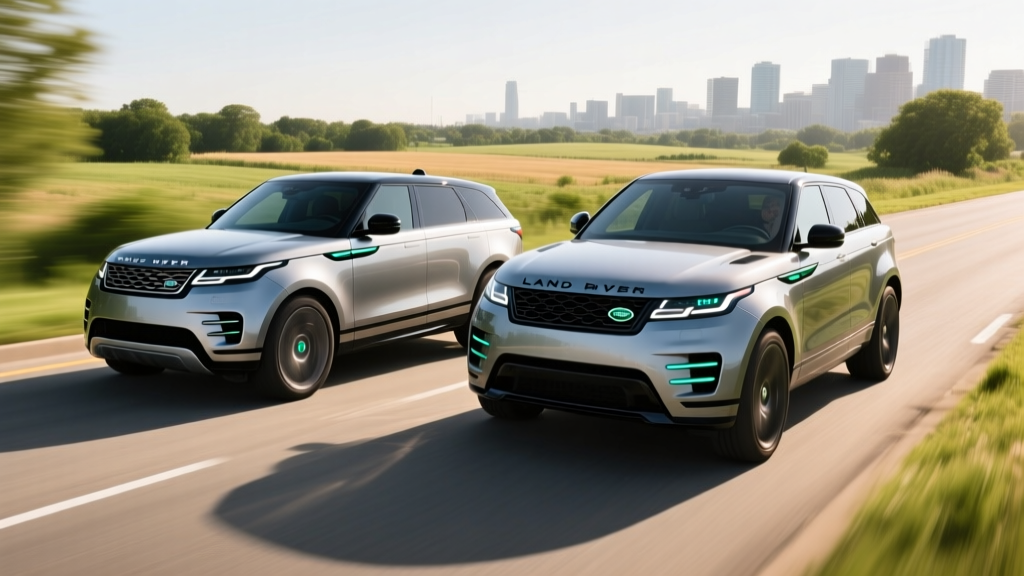
If you're searching for a hybrid Land Rover, the 2026 lineup narrows quickly to two plug-in hybrid (PHEV) models: the flagship Range Rover P550e and the Range Rover Sport P530e/P550e. Land Rover dropped conventional hybrid (HEV) options from its US lineup several model years ago, meaning every electrified Land Rover you can buy today is a plug-in. That distinction matters — a lot — for how you charge, what you spend, and whether you'll qualify for any federal incentives.
This guide breaks down exact EPA figures, real-world efficiency observations, battery and charging specs, powertrain outputs, pricing by trim, and the ownership calculus that determines whether a hybrid Land Rover makes sense versus a full EV or a gas-only alternative.
HEV vs PHEV: What Land Rover Actually Sells in 2026
Before examining specs, it's essential to understand the difference between the two hybrid architectures, because Land Rover's US strategy commits entirely to one of them.
Conventional Hybrid (HEV)
- No plug — charges via regenerative braking and the engine
- Small battery (typically 1–2 kWh)
- No electric-only driving beyond very low-speed creep
- No federal tax credit eligibility
- Example: Toyota Highlander Hybrid (not a Land Rover product)
Plug-In Hybrid (PHEV)
- Plugs into Level 1 or Level 2 chargers (no DC fast charging on Land Rover PHEVs)
- Larger battery (23–38 kWh usable)
- Genuine electric-only range (30–50+ miles EPA)
- May qualify for federal or state incentives
- 2026 Range Rover P550e and Range Rover Sport P550e
Land Rover's decision to skip HEVs means you'll need access to a plug — ideally at home — to extract the full efficiency benefit. Drive a PHEV without charging it and you're hauling a heavy battery dead weight, often returning worse fuel economy than a comparable gas model.
2026 Range Rover P550e: EPA MPG, Electric Range & Specs
The flagship Range Rover P550e pairs a 3.0-liter inline-six turbocharged engine with a 141 kW electric motor integrated into an 8-speed ZF automatic transmission. The result is serious output with genuine daily-drivable electric range.
| Specification | Value |
|---|---|
| Powertrain | 3.0L turbo I-6 + 141 kW electric motor |
| Combined Horsepower | 542 hp |
| Combined Torque | 590 lb-ft |
| 0–60 mph | 4.7 seconds |
| Battery (usable) | ~31.8 kWh (NMC lithium-ion) |
| EPA Electric-Only Range | 51 miles |
| Total Combined Range (gas + electric) | ~510 miles |
| EPA MPGe (electric + gas) | 54 MPGe combined |
| EPA MPG (gas only, battery depleted) | 21 city / 24 hwy / 22 combined |
| Level 2 AC Charging (max) | 7.2 kW |
| Full Charge Time (Level 2, 240V) | ~5 hours (0–100%) |
| DC Fast Charging | Not available |
| Drivetrain | AWD (permanent) |
| Starting MSRP | $127,575 (SE) / $142,575 (Autobiography) |
Real-World Range Reality Check
The EPA rates the Range Rover P550e at 51 miles electric-only. In real-world testing, expect 40–45 miles in mixed driving and as little as 35 miles in sustained highway use or cold weather (below 40°F). The 21 MPG combined figure in charge-depleted mode is realistic for suburban driving; highway-only trips at 75+ mph may dip to 19–20 MPG given the vehicle's 5,600+ lb curb weight and aerodynamic profile.
2026 Range Rover Sport PHEV: Specs & Efficiency
The Range Rover Sport P550e shares its powertrain architecture with the full-size Range Rover but in a shorter, slightly lighter package. That translates to marginally better efficiency and a lower entry price.
| Specification | Value |
|---|---|
| Powertrain | 3.0L turbo I-6 + 141 kW electric motor |
| Combined Horsepower | 542 hp |
| Combined Torque | 590 lb-ft |
| 0–60 mph | 4.5 seconds |
| Battery (usable) | ~31.8 kWh (NMC lithium-ion) |
| EPA Electric-Only Range | 48 miles |
| Total Combined Range | ~480 miles |
| EPA MPGe (electric + gas) | 51 MPGe combined |
| EPA MPG (gas only, battery depleted) | 20 city / 23 hwy / 21 combined |
| Level 2 AC Charging (max) | 7.2 kW |
| Full Charge Time (Level 2, 240V) | ~5 hours |
| DC Fast Charging | Not available |
| Starting MSRP | $109,675 (SE Dynamic) / $126,675 (Autobiography) |
The Sport's slightly shorter wheelbase and ~200 lb lower curb weight yield a modest efficiency edge. If your commute is under 45 miles round-trip and you charge nightly, you may go weeks without visiting a gas station.
Fuel Economy Breakdown: EPA vs Real World
| Model | EV Range | City MPG* | Hwy MPG* | Combined MPG* | Combined MPGe |
|---|---|---|---|---|---|
| Range Rover P550e | 51 mi | 21 | 24 | 22 | 54 MPGe |
| Range Rover Sport P550e | 48 mi | 20 | 23 | 21 | 51 MPGe |
*Gas-only MPG after battery is depleted. Source: fueleconomy.gov
Real-world observations: PHEVs are uniquely sensitive to charging habits. If you charge daily and your commute falls within the electric-only range, your effective "MPG" is essentially infinite for those trips — you're burning zero gasoline. Owners who charge religiously report 60–80% of total miles driven on electricity. Those who rarely charge see the gas-only MPG figures above, which are unimpressive for a six-figure vehicle but typical for a 5,000+ lb luxury SUV.
In city driving with a depleted battery, the regenerative braking system recovers energy effectively, and real-world city MPG may slightly exceed the EPA estimate by 1–2 MPG. Highway driving tells the opposite story — aerodynamic drag and weight penalize efficiency at sustained speeds.
Charging: What You Need to Know
Neither the Range Rover nor Range Rover Sport PHEV supports DC fast charging. This is a deliberate engineering trade-off: the 31.8 kWh battery is small enough that Level 2 AC charging fills it overnight, and adding DC fast-charge hardware would increase cost, weight, and packaging complexity.
| Charging Level | Power (kW) | Time (0–100%) | Miles of EV Range Added/Hour |
|---|---|---|---|
| Level 1 (120V household) | ~1.4 kW | ~24 hours | ~3–4 miles |
| Level 2 (240V, 32A) | 7.2 kW | ~5 hours | ~10–12 miles |
| DC Fast Charging | Not supported | ||
Practical recommendation: Install a Level 2 home charger (NEMA 14-50 outlet or hardwired wallbox) before delivery. A 7.2 kW onboard charger means a 48-amp or higher Level 2 station — such as a ChargePoint Home Flex or Emporia Level 2 — will max out the vehicle's charging capability. Expect $500–$1,500 for home Level 2 installation depending on your electrical panel's capacity and proximity to the parking spot.
Pricing, Trims & Federal Tax Credit Eligibility
Both hybrid Land Rover models sit well above the IRS §30D MSRP cap for SUVs ($80,000). This means neither the Range Rover P550e nor the Range Rover Sport P550e qualifies for the federal $7,500 new EV tax credit, even though they technically meet the PHEV battery-capacity threshold.
Federal §30D Tax Credit — Why These Models Don't Qualify
- MSRP cap for SUVs: $80,000 (both models exceed this)
- Buyer income cap: $300,000 MFJ / $150,000 single (likely met by most buyers)
- Battery sourcing & critical minerals: Must meet phased-in thresholds per IRS §30D rules
- Verdict: The MSRP cap alone disqualifies both models regardless of other criteria
State incentives may still apply. Several states — including California, Colorado, and New York — offer their own PHEV rebates or tax credits that don't carry the same MSRP restrictions. Check your state's energy or DMV website for current programs. Some utility companies also offer rebates for Level 2 charger installation.
Battery Warranty, Lifespan & Replacement Cost
Land Rover PHEV Battery Warranty
Land Rover covers the high-voltage hybrid battery for 8 years or 100,000 miles (whichever comes first), with a capacity-retention threshold of approximately 70%. This aligns with the industry standard for PHEV and EV battery warranties and exceeds the federal mandate minimum.
Longevity expectations: NMC lithium-ion batteries in PHEVs typically experience 10–15% degradation over the first 8–10 years under normal use. Because the Range Rover PHEV battery is relatively large (31.8 kWh usable) for a PHEV, daily cycling depth is shallow for most owners — a 40-mile commute uses roughly 80% of the battery, which is within the ideal state-of-charge window for longevity.
Replacement cost: Out-of-warranty high-voltage battery replacement for a Range Rover PHEV is estimated at $12,000–$18,000 including labor, based on current dealer parts pricing. This is a significant sum, though the 8-year/100,000-mile warranty provides substantial coverage. Individual cell module replacement (if only a portion of the pack degrades) may reduce costs in some scenarios.
The conventional 12V auxiliary battery is a separate maintenance item, typically requiring replacement every 4–6 years at $200–$400.
Who Should Buy a Hybrid Land Rover — And Who Shouldn't
Reasons to Choose a Hybrid Land Rover
- Your daily commute is under 50 miles and you can charge at home nightly
- You want luxury SUV refinement with reduced (not eliminated) fuel consumption
- You regularly take long road trips where EV charging infrastructure is sparse
- You value 542 hp and sub-5-second 0–60 performance alongside electric commuting
- Towing needs (up to 7,716 lbs for Range Rover) rule out many current EVs
Reasons to Look Elsewhere
- You cannot install a home Level 2 charger (PHEVs without charging are inefficient)
- You want to eliminate gasoline entirely (consider the BMW iX, Rivian R1S, or Tesla Model X)
- Budget is a primary concern (both models start above $100K with no federal credit)
- You prioritize reliability track records — Land Rover consistently ranks below average in J.D. Power and Consumer Reports dependability studies
- You want DC fast charging for road-trip flexibility
Hybrid Land Rover vs EV vs Gas — Which Fits You?
- Choose the PHEV if: You want 40–50 miles of daily electric driving but need 400+ miles of total range for weekend trips, and you value Land Rover's luxury and off-road capability.
- Choose a full EV if: You can charge at home, your longest trips are under 300 miles (or you're willing to stop for DC fast charging), and you want zero tailpipe emissions with lower running costs.
- Choose a gas-only SUV if: You lack home charging access, your budget is tighter, and you don't mind higher fuel costs in exchange for a lower purchase price and simpler maintenance.
Frequently Asked Questions
How many MPG does a hybrid Land Rover get?
The 2026 Range Rover P550e returns an EPA-estimated 22 MPG combined (21 city / 24 highway) when operating on gasoline alone after the battery is depleted. The Range Rover Sport P550e returns 21 MPG combined (20 city / 23 highway). When factoring in electric-only driving, the Range Rover achieves 54 MPGe and the Sport achieves 51 MPGe. Real-world MPG depends heavily on charging frequency — owners who charge daily and commute within the electric range may use gasoline only on longer trips.
How far can the Range Rover PHEV go on electric only?
The 2026 Range Rover P550e is EPA-rated at 51 miles of electric-only range, and the Range Rover Sport P550e at 48 miles. In real-world conditions — especially highway speeds above 65 mph or temperatures below 40°F — expect 35–45 miles of usable electric range. The 31.8 kWh usable battery is among the largest in any luxury PHEV, which is why these figures lead the segment.
Does a hybrid Land Rover qualify for a tax credit?
No. While both PHEVs technically meet the battery-capacity requirements for the federal §30D clean vehicle credit, their MSRPs ($109,675–$142,575) far exceed the IRS $80,000 cap for SUVs. This means neither model qualifies for the $7,500 federal tax credit regardless of buyer income or battery sourcing. Some state-level incentives may still apply — check your state's energy office for details. Consult a tax professional for personalized guidance.
Is the Land Rover PHEV reliable, and what does battery replacement cost?
Land Rover as a brand ranks below average in long-term dependability studies by J.D. Power and Consumer Reports. The PHEV powertrain adds complexity (electric motor, high-voltage battery, power electronics) on top of Land Rover's already intricate air suspension and electronics architecture. The hybrid battery is warranted for 8 years / 100,000 miles with a ~70% capacity retention threshold. Out-of-warranty replacement is estimated at $12,000–$18,000. Extended warranty coverage is strongly recommended for ownership beyond the warranty period.
Can I DC fast charge a Land Rover PHEV?
No. Neither the Range Rover P550e nor the Range Rover Sport P550e supports DC fast charging. The maximum charge rate is 7.2 kW on Level 2 AC power, which fills the 31.8 kWh battery in approximately 5 hours. This is typical for PHEVs — the battery is small enough that overnight Level 2 charging is sufficient for daily use. If you need DC fast-charging capability, you'll need to look at a full battery-electric vehicle.
How does the hybrid Land Rover compare to rivals?
The closest competitors include the BMW X5 xDrive50e (EPA 38 miles electric, ~$67,000 starting, qualifies for partial credit), the Porsche Cayenne E-Hybrid (EPA ~35 miles electric, ~$93,000 starting), and the Mercedes-Benz GLE 450e (not currently sold in the US as a PHEV for 2026). The Range Rover PHEV leads on electric-only range and total output but trails on pricing and federal incentive eligibility. The BMW X5 xDrive50e offers the strongest value proposition in this segment if Land Rover brand cachet isn't a priority.
Sources: EPA Fuel Economy, IRS §30D Clean Vehicle Credits, Land Rover USA official specifications.