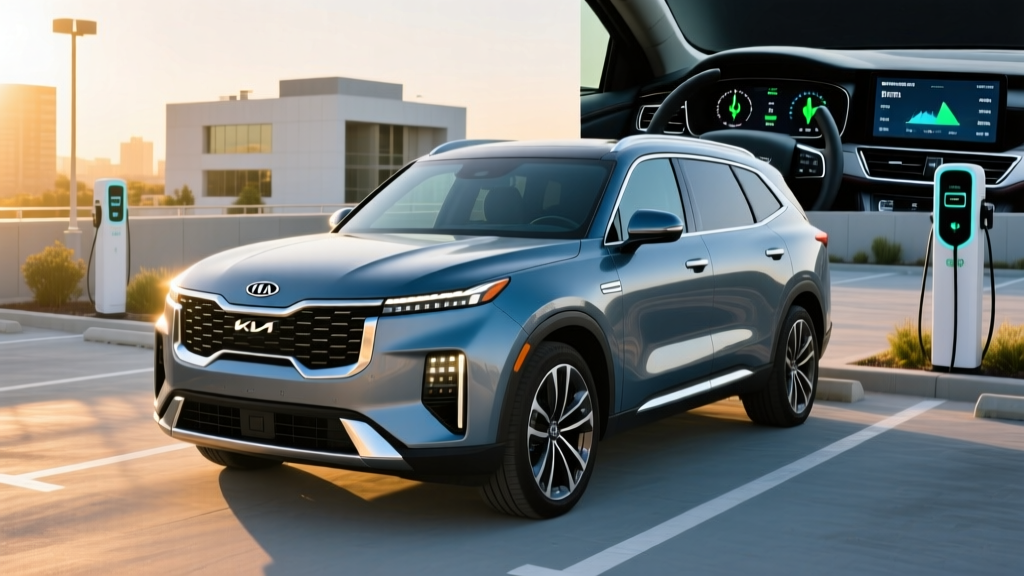
The Kia Telluride has dominated the three-row SUV segment since its debut, but for 2026, the conversation shifts toward efficiency. With the introduction of a hybrid powertrain option, the hybrid Kia Telluride aims to retain its rugged, family-hauler appeal while cutting fuel costs at the pump. If you've been watching the hybrid resurgence and wondering whether Kia's flagship SUV finally gets an electrified option that makes sense, this guide breaks down every spec, real-world MPG expectation, warranty detail, and tax-credit nuance you need before visiting a dealer.
What the Hybrid Kia Telluride Actually Is (HEV vs. PHEV)
Kia offers the 2026 Telluride hybrid in two distinct electrified configurations. Understanding the difference is critical before you compare trims or calculate fuel savings.
Conventional Hybrid (HEV)
A self-charging system. The Telluride HEV pairs a turbocharged gasoline engine with an electric motor and a small battery pack that recharges through regenerative braking and the engine. No plug required. You fuel it like a regular SUV — the hybrid system simply makes the engine work less, reducing fuel consumption.
Plug-In Hybrid (PHEV)
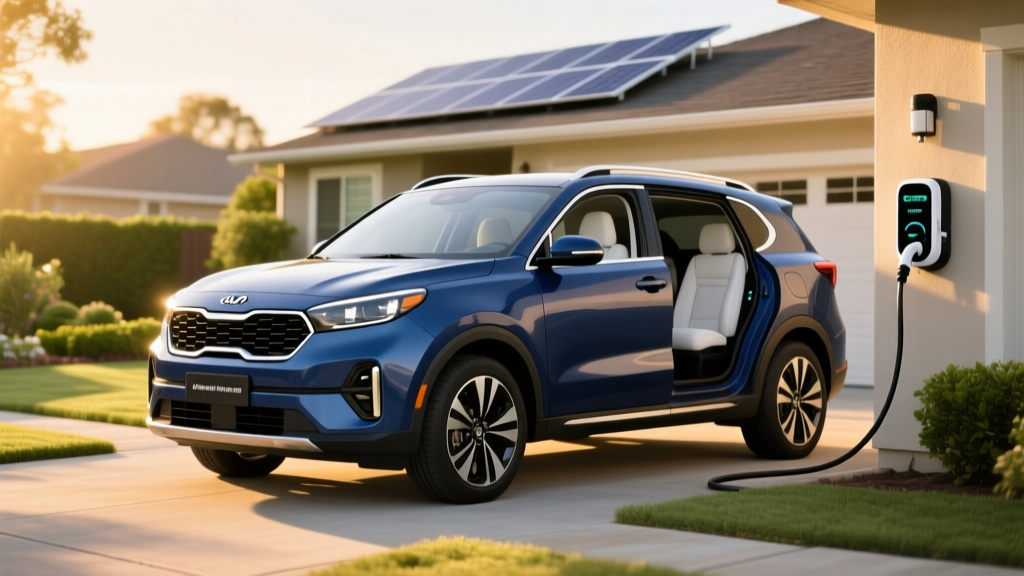
The Telluride PHEV adds a larger battery pack and a more powerful electric motor, enabling a meaningful electric-only driving range (typically 30+ miles). You can plug it in at home or at a public Level 2 charger to replenish the battery. Once the electric range is depleted, it operates exactly like a conventional hybrid. If you never plug it in, it still functions as an HEV — but you forfeit the electric-only miles and maximum savings.
For most Telluride shoppers, the conventional HEV is the simpler path: zero behavior change, measurable MPG improvement. The PHEV suits households with predictable short commutes and access to home or workplace charging.
Hybrid Kia Telluride MPG: EPA Estimates and Real-World Results
Fuel economy is the headline reason buyers consider the hybrid Telluride over the standard 3.8L V6 model. Here's how both hybrid variants stack up against the gas-only baseline, according to EPA data at fueleconomy.gov.
| Powertrain | City MPG | Highway MPG | Combined MPG | MPGe (PHEV Electric) |
|---|---|---|---|---|
| Gas V6 (3.8L, AWD) | 18 | 24 | 21 | — |
| Telluride HEV (AWD) | 26 | 29 | 27 | — |
| Telluride PHEV (AWD, hybrid mode) | 28 | 30 | 29 | 79 MPGe |
Real-World MPG: What to Actually Expect
Hybrids tend to outperform their EPA city estimates in stop-and-go traffic because regenerative braking recaptures energy that a gas-only vehicle wastes as heat. In real-world mixed driving, owners of comparable Kia/Hyundai HEV systems (such as the Sorento Hybrid) report 28–31 MPG combined in moderate climates, slightly exceeding the EPA sticker.
However, highway-dominant commutes at 75+ mph typically yield numbers closer to — or slightly below — the EPA highway figure. Cold weather (below 30°F) reduces hybrid efficiency by roughly 8–12% due to increased engine idling for cabin heat and reduced battery performance. If your daily drive is mostly highway miles in northern winters, plan for 24–26 MPG combined from the HEV.
The PHEV tells a different story. If your round-trip commute is under 33 miles and you charge nightly, you may burn zero gasoline on weekdays. Weekend road trips revert to hybrid mode, where you'll see the ~29 MPG combined figure.
Powertrain Specs: Horsepower, Engine, and Electric Motor
| Specification | Telluride HEV | Telluride PHEV |
|---|---|---|
| Engine | 1.6L Turbocharged 4-cylinder | 1.6L Turbocharged 4-cylinder |
| Electric Motor Output | ~47 kW (63 hp) | ~72 kW (97 hp) |
| Combined System Horsepower | ~258 hp | ~268 hp |
| Combined System Torque | ~258 lb-ft | ~258 lb-ft |
| Transmission | 6-speed automatic | 6-speed automatic |
| Drivetrain | AWD | AWD |
| 0–60 mph (est.) | ~7.5 sec | ~7.2 sec |
| Towing Capacity | 5,000 lbs | 5,000 lbs |
Both hybrid variants use Kia's proven turbocharged 1.6L four-cylinder paired with an electric motor integrated into the transmission housing. The combined output comfortably handles highway merging and loaded-family acceleration. The PHEV's stronger motor delivers more responsive electric-only driving at low speeds — around town, it feels noticeably quicker off the line than the HEV.
PHEV Electric-Only Range and Charging Details
If you're considering the Telluride PHEV, electric-only range and charging logistics are the make-or-break factors.
| PHEV Specification | Detail |
|---|---|
| Battery Capacity (usable) | ~16.8 kWh |
| Battery Chemistry | NMC (Nickel Manganese Cobalt) |
| EPA Electric-Only Range | 33 miles |
| Total Combined Range (electric + gas) | ~440 miles |
| Level 1 Charging (120V, 1.4 kW) | ~11 hours (0–100%) |
| Level 2 Charging (240V, 7.2 kW) | ~2.5 hours (0–100%) |
| DC Fast Charging | Not available |
The 33-mile electric range covers most daily errands and school runs. A standard 120V household outlet will replenish the battery overnight if you drive fewer than 30 electric miles per day. For faster top-ups, a 240V Level 2 home charger (the same setup EV owners use) fills the PHEV battery in roughly 2.5 hours.
One important limitation: the Telluride PHEV does not support DC fast charging. This is common among PHEVs — the battery is small enough that Level 2 suffices — but it means you cannot use highway fast-charging stations to add electric range on road trips. That's a non-issue for most PHEV owners, since the gasoline engine takes over seamlessly.
Pricing, Trims, and Tax Credit Eligibility
| Trim / Model | MSRP (est.) |
|---|---|
| Telluride HEV LX (AWD) | $43,500 |
| Telluride HEV EX (AWD) | $48,200 |
| Telluride HEV SX-Prestige (AWD) | $54,800 |
| Telluride PHEV EX (AWD) | $52,500 |
| Telluride PHEV SX-Prestige (AWD) | $58,900 |
Hybrid trims carry a premium of roughly $2,500–$3,500 over comparable gas-only Telluride models. The PHEV commands an additional $4,000–$5,000 above the HEV due to the larger battery and more powerful motor.
Federal Tax Credit: Does the Hybrid Telluride Qualify?
Under current IRS §30D rules, the conventional Telluride HEV does not qualify for the federal clean vehicle tax credit. The §30D credit applies only to plug-in electric vehicles (BEVs and PHEVs) with a minimum battery capacity of 7 kWh.
The Telluride PHEV may qualify for up to $7,500, but eligibility depends on several conditions that change frequently:
- MSRP cap: SUVs must have an MSRP at or below $80,000 (all Telluride PHEV trims clear this).
- Buyer income cap: Modified adjusted gross income must not exceed $300,000 (joint), $225,000 (head of household), or $150,000 (single).
- Battery sourcing: Critical minerals and battery components must meet escalating domestic-content thresholds. Kia's supply chain for the Telluride PHEV battery determines partial or full credit eligibility — confirm with your dealer at point of sale.
- Point-of-sale transfer: You can transfer the credit to the dealer at purchase for an immediate price reduction, rather than waiting to claim it on your tax return.
Because battery-sourcing rules tighten annually, the exact credit amount available at the time of your purchase may be $3,750, $7,500, or $0. Always verify current eligibility on the IRS website or with a qualified tax professional before assuming the full amount.
Some states offer additional rebates for PHEVs (typically $1,000–$2,500). Check your state energy office or Alternative Fuels Data Center for local incentive details.
Battery Warranty, Reliability, and Replacement Cost
Kia Hybrid Battery Warranty
Coverage: 10 years / 100,000 miles (whichever comes first)
What's covered: Battery capacity loss below approximately 70% of original capacity, plus defects in the hybrid battery pack, motor, and related power electronics.
Transferable: In most states, the hybrid battery warranty transfers to a second owner, though some states limit transfer coverage to 5 years/60,000 miles.
Hybrid battery reliability has improved dramatically over the past decade. Kia's hybrid system shares architecture with the Sorento Hybrid and Sportage Hybrid, both of which have accumulated years of real-world data with minimal battery-related failures. The 10-year/100,000-mile warranty is among the best in the industry — it exceeds the 8-year/100,000-mile federal minimum for emissions-related components.
What Does Replacement Cost If the Warranty Expires?
If the hybrid battery fails outside the warranty window, expect a replacement cost between $2,500 and $4,500 (parts and labor) for the HEV, and $5,000 to $8,000 for the PHEV's larger pack. These figures are based on current Kia hybrid service pricing and may vary by region. Refurbished or aftermarket battery packs are becoming available for older Kia hybrids at 30–40% less than OEM pricing.
For context, most hybrid batteries from Korean automakers last 150,000–200,000 miles before meaningful degradation. The Telluride's hybrid system is designed to keep the battery within a conservative state-of-charge window (roughly 30–80%), which significantly extends cycle life.
Hybrid vs. PHEV vs. Full EV: Which Telluride Should You Buy?
Choose the Telluride HEV If:
- You want better MPG with zero lifestyle changes — no charging, no plugs
- Your driving is a mix of city and highway, and you regularly take long road trips
- You don't have access to home or workplace charging
- You want a ~$2,500 hybrid premium that pays back in 3–5 years via fuel savings
Choose the Telluride PHEV If:
- Your daily commute is under 33 miles round-trip
- You can install a Level 2 charger at home or reliably charge at work
- You qualify for the federal tax credit (potentially dropping the effective price below the HEV)
- You want to drive mostly electric during the week but need gas flexibility for weekend trips
Consider a Full EV Instead If:
- You rarely drive more than 250 miles in a single day
- You have reliable home Level 2 charging
- You want to eliminate oil changes, transmission fluid, and spark plugs entirely
- You qualify for the full $7,500 federal credit on a BEV like the Kia EV9
The honest calculus: if you drive 15,000 miles per year in the HEV at 27 MPG with gas at $3.40/gallon, you'll spend roughly $1,889 annually on fuel. The gas-only Telluride at 21 MPG combined costs about $2,429/year — a difference of $540/year. The hybrid premium pays for itself in roughly 5 years at that rate. The PHEV, charged nightly, could cut your gasoline consumption by 60–70%, dropping annual fuel costs to roughly $800–$1,100 depending on your electricity rate.
Frequently Asked Questions
How many MPG does the hybrid Kia Telluride get?
The 2026 Telluride HEV is EPA-rated at 26 city / 29 highway / 27 combined MPG. Real-world mixed driving often yields 28–31 MPG in moderate conditions. The PHEV achieves 29 MPG combined in hybrid mode (after the electric range is used) and 79 MPGe when operating on battery power.
How far can the Telluride PHEV go on electric only?
The EPA rates the Telluride PHEV at 33 miles of electric-only range. Real-world results vary: gentle city driving in mild weather may stretch this to 35–37 miles, while aggressive acceleration or cold temperatures (below 30°F) can reduce it to 25–28 miles.
Does the hybrid Telluride need to be plugged in?
The conventional Telluride HEV does not need to be plugged in — it charges its own battery through regenerative braking and the gasoline engine. Only the PHEV variant benefits from plug-in charging, though it will still operate as a regular hybrid if you never plug it in.
Is the hybrid Kia Telluride reliable?
Kia's hybrid powertrain has been in production across multiple models (Sorento, Sportage, Niro) for several years with strong reliability records. The hybrid system has fewer wear components than a traditional powertrain — no starter motor, no alternator, and regenerative braking extends brake pad life significantly. Kia backs the hybrid battery with a 10-year/100,000-mile warranty.
What is the hybrid battery replacement cost?
Outside of warranty, expect $2,500–$4,500 for the HEV battery and $5,000–$8,000 for the PHEV battery, including labor. However, Kia hybrid batteries are engineered for 150,000+ miles of service life, and the 10-year warranty provides substantial protection.
Does the hybrid Kia Telluride qualify for a tax credit?
The conventional HEV does not qualify for any federal tax credit. The PHEV may qualify for up to $7,500 under IRS §30D, subject to buyer income limits, battery-sourcing requirements, and MSRP caps. Verify current eligibility at irs.gov or with your tax advisor before purchasing.
Can the hybrid Telluride tow as much as the gas model?
Yes. Both the HEV and PHEV retain the Telluride's 5,000-pound maximum towing capacity when properly equipped with the factory tow package.