Why Volkswagen's Plug-In Hybrid Strategy Matters in 2026
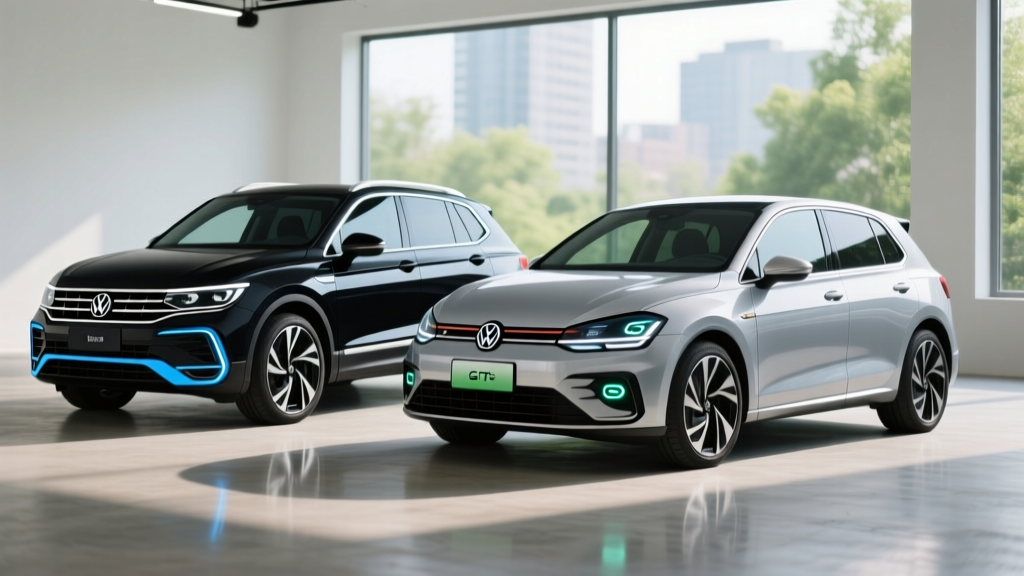
Volkswagen's approach to electrification has always been pragmatic: offer a bridge technology that doesn't force buyers into full battery-electric commitment. For 2026, the VW plug-in hybrid lineup centers on two vehicles — the Tiguan eHybrid (a compact SUV) and the Golf GTE (a hot-hatch PHEV). Both pair a turbocharged gasoline engine with a larger battery pack and electric motor than their predecessors, targeting buyers who want daily electric commuting without sacrificing road-trip flexibility.
If you're cross-shopping a VW plug-in hybrid against a full BEV like the ID.4 or a conventional hybrid like the Toyota RAV4 Hybrid, the decision hinges on one question: can you charge at home or work? If yes, a PHEV delivers EV-like daily driving with a gas-engine safety net. If no, a conventional HEV makes more sense.
HEV vs PHEV: What Volkswagen Actually Offers
Conventional Hybrid (HEV)
A standard hybrid — like the base Tiguan mild-hybrid in some markets — uses a small battery (typically under 2 kWh) that recharges through regenerative braking and the engine. You never plug it in. Electric-only driving is limited to brief low-speed assists. Think of it as a more efficient gas car.
Plug-In Hybrid (PHEV)
A plug-in hybrid like the Tiguan eHybrid or Golf GTE carries a much larger battery (19–26 kWh usable) that you charge via a wall outlet, Level 2 home charger, or public station. It delivers 30–55 miles of genuine electric-only range before the gas engine seamlessly takes over. This is the VW plug-in hybrid proposition: an EV for your commute, a gas car for your road trip.
Volkswagen does not currently sell a conventional (non-plug-in) hybrid in the US market for 2026. If you see "VW hybrid" referenced, it almost certainly means one of their PHEV models. This is a critical distinction — VW's hybrid strategy is plug-in or nothing stateside.
2026 Tiguan eHybrid: Range, MPG, and Powertrain Specs
The redesigned Tiguan eHybrid is the volume player in VW's plug-in hybrid portfolio. Built on the updated MQB Evo platform, it pairs a 1.5-liter turbocharged four-cylinder engine with an integrated electric motor and a floor-mounted lithium-ion battery pack.
| Specification | Value |
|---|---|
| Powertrain | 1.5L turbo I4 + electric motor (PHEV) |
| Combined System Output | 245 hp / 295 lb-ft torque |
| Battery (usable) | 19.7 kWh (NMC chemistry) |
| EPA Electric-Only Range | ~37 miles (estimated, pending EPA cert) |
| Total Combined Range | ~480 miles (gas + electric) |
| EPA MPG (gas mode, combined) | ~35 MPG combined (36 city / 34 hwy est.) |
| MPGe (electric + gas combined) | ~88 MPGe (estimated) |
| Level 2 AC Charging (max) | 7.2 kW (full charge ~2.75 hours) |
| DC Fast Charging | Not available |
| 0–60 mph | ~6.5 seconds |
| Drivetrain | Front-wheel drive (FWD) |
| Base MSRP | ~$40,500 (est.) |
Real-World Range vs. EPA Estimates
The Tiguan eHybrid's electric-only range is heavily dependent on conditions. In mild weather (55–75°F) with city and suburban driving, expect to see 35–40 miles on a full charge — closely matching the EPA estimate. On the highway at 70+ mph, that drops to roughly 25–28 miles due to higher aerodynamic drag and reduced regen braking opportunities. In cold weather (below 30°F), the battery's usable capacity shrinks and cabin heating draws from the pack, cutting electric range to approximately 22–26 miles.
In gas-only mode after battery depletion, the 1.5L turbo is efficient in stop-and-go traffic (where the electric motor still assists via regen), often achieving 37–39 MPG in city driving. Highway gas mileage settles around 32–34 MPG at sustained speeds.
2026 Golf GTE: The Performance PHEV Hatchback
The Golf GTE returns for 2026 with a larger battery and more power, positioning itself as the enthusiast's plug-in hybrid. It shares the MQB Evo platform with the Tiguan but tunes the powertrain for sportier delivery.
| Specification | Value |
|---|---|
| Powertrain | 1.5L turbo I4 + electric motor (PHEV) |
| Combined System Output | 272 hp / 295 lb-ft torque |
| Battery (usable) | 19.7 kWh (NMC chemistry) |
| EPA Electric-Only Range | ~44 miles (estimated, pending EPA cert) |
| Total Combined Range | ~500 miles (gas + electric) |
| EPA MPG (gas mode, combined) | ~40 MPG combined (43 city / 38 hwy est.) |
| MPGe (electric + gas combined) | ~100 MPGe (estimated) |
| Level 2 AC Charging (max) | 7.2 kW (full charge ~2.75 hours) |
| DC Fast Charging | Not available |
| 0–60 mph | ~5.8 seconds |
| Drivetrain | Front-wheel drive (FWD) |
| Base MSRP | ~$38,000 (est.) |
The Golf GTE's lighter curb weight and lower ride height give it a meaningful electric-range and efficiency advantage over the Tiguan eHybrid. Its real-world electric commuting range in temperate conditions often reaches 42–48 miles in mixed suburban driving. Highway electric range drops to around 30–33 miles.
Charging the VW Plug-In Hybrid: What You Need to Know
Neither the Tiguan eHybrid nor the Golf GTE supports DC fast charging. This is standard for most PHEVs — the battery packs are small enough that Level 2 AC charging fills them quickly, and the added cost and weight of DC fast-charge hardware isn't justified.
| Charging Method | Power (kW) | 0–100% Time | Cost per Full Charge* |
|---|---|---|---|
| Standard 120V Outlet (Level 1) | ~1.4 kW | ~14 hours | $2.00–$3.50 |
| Level 2 Home Charger (240V) | 7.2 kW (max) | ~2.75 hours | $2.00–$3.50 |
| Public Level 2 (e.g., ChargePoint) | Up to 7.2 kW | ~2.75 hours | $3.50–$6.00 |
*Cost estimates based on 19.7 kWh usable battery at $0.10–$0.18/kWh (home) and $0.20–$0.30/kWh (public). Actual rates vary by utility and region.
Practical charging advice: Most PHEV owners charge overnight on a standard 120V outlet or a Level 2 home charger. A full overnight charge on Level 1 (14 hours) is sufficient if you drive less than 40 miles daily and plug in when you get home. A Level 2 home charger (a 240V NEMA 14-50 outlet with a ~$500–$1,200 installation, depending on your electrical panel) cuts charge time to under three hours, which is ideal for mid-day top-ups or ensuring a full battery every morning.
Tax Credits and Incentives for VW Plug-In Hybrids
Federal tax credit eligibility for PHEVs is governed by the same IRS §30D Clean Vehicle Credit rules that apply to full EVs. However, there's a crucial difference: the credit amount for a PHEV is prorated based on battery capacity.
Federal §30D Requirements for PHEVs (2026)
- Battery capacity: Must be at least 7 kWh — both VW PHEVs qualify at 19.7 kWh
- Credit amount: Up to $3,750 (base credit for PHEVs meeting battery-capacity threshold; the full $7,500 requires critical-mineral and battery-component sourcing compliance that varies by model year)
- MSRP cap: SUVs (Tiguan) ≤ $80,000; cars (Golf) ≤ $55,000 — both qualify
- Buyer income cap: AGI ≤ $150,000 (single), $225,000 (head of household), $300,000 (joint)
- Final assembly: Must be assembled in North America — verify VIN on fueleconomy.gov
- Point-of-sale transfer: Eligible buyers can transfer the credit to the dealer for an immediate price reduction at purchase
Critical caveat: VW PHEVs for the US market are assembled in Europe (Wolfsburg/Emden). This likely disqualifies them from the federal §30D credit, which requires North American final assembly. Always verify the specific VIN on the IRS portal before assuming eligibility. Some states offer their own PHEV rebates (California, Colorado, New York, and others) that have no assembly requirement — check your state's energy office for current programs.
Battery Warranty, Reliability, and Replacement Costs
Hybrid and PHEV battery longevity is consistently the top concern among buyers. Volkswagen covers the high-voltage battery in both the Tiguan eHybrid and Golf GTE with an 8-year / 100,000-mile warranty (whichever comes first), guaranteeing a minimum of 70% capacity retention. This aligns with industry standards set by Toyota, Hyundai, and Ford for their electrified models.
VW PHEV Battery Warranty Summary
- Duration: 8 years / 100,000 miles
- Capacity retention guarantee: ≥70% of original usable capacity
- Components covered: High-voltage battery pack, battery management system, electric motor, power electronics
- Out-of-warranty replacement cost (est.): $6,000–$9,000 for the battery pack (based on current NMC pricing trends for ~20 kWh packs)
In practice, PHEV batteries degrade more slowly than full-EV batteries because they operate in a narrower state-of-charge window (the system rarely allows a true 0% or 100% charge, preserving cell health). Data from earlier-generation VW PHEVs (the 2016–2020 Golf GTE with a smaller 8.7 kWh pack) shows typical degradation of 8–12% over 8 years of mixed use — well within the warranty threshold.
Overall vehicle reliability for VW's MQB-based models has improved in recent years, though the brand still trails Toyota and Honda in long-term dependability rankings per J.D. Power and Consumer Reports. The PHEV powertrain adds complexity (two power sources, a clutch-based integration system, and high-voltage components) but eliminates the traditional automatic transmission — the electric motor handles low-speed torque, and the engine connects via a dedicated hybrid transmission. Fewer moving parts in the drivetrain offset some of the added electrical complexity.
Who Should Buy a VW Plug-In Hybrid?
Choose a VW PHEV If…
- Your daily commute is under 40 miles round-trip and you can charge at home
- You want EV-like daily driving but take road trips where charging infrastructure is sparse
- You prefer VW's driving dynamics, interior quality, and design over competitors like the Toyota RAV4 Prime or Ford Escape PHEV
- You want a sporty hatchback option (Golf GTE) that doubles as an efficient commuter
- You're not ready to commit to a full BEV but want to reduce gasoline consumption by 60–80%
Look Elsewhere If…
- You cannot charge at home or work — without regular plug-in charging, a PHEV becomes a heavy, less-efficient gas car
- You want DC fast charging for road-trip electric driving (only full BEVs offer this)
- You need all-wheel drive — VW's 2026 US PHEVs are front-wheel drive only; the RAV4 Prime offers AWD
- Federal tax credit eligibility is a dealbreaker — VW PHEVs likely don't qualify due to European assembly
- You want maximum electric range — the Toyota RAV4 Prime offers 42 miles EPA, and the upcoming Hyundai Tucson PHEV targets 40+ miles with AWD
PHEV vs Full EV vs Conventional Hybrid: The Decision Matrix
Choose a VW plug-in hybrid (PHEV) if: You have home charging, drive 20–45 miles daily, and regularly take trips exceeding 200 miles where you don't want to plan around charging stations.
Choose a full BEV (like the VW ID.4) if: You have reliable home charging, your daily driving is under 250 miles, and you want zero gasoline expenses, minimal maintenance, and access to DC fast-charging networks for road trips.
Choose a conventional hybrid (like the Toyota RAV4 Hybrid) if: You cannot charge at home, you want maximum fuel efficiency without any behavioral change, and you prefer the lowest upfront cost with proven long-term reliability.
Frequently Asked Questions
How many MPG does the VW plug-in hybrid get?
In gas-only mode (after the battery is depleted), the 2026 Tiguan eHybrid achieves an estimated 35 MPG combined (36 city / 34 highway), while the lighter Golf GTE reaches approximately 40 MPG combined (43 city / 38 highway). In real-world city driving, both tend to exceed their EPA estimates by 2–4 MPG thanks to regenerative braking assist. Highway mileage typically runs 1–3 MPG below the EPA figure at sustained 70+ mph speeds.
How far can the VW PHEV go on electric only?
The Tiguan eHybrid delivers approximately 37 miles of EPA-estimated electric-only range, while the Golf GTE achieves around 44 miles. In real-world temperate city driving, expect 35–40 miles (Tiguan) and 42–48 miles (Golf). Cold weather and highway driving reduce these figures by 25–35%.
Does the VW plug-in hybrid qualify for a tax credit?
Most likely not at the federal level. The IRS §30D credit requires North American final assembly, and VW's PHEVs are built in Europe. However, state-level incentives may apply — California offers up to $1,500 for PHEVs through the Clean Vehicle Rebate Project, and Colorado provides a state tax credit of up to $5,000 for electrified vehicles. Always check IRS.gov and your state's energy office before purchasing.
Is the VW PHEV battery reliable, and what does replacement cost?
VW covers the high-voltage battery for 8 years / 100,000 miles with a 70% capacity-retention guarantee. Historical data from earlier VW PHEV models shows 8–12% degradation over 8 years — well within warranty limits. Out-of-warranty battery replacement is estimated at $6,000–$9,000, though PHEV packs are smaller and less expensive to replace than full-EV batteries.
Can I charge a VW plug-in hybrid at a DC fast charger?
No. Neither the Tiguan eHybrid nor the Golf GTE supports DC fast charging. They use a J1772 connector for Level 1 (120V) and Level 2 (240V) AC charging, with a maximum charge rate of 7.2 kW. A full charge takes approximately 2.75 hours on Level 2 or about 14 hours on a standard household outlet.
What's the difference between the Tiguan eHybrid and the Golf GTE?
Both share the same 19.7 kWh battery and 1.5L turbo PHEV powertrain architecture, but the Golf GTE produces more power (272 hp vs. 245 hp), weighs less, and achieves greater electric range (~44 vs. ~37 miles). The Tiguan offers more cargo space (~33 cu ft vs. ~19 cu ft) and a higher seating position. Choose the Tiguan for family utility, the Golf GTE for driving engagement and efficiency.
Do I have to plug in a VW plug-in hybrid?
You don't have to — the car operates as a conventional hybrid using the gas engine and regenerative braking if you never plug it in. However, you'll forfeit the entire electric-range benefit and operate a heavier vehicle, resulting in worse fuel economy than a purpose-built conventional hybrid. To get value from a PHEV, plan to plug in daily.