Quick Verdict: Kia's Hybrid SUV Strategy for 2026
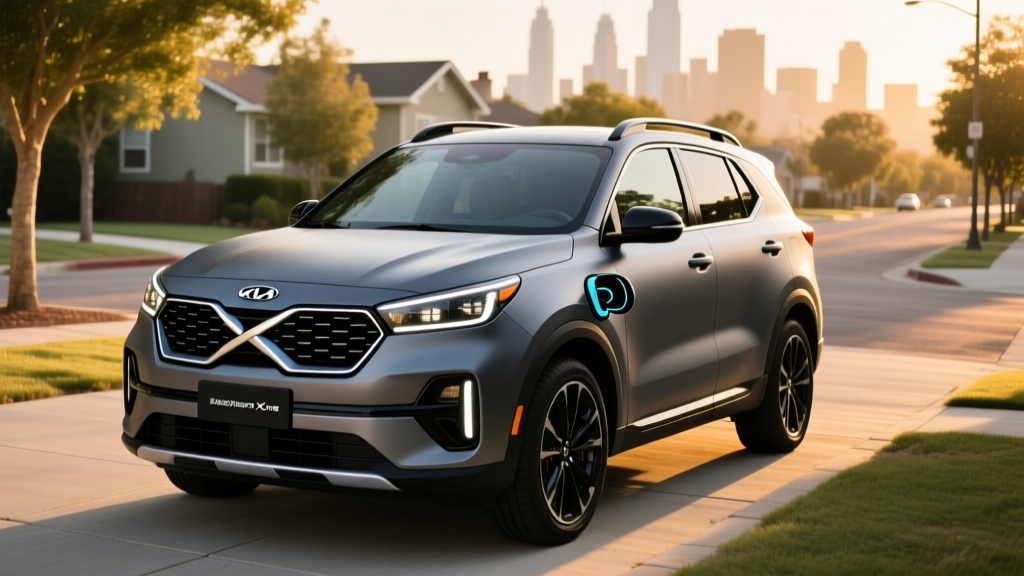
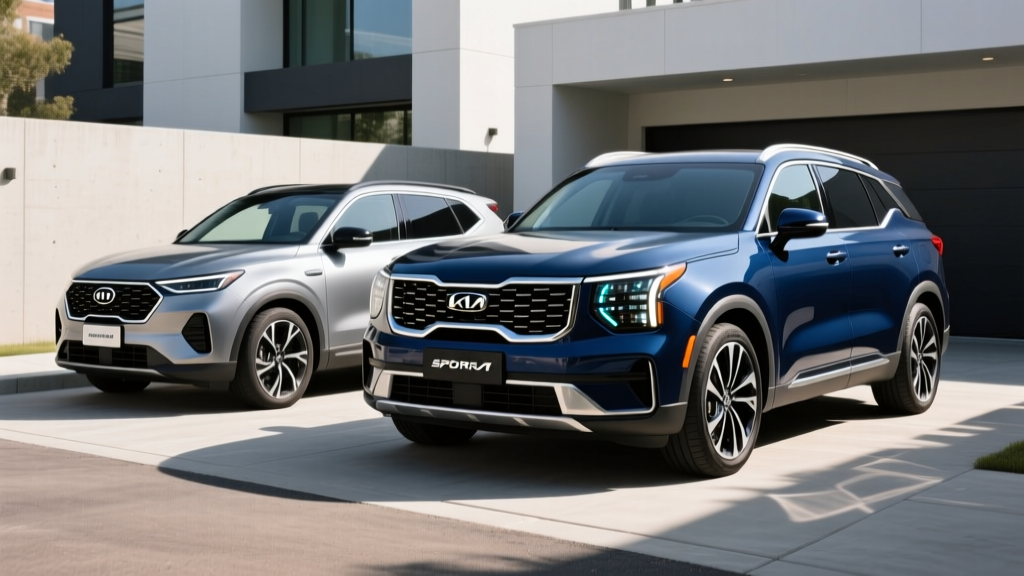
Kia offers two hybrid SUV nameplates in the US market for the 2026 model year: the midsize Sorento and the compact Sportage. Each is available as a conventional hybrid (HEV) and a plug-in hybrid (PHEV), giving buyers four distinct powertrain configurations to evaluate. The Sorento Hybrid remains one of the few three-row hybrid SUVs under $45,000, while the Sportage PHEV delivers a class-leading 34 miles of electric-only range. This guide breaks down exact EPA figures, pricing, tax credit eligibility, and real-world ownership data so you can pick the right hybrid Kia SUV for your driving pattern.
2026 Kia Hybrid SUV Spec Comparison
| Spec | Sportage HEV | Sportage PHEV | Sorento HEV | Sorento PHEV |
|---|---|---|---|---|
| Powertrain | 1.6L turbo I4 + 47 kW motor | 1.6L turbo I4 + 72 kW motor | 1.6L turbo I4 + 47 kW motor | 1.6L turbo I4 + 72 kW motor |
| Combined HP | 232 hp | 261 hp | 232 hp | 261 hp |
| EPA Combined MPG | 43 MPG (FWD) | 84 MPGe / 35 MPG gas-only | 37 MPG (FWD) | 79 MPGe / 33 MPG gas-only |
| EPA City / Hwy | 42 / 44 | — / — | 36 / 38 | — / — |
| EV-Only Range | N/A | 34 mi | N/A | 32 mi |
| Battery (PHEV) | 1.49 kWh (HEV) | 13.8 kWh usable | 1.49 kWh (HEV) | 13.8 kWh usable |
| Level 2 Charge Time | N/A | ~3 hr 15 min | N/A | ~3 hr 15 min |
| DC Fast Charge | No | No | No | No |
| Seating | 5 | 5 | 6 (captain's chairs) | 6 |
| Base MSRP | $32,090 | $40,090 | $39,290 | $51,590 |
| Drivetrain | FWD or AWD | AWD standard | FWD or AWD | AWD standard |
Sources: fueleconomy.gov, Kia America 2026 spec sheets. MPGe figures reflect combined electric+gas operation per EPA methodology.
Fuel Economy Deep Dive: Real-World MPG vs EPA Stickers
Hybrids consistently outperform their EPA ratings in stop-and-go city driving because regenerative braking recovers energy that a gas car wastes as heat at every stoplight. The Sportage HEV is rated at 42 city / 44 highway / 43 combined (FWD). In real-world urban commutes, owners regularly report 45–48 MPG on flat city routes. Highway driving at sustained 75+ mph, however, can drop the figure to 38–40 MPG — the small turbocharged engine works harder without regenerative assistance at constant speed.
The Sorento HEV posts 36 city / 38 highway / 37 combined (FWD), a meaningful drop from the Sportage due to its larger, heavier body and three-row architecture. Expect 39–42 MPG in city traffic and 33–35 MPG on extended highway trips. Adding AWD costs roughly 1–2 MPG across the board for both models.
For PHEV models, the relevant metric depends entirely on your charging habits. If you charge nightly and your commute is under 30 miles, the Sportage PHEV may use almost no gasoline on weekdays. The EPA rates it at 84 MPGe in combined electric+gas operation, but once the 13.8 kWh battery is depleted, you're driving a 261-hp AWD crossover that returns about 35 MPG — slightly below the Sportage HEV because of the extra battery weight.
PHEV Electric Range and Charging: What to Expect
Both the Sportage PHEV (34 miles) and Sorento PHEV (32 miles) share Kia's 13.8 kWh lithium-ion polymer battery pack. This is a moderate-capacity PHEV battery — large enough for most daily commutes but not designed for extended electric road-trip driving.
Charging the Kia PHEV Models
The 2026 Kia PHEV SUVs accept Level 1 (120V household outlet) and Level 2 (240V) charging. They do not support DC fast charging — a limitation shared with most PHEVs in this price class, though some competitors like the Jeep Wrangler 4xe do offer it.
- Level 1 (120V, ~1.4 kW): 0–100% in approximately 11 hours. Suitable for overnight charging if you arrive home with partial charge remaining.
- Level 2 (240V, ~3.3 kW onboard charger): 0–100% in about 3 hours 15 minutes. A home Level 2 station (like a ChargePoint Home Flex or Kia's own Wallbox) is strongly recommended for PHEV ownership.
The 3.3 kW onboard charger is the bottleneck — even if you plug into a 7.2 kW Level 2 station, the vehicle will only draw 3.3 kW. This is a hardware limitation of the PHEV's onboard charging module, not the station.
Powertrain and Performance
All four hybrid Kia SUVs use a 1.6-liter turbocharged inline-four paired with an electric motor and a 6-speed automatic transmission (not a CVT, which some buyers prefer for its more natural acceleration feel).
The HEV models pair the engine with a 47 kW (63 hp) electric motor for a combined system output of 232 horsepower. The PHEV models upgrade to a 72 kW (97 hp) motor for 261 horsepower, making them meaningfully quicker. The Sportage PHEV hits 0–60 mph in approximately 7.1 seconds, while the Sportage HEV takes around 7.8 seconds. The heavier Sorento variants add roughly 0.5–0.8 seconds to those figures.
One practical advantage of the PHEV's larger motor: in EV mode, it delivers strong low-speed torque for confident merging and passing without waking the gas engine. The HEV's smaller motor can feel less responsive during initial acceleration from a stop.
Pricing, Trims, and Tax Credit Eligibility
Kia's hybrid SUV pricing spans from the low-$30,000s to the low-$50,000s depending on model and trim. Here's the 2026 lineup at a glance:
- Sportage HEV LX: $32,090 (FWD) / $33,590 (AWD)
- Sportage HEV EX: $34,990 (AWD)
- Sportage HEV SX-Prestige: $38,090 (AWD)
- Sportage PHEV X-Line: $40,090
- Sportage PHEV X-Line Prestige: $43,590
- Sorento HEV S: $39,290 (FWD)
- Sorento HEV EX: $42,590 (AWD)
- Sorento PHEV SX: $51,590
- Sorento PHEV SX Prestige: $55,290
Federal Tax Credit for Kia PHEV Models
Under current IRS §30D rules, the Sportage PHEV and Sorento PHEV may qualify for a federal tax credit, but eligibility is far from guaranteed. The credit amount depends on battery component and critical mineral sourcing requirements that shift annually. As of 2026, the full $7,500 credit requires meeting both the critical minerals and battery component thresholds. Vehicles that meet only one threshold receive $3,750.
- Vehicle MSRP must not exceed $80,000 for SUVs (all Kia PHEVs qualify)
- Buyer AGI must not exceed $150,000 (single) / $300,000 (joint)
- Battery components must meet US/free-trade-agreement manufacturing thresholds
- Critical minerals must meet US/free-trade-agreement sourcing thresholds
- Credit may be transferred to the dealer as a point-of-sale discount
Kia's PHEV models are assembled in West Point, Georgia, but battery cell sourcing determines credit eligibility. Verify current status at fueleconomy.gov before purchase. Consult a tax professional for your specific situation.
Conventional HEV models (Sportage HEV, Sorento HEV) do not qualify for the §30D federal EV credit, as they lack sufficient battery capacity and plug-in capability. Some states and utilities offer separate hybrid rebates — check your local programs.
Battery Warranty, Reliability, and Replacement Costs
Kia's hybrid systems have proven reliable since the brand introduced the Niro hybrid in 2017. The 1.6L turbo and electric motor combination has been in the lineup since 2022 (Sportage) and 2021 (Sorento), giving it a solid track record. Common maintenance items are minimal — no transmission fluid changes at typical intervals, and the electric motor has no wear components.
Battery Replacement Cost
If a hybrid battery fails outside warranty, replacement costs vary:
- HEV battery (1.49 kWh): $2,000–$3,500 installed. This is a small pack, so costs are moderate.
- PHEV battery (13.8 kWh): $6,000–$9,000 installed. Significantly more expensive due to the larger pack.
Real-world data from Hyundai-Kia's hybrid platform shows battery degradation of roughly 5–8% over the first 100,000 miles under normal use. The 10-year warranty provides strong protection, and most hybrid batteries outlast the vehicle's useful life. According to IIHS, the Sorento and Sportage also earn strong safety ratings, reducing total-ownership risk.
Who Should Buy a Hybrid Kia SUV (and Who Shouldn't)
Choose the Sportage HEV if:
- Your daily drive is 30–60 miles and you want zero charging hassle
- You want 40+ MPG without paying a PHEV premium
- You don't have access to home or workplace charging
- Budget is under $38,000
Choose the Sportage PHEV if:
- Your commute is under 34 miles and you can charge at home nightly
- You want near-EV daily driving but need gas flexibility for road trips
- You qualify for the federal tax credit (effectively reducing the $8,000 PHEV premium)
- You want 261 hp for confident highway merging
Choose the Sorento HEV if:
- You need three rows of seating but want hybrid efficiency
- You want the cheapest per-seat hybrid SUV on the market
- Your driving is primarily suburban and city-based
Skip the hybrids and go full EV if:
- You have reliable home Level 2 charging
- Your daily driving is under 250 miles
- You want to eliminate all gas station visits and oil changes
- Consider the Kia EV6 or EV9 for a pure-electric alternative
Frequently Asked Questions
How many MPG does the hybrid Kia SUV get?
The 2026 Sportage HEV achieves 42 city / 44 highway / 43 combined MPG (FWD). The larger Sorento HEV returns 36 city / 38 highway / 37 combined (FWD). In real-world city driving, both tend to exceed their EPA ratings by 2–5 MPG thanks to aggressive regenerative braking. Highway efficiency at 75+ mph will fall 3–5 MPG below the sticker.
How far can the Kia PHEV go on electric only?
The 2026 Sportage PHEV delivers 34 miles of EPA-rated electric-only range, while the Sorento PHEV achieves 32 miles. In warm weather at moderate speeds (under 55 mph), you may squeeze out 36–38 miles from the Sportage PHEV. In cold weather or at highway speeds, expect 26–30 miles before the gas engine engages.
Hybrid vs PHEV vs EV — which is right for me?
HEV: Best if you lack home charging, drive long distances, or want the lowest purchase price with no behavioral changes. You'll save 30–40% on fuel vs a gas-only SUV. PHEV: Best if you have home charging, a commute under the EV range, but need gas flexibility for road trips. You'll use almost no gas on weekdays but still need oil changes. BEV (full EV): Best if you have reliable home charging, want zero tailpipe emissions and zero gas station visits, and your longest regular trip is within the vehicle's range (or you're willing to use DC fast chargers on road trips).
Is the Kia hybrid reliable and what does a battery replacement cost?
Kia's hybrid powertrain has proven reliable since 2017 (Niro platform). The 10-year / 100,000-mile hybrid battery warranty is among the best in the industry. Out-of-warranty HEV battery replacement runs $2,000–$3,500; PHEV replacement costs $6,000–$9,000. Most hybrid batteries show only 5–8% degradation at 100,000 miles and outlast the vehicle.
Does the hybrid Kia SUV qualify for any tax credit?
The conventional HEV models (Sportage HEV, Sorento HEV) do not qualify for the federal §30D EV tax credit. The PHEV models (Sportage PHEV, Sorento PHEV) may qualify for up to $7,500, but the actual amount depends on battery sourcing requirements that change annually. Check fueleconomy.gov for current eligibility, and verify buyer income limits ($150K single / $300K joint AGI). The credit can be applied as a point-of-sale discount at the dealership. Some states offer additional hybrid or PHEV rebates — consult your state energy office.
Can I charge the Kia PHEV at a DC fast charger?
No. The 2026 Sportage PHEV and Sorento PHEV do not have DC fast charging capability. They accept Level 1 (120V) and Level 2 (240V) charging only, with a maximum onboard charger rate of 3.3 kW. A full Level 2 charge takes about 3 hours 15 minutes. This is standard for most PHEVs in this segment.