Is There a Hybrid Hummer in 2026?
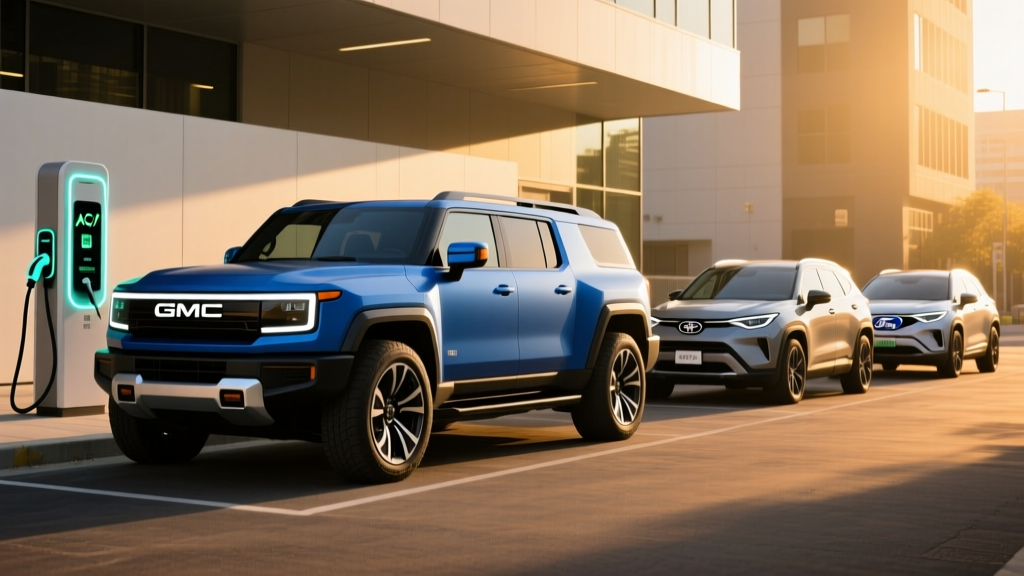
If you've been searching for a hybrid Hummer, the short answer is: not exactly. GMC does not offer a conventional hybrid (HEV) or plug-in hybrid (PHEV) version of the Hummer nameplate in 2026. What you can buy is the fully electric GMC Hummer EV, available as both a pickup and an SUV, which replaced the gas-guzzling Hummer H1/H2/H3 lineage with a battery-electric platform. But the "hybrid Hummer" search intent is real — buyers want a rugged, off-road-capable vehicle with electrified efficiency and the option to run on gasoline when range or infrastructure falls short.
This guide dissects the 2026 GMC Hummer EV's powertrain and efficiency, then compares it head-to-head against the closest thing to a hybrid Hummer that actually exists: the Jeep Wrangler 4xe, a plug-in hybrid with serious off-road chops. We'll cover exact MPG, electric-only range, battery specs, pricing, tax credit eligibility, and which vehicle actually fits your needs.
- HEV (Conventional Hybrid): Uses a small battery charged by the engine and regenerative braking. Cannot plug in. Example: Toyota RAV4 Hybrid.
- PHEV (Plug-In Hybrid): Larger battery you can plug in to charge. Offers 20–50 miles of electric-only driving before the gas engine kicks in. Example: Jeep Wrangler 4xe.
- BEV (Battery Electric Vehicle): No gas engine. 100% electric, charged via plug. Example: GMC Hummer EV.
2026 GMC Hummer EV: Powertrain and Efficiency Specs
The 2026 GMC Hummer EV rides on GM's Ultium platform and is offered in pickup and SUV body styles. It is a pure battery-electric vehicle — no hybrid variant exists. Here are the exact specifications for the current lineup:
| Spec | Pickup 2X (Dual Motor) | Pickup 3X (Tri Motor) | SUV 2X |
|---|---|---|---|
| Battery (usable) | ~170 kWh (NMC) | ~212 kWh (NMC) | ~170 kWh (NMC) |
| EPA Range | ~314 miles | ~381 miles (Extended Range) | ~314 miles |
| Combined Horsepower | 625 hp | 830 hp | 625 hp |
| 0–60 mph | ~5.0 sec | ~3.0 sec (Watts to Freedom) | ~5.0 sec |
| Max DC Fast Charge | ~350 kW (peak) | ~350 kW (peak) | ~350 kW (peak) |
| 10–80% DC Charge | ~35 min (est.) | ~40 min (est.) | ~35 min (est.) |
| MPGe (combined) | ~47 MPGe | ~45 MPGe | ~47 MPGe |
| Starting MSRP | ~$99,395 | ~$106,395 | ~$99,395 |
The Closest Thing to a Hybrid Hummer: Jeep Wrangler 4xe
Since GMC won't build you a plug-in hybrid Hummer, the 2026 Jeep Wrangler 4xe is the next best thing — a rugged, body-on-frame off-roader with a PHEV powertrain that delivers genuine electric-only commuting and gas-engine range for trail days and road trips.
| Spec | Wrangler 4xe (Willys/Sahara) |
|---|---|
| Powertrain | 2.0L turbo I4 + 2 electric motors + 8-speed auto |
| Combined Horsepower | 375 hp / 470 lb-ft torque |
| Battery | 17.3 kWh (NMC, usable ~15 kWh) |
| Electric-Only Range (EPA) | 22 miles |
| Total Combined Range | ~370 miles (electric + gas) |
| EPA MPG (gas only, combined) | 20 MPG combined (19 city / 22 hwy) |
| MPGe (electric + gas) | 49 MPGe |
| Level 2 Charge Time (0–100%) | ~2.5 hours at 7.2 kW |
| DC Fast Charge | Not available |
| 0–60 mph | ~6.0 sec |
| Starting MSRP | ~$51,790 (Willys 4xe) |
The Wrangler 4xe is the PHEV that most closely matches the Hummer ethos: removable doors, solid axles, locking differentials, and serious ground clearance. The 22-mile electric range is enough for most daily commutes, and when the battery depletes, the 2.0L turbo engine takes over seamlessly. Just don't expect Prius-level efficiency once the gas engine is running — this is a 5,000+ lb box-on-wheels.
Source: fueleconomy.gov, jeep.com.
Head-to-Head: Hummer EV vs. Wrangler 4xe
| Category | Hummer EV Pickup 2X | Wrangler 4xe Sahara | Winner |
|---|---|---|---|
| Total Range | ~314 mi (EPA) | ~370 mi (combined) | Wrangler 4xe |
| Electric-Only Driving | 314 mi (all electric) | 22 mi | Hummer EV |
| Off-Road Capability | Extract mode, CrabWalk, e4WD | Solid axles, lockers, sway bar disconnect | Tie (different approaches) |
| Horsepower | 625 hp | 375 hp | Hummer EV |
| Refueling/Recharging Flexibility | Plug only (350 kW DC) | Plug + gas station | Wrangler 4xe |
| Starting Price | ~$99,395 | ~$51,790 | Wrangler 4xe |
| Federal Tax Credit (§30D) | Not eligible (MSRP cap: $80k for trucks) | Up to $3,750 (partial credit; sourcing rules apply) | Wrangler 4xe |
Tax Credits and Pricing: What You'll Actually Pay
The GMC Hummer EV starts above $99,000, which immediately disqualifies it from the federal §30D new clean vehicle credit. Under current IRS rules, pickup trucks must have an MSRP at or below $80,000 to qualify. The Hummer EV exceeds this cap by a wide margin. State incentives vary — check your state's energy office or IRS §30D guidance for details.
The Jeep Wrangler 4xe has historically qualified for a partial federal credit (up to $3,750), depending on battery component and critical mineral sourcing requirements that tighten annually. For the 2026 tax year, eligibility hinges on whether the battery meets the §30D sourcing thresholds and whether the buyer meets income caps ($150,000 single / $300,000 joint modified AGI). The point-of-sale transfer option allows dealers to apply the credit as an upfront discount. Always confirm current eligibility on fueleconomy.gov before purchasing, as qualifying vehicles change throughout the year.
- Vehicle MSRP: ≤$80,000 for SUVs/pickups; ≤$55,000 for sedans
- Buyer income: ≤$150k single / $225k head of household / $300k joint (MAGI)
- Battery critical minerals: percentage must be sourced from US/FTA partners (threshold increases annually)
- Battery components: percentage must be manufactured in North America (threshold increases annually)
- Final assembly in North America (VIN verification required)
- Point-of-sale transfer available — reduces purchase price at dealer
Consult a tax professional for your specific situation. Rules are subject to change.
Battery Warranty, Reliability, and Replacement Costs
- GMC Hummer EV: 8 years / 100,000 miles (battery & powertrain), with GM guaranteeing ≥70% capacity retention during the warranty period.
- Jeep Wrangler 4xe: 8 years / 100,000 miles on the high-voltage battery and PHEV powertrain components, also with a capacity retention threshold (typically ≥70%).
Both meet the federal minimum warranty requirement for electrified powertrains. CARB-compliant states may extend this to 10 years / 150,000 miles for emissions-related components on the Wrangler 4xe.
Reliability outlook: The Hummer EV's Ultium platform is relatively new, and large-scale long-term data is still limited. Early owner reports have noted some software-related issues (infotainment glitches, sensor calibration), which are common in first-generation EV platforms. GM has issued several OTA updates to address these.
The Wrangler 4xe benefits from Stellantis' longer production history with the PHEV powertrain (introduced for 2021), though Wrangler build quality and interior refinement remain common complaints in owner surveys. The 2.0L turbo engine is a known quantity with established service networks.
Battery replacement cost: If a Hummer EV battery pack requires replacement out of warranty, expect a figure between $25,000–$40,000+ given the 170–212 kWh pack size. The Wrangler 4xe's smaller 17.3 kWh pack would cost significantly less — estimates range from $6,000–$10,000 for a replacement module or pack. In practice, PHEV and EV batteries rarely need full replacement; individual module swaps are more common and less expensive.
Real-World MPG: What Owners Actually See
For the Hummer EV, efficiency is measured in kWh per 100 miles rather than MPG. Expect roughly 47 MPGe combined (EPA), which translates to about 71–75 kWh/100mi. This is poor by EV standards — for comparison, a Tesla Model Y achieves ~120 MPGe. The Hummer's weight (over 9,000 lbs for the pickup) and aerodynamics are the culprits. Highway driving at 75 mph pushes consumption above 80 kWh/100mi. City driving with regenerative braking is modestly more efficient.
For the Wrangler 4xe, owners consistently report that real-world electric-only range hovers around 18–22 miles depending on temperature and terrain. Once the battery depletes, real-world gas-only MPG tends to land around 18–21 MPG combined — slightly below the EPA's 20 MPG figure, especially if you're driving aggressively or carrying aftermarket accessories (larger tires, roof racks). In city driving with frequent regen opportunities, some owners report squeezing 23–24 miles from a full charge.
Who Should Buy What: Hybrid, PHEV, or Full EV?
- Choose the GMC Hummer EV if: You want maximum electric range (314+ miles), 600+ hp performance, cutting-edge off-road tech (CrabWalk, Extract mode), have reliable home Level 2 charging, rarely drive beyond 250 miles without stopping, and budget is not a primary constraint (~$100k+).
- Choose the Jeep Wrangler 4xe (PHEV) if: You want a rugged off-roader with electric-only commuting capability (22 mi), need gas-engine flexibility for remote trail runs or road trips, want a lower entry price (~$52k), value the open-air experience (removable doors/roof), and don't mind lower overall efficiency.
- Choose a conventional hybrid (HEV) instead if: You have no access to plug-in charging at home or work, want maximum simplicity, and prioritize fuel savings without changing your driving or fueling habits. Consider the Toyota 4Runner Hybrid (if available) or a used Lexus GX hybrid for rugged-adjacent options.
- Stick with gas if: You drive a low-miles, off-road-focused vehicle occasionally, and the upfront premium of electrification doesn't pencil out against your fuel savings over 5 years.
Frequently Asked Questions
How many MPG does the hybrid Hummer get?
There is no hybrid (HEV) or plug-in hybrid (PHEV) Hummer. The 2026 GMC Hummer EV is fully electric and is rated at approximately 47 MPGe combined. In practical terms, it consumes about 71–75 kWh per 100 miles. If you want a Hummer-adjacent vehicle with MPG ratings, the Jeep Wrangler 4xe PHEV delivers 49 MPGe (electric + gas) and 20 MPG combined on gas alone.
How far can the Wrangler 4xe go on electric only?
The EPA rates the Wrangler 4xe at 22 miles of electric-only range. Real-world results vary from 18 to 24 miles depending on temperature, terrain, and driving style. This is sufficient for many daily commutes but not for extended electric-only highway trips.
Does the Hummer EV qualify for a federal tax credit?
No. The Hummer EV's MSRP exceeds the §30D cap of $80,000 for pickup trucks and SUVs. It is not eligible for the federal new clean vehicle credit regardless of buyer income. Check your state's incentive programs for possible local rebates.
Does the Jeep Wrangler 4xe qualify for a tax credit?
The Wrangler 4xe may qualify for a partial federal credit (up to $3,750) depending on 2026 battery sourcing requirements and buyer income limits. Eligibility changes throughout the year as sourcing rules tighten. Verify current status on fueleconomy.gov and consult a tax professional.
Is the Hummer EV battery reliable, and what does replacement cost?
The Ultium battery is covered by an 8-year/100,000-mile warranty with a ≥70% capacity retention guarantee. Out-of-warranty replacement for the 170–212 kWh pack is estimated at $25,000–$40,000+, though full pack replacements are rare. Most issues are addressed via software updates or individual module service.
Can I charge the Hummer EV at home?
Yes, but plan for a significant electrical investment. The Hummer EV accepts up to 19.2 kW on Level 2 (80-amp circuit), which adds roughly 30–35 miles of range per hour. Given the ~170–212 kWh battery, a full Level 2 charge from 10–100% takes 10–14 hours. You'll likely need a panel upgrade to 200A service if your home doesn't already have one. Budget $2,000–$5,000+ for a complete home charging installation (charger, electrical work, permits).
Which is better for off-roading: Hummer EV or Wrangler 4xe?
Both are exceptional off-roaders with different philosophies. The Hummer EV uses electric torque vectoring, CrabWalk (diagonal movement), and adaptive air suspension (Extract mode raises ride height to 15.9 inches of ground clearance). The Wrangler 4xe relies on proven solid-axle architecture, front/rear locking differentials, an electronic sway-bar disconnect, and the instant torque of its electric motors for low-speed crawling. Hardcore rock crawlers often prefer the Wrangler's mechanical simplicity and aftermarket support. The Hummer EV excels in high-speed desert running and technical terrain where its weight and power can be managed.