Quick Verdict: The Pilot Goes Electrified
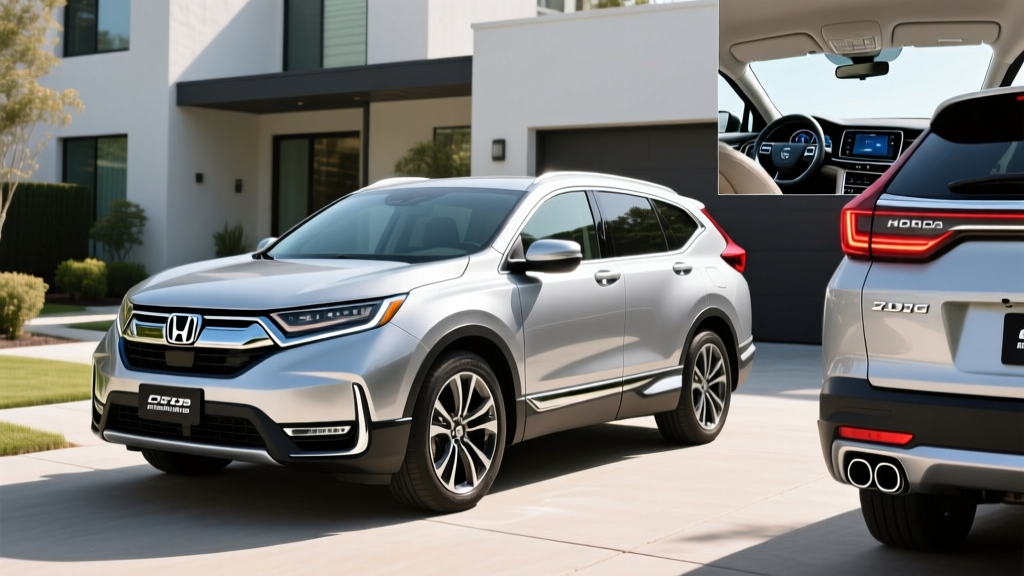
For years, the three-row midsize SUV segment has been dominated by turbocharged V6 engines and thirst measured in the low-to-mid 20s. The 2026 Honda Pilot Hybrid changes that equation. Honda has introduced a conventional hybrid (HEV) variant of its best-selling family hauler, pairing its familiar 3.5-liter V6 with a two-motor hybrid system to target class-leading efficiency without sacrificing the cargo space, towing capability, or third-row usability buyers demand.
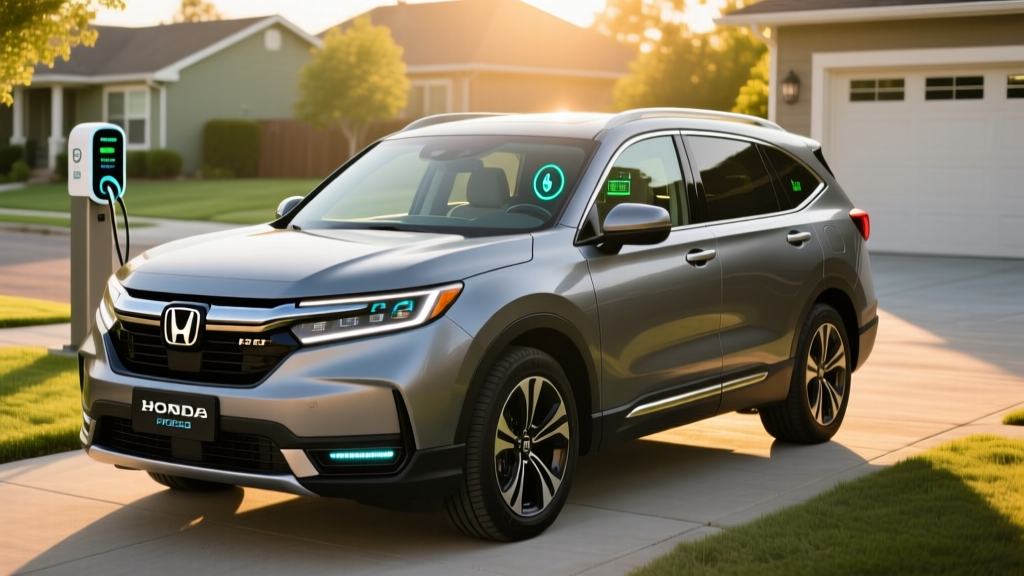
This is not a plug-in hybrid. The 2026 Pilot Hybrid does not have a charge port, does not offer electric-only driving range, and does not qualify for the federal §30D EV tax credit. What it does offer is substantially improved fuel economy — particularly in stop-and-go city driving — with zero changes to daily routine. You fuel it exactly like the standard Pilot. The hybrid system handles the rest.
| Spec | Value |
|---|---|
| Powertrain | 3.5L V6 + two-motor hybrid system |
| Combined Horsepower | ~310 hp (est.) |
| Transmission | e-CVT (hybrid-optimized) |
| EPA MPG (City / Hwy / Combined) | 27 / 26 / 27 (est., FWD) |
| Drivetrain | FWD standard; AWD available |
| Towing Capacity | Up to 5,000 lbs (AWD, est.) |
| Hybrid Battery | ~1.3 kWh lithium-ion (sealed, non-plug-in) |
| Seating | 7 or 8 passengers |
| Cargo (behind 3rd / 2nd / 1st row) | 18.4 / 48.5 / 83.9 cu ft |
| Starting MSRP (est.) | ~$43,500 (FWD Hybrid LX) |
| Battery Warranty | 8 years / 100,000 miles (10 yr/150,000 mi in CARB states) |
Note: As of early 2026, Honda has announced the Pilot Hybrid powertrain but final EPA certification figures may shift slightly before vehicles reach dealers. Specs above reflect Honda's published estimates and comparable Honda hybrid system outputs. Always confirm final figures at fueleconomy.gov.
HEV vs. PHEV: What Honda Chose and Why
Before evaluating the Pilot Hybrid, it is essential to understand what type of hybrid it is — and what it is not.
| Feature | HEV (Pilot Hybrid) | PHEV (e.g., Toyota RAV4 Prime) |
|---|---|---|
| Plug-in charging? | No — gasoline only | Yes — Level 1/Level 2 |
| Electric-only range | None (motor assists engine) | Typically 25–45 miles |
| Battery size | ~1–2 kWh | ~15–20 kWh |
| DC fast charging | No | Rarely; most PHEVs are Level 2 only |
| Federal tax credit (§30D) | Not eligible | Up to $7,500 if eligible |
| Daily routine change | None | Plug in nightly for max benefit |
| Best for | Drivers without home charging access | Drivers with home Level 2 + short commutes |
Honda's decision to go HEV-only for the 2026 Pilot is pragmatic. The three-row SUV buyer typically prioritizes simplicity, long road-trip range, and minimal lifestyle disruption. A PHEV Pilot would require a larger, heavier, and more expensive battery pack — eating into cargo volume and adding $5,000–$8,000 to the MSRP. For a vehicle frequently used for 400-mile family road trips, the HEV approach delivers the efficiency gain where it matters most (city and suburban driving) without compromise on the highway.
Fuel Economy: EPA Ratings and Real-World MPG
The headline number for the 2026 Honda Pilot Hybrid is its projected EPA fuel economy. Honda's two-motor hybrid system — the same architecture proven in the Accord Hybrid and CR-V Hybrid — is optimized for low-speed electric assist, regenerative braking, and seamless engine start-stop.
| Model | City MPG | Highway MPG | Combined MPG |
|---|---|---|---|
| Pilot Hybrid (FWD, est.) | 27 | 26 | 27 |
| Pilot Hybrid (AWD, est.) | 26 | 25 | 25 |
| Pilot Gas (FWD, 2025 EPA) | 19 | 27 | 22 |
| Pilot Gas (AWD, 2025 EPA) | 19 | 25 | 21 |
The hybrid's advantage is concentrated in city driving, where the electric motor handles low-speed propulsion and the engine shuts off at stops. Expect a 35–40% improvement in city MPG over the gas-only Pilot. On the highway, the gap narrows because the gasoline engine operates more efficiently at steady speeds and the hybrid system's weight penalty (roughly 150–200 lbs for the battery and motors) slightly offsets aerodynamic gains.
Real-World MPG: What Owners Should Expect
Conventional hybrids frequently exceed their EPA city rating in real-world stop-and-go traffic, because regenerative braking recaptures energy that a gas car wastes as heat. In mixed suburban driving with moderate traffic, Pilot Hybrid owners may see 28–30 MPG on the FWD model.
However, highway-heavy road trips at 75–80 mph will likely return 23–25 MPG (FWD) — close to or slightly below the EPA highway figure, consistent with how all hybrids perform at sustained high speeds. Cold weather (below 35°F) reduces hybrid efficiency by roughly 5–10% as the engine runs more frequently to provide cabin heat and maintain battery temperature. These are normal hybrid behaviors, not deficiencies.
Powertrain Details: V6 Meets Two-Motor Hybrid
Honda's hybrid system pairs the carryover 3.5-liter i-VTEC V6 (approximately 285 hp on its own) with a two-motor setup integrated into the transmission housing. One motor functions primarily as a generator, while the second drives the front wheels directly at low speeds or supplements engine torque during acceleration. Combined system output is estimated at ~310 horsepower, a modest but meaningful bump over the gas Pilot's 285 hp.
The e-CVT transmission is not a traditional belt-and-pulley CVT. Honda's system uses a fixed-gear ratio for highway cruising (with a lock-up clutch connecting the engine directly to the wheels) and electric-only drive at low speeds. The result is smooth, linear acceleration without the "rubber-band" drone some CVTs produce. Expect 0–60 mph in approximately 6.8–7.2 seconds — competitive with the gas Pilot and adequate for confident highway merging with a full load.
For AWD models, Honda uses a rear-mounted electric motor (rather than a mechanical driveshaft) to power the rear axle when traction demands it. This is the same approach used in the CR-V Hybrid AWD and provides instant torque to the rear wheels without the parasitic loss of a conventional AWD system.
Pricing, Trims, and Tax Credit Eligibility
The 2026 Honda Pilot Hybrid is expected to slot above the standard gas Pilot in pricing, reflecting the added hybrid hardware. Based on Honda's pricing strategy with the CR-V Hybrid (which carries roughly a $1,500–$2,000 premium over its gas counterpart), projected MSRPs are:
| Trim | Est. MSRP (FWD) | Est. MSRP (AWD) |
|---|---|---|
| LX Hybrid | $43,500 | $45,500 |
| Sport Hybrid | $45,500 | $47,500 |
| EX-L Hybrid | $48,000 | $50,000 |
| Touring Hybrid | $52,000 | $54,000 |
| Elite Hybrid | $55,500 | $57,500 |
Federal Tax Credit: Not Eligible Under §30D
Because the Pilot Hybrid is a conventional HEV — not a plug-in vehicle — it does not qualify for the federal §30D Clean Vehicle Credit (up to $7,500 for new EVs and PHEVs). The IRS restricts this credit to vehicles with a minimum battery capacity of 7 kWh that can be recharged from an external source, per IRS.gov. The Pilot Hybrid's ~1.3 kWh battery is charged exclusively through regenerative braking and the gasoline engine.
Some states may offer modest incentives for conventional hybrids, but these are increasingly rare as state programs shift focus to zero-emission vehicles. Check your state's energy or environmental agency website for current programs.
Fuel Savings vs. Gas Pilot: The Payback Math
At $3.50/gallon and 15,000 miles/year, the gas Pilot AWD (21 MPG combined) costs approximately $2,500/year in fuel. The Pilot Hybrid AWD (25 MPG combined) would cost roughly $2,100/year — a savings of about $400 annually. Over a typical 7-year ownership period, that's ~$2,800 in fuel savings, which largely offsets the hybrid premium. The break-even point is shorter for high-mileage drivers and those in regions with higher fuel prices.
Battery Warranty, Lifespan, and Replacement Cost
Hybrid Battery Coverage
Standard warranty: 8 years / 100,000 miles
CARB-state warranty: 10 years / 150,000 miles (CA, CO, CT, ME, MD, MA, NJ, NY, OR, RI, VT, WA)
Honda covers the hybrid battery against defects and abnormal capacity loss. If the battery falls below a defined performance threshold within the warranty period, Honda replaces it at no cost.
How Long Will the Hybrid Battery Last?
Modern Honda hybrid batteries use lithium-ion cells with sophisticated thermal management. Data from the Accord Hybrid and CR-V Hybrid (which share similar architecture) indicates that hybrid batteries routinely last 150,000–200,000+ miles before significant degradation. Unlike EV batteries, hybrid batteries operate in a narrow state-of-charge window (roughly 40–80%), which dramatically reduces cell stress and extends cycle life.
The hybrid battery is also much smaller (~1.3 kWh vs. 75–100 kWh in a full EV), so even a total replacement is far less expensive.
Battery Replacement Cost
If the hybrid battery fails outside of warranty, replacement costs typically range from $2,000 to $3,500 (parts and labor) at a Honda dealer. Independent hybrid specialists may offer refurbished battery packs for $1,200–$2,000. This is a fraction of EV battery replacement costs ($8,000–$20,000+) and is rarely needed within the vehicle's normal lifespan.
Who Should Choose the Pilot Hybrid?
Pros
- Significantly better city MPG vs. gas Pilot (27 vs. 19 city)
- No charging infrastructure needed — fuel and go
- Smooth, quiet low-speed electric operation
- Full three-row seating and cargo volume retained
- Proven Honda hybrid reliability track record
- Modest power increase (~310 hp combined)
- Strong hybrid battery warranty (8–10 years)
Cons
- No federal tax credit eligibility
- Highway MPG improvement is modest over gas model
- Estimated $1,500–$2,000 price premium over gas trims
- No electric-only driving mode for short trips
- AWD hybrid fuel economy slightly lower than FWD
- Final EPA numbers pending certification
Decision Framework: Hybrid, PHEV, or Full EV?
Choose the Pilot Hybrid if: You want a three-row family SUV with better fuel economy, you lack access to home or workplace charging, you take frequent long road trips, and you want zero changes to your fueling routine.
Consider a PHEV (e.g., upcoming electrified competitors) if: You have Level 2 home charging, your daily commute is under 35 miles round-trip, and you want electric-only weekday driving with gas-engine flexibility for weekends. Note: no PHEV three-row SUV currently matches the Pilot's interior volume at this price point.
Choose a full EV (e.g., Kia EV9, Rivian R1S) if: You have reliable home charging, your daily driving is under 250 miles, you want maximum fuel savings and zero tailpipe emissions, and you're comfortable with longer trip charging stops. Full EVs offer $0–$7,500 in federal tax credits and dramatically lower per-mile energy costs, but require charging infrastructure and trip planning.
Frequently Asked Questions
How many MPG does the 2026 Honda Pilot Hybrid get?
The estimated EPA rating is 27 city / 26 highway / 27 combined for FWD models, and 26/25/25 for AWD. Final EPA figures will be confirmed closer to the on-sale date. Real-world city driving may exceed the EPA number; highway driving at 75+ mph may return slightly less.
Does the Pilot Hybrid need to be plugged in?
No. The 2026 Pilot Hybrid is a conventional hybrid (HEV). It charges its small battery through regenerative braking and the gasoline engine. There is no charge port. You fuel it exactly like a standard gas Pilot.
Is the 2026 Pilot Hybrid reliable?
Honda's two-motor hybrid system has been in production since 2014 (Accord Hybrid) and is now in its fourth generation across multiple models. It has a strong reliability record with no widespread battery failure issues. The hybrid battery is warranted for 8 years/100,000 miles (10 years/150,000 miles in CARB states). Honda's hybrid components have proven durable well beyond 150,000 miles in real-world use.
What does it cost to replace the hybrid battery?
Out-of-warranty replacement runs approximately $2,000–$3,500 at a Honda dealer. This is rare — most hybrid batteries outlast 200,000 miles due to the narrow state-of-charge operating window that minimizes cell degradation.
Does the 2026 Pilot Hybrid qualify for any tax credit?
No. The federal §30D Clean Vehicle Credit applies only to plug-in vehicles (EVs and PHEVs) with a minimum 7 kWh battery that charges from an external source. The Pilot Hybrid's ~1.3 kWh battery does not meet this threshold. Some states may offer small hybrid incentives, but these are uncommon. Consult a tax professional or check IRS.gov for current rules.
How does the Pilot Hybrid compare to the Toyota Highlander Hybrid?
The Highlander Hybrid (36 MPG combined, 4-cylinder hybrid) holds a significant efficiency advantage but offers less cargo volume, lower towing capacity (3,500 lbs vs. the Pilot's estimated 5,000 lbs), and a less powerful powertrain (243 hp vs. ~310 hp). The Pilot Hybrid trades some MPG for more capability, space, and power — a choice that depends on your priorities.
Can the Pilot Hybrid tow as much as the gas version?
Honda has indicated the Pilot Hybrid will maintain competitive towing capability. AWD models are expected to tow up to 5,000 lbs, matching the gas AWD Pilot. The hybrid system's additional low-end electric torque can actually improve trailer launch performance. Final SAE J2807 tow ratings will be published before launch.
Sources: Honda Newsroom (news.honda.com), fueleconomy.gov (EPA), IRS.gov (§30D credit rules). Specifications reflect Honda's published estimates as of early 2026; final EPA and pricing figures subject to confirmation.