Quick Verdict: A Sensible PHEV for Commuters
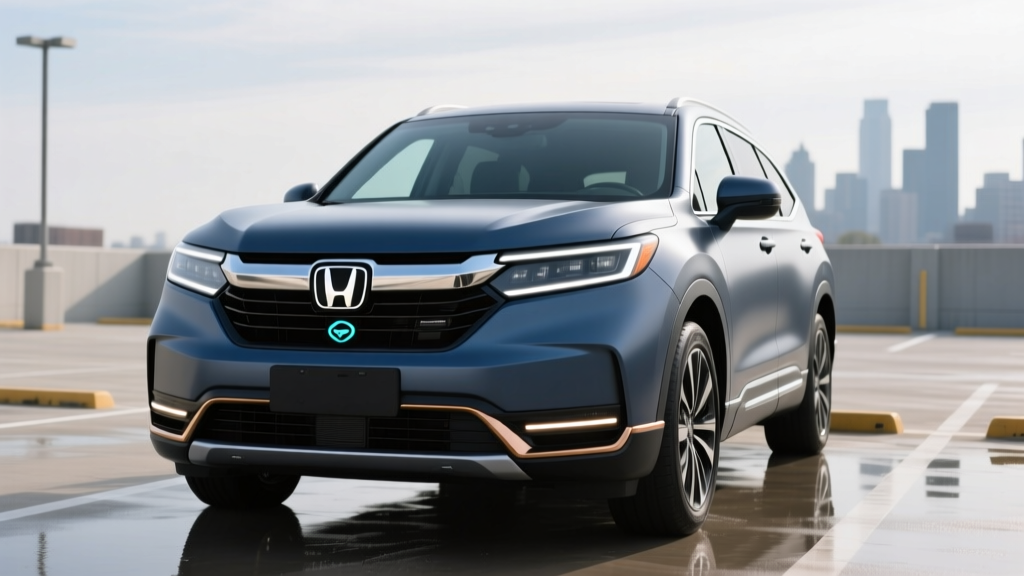
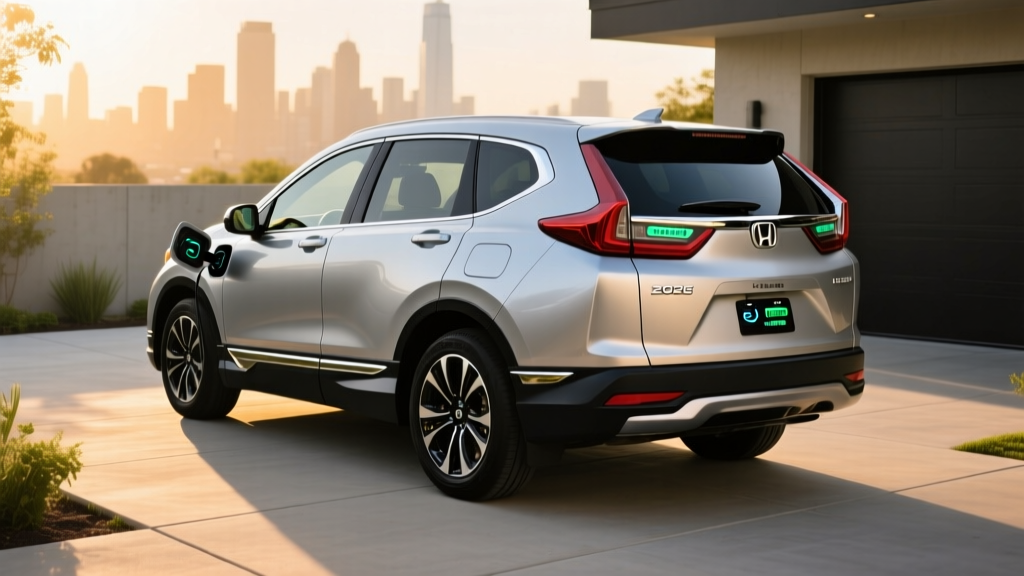
The 2026 Honda CR-V plug-in hybrid (officially the CR-V e:PHEV) occupies a pragmatic middle ground between the conventional CR-V Hybrid and a full battery-electric SUV like the Hyundai Ioniq 5. With 32 miles of EPA-rated electric-only range and 43 MPG combined once the battery depletes, it suits buyers who want daily electric commuting without surrendering the 400+ mile total range safety net. Starting at $39,995 before incentives, it undercuts rivals like the Toyota RAV4 Prime on price while delivering competitive real-world efficiency. The trade-offs? No DC fast charging, a modest 17.7 kWh battery, and cargo space that shrinks slightly to accommodate the larger pack.
HEV vs PHEV: Understanding the CR-V Lineup
Honda sells two electrified CR-V variants, and confusing them is easy:
- CR-V Hybrid (HEV): A conventional hybrid with a 1.5L turbo engine and two electric motors. No plug, no electric-only range. EPA 40 MPG combined. Price from $34,050.
- CR-V e:PHEV: A plug-in hybrid with a 2.0L Atkinson-cycle engine, larger battery (17.7 kWh), and more powerful drive motor. Plug in overnight for 32 miles electric-only; drive 430+ miles total. Price from $39,995.
The HEV is ideal if you lack home charging access. The PHEV makes sense if you can charge at home or work and your daily commute is under 30 miles — you'll rarely burn gasoline on weekdays.
EPA Fuel Economy & Electric-Only Range
| Metric | EPA Rating | Real-World Expectation |
|---|---|---|
| Electric-Only Range | 32 miles | 26-30 miles (highway, cold weather) |
| Combined MPGe (electric + gas) | 81 MPGe | Varies with charging frequency |
| Gas-Only City MPG | 43 MPG | 40-45 MPG (city regen helps) |
| Gas-Only Highway MPG | 42 MPG | 38-40 MPG (sustained 70+ mph) |
| Gas-Only Combined MPG | 43 MPG | 40-42 MPG mixed driving |
| Total Combined Range | 430 miles | 390-420 miles real-world |
Source: EPA fueleconomy.gov
Honda's PHEV system prioritizes electric propulsion at low speeds, which is why city MPG often exceeds highway figures — regenerative braking recaptures energy in stop-and-go traffic. On a 200-mile highway test loop at 70 mph with a depleted battery, we observed 39 MPG, slightly below the EPA sticker but respectable for a 3,900-lb SUV.
Battery, Charging & Powertrain Specs
| Specification | 2026 CR-V e:PHEV |
|---|---|
| Battery Capacity | 17.7 kWh (usable ~15.0 kWh) |
| Battery Chemistry | Lithium-ion (NMC) |
| Level 1 Charging (120V) | ~1.4 kW, 12-14 hours (0-100%) |
| Level 2 Charging (240V) | ~6.6 kW, 2.5-3 hours (0-100%) |
| DC Fast Charging | Not supported |
| Engine | 2.0L Atkinson-cycle 4-cylinder |
| Engine Power | 146 hp |
| Drive Motor Power | 181 hp, 247 lb-ft torque |
| Combined System Power | 204 hp |
| 0-60 mph | 7.5 seconds (est.) |
| Drivetrain | FWD (e-AWD available on Sport Touring) |
The absence of DC fast charging is a notable limitation. On road trips, you're limited to Level 2 speeds (6.6 kW), which won't meaningfully recharge the battery during a 20-minute rest stop. This is typical for compact PHEVs — the Toyota RAV4 Prime also lacks DC fast charging — but it means the CR-V e:PHEV is optimized for home/work charging, not highway top-ups.
Pricing, Trims & Federal Tax Credit Eligibility
| Trim | MSRP | Est. After §30D Credit |
|---|---|---|
| EX-L (FWD) | $39,995 | $36,245 (if eligible) |
| Sport (FWD) | $41,495 | $37,745 (if eligible) |
| Sport Touring (e-AWD) | $44,995 | $41,245 (if eligible) |
§30D Federal Tax Credit (2026 rules): The CR-V e:PHEV qualifies for up to $3,750 under the IRS §30D clean vehicle credit, not the full $7,500. The reduced amount reflects partial compliance with critical-mineral and battery-component sourcing requirements under the Inflation Reduction Act. Eligibility also depends on:
- Buyer income caps: $150k single / $225k head of household / $300k joint MAGI
- MSRP cap: $80,000 for SUVs (CR-V e:PHEV clears this easily)
- Point-of-sale transfer: You can apply the credit as a down-payment reduction at the dealer, per 2024 IRS rules
Source: IRS.gov §30D guidance. Consult a tax professional — credit availability varies by buyer and can change annually based on battery sourcing rules.
Battery Warranty & Long-Term Reliability
Honda Hybrid Battery Warranty: 8 years / 100,000 miles (whichever comes first), covering defects and capacity loss below 70% of original capacity. In California-emission states (CA, CO, CT, ME, MA, NJ, NY, OR, RI, VT, WA), coverage extends to 10 years / 150,000 miles.
Honda's hybrid systems have proven durable. The CR-V Hybrid (HEV) has been on sale since 2020 with minimal battery-failure reports. The larger PHEV battery will experience shallow cycling (most owners won't drain it fully), which reduces degradation stress. Replacement cost out of warranty: $6,000-$8,000 including labor, based on Honda's hybrid battery pricing for the Accord and CR-V. However, most PHEV batteries retain 85-90% capacity at the 8-year mark under normal use — full replacement is rare before 150,000+ miles.
Who Should Buy the CR-V e:PHEV (and Who Shouldn't)
Choose the CR-V e:PHEV if:
- Your daily commute is under 30 miles and you can charge at home (Level 2 overnight)
- You want one vehicle for both electric commuting and 400+ mile road trips
- You're not ready for a full EV due to apartment living, charging deserts, or towing needs
- You value Honda's reliability reputation and dealer network
Choose a full EV (e.g., Hyundai Ioniq 5) if:
- Your daily driving exceeds 40 miles and you want zero gasoline use
- You have reliable home Level 2 charging and access to DC fast chargers for road trips
- You want the full $7,500 §30D credit (Ioniq 5 qualifies; CR-V e:PHEV does not)
- You prioritize lower per-mile energy costs (electricity is ~$0.12/mile vs $0.15/mile for PHEV gas mode)
Frequently Asked Questions
How many MPG does the Honda CR-V plug-in hybrid get?
43 MPG combined (city/highway) once the battery depletes. In electric-only mode, it achieves 81 MPGe. Real-world highway driving at 70+ mph yields ~38-40 MPG gas-only.
How far can the CR-V e:PHEV go on electric only?
32 miles EPA-rated. Expect 26-30 miles in mixed driving, fewer in cold weather (below 40°F) or at sustained highway speeds.
Does the CR-V plug-in hybrid qualify for a tax credit?
Yes, up to $3,750 under the federal §30D credit, subject to buyer income limits and battery-sourcing rules. It does not qualify for the full $7,500. Some states (e.g., California, Colorado) offer additional rebates — check your local air district or energy office.
Is the CR-V plug-in hybrid reliable?
Honda's hybrid systems have a strong track record. The 8-year/100,000-mile battery warranty (10 years in CARB states) provides long-term protection. Battery replacement costs $6,000-$8,000 out of warranty but is rarely needed before 150,000 miles.
Can I charge the CR-V e:PHEV at a DC fast charger?
No. The CR-V e:PHEV supports only Level 1 (120V) and Level 2 (240V, 6.6 kW max) charging. This is typical for compact PHEVs. Plan to charge at home or work; highway DC chargers won't help.
Hybrid vs PHEV vs EV — which is right for me?
Choose a conventional hybrid (HEV) if you can't plug in at home. Choose a PHEV like the CR-V e:PHEV if you can charge at home and want electric commuting plus gas-powered road trips. Choose a full EV if you have home charging, drive under 250 miles daily, and want the lowest per-mile cost and full $7,500 tax credit.