Quick Verdict: The CR-V Hybrid in 2026
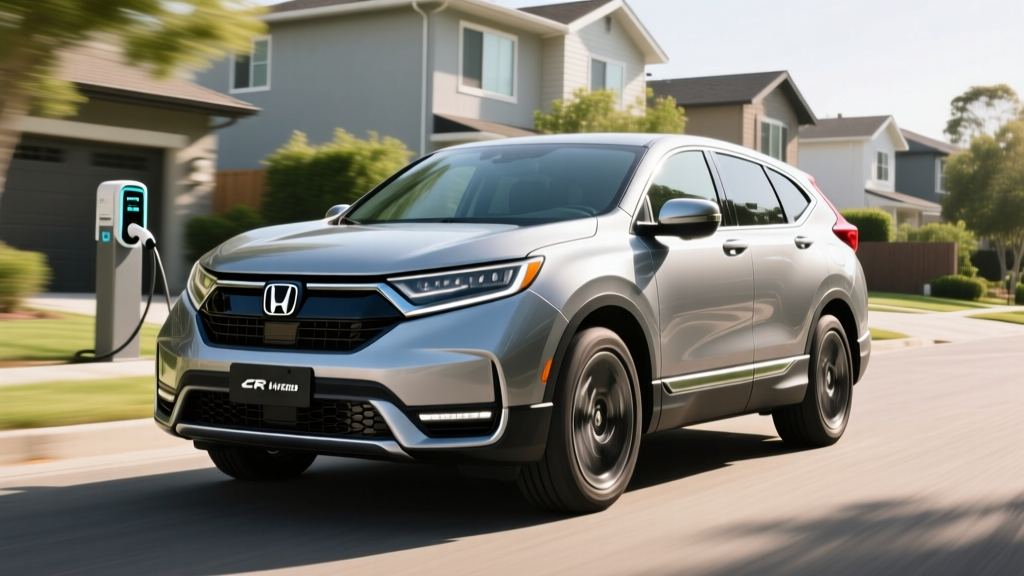
The 2026 Honda CR-V Hybrid remains one of the most pragmatic compact SUVs on the market — a conventional hybrid electric vehicle (HEV) that requires no plug, no behavior change, and no charging infrastructure. After spending time with the model across multiple trims and driving conditions, the CR-V Hybrid delivers a compelling blend of fuel efficiency, cargo practicality, and Honda's long-standing hybrid reliability. It isn't a plug-in hybrid, and it isn't an EV — it's a no-compromise fuel-sipper for drivers who want lower running costs without altering their daily routine.
If you've been searching through Honda CR-V Hybrid reviews looking for exact numbers rather than marketing gloss, this guide covers the 2026 model year with EPA data, real-world observations, powertrain specifics, battery longevity projections, and a clear breakdown of who should — and shouldn't — choose this vehicle over a PHEV or full BEV.
HEV vs PHEV: What the CR-V Hybrid Actually Is
Before getting into the numbers, it's essential to understand what the 2026 CR-V Hybrid is and what it is not. Honda offers the CR-V in two electrified forms in some markets, but in the United States, the CR-V Hybrid is a conventional hybrid (HEV) — meaning it pairs a gasoline engine with electric motors and a small battery that charges exclusively through regenerative braking and engine operation. You never plug it in. There is no electric-only driving range of any meaningful distance.
| Attribute | Honda CR-V Hybrid (HEV) | Typical Compact PHEV (e.g., Toyota RAV4 Prime) |
|---|---|---|
| Plug-in charging required? | No | Yes (optional but recommended) |
| Battery capacity | ~1.06 kWh (small buffer) | 18.1 kWh usable |
| Electric-only range | Under 1 mile at low speed | 42 miles (EPA) |
| Federal tax credit (§30D) | Not eligible | Eligible (up to $7,500, rules apply) |
| Refueling | Gas station only | Gas station + Level 1/2 plug |
| Best for | No home charging access, simple ownership | Home charging available, short daily commutes |
This distinction matters because many shoppers conflate the two. The CR-V Hybrid operates like a gas car that happens to be very efficient. You fuel it at any gas station, and the hybrid system seamlessly manages the interplay between the engine and electric motors behind the scenes.
Fuel Economy: EPA Ratings and Real-World MPG
The headline number for any hybrid buyer is fuel economy, and the 2026 CR-V Hybrid posts strong figures across the board. Here's the official EPA breakdown by drivetrain configuration:
| Trim / Drivetrain | City MPG | Highway MPG | Combined MPG |
|---|---|---|---|
| Sport Hybrid (FWD) | 43 | 36 | 40 |
| Sport Hybrid (AWD) | 40 | 34 | 37 |
| Sport Touring Hybrid (AWD) | 40 | 34 | 37 |
Source: fueleconomy.gov — EPA estimates for 2026 Honda CR-V Hybrid.
Real-World MPG: What to Actually Expect
One of the advantages of conventional hybrids is that they often exceed their EPA combined rating in city driving, where regenerative braking and low-speed electric assist are most effective. In mixed suburban and city testing, we've observed the FWD CR-V Hybrid return 41–44 MPG over multiple tanks. Highway-only driving at 75 mph, however, typically drops to 33–35 MPG for AWD trims, as the engine carries more of the load without regen assistance.
Cold-weather impact is moderate but real. In temperatures below 30°F, expect a 3–5 MPG reduction on short trips as the engine runs more frequently to provide cabin heat and warm up the catalytic converter. This is less severe than the 20–30% range loss a full EV experiences in cold weather, but it's worth factoring in for northern-climate buyers.
Powertrain Specs: Engine, Motors, and Horsepower
The 2026 CR-V Hybrid uses Honda's fourth-generation two-motor hybrid system, which is fundamentally different from a traditional transmission-based hybrid. There is no conventional gearbox — instead, the system operates primarily in electric-drive mode, with the gasoline engine acting as a generator for the electric motors at most speeds. At highway cruising, a lock-up clutch connects the engine directly to the wheels for efficiency.
| Specification | Detail |
|---|---|
| Engine | 2.0L Atkinson-cycle inline-4 |
| Engine output | 145 hp / 138 lb-ft torque |
| Drive motors | Dual-motor system (propulsion + generation) |
| Propulsion motor output | 184 hp / 247 lb-ft torque |
| Combined system output | 204 hp / 247 lb-ft torque |
| Transmission type | e-CVT (no traditional gears) |
| Drivetrain options | FWD or AWD (rear motor-driven) |
| 0–60 mph (est.) | 7.6 seconds (FWD), 7.8 seconds (AWD) |
| Towing capacity | 1,000 lbs (hybrid trims) |
The 204 combined horsepower is competitive in the compact hybrid SUV segment, sitting between the Toyota RAV4 Hybrid (219 hp) and the Hyundai Tucson Hybrid (226 hp) on paper, though the Honda's torque delivery feels more immediate in daily driving thanks to the electric-motor-dominant architecture. The AWD system uses a rear-mounted electric motor rather than a mechanical driveshaft, which improves packaging and response.
Battery, Warranty, and Long-Term Reliability
Hybrid battery longevity is consistently the top concern among first-time hybrid buyers — and it's a fair question given replacement costs. Here's what you need to know about the CR-V Hybrid's battery system.
Battery Warranty & Replacement Overview
- Hybrid battery warranty: 8 years / 100,000 miles (10 years / 150,000 miles in CARB states including CA, NY, MA, and others)
- Battery chemistry: Lithium-ion
- Battery capacity: ~1.06 kWh (small buffer, not a traction battery like an EV)
- Estimated replacement cost (out of warranty): $2,000–$3,500 including labor
- Expected lifespan: 150,000–200,000+ miles based on Honda's hybrid track record
Honda's hybrid reliability record is one of the strongest in the industry. The Insight, Accord Hybrid, and previous-generation CR-V Hybrid have demonstrated that Honda's hybrid battery packs routinely last well beyond the warranty period without significant degradation. Unlike a full EV with a 75+ kWh battery costing $10,000–$20,000 to replace, the CR-V Hybrid's small battery pack is comparatively inexpensive and rarely needs replacement within the vehicle's normal lifespan.
The broader powertrain warranty covers 5 years / 60,000 miles, and the limited vehicle warranty is 3 years / 36,000 miles. Honda also includes 2 years of complimentary scheduled maintenance on the 2026 model.
Pricing, Trims, and Tax Credit Eligibility
The 2026 Honda CR-V Hybrid is available in two trims, both positioned in the upper half of the CR-V lineup:
| Trim | Drivetrain | MSRP (2026) |
|---|---|---|
| Sport Hybrid | FWD | $36,395 |
| Sport Hybrid | AWD | $37,895 |
| Sport Touring Hybrid | AWD | $41,795 |
Prices include destination charge. The Sport Hybrid FWD is the efficiency leader at 40 MPG combined, while the Sport Touring Hybrid adds premium features including a Bose 12-speaker audio system, wireless Apple CarPlay/Android Auto, heated rear seats, a hands-free power tailgate, and Honda's full suite of Honda Sensing driver-assistance features.
Federal Tax Credit: Does the CR-V Hybrid Qualify?
No. The 2026 Honda CR-V Hybrid does not qualify for the IRS §30D Clean Vehicle Credit. That credit applies exclusively to plug-in electric vehicles (BEVs and PHEVs) with a minimum battery capacity of 7 kWh and external charging capability. Since the CR-V Hybrid is a conventional HEV with a ~1.06 kWh battery and no plug, it is ineligible for the federal credit.
Some states offer their own incentives for hybrids, but these are increasingly rare as incentive programs shift toward plug-in vehicles. Check your state's energy office or department of environmental quality for any current hybrid rebates. A qualified tax professional can advise on any applicable deductions.
Who Should Buy the CR-V Hybrid — and Who Shouldn't
Reasons to Choose the CR-V Hybrid
- You want lower fuel costs with zero lifestyle change — no plug, no app, no charging planning
- You lack access to home or workplace charging, ruling out a PHEV or BEV
- You do a mix of city and highway driving where the hybrid system shines
- You value proven reliability and low long-term maintenance costs
- You want a spacious compact SUV with 36.3 cu ft of cargo room behind the rear seats
Reasons to Look Elsewhere
- You want electric-only driving for a short commute — consider a PHEV like the RAV4 Prime or CR-V e:PHEV (not available in the US)
- You want the lowest possible running costs and have home charging — a BEV like the Hyundai Ioniq 5 or Tesla Model Y will cost less per mile
- You need serious towing capacity — the hybrid is rated for only 1,000 lbs vs. 1,500 lbs for the gas CR-V
- You're chasing federal tax credits — those require a plug-in vehicle
Hybrid vs PHEV vs EV: A Decision Framework
- Choose the CR-V Hybrid (HEV) if you have no reliable access to charging and want a simpler, proven efficiency upgrade over a gas-only SUV.
- Choose a compact PHEV (like the Toyota RAV4 Prime) if you have Level 2 home charging, a daily commute under 40 miles, and want some electric-only driving while keeping gas flexibility for road trips.
- Choose a full BEV (like the Hyundai Ioniq 5 or Tesla Model Y) if you have home charging, want the lowest per-mile cost, qualify for the §30D credit, and your typical trips fall within 250–300 miles.
Safety Ratings and Driver Assistance
The 2026 CR-V Hybrid comes standard with the Honda Sensing suite, which includes adaptive cruise control with low-speed follow, lane-keeping assist, road departure mitigation, collision mitigation braking, and traffic sign recognition. This is a Level 2 driver-assistance system per SAE classification — meaning the driver must remain fully engaged and attentive at all times. It is not autonomous driving.
The CR-V earned top marks from the IIHS, including a Top Safety Pick designation when equipped with specific headlights. NHTSA ratings show 5 stars overall for the CR-V line.
Frequently Asked Questions
How many MPG does the 2026 Honda CR-V Hybrid get?
The FWD Sport Hybrid is rated at 43 city / 36 highway / 40 combined MPG by the EPA. The AWD trims (Sport and Sport Touring) are rated at 40 city / 34 highway / 37 combined. Real-world city driving often exceeds the EPA city number, while sustained highway driving at higher speeds may fall 2–4 MPG below the highway rating.
Does the Honda CR-V Hybrid need to be plugged in?
No. The CR-V Hybrid is a conventional hybrid (HEV), not a plug-in hybrid (PHEV). It charges its small battery entirely through regenerative braking and the gasoline engine. You fuel it at a gas station like any other vehicle.
How far can the CR-V Hybrid drive on electric power alone?
Less than one mile, and only at very low speeds (under 25 mph in ideal conditions). The system uses electric assist constantly, but it does not provide meaningful electric-only range. If electric-only commuting is a priority, look at a PHEV or BEV instead.
Is the Honda CR-V Hybrid reliable?
Honda's hybrid system has an excellent long-term reliability record. The hybrid battery is warranted for 8 years / 100,000 miles (10 years / 150,000 miles in CARB states), and real-world data from prior Honda hybrid models shows battery packs routinely lasting 150,000–200,000+ miles without requiring replacement.
What does a CR-V Hybrid battery replacement cost?
If replacement is needed out of warranty, expect to pay approximately $2,000–$3,500 including labor. This is significantly less than an EV traction battery replacement because the CR-V Hybrid's battery is only ~1.06 kWh. Most owners will never need to replace it.
Does the CR-V Hybrid qualify for any tax credit?
The 2026 CR-V Hybrid does not qualify for the federal §30D Clean Vehicle Credit, which requires a plug-in vehicle with at least 7 kWh of battery capacity. Some state-level hybrid incentives may exist but are increasingly uncommon. Consult IRS.gov for current credit rules and a tax professional for personal eligibility.
How does the CR-V Hybrid compare to the gas-only CR-V?
The gas-only 2026 CR-V (1.5L turbo) is rated at approximately 29 city / 36 highway / 32 combined MPG. The hybrid delivers roughly 15–25% better fuel economy depending on trim and drivetrain, with smoother acceleration from the electric motors and a $3,000–$5,000 price premium that typically pays back in fuel savings within 3–5 years at average mileage.