Quick Verdict: A Practical PHEV Family Hauler
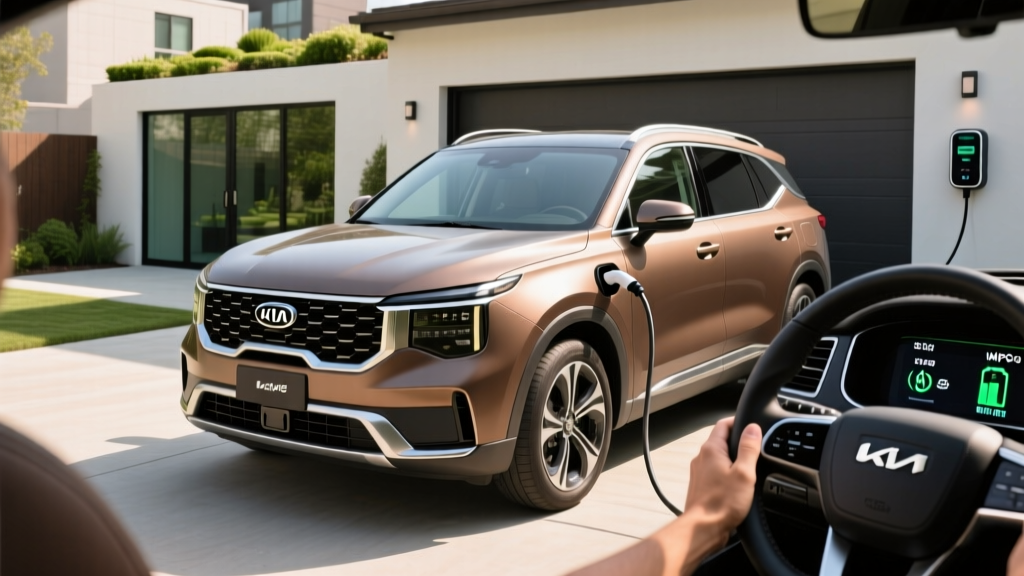
The 2026 Kia Sorento Plug-In Hybrid occupies a narrow but valuable lane: it's one of the few three-row SUVs that can handle a week of school runs and grocery trips on electricity alone, then stretch its legs on a 400-mile road trip without a single charging stop. With an EPA-estimated 32 miles of electric-only range, 79 MPGe combined, and a combined 261 horsepower from its turbocharged powertrain, the Sorento PHEV rewards owners who can charge at home most nights. The trade-off? A starting MSRP above $51,000, a modest 3.3 kW Level 2 charge rate that means overnight-only refills, and no DC fast-charging capability.
If your daily commute falls under 30 miles round-trip and you have access to a standard 120V outlet or a Level 2 home charger, the Sorento PHEV can operate as a de facto EV on weekdays and a hybrid on weekends. If you lack home charging access, the conventional Sorento HEV (starting around $39,000) is the smarter financial play. Here's everything you need to know.
HEV vs. PHEV: Which Sorento Is Right for You?
Kia sells the Sorento in three powertrain flavors for 2026: a conventional gas model, a standard hybrid (HEV), and the plug-in hybrid (PHEV) we're reviewing here. The distinction matters enormously for your wallet and your daily routine.
| Feature | Sorento HEV (Conventional Hybrid) | Sorento PHEV (Plug-In Hybrid) |
|---|---|---|
| Plug-in required? | No — self-charging via regenerative braking | Yes — plug in nightly for best results |
| Electric-only range | ~1 mile at low speed | 32 miles (EPA est.) |
| Combined MPGe / MPG | 36 MPG combined | 79 MPGe (electric+gas) / 34 MPG (gas only) |
| Battery capacity | ~1.5 kWh | 13.8 kWh usable |
| Combined horsepower | 227 hp | 261 hp |
| Starting MSRP | ~$39,090 | $51,090 |
| Federal tax credit (§30D) | Not eligible | Eligibility varies by sourcing/income |
| Drivetrain | AWD standard | AWD standard |
The bottom line: The PHEV makes financial sense only if you can charge at home (even a standard 120V outlet works overnight) and your daily driving stays under ~30 miles. Without regular plug-in charging, you're carrying 300+ pounds of battery you never use, and the HEV's lower price and still-strong 36 MPG make it the better buy.
EPA Range, MPGe, and Real-World Efficiency
- Electric-only range: EPA 32 miles — expect 26–30 miles in mixed driving, as low as 22 miles in freezing temperatures with heat on
- MPGe (charge-sustaining + electric): 79 MPGe combined
- Gas-only MPG (battery depleted): 34 combined / 33 city / 34 highway
- Total combined range: ~420 miles (32 electric + ~390 gas)
| Driving Scenario | EPA Sticker | Real-World Expectation |
|---|---|---|
| Electric-only range | 32 miles | 26–30 mi (mild weather); 22–25 mi (cold, <32°F) |
| City MPG (gas mode) | 33 MPG | 34–37 MPG (regen braking excels in stop-and-go) |
| Highway MPG (gas mode) | 34 MPG | 30–33 MPG (aerodynamic drag and turbo usage) |
| Combined MPG (gas mode) | 34 MPG | 32–35 MPG |
| MPGe (combined EV+gas) | 79 MPGe | Depends on % of miles driven electrically |
Kia's 1.6-liter turbocharged inline-four paired with a 72 kW (97 hp) electric motor produces a combined 261 hp and 258 lb-ft of torque through a 6-speed automatic. That's notably more power than the HEV's 227 hp, and it shows in passing confidence and highway merging. The transition between electric and gas power is nearly imperceptible — one of the better-executed PHEV powertrains in this class.
Efficiency tip: Use the Sorento's built-in navigation-based preconditioning to warm or cool the battery and cabin while still plugged in. This preserves electric range on cold mornings rather than spending precious kWh on cabin heat during your commute.
Battery, Charging, and What to Expect at the Plug
The 2026 Sorento PHEV carries a 13.8 kWh lithium-ion battery pack (NMC chemistry). Here's the critical limitation buyers need to understand: the Sorento PHEV does not support DC fast charging. This is typical for PHEVs — the battery is small enough that Level 2 charging suffices overnight — but it means public fast-charging stations are useless for this vehicle.
| Charging Level | Power (kW) | 0–100% Time | Practical Notes |
|---|---|---|---|
| Level 1 (120V household) | ~1.4 kW | ~10–11 hours | Works overnight from any standard outlet; sufficient if you drive <25 miles/day |
| Level 2 (240V, 16A) | 3.3 kW | ~3 hours 45 min | Full charge in a workday or overnight; requires 240V outlet or hardwired charger |
| DC Fast Charging | N/A | N/A | Not supported — no CCS or NACS DC inlet |
The onboard charger is limited to 3.3 kW. Even if you plug into a 48-amp Level 2 station capable of 11.5 kW, the Sorento will only draw 3.3 kW. That's not a dealbreaker for a 13.8 kWh battery — a full charge still takes under four hours — but it means you won't benefit from installing a high-amperage home charger specifically for this vehicle.
Home charging cost estimate: At the US average residential electricity rate of ~$0.17/kWh (EIA data), fully charging the 13.8 kWh battery costs roughly $2.35. That's good for ~30 real-world electric miles — about 8 cents per mile, versus ~14 cents per mile for a 30 MPG gas vehicle at $3.50/gallon.
Powertrain, Performance, and Driving Impressions
| Specification | 2026 Kia Sorento PHEV |
|---|---|
| Engine | 1.6L turbocharged inline-4 (Smartstream) |
| Electric motor | 72 kW (97 hp) permanent-magnet synchronous |
| Combined output | 261 hp / 258 lb-ft torque |
| Transmission | 6-speed automatic |
| Drivetrain | AWD (electrically driven rear axle) |
| 0–60 mph | ~7.5 seconds (est.) |
| Towing capacity | 2,000 lbs |
| Battery (usable) | 13.8 kWh, NMC lithium-ion |
| EV-only top speed | ~75 mph |
The Sorento PHEV's AWD system is worth noting: the rear axle is driven entirely by the electric motor, with no mechanical driveshaft connecting it to the engine. This means AWD engagement is instant and seamless, and in EV mode, you have true electric all-wheel drive. Traction in rain and light snow is confident, though the 2,000-pound tow rating limits utility for boat or camper trailers.
On the road, the PHEV's extra 34 hp over the HEV translates to noticeably quicker highway merges and less strain when climbing grades fully loaded. The 6-speed automatic is a deliberate choice over a CVT — shifts are perceptible but smooth, and the direct gear ratios eliminate the rubber-band drone common in hybrid CVTs.
Pricing, Trims, and Tax Credit Eligibility
| Trim | MSRP (2026) | Key Features |
|---|---|---|
| EX PHEV | $51,090 | Leatherette, 12.3" display, Highway Driving Assist 2, power liftgate |
| SX Prestige PHEV | $55,090 | Nappa leather, ventilated front seats, surround-view monitor, head-up display |
Does the Sorento PHEV Qualify for the Federal Tax Credit?
This is where the Sorento PHEV gets complicated. Under current IRS §30D rules, the federal clean vehicle credit of up to $7,500 is subject to strict requirements that change periodically:
- MSRP cap: SUVs/vans must be under $80,000 — Sorento PHEV qualifies ✓
- Buyer income cap: AGI ≤ $150,000 (single) / $300,000 (joint) — varies by filer
- Battery sourcing: Critical minerals and battery components must meet phased-in domestic-content thresholds — this is where many PHEVs face disqualification
- Assembly: Final assembly must occur in North America — Sorento is assembled in West Point, Georgia ✓
- Point-of-sale transfer: Eligible buyers can transfer the credit to the dealer for an immediate price reduction
Check the latest eligibility on the IRS Clean Vehicle Credits page and verify specific VIN eligibility at fueleconomy.gov before purchasing. Tax rules are subject to change, and battery-sourcing requirements tighten annually.
As of early 2026, Kia's Sorento PHEV battery sourcing has not consistently met the escalating critical-mineral thresholds, meaning the full $7,500 credit is not guaranteed. Some buyers may qualify for a partial credit ($3,750) or none at all, depending on the specific VIN's battery supply chain. Always verify your exact vehicle's eligibility before relying on the credit in your purchase math.
Several states offer additional PHEV incentives (California, Colorado, New York, among others), but amounts and eligibility vary by jurisdiction. Check your state's energy or environmental agency for current programs.
Battery Longevity, Warranty, and Replacement Cost
- Hybrid/EV battery: 10 years / 100,000 miles (whichever comes first)
- Capacity retention threshold: Warranty covers defects and capacity loss below ~70% of original capacity
- Hybrid system components: 10 years / 100,000 miles (inverter, motor, onboard charger)
- Basic vehicle warranty: 5 years / 60,000 miles
- Powertrain warranty: 10 years / 100,000 miles
Kia's 10-year/100,000-mile hybrid battery warranty is among the best in the industry, matching Hyundai and exceeding most competitors. The NMC chemistry in the Sorento PHEV is proven in millions of Kia/Hyundai PHEVs and EVs globally. Real-world degradation data from earlier-generation Kia PHEVs (Niro, Sorento PHEV 2022–2025) suggests capacity loss of approximately 8–12% over 5 years / 75,000 miles under normal use — meaning your 32-mile EV range might become ~28 miles by year five. This is acceptable and consistent with industry norms.
Battery replacement cost: If the battery fails outside warranty (unlikely given the coverage period), a replacement 13.8 kWh pack plus labor currently runs approximately $4,500–$6,500 at a Kia dealer. However, individual module replacement (if only one cell group degrades) can cost significantly less. Given the 10-year warranty, most original owners will never face this expense.
To maximize battery lifespan: avoid leaving the Sorento PHEV sitting at 100% state of charge in extreme heat for extended periods, and use the built-in charge-limiting feature (if equipped) to cap daily charges at 80–90% when full range isn't needed.
Who Should Buy the Sorento PHEV — And Who Shouldn't
- 32 miles of EV range covers most daily commutes gas-free
- 261 hp is genuinely quick for a three-row family SUV
- Seamless EV-to-gas transition; no range anxiety on road trips
- AWD standard with electric rear axle
- 10-year/100,000-mile battery warranty
- Qualifies for HOV lane access in several states
- Three-row seating (rare in PHEVs at this price)
- $51,090 starting price is steep vs. the HEV ($39,090)
- No DC fast charging — public charging infrastructure is largely irrelevant
- 3.3 kW onboard charger limits Level 2 speed
- Federal tax credit eligibility is uncertain due to battery sourcing rules
- Third row is tight for adults; cargo space reduced vs. gas model
- EV range drops to ~22 miles in freezing temperatures
- You have home charging access (even a 120V garage outlet)
- Your weekday driving is under 30 miles round-trip
- You need three rows but don't want a minivan or full-size SUV
- You take 2–4 road trips per year where EV charging would be inconvenient
- You want the torque and quietness of electric driving without full EV commitment
- You cannot charge at home or at work
- Your daily commute exceeds 35 miles
- Budget is a primary concern ($12,000 savings at purchase)
- You drive primarily highway miles (where the PHEV's EV range offers no benefit)
- You have reliable Level 2 home charging and your daily driving is under 250 miles
- You want to eliminate gas station visits entirely
- You want lower per-mile fuel costs and less drivetrain maintenance
Frequently Asked Questions
How many MPG does the 2026 Kia Sorento Plug-In Hybrid get?
The EPA rates the Sorento PHEV at 79 MPGe combined when operating with a charged battery (electric + gas). Once the battery is depleted, it operates as a conventional hybrid rated at 34 MPG combined (33 city / 34 highway). In real-world testing, city MPG in gas mode often exceeds the EPA estimate — regenerative braking is most effective in stop-and-go traffic, and we've observed 35–37 MPG in urban driving. Highway driving tends to fall slightly below the sticker, around 30–33 MPG, especially at speeds above 70 mph or in hilly terrain.
How far can the Sorento PHEV go on electric only?
The EPA estimates 32 miles of all-electric range. In mild weather (50–80°F) with moderate speeds, expect 28–31 miles. In freezing temperatures with cabin heat running, that drops to approximately 22–25 miles because the battery is less efficient and cabin heating draws significant energy. Highway-speed EV driving (above 65 mph) also reduces range due to aerodynamic drag. The Sorento PHEV can reach up to ~75 mph in EV mode before the engine automatically engages.
Hybrid vs. PHEV vs. EV — which powertrain fits my lifestyle?
Conventional hybrids (HEV) need no plug and work for everyone — they simply improve fuel economy by 30–40% over gas-only vehicles. Plug-in hybrids (PHEV) like the Sorento require regular charging to realize their efficiency advantage; without plugging in, they're heavier, more expensive hybrids. Full EVs (BEV) eliminate gas entirely but require reliable home or workplace charging and planning for long road trips. The PHEV is the bridge option: electric daily, gas for road trips. If you can charge at home and drive under 30 miles daily, a PHEV gives you 80% of the EV experience with 100% of the flexibility.
Is the Sorento PHEV reliable, and what does battery replacement cost?
Kia's hybrid powertrains have demonstrated strong reliability since the Niro PHEV's introduction in 2018. The 1.6L turbo engine and 6-speed automatic are proven components. The hybrid battery is warrantied for 10 years / 100,000 miles against defects and excessive capacity loss (below ~70%). Out-of-warranty battery replacement runs approximately $4,500–$6,500 including labor, though partial module replacement can cost less. Given the generous warranty period, most original owners and even second owners will never face a battery replacement expense.
Does the 2026 Sorento PHEV qualify for the $7,500 federal tax credit?
Potentially, but it's not guaranteed. The Sorento PHEV meets the MSRP cap (under $80,000 for SUVs) and North American assembly requirement (built in Georgia). However, the IRS §30D credit also requires that battery components and critical minerals meet escalating domestic-content thresholds that tighten each year. As of early 2026, the Sorento PHEV's eligibility for the full $7,500 credit is inconsistent — some VINs qualify for $3,750 (the critical minerals half), some for the full amount, and some for none, depending on battery supply chain changes. Always check the specific VIN at fueleconomy.gov and consult a tax professional before counting the credit in your budget. Income caps also apply: AGI ≤ $150K single / $300K joint.
Can I charge the Sorento PHEV at a public DC fast charger?
No. The 2026 Sorento PHEV does not have a DC fast-charging port. It can only charge via Level 1 (120V) or Level 2 (240V) using its J1772 inlet. This is standard for plug-in hybrids — the 13.8 kWh battery is small enough that Level 2 charging fills it in under four hours, making DC fast charging unnecessary for the use case. If you need DC fast charging, you need a full battery electric vehicle (BEV).
How much does it cost to charge the Sorento PHEV at home?
A full charge of the 13.8 kWh battery at the US average residential electricity rate (~$0.17/kWh) costs approximately $2.35. That provides roughly 28–30 real-world electric miles, or about 8 cents per mile. Compare that to gasoline at $3.50/gallon and 34 MPG — about 10.3 cents per mile in gas mode. The savings per mile are modest compared to a full EV, but over a year of weekday commuting (say, 6,000 electric miles), you'd save roughly $140 versus running on gas alone. The real value is the driving experience: quiet, instant-torque electric propulsion during your daily routine.