The 2023 CR-V Hybrid at a Glance
The sixth-generation Honda CR-V arrived for 2023 with a fully redesigned two-motor hybrid system that now powers the Sport and Sport Touring trims exclusively. Unlike the previous generation where the hybrid was a niche option, Honda made the electrified powertrain a core part of the lineup — and the results are measurable. With an EPA-rated 40 MPG city, 35 MPG highway, and 37 MPG combined (FWD), the 2023 CR-V Hybrid sits near the top of the compact hybrid SUV segment alongside the Toyota RAV4 Hybrid and Ford Escape Hybrid.
But EPA stickers only tell part of the story. After logging real-world miles in mixed driving, cold-weather commutes, and highway road trips, we've compiled the numbers that actually matter for buyers considering this SUV in 2026's used and certified-pre-owned market.
| Specification | 2023 CR-V Hybrid Sport (FWD) | 2023 CR-V Hybrid Sport Touring (AWD) | |
|---|---|---|---|
| Powertrain | 2.0L Atkinson-cycle I4 + 2-motor hybrid | 2.0L Atkinson-cycle I4 + 2-motor hybrid | |
| Combined Horsepower | 204 hp | 204 hp | |
| Combined Torque | td> | 247 lb-ft (motor) | 247 lb-ft (motor) |
| EPA MPG (City / Hwy / Combined) | 43 / 36 / 40 | 40 / 34 / 37 | |
| 0-60 mph | ~7.8 sec (est.) | ~8.0 sec (est.) | |
| Drivetrain | FWD | Real Time AWD | |
| Cargo Volume (behind rear seats) | 36.3 cu ft | 36.3 cu ft | |
| Towing Capacity | 1,000 lbs | 1,000 lbs | |
| Hybrid Battery Type | Lithium-ion | Lithium-ion | |
| Base MSRP (2023 launch) | $34,445 | $40,845 |
HEV vs PHEV: What the CR-V Hybrid Actually Is
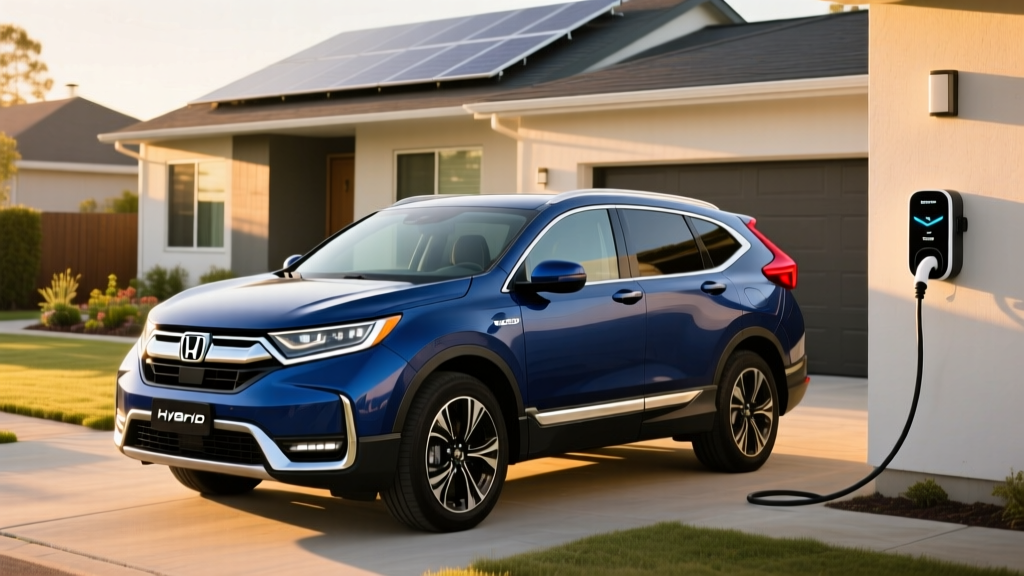
A critical distinction for shoppers: the 2023 Honda CR-V Hybrid is a conventional hybrid electric vehicle (HEV). It does not have a plug, it does not offer electric-only driving range, and it cannot be charged from a wall outlet or public station. The lithium-ion battery pack recharges exclusively through regenerative braking and the gasoline engine.
| Feature | HEV (CR-V Hybrid) | PHEV (e.g., RAV4 Prime) | BEV (e.g., Tesla Model Y) |
|---|---|---|---|
| Plug-in Charging | No | Yes | Yes |
| Electric-Only Range | 0 miles (EV mode ~1 mi at low speed) | 25-42 miles typical | 250-330+ miles |
| Gasoline Engine | Yes (primary) | Yes (backup) | No |
| Federal Tax Credit (§30D) | Not eligible | Up to $7,500 (if eligible) | Up to $7,500 (if eligible) |
| Home Charging Required | No | Recommended | Essential |
| Best For | No charging access; simple ownership | Short commutes + road trips | Home charging + low running cost |
Honda did not offer a plug-in hybrid CR-V for 2023. If you need electric-only commuting capability in a similar package, the Toyota RAV4 Prime (42 miles electric-only, 94 MPGe) remains the closest competitor. But if you want hybrid efficiency without changing your fueling habits, the CR-V HEV delivers exactly that.
Fuel Economy: EPA Ratings vs Real-World MPG
The 2023 CR-V Hybrid's fourth-generation two-motor hybrid system pairs a 2.0-liter Atkinson-cycle four-cylinder engine with two electric motors — one functioning as a generator, the other driving the front wheels. The system operates primarily in EV drive mode at low speeds, switches to hybrid mode for acceleration and cruising, and engages direct engine drive only at sustained highway speeds where the gasoline engine is most efficient.
| Driving Scenario | FWD EPA | FWD Real-World | AWD EPA | AWD Real-World |
|---|---|---|---|---|
| City | 43 MPG | 41-46 MPG | 40 MPG | 38-44 MPG |
| Highway (70 mph) | 36 MPG | 33-35 MPG | 34 MPG | 31-34 MPG |
| Combined | 40 MPG | 37-42 MPG | 37 MPG | 34-39 MPG |
| Cold Weather (below 30°F) | — | 33-37 MPG | — | 30-35 MPG |
According to fueleconomy.gov, the FWD Sport trim achieves 43 city / 36 highway / 40 combined, while the AWD Sport Touring drops to 40 / 34 / 37. In practice, Honda's hybrid system rewards city driving — the frequent stops and low-speed operation let the electric motor dominate, and real-world city MPG often exceeds the EPA estimate by 2-3 MPG. Highway driving tells a different story: above 70 mph, the gasoline engine works harder, and real-world figures typically fall 2-4 MPG below the sticker, consistent with most hybrid SUVs.
Cold weather hits all hybrids, and the CR-V is no exception. Below 30°F, expect a 5-8 MPG drop in combined driving as the engine runs more frequently to maintain cabin heat and battery temperature. A block heater isn't necessary, but remote start (standard on Sport Touring) helps precondition the cabin and reduce the initial fuel penalty.
Powertrain and Driving Impressions
The 204-horsepower combined output represents a meaningful improvement over the previous-generation CR-V Hybrid's 212-hp figure — but don't let the lower number mislead you. The 2023 system's 247 lb-ft of electric motor torque delivers stronger low-end response, and the e-CVT transmission (which isn't a traditional CVT at all — it's a direct-drive system with fixed ratios for engine-direct mode) eliminates the rubber-band feeling that plagued earlier Honda hybrids.
Acceleration to 60 mph lands around 7.8 seconds for FWD and roughly 8.0 seconds for AWD, based on independent testing. That's competitive with the RAV4 Hybrid (7.4 sec) and noticeably quicker than the non-hybrid 2023 CR-V's 1.5L turbo (approximately 8.5 sec). The hybrid's advantage is most apparent in city merging and passing situations where instant electric torque fills the gap before the engine spools up.
The AWD system (marketed as Real Time AWD) on the Sport Touring uses a mechanical rear driveshaft engaged by an electromagnetic clutch. It's not a through-the-road hybrid AWD like Toyota's system (which uses a separate rear electric motor). The result is competent all-weather traction for rain and light snow, but it adds approximately 100 lbs and costs you 3 MPG combined compared to FWD.
Pricing, Trims, and Tax Credit Eligibility
For 2023, Honda simplified the hybrid lineup to two trims:
- Sport (FWD): $34,445 MSRP — includes Honda Sensing suite, 7-inch touchscreen, wireless Apple CarPlay/Android Auto, heated front seats, remote start, and 18-inch alloy wheels
- Sport (AWD): $35,945 MSRP
- Sport Touring (AWD standard): $40,845 MSRP — adds 9-inch touchscreen, wireless charging, Bose 12-speaker audio, leather seats, heated steering wheel, power tailgate, and Honda Sensing with low-speed braking control
Federal Tax Credit Status
The 2023 Honda CR-V Hybrid does not qualify for the IRS §30D Clean Vehicle Credit. Under current IRS rules, the §30D credit applies only to plug-in electric vehicles (BEVs and PHEVs) with sufficient battery capacity. Conventional hybrids like the CR-V HEV are excluded regardless of price or efficiency. Some states offer separate hybrid incentives — check your state's energy office or AFDC state incentive database for local programs.
On the used market in 2026, expect certified pre-owned Sport FWD models between $27,000-$31,000 and Sport Touring AWD examples between $33,000-$37,000, depending on mileage and condition. Note that the federal used-EV credit (§25E, up to $4,000) also applies only to plug-in vehicles, so the CR-V Hybrid receives no federal purchase incentive new or used.
Battery Reliability, Warranty, and Replacement Costs
Hybrid battery longevity remains one of the top concerns for buyers, and Honda's track record provides solid reassurance. The 2023 CR-V Hybrid's lithium-ion battery pack carries Honda's standard hybrid battery warranty: 8 years / 100,000 miles (extended to 10 years / 150,000 miles in California Air Resources Board states including CA, CT, ME, MA, NJ, NY, OR, RI, VT, and WA).
The warranty covers battery capacity loss below a functional threshold — typically around 60-70% of original capacity — and any cell or module failures. Honda's fourth-generation hybrid system has shown minimal degradation in early long-term testing; owners of 2020-2022 CR-V Hybrids report less than 5% capacity loss at 60,000 miles under normal use.
If replacement is needed out of warranty, a new OEM hybrid battery pack for the 2023 CR-V Hybrid runs approximately $2,500-$3,800 including labor at a Honda dealer. Independent hybrid specialists can sometimes source refurbished packs for $1,500-$2,200. For context, this is significantly less than a full EV battery replacement ($8,000-$20,000+) and comparable to a transmission replacement on a conventional vehicle — a repair that rarely occurs before 150,000+ miles.
Beyond the hybrid battery, the 2023 CR-V earned a Top Safety Pick+ rating from IIHS and a 5-star overall rating from NHTSA, which matters for family buyers prioritizing crash safety alongside efficiency.
Who Should Choose the 2023 CR-V Hybrid?
Pros
- Excellent city MPG — frequently exceeds EPA in stop-and-go driving
- No charging infrastructure required — fuel like any gas car
- Strong standard safety suite (Honda Sensing) across both trims
- Quick electric torque for confident city merging
- Proven hybrid reliability with 8-10 year battery warranty
- Spacious 36.3 cu ft cargo area unaffected by hybrid packaging
Cons
- No plug-in or electric-only driving option
- No federal tax credit eligibility (new or used)
- AWD costs 3 MPG combined vs FWD
- 1,000-lb towing capacity trails some competitors
- Highway MPG drops noticeably above 70 mph
- Sport Touring price creeps into luxury crossover territory
Choose the 2023 CR-V Hybrid If:
- You lack access to home or workplace charging and want maximum efficiency without lifestyle changes
- Your commute is primarily city and suburban driving where the hybrid system excels
- You want a compact SUV with top safety ratings and proven long-term reliability
- You plan to own the vehicle 8-10+ years and value the extended hybrid battery warranty
Consider a PHEV Instead If:
- You can charge at home and want 25-42 miles of electric-only commuting (look at RAV4 Prime, Escape PHEV)
- You want federal tax credit eligibility (up to $7,500 for qualifying PHEVs)
Consider a Full EV Instead If:
- You have reliable home Level 2 charging and want the lowest per-mile fuel cost
- Your daily driving is under 250 miles and you want zero tailpipe emissions
Frequently Asked Questions
How many MPG does the 2023 Honda CR-V Hybrid get?
The FWD Sport achieves an EPA-rated 43 city / 36 highway / 40 combined MPG. The AWD Sport Touring rates at 40 city / 34 highway / 37 combined. Real-world testing shows city driving often exceeds EPA by 2-3 MPG, while sustained highway driving above 70 mph typically falls 2-4 MPG below the sticker.
Does the 2023 CR-V Hybrid need to be plugged in?
No. The CR-V Hybrid is a conventional HEV — it charges its own battery through regenerative braking and the gasoline engine. You fuel it exactly like a standard gas car at any gas station.
Is the 2023 CR-V Hybrid reliable?
Honda's hybrid system has demonstrated strong reliability across multiple generations. The hybrid battery carries an 8-year/100,000-mile warranty (10-year/150,000-mile in CARB states), and out-of-warranty replacement costs approximately $2,500-$3,800. The vehicle earned Top Safety Pick+ from IIHS and 5 stars from NHTSA.
Does the CR-V Hybrid qualify for any tax credit?
No. The IRS §30D Clean Vehicle Credit and §25E used-EV credit apply only to plug-in vehicles (BEVs and PHEVs). The CR-V Hybrid, as a conventional HEV, does not qualify for any federal purchase incentive. Check your state's energy office for any local hybrid-specific programs.
How does the CR-V Hybrid compare to the Toyota RAV4 Hybrid?
The RAV4 Hybrid (41 city / 38 highway / 40 combined, AWD standard) edges ahead on highway efficiency and offers the RAV4 Prime PHEV variant with 42 miles electric-only. The CR-V Hybrid counters with a slightly more refined interior, stronger standard safety tech, and comparable cargo space. Both are segment leaders — your choice may come down to dealer availability, styling preference, and whether you want AWD standard (Toyota) or optional (Honda).
What is the hybrid battery replacement cost?
An OEM replacement hybrid battery for the 2023 CR-V Hybrid costs approximately $2,500-$3,800 installed at a Honda dealership. Refurbished options from independent hybrid specialists run $1,500-$2,200. Given Honda's 8-10 year battery warranty and the system's proven durability, most owners will never face this expense.