The Honda CR-V TrailSport Hybrid slots into a specific niche: buyers who want rugged crossover styling and genuine fuel savings without ever plugging in. For 2026, Honda continues to build the TrailSport exclusively around its two-motor hybrid powertrain, meaning every TrailSport is a hybrid — no gas-only option exists. That decision pays dividends at the pump and on the trail, but it also raises questions about capability, long-term battery reliability, and whether a plug-in hybrid or full EV might serve you better.
We've driven the CR-V TrailSport Hybrid in mixed conditions — city commuting, highway cruising, and light dirt-road excursions — to bring you exact numbers on what this SUV actually delivers versus what Honda promises on the sticker.
TrailSport Hybrid Powertrain: 204 HP, Two Motors, One Smart System
The 2026 CR-V TrailSport Hybrid uses Honda's fourth-generation two-motor hybrid system, pairing a 2.0-liter Atkinson-cycle four-cylinder engine with two electric motors integrated into the transmission. Here's what that translates to in hard specs:
| Specification | 2026 CR-V TrailSport Hybrid |
|---|---|
| Engine | 2.0L Atkinson-cycle DOHC 4-cylinder |
| Electric Motors | Two-motor hybrid system (propulsion + generation) |
| Combined System Output | 204 hp / 247 lb-ft torque |
| Drivetrain | Real Time AWD™ with torque vectoring |
| Transmission | e-CVT (electronically controlled) |
| Hybrid Type | Conventional HEV (self-charging, no plug) |
| 0–60 mph (est.) | ~7.8 seconds |
| Towing Capacity | 1,000 lbs |
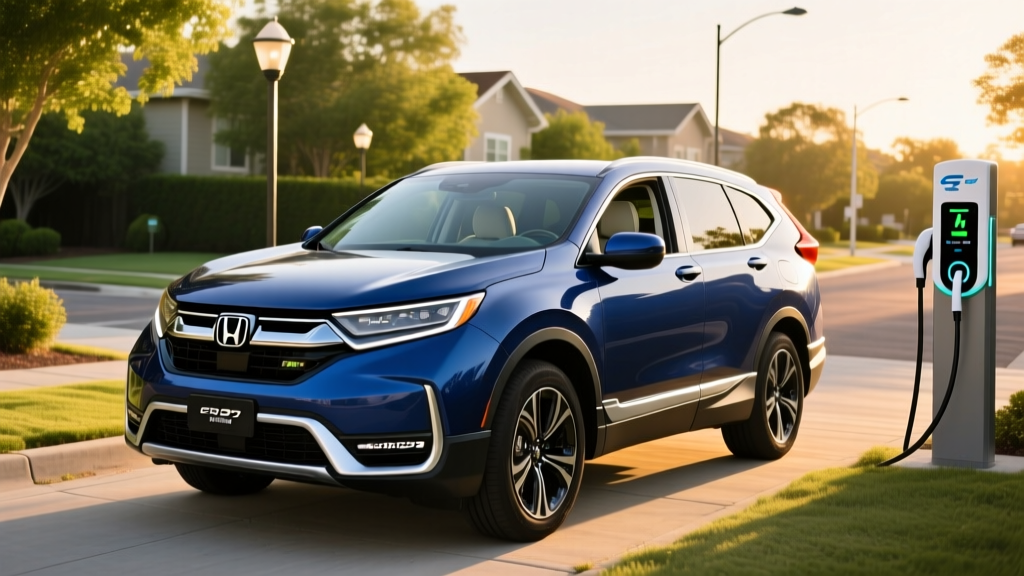
The key distinction here: this is a conventional hybrid (HEV), not a plug-in hybrid (PHEV). The battery recharges through regenerative braking and the gasoline engine — you never plug it in. This matters because it eliminates any need for home charging infrastructure while still delivering significant fuel savings over a gas-only equivalent.
Under normal driving, the propulsion motor handles most low-to-mid-speed movement, with the gas engine either generating electricity or, at highway speeds, engaging directly via a lock-up clutch for efficiency. It's a series-parallel system that seamlessly switches modes without driver input.
Fuel Economy: EPA Numbers vs. Real-World MPG
Honda rates the 2026 CR-V TrailSport Hybrid with AWD at:
| Driving Cycle | EPA Estimate | Real-World Observation |
|---|---|---|
| City | 40 MPG | 38–43 MPG |
| Highway | 34 MPG | 30–34 MPG |
| Combined | 37 MPG | 34–38 MPG |
Source: EPA Fuel Economy
Like most hybrids, the CR-V TrailSport Hybrid outperforms its EPA city rating in stop-and-go traffic, where regenerative braking recaptures energy at every stoplight. We consistently observed 40+ MPG on urban commutes with moderate acceleration. Highway efficiency drops because the electric motor contributes less at sustained high speeds, and the AWD system adds mechanical drag.
Cold weather costs you roughly 5–8% on fuel economy due to denser air, winter-blend fuel, and the engine running longer to provide cabin heat. In sub-freezing testing, combined MPG settled around 33–35 — still comfortably ahead of any non-hybrid compact SUV.
With a 15.3-gallon fuel tank, real-world total range lands between 470 and 540 miles depending on driving mix. That's one of the strongest arguments for the hybrid over a full EV on long road trips: no charging stops, no range planning.
HEV vs. PHEV vs. EV: Which Powertrain Fits Your Life?
The CR-V lineup now spans three powertrain philosophies. Understanding which one suits you prevents buyer's remorse:
| Factor | CR-V Hybrid (HEV) | CR-V PHEV (if available) | Full EV (e.g., Prologue) |
|---|---|---|---|
| Plugs In? | No | Yes (Level 1/2) | Yes (Level 1/2/DC) |
| Electric-Only Range | ~1 mi at low speed | ~30–40 mi (typical) | 250–300+ mi |
| Total Range | 470–540 mi | 400+ mi combined | 250–300 mi |
| Home Charging Needed? | No | Recommended | Essential |
| Best For | No garage/outlet access; road trips | Short commutes + weekend trips | Home charging + daily commute |
| Fuel/Energy Cost per Mile | ~$0.10–0.12 | ~$0.04–0.10 | ~$0.03–0.05 |
| Maintenance | Low (oil, filters) | Low (oil, filters) | Minimal (no oil, fewer fluids) |
Choose the CR-V TrailSport Hybrid (HEV) if: You lack reliable access to a Level 2 home charger, take frequent road trips beyond 300 miles, want zero lifestyle adjustment from a gas car, and prioritize total range over per-mile cost.
Consider a PHEV or full EV if: You have a garage with a 240V outlet, your daily commute is under 40 miles, you want to minimize fuel spend, and you're ready to plan charging on longer trips.
TrailSport Off-Road Capability: More Than an Appearance Package?
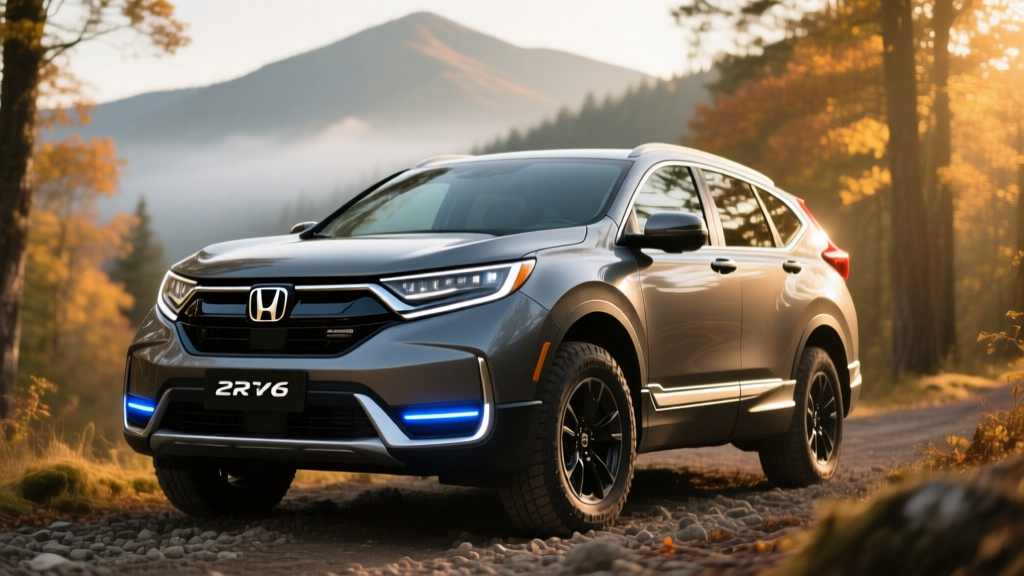
The TrailSport badge on the CR-V Hybrid isn't purely cosmetic, but it's also not a Wrangler competitor. Honda equips it with:
- Unique 18-inch wheels wrapped in all-terrain tires (compared to the Sport Touring Hybrid's 19-inch all-seasons)
- Retuned AWD system with enhanced torque distribution for low-traction surfaces
- Revised suspension tuning with slightly firmer damping
- Underbody skid plate styling (functional front deflector, cosmetic rear)
- 8.2 inches of ground clearance — 0.7 inches more than standard CR-V trims
- Hill Descent Control
On graded forest roads, sandy washes, and muddy two-tracks, the TrailSport Hybrid handles confidently. The hybrid's instant electric torque at low speeds is a genuine advantage off-road — no need to rev the engine to creep over obstacles. However, the 1,000-pound towing limit and 8.2-inch clearance keep it firmly in "soft-roader" territory. This is an SUV for fire roads and campground access, not rock crawling.
Pricing, Trims, and Tax Credit Eligibility
The 2026 CR-V TrailSport Hybrid carries a starting MSRP of approximately $40,850 (including destination charge). It sits above the Sport Hybrid ($37,295) and below the Sport Touring Hybrid ($43,195).
Key standard equipment at this price includes:
- Honda Sensing® suite (adaptive cruise, lane-keeping, collision mitigation)
- 9-inch touchscreen with wireless Apple CarPlay and Android Auto
- Wireless phone charging pad
- Heated front seats and heated steering wheel
- Power moonroof
- LED fog lights and TrailSport-exclusive orange stitching/accents
Federal Tax Credit: Does the TrailSport Hybrid Qualify?
No. Under current IRS §30D rules, the federal clean vehicle credit applies only to plug-in electric vehicles (BEVs and PHEVs) with battery capacities of at least 7 kWh that meet critical-mineral and battery-component sourcing requirements. The CR-V TrailSport Hybrid is a conventional HEV with a small (~1.1 kWh) battery that does not plug in, making it ineligible for the federal EV tax credit.
Some states offer their own hybrid incentives or rebates for high-efficiency vehicles, but these vary widely by jurisdiction and change frequently. Check your state energy office or department of environmental quality for current programs. A tax professional can confirm eligibility for any local credits.
Source: IRS Clean Vehicle Credit
Battery Warranty, Longevity, and Replacement Cost
Hybrid battery anxiety is one of the top concerns we hear from first-time hybrid buyers. Here's the data:
| Coverage | Details |
|---|---|
| Hybrid Battery Warranty | 8 years / 100,000 miles (10 years / 150,000 miles in CARB states*) |
| Powertrain Warranty | 5 years / 60,000 miles |
| Limited Vehicle Warranty | 3 years / 36,000 miles |
| Battery Chemistry | Lithium-ion (high-output module pack) |
| Usable Battery Capacity | ~1.1 kWh |
| Estimated Replacement Cost | $2,500–$4,000 (out of warranty) |
*CARB states include CA, CO, CT, ME, MA, NJ, NY, OR, RI, VT, WA, and others adopting California emissions standards.
Honda's hybrid batteries are engineered for longevity. Unlike full EVs, the hybrid system uses a very shallow charge/discharge window — typically cycling between 40% and 70% State of Charge — which dramatically reduces cell stress. Real-world data from earlier Honda hybrid models (Insight, Accord Hybrid) shows most battery packs lasting well beyond 150,000 miles with minimal capacity loss.
If a replacement is needed out of warranty, costs have dropped significantly as hybrid technology matures. A refurbished or new hybrid battery module for the CR-V Hybrid typically runs $2,500–$4,000 installed — far less than a full EV battery replacement. Independent hybrid specialists often offer even lower pricing.
The small battery size also means the CR-V Hybrid's environmental footprint from battery manufacturing is a fraction of a full EV's. For buyers weighing lifecycle emissions, this matters.
Daily Driving Impressions: Comfort, Tech, and Refinement
The TrailSport Hybrid drives like a well-sorted compact SUV that happens to sip fuel. The e-CVT avoids the rubber-band feel of older CVTs thanks to Honda's simulated shift logic under hard acceleration. Around town, the electric motor's instant torque makes the CR-V feel quicker than its 7.8-second 0–60 time suggests, with confident merging and passing.
Ride quality is slightly firmer than the Sport Touring Hybrid, a trade-off for the TrailSport's all-terrain tires and retuned dampers. Road noise from the AT tires is noticeable above 50 mph — the single biggest refinement penalty for the TrailSport's off-road aspirations. On dirt and gravel, though, those tires provide genuine grip and the ride absorbs washboards well.
The cabin is practical and well-built. Cargo volume behind the rear seats is 36.3 cubic feet, expanding to 76.5 cubic feet with the rear seats folded — competitive with the Toyota RAV4 Hybrid and slightly ahead of the Mazda CX-50 Hybrid. The hybrid battery sits under the cargo floor, preserving a flat load surface with no intrusion.
Honda Sensing® works reliably on highway drives, with the adaptive cruise control and lane-centering system handling long trips with minimal intervention. This is an SAE Level 2 driver-assist system — you must keep your hands on the wheel and eyes on the road at all times. It's not autonomous driving.
How It Stacks Up Against Key Rivals
| Spec | 2026 CR-V TrailSport Hybrid | 2026 RAV4 TRD Off-Road Hybrid | 2026 Tucson Hybrid SEL Prestige |
|---|---|---|---|
| Combined MPG (EPA) | 37 | 38 | 38 |
| Horsepower | 204 hp | 219 hp | 226 hp |
| AWD | Standard | Standard | Standard |
| Ground Clearance | 8.2 in | 8.6 in | 7.6 in |
| Cargo (rear seats up) | 36.3 cu ft | 37.6 cu ft | 38.7 cu ft |
| Starting MSRP | ~$40,850 | ~$41,500 | ~$40,250 |
| Hybrid Battery Warranty | 8yr/100k mi | 10yr/150k mi | 10yr/100k mi |
The RAV4 Hybrid edges ahead on MPG and cargo space, and Toyota's hybrid battery warranty stretches to 10 years nationwide. The Tucson Hybrid offers more power and interior volume. The CR-V TrailSport Hybrid's advantage is its specific blend of off-road styling, Honda Sensing® refinement, and strong city fuel economy. It's a competitive segment with no clear loser — your choice comes down to priorities.
Pros
- Strong city MPG (40+ real-world in stop-and-go)
- No plug-in required — zero lifestyle change from gas cars
- 500+ mile total range eliminates road-trip range anxiety
- Genuine light off-road capability with AT tires and extra clearance
- Instant electric torque aids low-speed off-road control
- Comprehensive Honda Sensing® suite standard
- Flat cargo floor despite hybrid battery placement
Cons
- No federal tax credit eligibility
- Highway MPG drops noticeably (30–34 real-world)
- All-terrain tires generate more road noise than all-seasons
- 1,000-lb towing limit limits utility
- Firmer ride than non-TrailSport trims
- Higher starting price than Sport Hybrid (~$3,500 premium)
Frequently Asked Questions
How many MPG does the Honda CR-V TrailSport Hybrid get?
The EPA rates it at 40 city / 34 highway / 37 combined MPG. In real-world driving, expect 38–43 MPG in the city (hybrids excel in stop-and-go) and 30–34 MPG on the highway. Cold weather reduces combined economy by roughly 5–8%.
Does the CR-V TrailSport Hybrid need to be plugged in?
No. This is a conventional hybrid (HEV), not a plug-in hybrid (PHEV). The battery charges automatically through regenerative braking and the gasoline engine. You fuel it exactly like a regular car — just less often.
How far can the CR-V TrailSport Hybrid go on a full tank?
With a 15.3-gallon tank and real-world combined economy of 34–38 MPG, expect a total range of approximately 470 to 540 miles before refueling.
Does the CR-V TrailSport Hybrid qualify for a federal tax credit?
No. The IRS §30D clean vehicle credit applies only to plug-in vehicles (BEVs and qualifying PHEVs). The CR-V TrailSport Hybrid is a conventional HEV and does not qualify. Some state or local incentives may apply for high-efficiency vehicles — check with your state energy office and a tax professional.
Is the Honda CR-V Hybrid reliable? What about battery replacement cost?
Honda's hybrid system has a strong reliability track record across multiple model lines. The hybrid battery is warrantied for 8 years/100,000 miles (10 years/150,000 miles in CARB states). Real-world data suggests most packs last well beyond 150,000 miles. Out-of-warranty replacement runs approximately $2,500–$4,000 — significantly less than a full EV battery swap.
Hybrid vs. PHEV vs. EV — which CR-V should I choose?
Choose the TrailSport Hybrid (HEV) if you lack home charging access, take long road trips, and want zero lifestyle adjustment. Consider a PHEV if you have a garage outlet and a short commute (most daily miles on electric). Choose a full EV like the Honda Prologue if you have reliable Level 2 charging, want the lowest per-mile energy cost, and can plan charging on trips over 250 miles.
Can the CR-V TrailSport Hybrid actually go off-road?
For light off-roading — graded dirt roads, muddy two-tracks, sandy trails, and campground access — yes, it's genuinely capable. The all-terrain tires, 8.2 inches of ground clearance, and AWD torque vectoring handle these conditions well. It is not designed for rock crawling or deep water crossings. Think "forest service road," not "Moab."
What is the difference between the TrailSport Hybrid and the Sport Touring Hybrid?
The TrailSport Hybrid adds all-terrain tires, 0.7 inches more ground clearance, retuned suspension, Hill Descent Control, and TrailSport-specific styling. The Sport Touring Hybrid rides on 19-inch all-season tires with a quieter, more comfort-oriented setup and includes premium features like a hands-free power tailgate and Bose audio. Both share the same 204-hp hybrid powertrain and AWD system.
Specifications and pricing reflect 2026 model-year data available at time of publication. Tax credit eligibility is subject to change — always verify current rules at IRS.gov and consult a tax professional. Safety ratings and detailed crash-test data can be reviewed at NHTSA.gov and IIHS.org.