Quick Verdict: The Honda CR-V Hybrid Sport in 2026
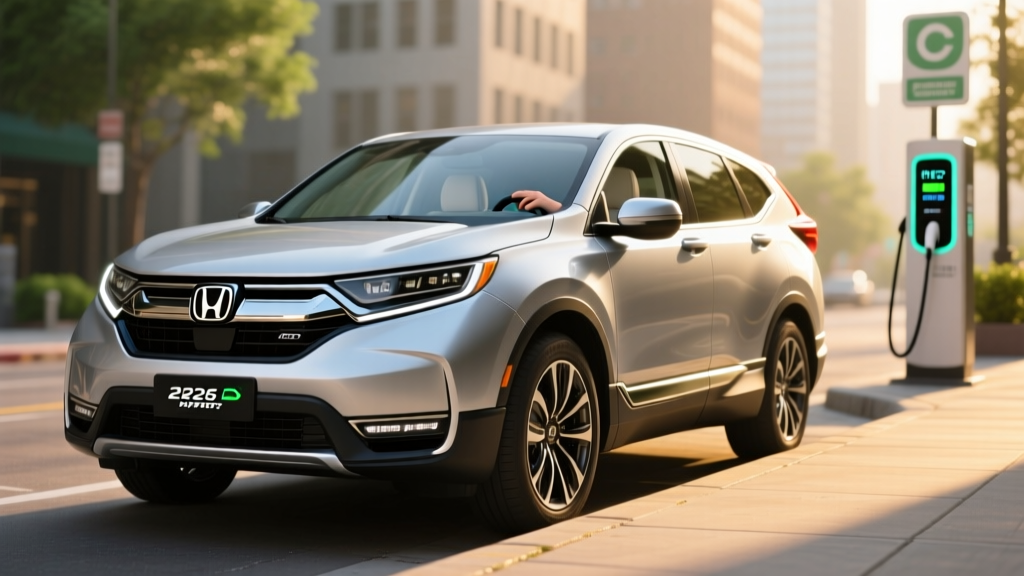
The 2026 Honda CR-V Hybrid Sport occupies a specific lane in the compact crossover market: it's a conventional hybrid (HEV) that requires no plug, delivers strong city fuel economy, and carries a modest price premium over its gas-only sibling. With an EPA-estimated 40 MPG combined and standard all-wheel drive, the Sport trim targets buyers who want electrified efficiency without altering their fueling habits.
This is not a plug-in hybrid. There is no electric-only driving range to manage, no charging cable to deal with, and no federal tax credit to chase. What you get instead is a proven two-motor hybrid system, 204 combined horsepower, and a vehicle that behaves like a normal SUV at the pump — just one that visits it less often.
Fuel Economy: EPA Ratings and Real-World MPG
Fuel economy is the primary reason buyers choose the CR-V Hybrid over the gas-only model. Here's what the EPA says, and what you should actually expect.
| Metric | EPA Rating | Real-World Expectation |
|---|---|---|
| City | 40 MPG | 41–44 MPG |
| Highway | 34 MPG | 32–35 MPG |
| Combined | 37 MPG | 36–40 MPG |
Source: fueleconomy.gov
Why Hybrids Often Beat EPA City Estimates
The CR-V Hybrid's two-motor system excels in stop-and-go traffic, where the electric motors handle low-speed propulsion and regenerative braking recaptures energy that a gas-only car would waste as heat. In real-world city driving, many owners report exceeding the 40 MPG city EPA figure by 2–4 MPG, particularly in warm weather with moderate HVAC use.
Highway driving tells a different story. At sustained speeds above 70 mph, the gasoline engine does most of the work, and aerodynamic drag reduces the hybrid advantage. Expect highway MPG to track closely with — or slightly below — the 34 MPG EPA estimate. Cold weather (below 35°F) typically reduces combined fuel economy by 3–5 MPG due to increased engine runtime for cabin heating and reduced battery efficiency.
Powertrain: Engine, Motors, and Performance
The 2026 CR-V Hybrid Sport uses Honda's fourth-generation two-motor hybrid system, pairing a 2.0-liter Atkinson-cycle four-cylinder engine with two electric motors and a lithium-ion battery pack.
| Specification | Value |
|---|---|
| Engine | 2.0L Atkinson-cycle I-4 |
| Combined System Horsepower | 204 hp |
| Combined Torque (Motor) | 247 lb-ft |
| Drivetrain | AWD (standard) |
| Transmission | e-CVT (direct drive) |
| 0–60 mph | ~7.6 seconds |
| Towing Capacity | 1,000 lbs |
The electric motors provide instant torque from a stop, making the CR-V Hybrid feel more responsive in city driving than its 204 hp figure suggests. The e-CVT is a direct-drive unit — not a belt-and-cone CVT — so there's no rubber-banding sensation under acceleration. The AWD system uses a dedicated rear electric motor rather than a mechanical driveshaft, which improves packaging efficiency and allows precise torque distribution to the rear axle when needed.
Battery, Reliability, and Warranty Coverage
Hybrid battery longevity is consistently one of the top concerns for HEV buyers. Here's what Honda provides and what the data shows.
Real-World Hybrid Battery Lifespan
Honda's hybrid systems have been in production since the early 2000s (Insight, Accord Hybrid), and real-world data from high-mileage owners and fleet operators suggests the lithium-ion packs in the current-generation CR-V Hybrid typically last well beyond the warranty period. Failures before 150,000 miles are uncommon. When replacement is eventually needed, a new OEM hybrid battery pack costs approximately $3,000–$4,500 including labor, depending on the dealer and region. Third-party refurbished packs can reduce this cost to roughly $2,000–$2,800.
The hybrid battery is relatively small (approximately 1.1 kWh usable capacity) compared to a PHEV or full EV, which means thermal stress per cycle is low and degradation is gradual. Unlike a full EV battery, a slightly degraded hybrid battery doesn't meaningfully affect range — it simply reduces the frequency of electric-only assist events, causing a minor MPG decrease over time.
Pricing, Trims, and Tax Credit Eligibility
The 2026 CR-V Hybrid Sport sits in the middle of the CR-V Hybrid lineup. Here's how pricing breaks down.
| Trim | MSRP | Key Features |
|---|---|---|
| Sport | $36,395 | 19" wheels, black accents, heated seats, wireless CarPlay/Android Auto |
| Sport-L | $38,895 | Leather seats, power liftgate, wireless charging pad |
| Sport Touring | $41,895 | Bose audio, navigation, heated steering wheel, hands-free liftgate |
Prices include destination charge. Source: Honda.com
Federal Tax Credit: Does the CR-V Hybrid Qualify?
No. The Honda CR-V Hybrid Sport is a conventional hybrid (HEV), not a plug-in vehicle. Under IRS §30D rules, the federal clean vehicle credit is available only to battery-electric vehicles (BEVs) and plug-in hybrids (PHEVs) with a battery capacity of at least 7 kWh that can be recharged from an external power source. The CR-V Hybrid's ~1.1 kWh battery is charged exclusively by the engine and regenerative braking, making it ineligible for the federal EV tax credit.
Some states offer their own incentives for conventional hybrids, but these are increasingly rare as state programs shift focus to zero-emission vehicles. Check your state's energy or DMV website for current programs. Honda does occasionally offer manufacturer financing incentives (e.g., 1.9% APR for 36 months) on hybrid trims, which can offset the price premium over gas models.
CR-V Hybrid Sport vs. Gas CR-V vs. Full EV: Which Fits?
Choosing between the CR-V Hybrid, the gas-only CR-V, and a fully electric compact SUV depends on your driving patterns, charging access, and budget.
| Factor | CR-V Hybrid (HEV) | CR-V Gas | Compact EV (e.g., Ioniq 5) |
|---|---|---|---|
| Combined MPG / MPGe | 37 MPG | 30 MPG | ~110 MPGe |
| Fuel/Energy Cost (15K mi/yr) | ~$1,420/yr | ~$1,750/yr | ~$540/yr (home charging) |
| Requires Plug? | No | No | Yes (Level 2 recommended) |
| Federal Tax Credit | No | No | Up to $7,500 (eligibility varies) |
| Best For | City-heavy drivers, no home charging | Budget-first buyers, highway-heavy | Home chargers, daily commuters |
- You drive primarily in city or suburban traffic (hybrid advantage is greatest below 45 mph)
- You don't have access to home or workplace charging
- You want lower fuel costs without changing your refueling routine
- You live in a region with extreme cold where EV range loss is a concern
- You have reliable Level 2 home charging and a short daily commute
- You want to maximize fuel savings and qualify for federal tax credits
- You're ready to manage charging logistics for road trips
Pros and Cons of the CR-V Hybrid Sport
Pros
- Strong city MPG (often exceeds 40 MPG EPA in real-world driving)
- Standard AWD with rear electric motor — no fuel-economy penalty vs. FWD
- Responsive low-speed acceleration from electric motor torque
- No plug required — zero lifestyle adjustment from a gas car
- Competitive cargo space: 36.3 cu ft behind rear seats
- Honda Sensing suite standard (adaptive cruise, lane-keeping, auto emergency braking)
Cons
- Highway MPG (34 EPA) trails some diesel and turbo-gas competitors
- No federal tax credit — full price out of pocket
- 1,000-lb towing capacity is low for the segment
- Sport trim lacks leather, navigation, and premium audio (step up to Sport-L or Touring)
- Hybrid premium over gas EX-L trim is roughly $2,000–$3,000
- No plug-in hybrid option available from Honda for range-maximizing commuters
Ownership Costs: 5-Year Fuel Savings vs. Gas CR-V
The CR-V Hybrid Sport carries a roughly $2,500 MSRP premium over a comparably equipped gas-only CR-V EX. Here's how that premium pays back over five years of typical ownership.
| Cost Factor | CR-V Hybrid Sport | CR-V Gas EX |
|---|---|---|
| MSRP (approx.) | $36,395 | $33,895 |
| 5-Year Fuel Cost (regular unleaded, $3.50/gal avg) | $7,100 | $8,750 |
| Fuel Savings Over 5 Years | $1,650 in hybrid's favor | |
| Net Premium After Fuel Savings | ~$850 more for hybrid over 5 years | |
At current fuel prices, the hybrid premium takes approximately 7–8 years to fully recoup through fuel savings alone at 15,000 miles per year. However, the hybrid's higher resale value (typically $1,500–$2,500 more than the gas model at 5 years, per Kelley Blue Book data) often closes this gap. Drivers who cover more than 15,000 miles annually or who drive predominantly in city traffic will see faster payback.
Frequently Asked Questions
How many MPG does the Honda CR-V Hybrid Sport get?
The EPA rates the 2026 CR-V Hybrid Sport at 40 MPG city, 34 MPG highway, and 37 MPG combined with standard AWD. In real-world city driving, many owners report 41–44 MPG thanks to the hybrid system's efficiency in stop-and-go traffic. Highway driving at 70+ mph typically yields 32–35 MPG.
Does the CR-V Hybrid need to be plugged in?
No. The CR-V Hybrid Sport is a conventional hybrid (HEV). Its small lithium-ion battery is charged by the gasoline engine and through regenerative braking. You fuel it exactly like a gas-only car — at a gas station. There is no plug, no charging cable, and no electric-only driving mode.
Does the CR-V Hybrid Sport qualify for any tax credit?
It does not qualify for the federal §30D clean vehicle tax credit, which is reserved for plug-in vehicles (BEVs and PHEVs) with battery packs of at least 7 kWh. Some states may offer minor incentives for conventional hybrids, but these are uncommon in 2026. Check your state's energy office for specifics.
How reliable is the CR-V Hybrid, and what does a battery replacement cost?
Honda's hybrid powertrain has a strong reliability record spanning two decades of production. The hybrid battery is warrantied for 8 years/100,000 miles (10 years/150,000 miles in CARB states). Based on historical data from Honda's hybrid fleet, most packs last well beyond 150,000 miles. If replacement is needed, expect to pay $3,000–$4,500 for a new OEM pack or $2,000–$2,800 for a refurbished unit.
Is the CR-V Hybrid Sport better than the gas CR-V for highway driving?
The advantage is modest. The hybrid's 34 MPG highway EPA rating is roughly 4–5 MPG better than the gas-only AWD CR-V (29 MPG highway). The hybrid's biggest advantage is in city driving, where the 40 MPG city rating represents a 10–12 MPG improvement. If your driving is overwhelmingly highway-based, the hybrid premium takes longer to recoup.
What's the difference between the CR-V Hybrid Sport and Sport Touring?
The Sport Touring adds approximately $5,500 to the Sport's MSRP and includes leather-trimmed seats, a 9-inch touchscreen with navigation, a 12-speaker Bose audio system, a heated steering wheel, a hands-free power liftgate, and low-speed braking assist. The hybrid powertrain, AWD system, and fuel economy are identical across all Hybrid trims.