Quick Verdict: The TrailSport Hybrid Is the CR-V Sweet Spot
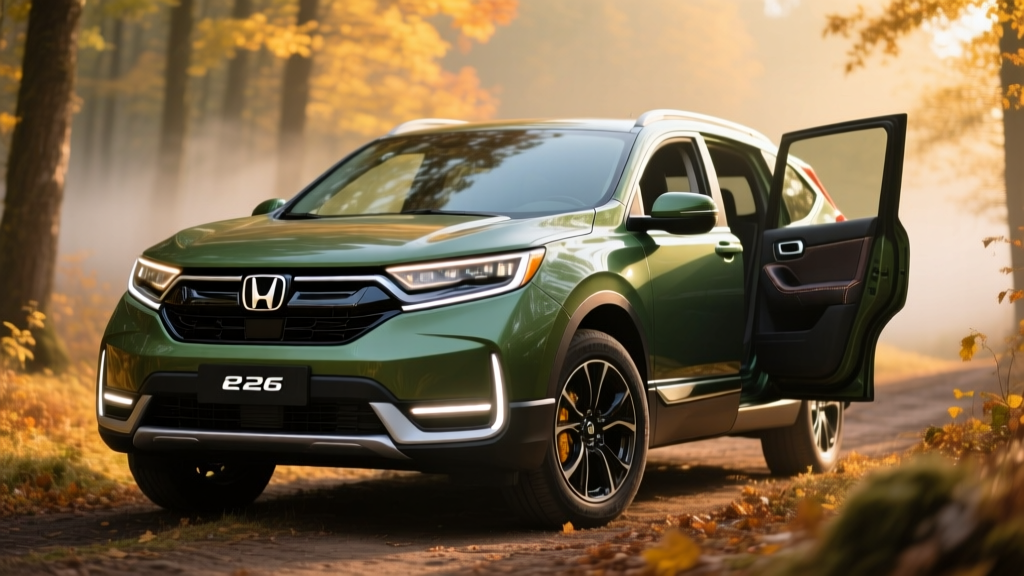
If you want the rugged-look CR-V with the best fuel economy and standard all-wheel drive, the 2026 Honda CR-V TrailSport Hybrid is the trim to get. It pairs Honda's two-motor hybrid system with off-road styling cues, 8.3 inches of ground clearance, and an EPA-rated 40 MPG combined. Unlike a plug-in hybrid or full EV, it requires zero change to your fueling habits — you simply fill up at any gas station and let the hybrid system handle efficiency in the background.
The trade-off? The TrailSport Hybrid carries a modest price premium over the gas-only CR-V TrailSport, and it does not qualify for federal EV tax credits. But for buyers who aren't ready to plug in, it delivers the best balance of capability and efficiency in the compact SUV segment.
| Spec | Value |
|---|---|
| Powertrain | 2.0L 4-cyl Atkinson + 2-motor hybrid system |
| Combined Horsepower | 204 hp |
| Combined Torque | 247 lb-ft (electric motor) |
| Drivetrain | AWD (standard) |
| EPA Fuel Economy (City / Hwy / Combined) | 40 / 34 / 37 MPG (AWD TrailSport) |
| 0–60 mph | ~7.6 seconds (estimated) |
| Ground Clearance | 8.3 inches |
| Cargo Volume (behind 2nd row) | 36.3 cu ft |
| Towing Capacity | 1,000 lbs |
| Base MSRP (TrailSport Hybrid) | ~$40,350 |
| Federal Tax Credit (§30D) | Not eligible (HEV, not PHEV/BEV) |
| Hybrid Battery Warranty | 8 years / 100,000 miles |
Understanding the Powertrain: This Is a Conventional Hybrid (HEV), Not a PHEV
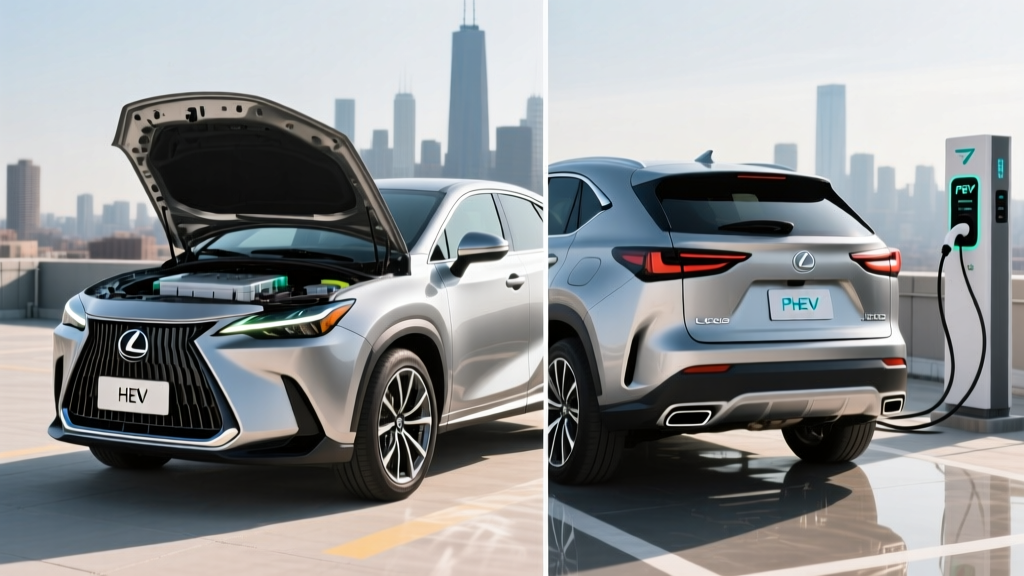
A common point of confusion in the CR-V lineup is the difference between the standard CR-V Hybrid and any hypothetical plug-in variant. The 2026 CR-V TrailSport Hybrid is a conventional hybrid electric vehicle (HEV). It does not have a plug, does not need to be charged, and cannot drive on electric power alone for any meaningful distance.
| Feature | HEV (CR-V Hybrid) | PHEV (e.g., RAV4 Prime) | BEV (e.g., IONIQ 5) |
|---|---|---|---|
| Plug-in Charging | No | Yes | Yes |
| Electric-Only Range | ~1 mile at low speed | 30–42 miles typical | 250–350+ miles |
| Battery Size | ~1.1 kWh (small buffer) | 14–18 kWh usable | 58–84+ kWh |
| Gas Engine | Yes — primary power | Yes — backup after EV range | None |
| Federal Tax Credit | No | Up to $7,500 (if eligible) | Up to $7,500 (if eligible) |
| Fueling | Gas station only | Gas + plug-in | Plug-in only |
The CR-V's hybrid system uses a relatively small lithium-ion battery pack (approximately 1.1 kWh) that charges itself through regenerative braking and the gas engine. The two-motor setup — one motor primarily generates electricity, the other drives the wheels — allows the engine to operate in its most efficient RPM range far more often than a conventional gas car. In practice, the electric motor handles low-speed acceleration and assists during harder throttle inputs, while the 2.0L Atkinson-cycle engine kicks in for highway cruising and higher-demand situations.
Fuel Economy: EPA Ratings and Real-World MPG
The 2026 CR-V TrailSport Hybrid carries an EPA rating of 40 MPG city, 34 MPG highway, and 37 MPG combined with standard AWD. These figures are slightly lower than the front-wheel-drive Sport Hybrid trims (which rate 43/36/40), due to the TrailSport's heavier all-wheel-drive hardware, all-terrain tires, and increased ride height.
| Trim / Drivetrain | City | Highway | Combined |
|---|---|---|---|
| Sport Hybrid (FWD) | 43 MPG | 36 MPG | 40 MPG |
| Sport Hybrid (AWD) | 40 MPG | 34 MPG | 37 MPG |
| TrailSport Hybrid (AWD) | 40 MPG | 34 MPG | 37 MPG |
| Gas CR-V TrailSport (AWD, non-hybrid) | 27 MPG | 32 MPG | 29 MPG |
Real-world MPG expectations: Honda's hybrid system excels in city driving, where the electric motor handles frequent stop-and-go acceleration. In mixed suburban and city driving, many owners report matching or even exceeding the 40 MPG city figure — sometimes seeing 42–44 MPG on routes with frequent stops. Highway driving at 70–80 mph is where the system is least efficient, since the gas engine must do most of the work. Expect 32–34 MPG on sustained highway trips. In cold weather (below 30°F), fuel economy typically drops 3–5 MPG as the engine runs more frequently to provide cabin heat and warm up the catalytic converter.
For context, the hybrid saves roughly 8–10 MPG combined over the gas-only TrailSport. At 12,000 miles per year and $3.50/gallon fuel, that translates to approximately $500–$600 in annual fuel savings versus the non-hybrid model.
Performance and Driving Dynamics
The TrailSport Hybrid's combined output of 204 hp and 247 lb-ft of torque (from the electric drive motor) provides confident acceleration for merging and passing. The 0–60 mph time sits around 7.6 seconds — not quick by performance-SUV standards, but noticeably more responsive off the line than the gas-only CR-V's 190-hp turbocharged engine, thanks to the electric motor's instant torque delivery.
The TrailSport trim adds specific off-road tuning to the AWD system, all-terrain tires, and Hill Descent Control. Ground clearance of 8.3 inches is competitive with the Subaru Outback Wilderness and Toyota RAV4 TRD Off-Road. This is a soft-roader, not a body-on-frame truck — it handles gravel roads, snow, and mild trail use competently, but the unibody platform and 1,000-lb towing limit keep it out of serious off-road or heavy-hauling territory.
One driving characteristic worth noting: the hybrid system uses an electronically controlled continuously variable transmission (e-CVT). Under hard acceleration, the engine revs to a fixed RPM and holds there while the electric motor modulates speed. Some drivers find the lack of traditional gear shifts and the sustained engine drone under load disconcerting. In normal driving, though, the transitions between electric and gas power are seamless and nearly imperceptible.
Pricing, Tax Credits, and Ownership Cost
The 2026 Honda CR-V TrailSport Hybrid starts at an MSRP of approximately $40,350, including destination. That positions it roughly $2,000–$2,500 above the gas-only TrailSport trim and about $1,000 above the Sport Touring Hybrid, making it one of the pricier CR-V configurations.
Federal Tax Credit Status
Because the CR-V TrailSport Hybrid is a conventional HEV — not a plug-in hybrid or battery-electric vehicle — it does not qualify for the IRS §30D Clean Vehicle Credit. That credit, which offers up to $7,500 for eligible new PHEVs and BEVs, requires a vehicle to have a battery capacity of at least 7 kWh and external charging capability (IRS §30D rules). The CR-V Hybrid's ~1.1 kWh battery does not meet this threshold.
Some states offer separate incentives for conventional hybrids, but these vary widely and are often limited. Check your state's energy office or department of revenue for current programs.
Five-Year Ownership Cost Snapshot
Despite the lack of a federal tax credit, the TrailSport Hybrid can be cost-competitive with the gas model over a five-year ownership period:
- Fuel savings: ~$2,500–$3,000 over 5 years vs. gas TrailSport (at 12,000 mi/yr, $3.50/gal)
- Insurance: Comparable to gas CR-V; hybrids do not typically carry a premium
- Maintenance: Slightly lower — regenerative braking extends brake pad life, and the hybrid system has no belts, alternator, or starter motor to replace
- Depreciation: CR-V Hybrids historically hold value well; the TrailSport's niche appeal may help residuals
Battery Longevity, Warranty, and Replacement Cost
Honda Hybrid Battery Warranty: 8 years or 100,000 miles (whichever comes first), covering defects and capacity loss below functional thresholds. In California-emissions states (CARB states), the warranty extends to 10 years / 150,000 miles.
The CR-V Hybrid's lithium-ion battery pack is small (~1.1 kWh) and operates within a narrow state-of-charge window — typically between 40% and 80%. This shallow cycling is far less stressful on battery chemistry than the deep cycles a full EV or PHEV experiences, which is why conventional hybrid batteries routinely last well beyond their warranty periods.
Honda's two-motor hybrid system has been in production since 2014 (Accord Hybrid) and has proven highly reliable. The NHTSA vehicle profile and long-term owner data show minimal hybrid-battery failure rates. If replacement is needed outside warranty, a new OEM hybrid battery for the CR-V typically costs between $2,500 and $4,000 including labor. Third-party refurbished units are available for $1,500–$2,500. For context, most CR-V Hybrid owners never need a battery replacement during typical ownership.
The broader hybrid powertrain — including the electric motors, power control unit, and e-CVT — is also covered under Honda's 5-year/60,000-mile powertrain warranty, with the hybrid-specific components covered for 8 years/100,000 miles.
Who Should Buy the TrailSport Hybrid — and Who Shouldn't
Reasons to Choose It
- Best fuel economy in the CR-V lineup with AWD standard
- No plug-in infrastructure needed — zero lifestyle change from a gas car
- Off-road styling and 8.3" ground clearance for light trail and snow use
- Strong reliability track record from Honda's proven hybrid system
- Electric motor torque gives responsive city driving feel
Reasons to Look Elsewhere
- No federal tax credit eligibility (HEV, not PHEV)
- Highway MPG advantage over gas model is modest (~5 MPG)
- 1,000-lb towing limit is lower than some competitors
- e-CVT engine drone under hard acceleration
- TrailSport's all-terrain tires add road noise vs. touring trims
Decision Framework
Choose the CR-V TrailSport Hybrid if: You drive primarily in city and suburban conditions, want AWD for snow or light trails, and prefer not to deal with plug-in charging. The hybrid's ~8 MPG combined advantage over the gas model pays back the price premium in roughly 4–5 years of average driving.
Choose a PHEV (like the Toyota RAV4 Prime) if: You have access to home or workplace Level 2 charging, your daily commute is under 40 miles, and you want to drive mostly on electricity while keeping a gas engine for road trips. PHEVs may qualify for the $7,500 federal credit, offsetting their higher sticker price.
Choose a full EV (like the Hyundai IONIQ 5) if: You can install a Level 2 home charger, want zero tailpipe emissions, and your driving patterns fit within a 250–300 mile range. EVs offer the lowest per-mile fuel cost and qualify for federal and state incentives, but require a charging commitment.
Frequently Asked Questions
How many MPG does the 2026 Honda CR-V TrailSport Hybrid get?
The EPA rates the TrailSport Hybrid at 40 MPG city, 34 MPG highway, and 37 MPG combined with AWD. In real-world mixed driving, expect 35–39 MPG combined, with city-heavy routes occasionally exceeding 40 MPG and sustained highway driving dropping to 32–34 MPG.
Does the CR-V TrailSport Hybrid need to be plugged in?
No. The CR-V TrailSport Hybrid is a conventional hybrid (HEV). Its small battery charges through regenerative braking and the gas engine. You fuel it exactly like a regular gas car — at any gas station. There is no plug, no charging cable, and no electric-only driving range to manage.
Is the CR-V Hybrid reliable, and what does a battery replacement cost?
Honda's two-motor hybrid system has been in production since 2014 and has an excellent reliability record. The hybrid battery is warranted for 8 years/100,000 miles (10/150,000 in CARB states). Replacement cost, if needed out of warranty, is approximately $2,500–$4,000 for a new OEM unit. Most hybrid batteries last well beyond the warranty period due to the shallow charge cycles used in HEV operation.
Does the 2026 CR-V TrailSport Hybrid qualify for a federal tax credit?
No. The IRS §30D Clean Vehicle Credit applies only to plug-in hybrid electric vehicles (PHEVs) with at least 7 kWh of battery capacity and battery-electric vehicles (BEVs). The CR-V Hybrid's ~1.1 kWh battery and lack of plug-in capability make it ineligible. Some states may offer minor hybrid incentives, but these vary by jurisdiction — check your state's official energy or revenue website.
How does the TrailSport Hybrid compare to the Toyota RAV4 Hybrid?
The RAV4 Hybrid (219 hp, 41/38/40 MPG AWD) is the CR-V TrailSport Hybrid's closest rival. The RAV4 edges ahead on highway MPG and offers slightly more cargo space. The CR-V counters with a more refined interior, a smoother hybrid powertrain in normal driving, and the TrailSport's specific off-road features. Both are strong choices; the decision often comes down to styling preference, dealer pricing, and which hybrid system's driving character you prefer. For a detailed comparison, see our EPA fuel economy side-by-side tool.
What is the towing capacity of the CR-V TrailSport Hybrid?
The 2026 CR-V TrailSport Hybrid is rated to tow up to 1,000 pounds. That covers a small utility trailer, a pair of dirt bikes, or a light camping setup, but it falls short of the 1,500–3,500 lb ratings offered by some competitors (e.g., the Ford Escape Hybrid with the tow package). If you need to tow a larger boat or camper, a body-on-frame SUV or truck is a better fit.