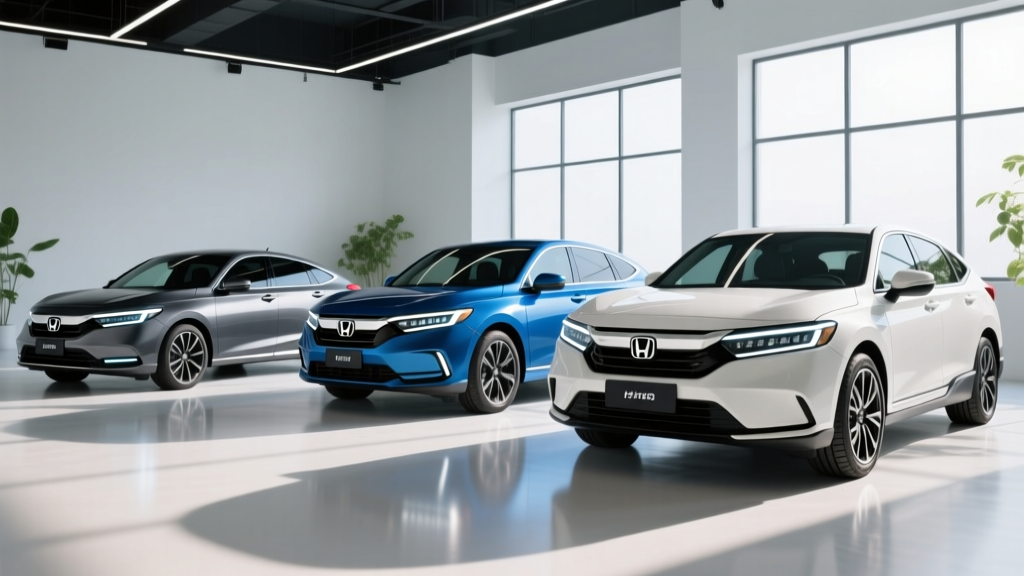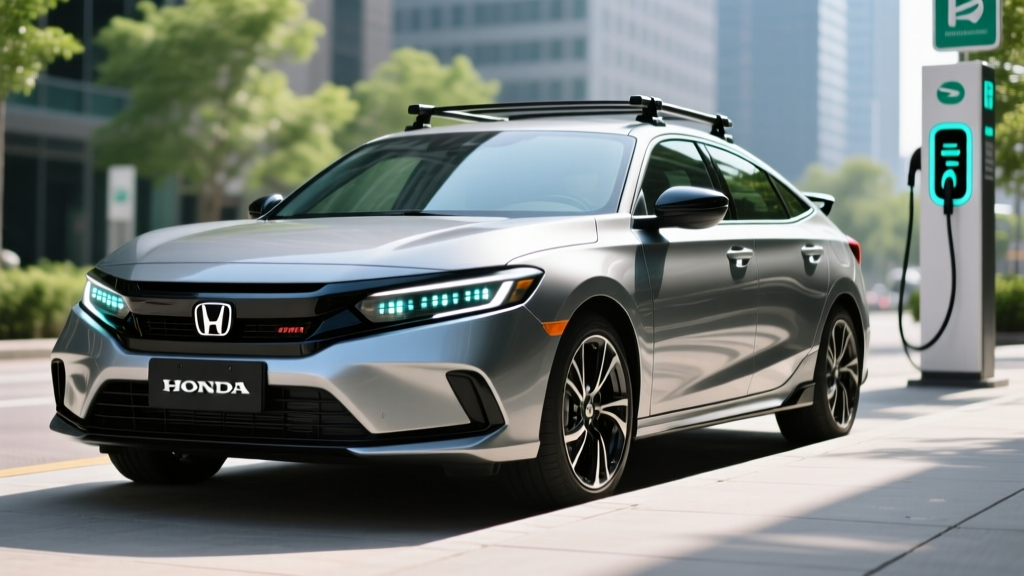
The 2026 Honda Civic Hybrid Sport Touring sits at the top of the Civic Hybrid lineup, pairing a 200-horsepower two-motor hybrid system with the most feature-rich trim Honda offers in the compact sedan segment. At an EPA-estimated 49 MPG combined, it delivers hybrid efficiency without the plug-in complexity — and without the range anxiety that still accompanies pure EVs for apartment dwellers and road-trippers alike.
This review breaks down the Civic Hybrid Sport Touring's real-world fuel economy, powertrain behavior, battery longevity, and ownership costs so you can decide whether it's the right electrified choice — or whether a PHEV or full BEV better fits your daily driving.
HEV vs. PHEV: What the Civic Hybrid Actually Is
Before examining the numbers, a critical distinction: the 2026 Honda Civic Hybrid is a conventional hybrid electric vehicle (HEV), not a plug-in hybrid (PHEV). You never plug it in. The 1.1 kWh lithium-ion battery pack charges exclusively through regenerative braking and the gasoline engine. This is fundamentally different from a PHEV like the Toyota Prius Prime, which carries a larger battery (roughly 13.6 kWh), offers 40+ miles of electric-only driving, and requires plug-in charging to realize its full efficiency benefit.
HEV vs. PHEV — Key Differences at a Glance
| Feature | HEV (Civic Hybrid) | PHEV (e.g., Prius Prime) |
|---|---|---|
| Plug-in charging required? | No | Yes (for full benefit) |
| Battery capacity | ~1.1 kWh | ~13.6 kWh |
| Electric-only range | Less than 1 mile (low-speed assist) | 25–44 miles |
| Federal tax credit (§30D) | Not eligible | Up to $7,500 (if eligible) |
| Best for | Drivers without home charging access | Drivers with home/workplace charging |
If you have reliable access to a Level 2 home charger and a commute under 40 miles, a PHEV might save you more fuel. But if you park on the street, live in an apartment, or simply want zero behavioral change from your gas car, the HEV architecture of the Civic Hybrid is the pragmatic choice.
Fuel Economy: EPA Ratings and Real-World MPG
The 2026 Civic Hybrid Sport Touring carries the same powertrain as lower trims, so EPA fuel economy ratings are shared across the Hybrid lineup. Here's the official breakdown from fueleconomy.gov:
| Cycle | EPA Rating | Real-World Expectation |
|---|---|---|
| City | 50 MPG | 48–54 MPG |
| Highway | 47 MPG | 42–46 MPG |
| Combined | 49 MPG | 45–50 MPG |
With a 12.4-gallon fuel tank, total range stretches past 600 miles in mixed driving — enough to drive from Los Angeles to the Bay Area and back with fuel to spare. No charging stops, no route planning.
Powertrain and Performance Specs
The Civic Hybrid's two-motor hybrid system pairs a 2.0-liter Atkinson-cycle four-cylinder engine with two electric motors and an electric continuously variable transmission (e-CVT). Unlike Toyota's planetary-gear hybrid system, Honda's setup allows the engine to mechanically connect to the front wheels at highway cruising speeds via a lock-up clutch, improving high-speed efficiency.
| Specification | 2026 Civic Hybrid Sport Touring |
|---|---|
| Combined System Horsepower | 200 hp |
| Combined System Torque | 232 lb-ft |
| Engine | 2.0L DOHC Atkinson-cycle I-4 |
| Electric Motors | Two-motor system (propulsion + generator) |
| Transmission | e-CVT with lock-up clutch |
| 0–60 mph | ~7.2 seconds (est.) |
| Drivetrain | Front-wheel drive |
| Hybrid Battery | ~1.1 kWh lithium-ion |
| Fuel Tank | 12.4 gallons |
| Curb Weight | ~3,100 lbs |
| EPA Combined MPG | 49 MPG |
| Starting MSRP (Sport Touring) | ~$32,550 (incl. destination) |
The 200 hp figure is a meaningful upgrade over the non-hybrid Civic's 158 hp (2.0L) or 180 hp (1.5T). The 232 lb-ft of torque — available instantly from the electric motor — gives the Civic Hybrid genuinely responsive off-the-line acceleration that the gas-only models can't match. Merging onto freeways and passing on two-lane roads feels effortless. The e-CVT avoids the rubber-band sensation of older CVTs thanks to the lock-up clutch engaging at steady highway speeds.
Sport Touring Trim: What You Get for the Money
The Sport Touring is the range-topping Civic Hybrid trim, and the premium over the Sport Hybrid (~$2,000) buys meaningful upgrades:
- 10.2-inch digital instrument cluster with hybrid-specific energy flow displays
- 9-inch touchscreen with wireless Apple CarPlay and Android Auto
- Bose 12-speaker premium audio system
- Wireless phone charging pad
- Leather-trimmed seats with heated front seats
- Honda Sensing suite (adaptive cruise, lane-keeping, collision mitigation, traffic sign recognition)
- Low-speed braking control and cross-traffic monitor
- 18-inch alloy wheels with all-season tires
At roughly $32,550 with destination, the Civic Hybrid Sport Touring competes against the Toyota Prius Limited (~$36,000) and non-hybrid premium compacts. The Prius offers slightly higher combined MPG (up to 57 on lower trims) but sacrifices some refinement and interior space.
Battery Warranty, Reliability, and Replacement Costs
Honda Hybrid Battery Warranty
Honda covers the Civic Hybrid's lithium-ion battery pack for 8 years or 100,000 miles (whichever comes first) in most states. In states that follow California Air Resources Board (CARB) emissions rules — including California, New York, Massachusetts, and several others — the hybrid battery warranty extends to 10 years or 150,000 miles.
The warranty covers battery capacity loss below a defined threshold (typically 60–70% of original capacity) and any manufacturing defects. Honda does not publish an exact degradation percentage trigger, so confirm specifics with your dealer at purchase.
Real-world reliability: Honda's two-motor hybrid system has been in production since the Accord Hybrid (2014) and CR-V Hybrid (2020). The architecture is well-proven, and widespread battery failures are rare. The small 1.1 kWh battery undergoes relatively shallow charge-discharge cycles — it rarely drops below 40% or above 80% state of charge — which significantly extends cell longevity compared to a BEV battery that cycles through a wider range daily.
Battery replacement cost: If the hybrid battery does need replacement outside of warranty, expect a dealer-installed replacement to cost between $2,500 and $4,000 (parts and labor). This is substantially less than a BEV battery replacement ($8,000–$20,000+) because the Civic Hybrid's battery is small. Third-party hybrid battery rebuild services may offer repairs for $1,500–$2,500, though these may affect remaining warranty coverage.
Tax Credits and Incentives: What's Available?
This is a common question, and the answer is straightforward: the Honda Civic Hybrid does not qualify for the federal §30D Clean Vehicle tax credit. Under current IRS rules, the §30D credit applies only to plug-in electric vehicles (BEVs and PHEVs) with a battery capacity of at least 7 kWh. The Civic Hybrid's 1.1 kWh battery falls far below that threshold.
Conventional HEVs also do not qualify for most state-level EV rebates or HOV lane stickers. A few states and municipalities offer modest incentives ($250–$500) for any vehicle exceeding 45 MPG combined, but these are exceptions, not the rule. Check your state's energy office or Alternative Fuels Data Center for local programs.
If the federal tax credit is a priority for your purchase, you'll need to look at a PHEV (like the Toyota Prius Prime) or a full BEV (like the Chevrolet Equinox EV or Hyundai Kona Electric) to qualify — subject to MSRP caps, buyer income limits, and battery-sourcing requirements.
Hybrid vs. PHEV vs. Full EV: Which Fits You?
Choose the Civic Hybrid (HEV) if:
- You don't have access to home or workplace Level 2 charging
- You regularly take road trips exceeding 300 miles
- You want EV-like efficiency with zero behavior change
- Your budget is under $35,000 and you don't qualify for EV tax credits
- You live in an area with sparse public DC fast-charging infrastructure
Choose a PHEV (Prius Prime, etc.) if:
- You have reliable Level 2 charging at home or work
- Your daily commute is under 40 miles round-trip
- You want electric-only driving most days but gas flexibility for long trips
- You qualify for the $7,500 federal tax credit (income and sourcing rules apply)
Choose a Full BEV (Equinox EV, Ioniq 5, etc.) if:
- You have home Level 2 charging and rarely drive more than 250 miles in a day
- You want to eliminate gasoline entirely and minimize maintenance
- You qualify for the full $7,500 federal credit and applicable state rebates
- You're willing to plan charging stops on road trips
The Civic Hybrid's strongest value proposition is simplicity. You buy it, fuel it like any gas car, and get 49 MPG without installing a charger, downloading charging apps, or worrying about public charging reliability. For the roughly 65% of American drivers who cannot install a home Level 2 charger (apartment dwellers, street parkers, older homes with 100-amp panels), a conventional hybrid remains the most practical path to dramatically lower fuel consumption.
Ownership Costs: Fuel Savings vs. Gas-Only Civic
How much does the Civic Hybrid's efficiency actually save you? Here's a five-year comparison against the gas-only 2026 Civic Sport Touring (2.0L, 33 MPG combined), assuming 15,000 miles per year and $3.40/gallon regular unleaded:
| Cost Factor | Civic Hybrid Sport Touring | Civic Gas Sport Touring |
|---|---|---|
| MSRP (approx.) | $32,550 | $30,950 |
| Annual fuel (15k mi) | ~$1,041 | ~$1,545 |
| 5-year fuel cost | ~$5,205 | ~$7,727 |
| 5-year total (MSRP + fuel) | $37,755 | $38,677 |
| Net 5-year savings | +$922 | — |
The hybrid's ~$1,600 MSRP premium pays for itself in fuel savings within roughly 3.2 years at current gas prices. If gas prices rise to $4.00/gallon, payback drops to about 2.7 years. Factor in potentially stronger resale value for the hybrid and the financial case strengthens further.
Pros and Cons
Pros
- 49 MPG combined EPA — among the best in the compact segment
- 200 hp with instant electric torque — genuinely quick for a hybrid
- No plug-in charging required — works for any living situation
- 600+ mile total range eliminates fuel-stop anxiety
- Sport Touring trim is well-equipped with premium features
- Proven Honda hybrid reliability with 8–10 year battery warranty
- Lower battery replacement cost vs. PHEV or BEV
Cons
- No federal tax credit eligibility (HEV, not PHEV/BEV)
- No electric-only driving mode for meaningful zero-emission miles
- Highway MPG drops noticeably above 75 mph
- Sport Touring premium pushes price above $32,000
- FWD only — no AWD option (available on CR-V Hybrid)
- Cold-weather efficiency penalty of 5–10%
- Small 1.1 kWh battery means minimal regenerative braking feel
Frequently Asked Questions
How many MPG does the 2026 Honda Civic Hybrid Sport Touring get?
The EPA rates the Civic Hybrid at 50 MPG city, 47 MPG highway, and 49 MPG combined. Real-world city driving often exceeds the EPA estimate, while sustained high-speed highway driving may return 42–44 MPG. Expect 45–50 MPG combined in typical mixed driving.
Does the Civic Hybrid need to be plugged in?
No. The Civic Hybrid is a conventional HEV. Its small battery recharges through regenerative braking and the gasoline engine. You fuel it exactly like a standard gas car — just with significantly fewer trips to the pump.
Does the Honda Civic Hybrid qualify for any federal tax credit?
No. The federal §30D Clean Vehicle credit requires a plug-in vehicle with at least 7 kWh of battery capacity. The Civic Hybrid's 1.1 kWh battery does not qualify. Only plug-in hybrids (PHEVs) and battery-electric vehicles (BEVs) are eligible, subject to MSRP, income, and battery-sourcing requirements per the IRS.
How long will the Civic Hybrid battery last, and what does replacement cost?
Honda warrants the hybrid battery for 8 years/100,000 miles (10 years/150,000 miles in CARB states). Real-world data from Honda's hybrid fleet suggests these batteries routinely last 150,000+ miles with minimal degradation. If replacement is needed out of warranty, expect $2,500–$4,000 at a dealer — far less than a BEV battery swap.
How does the Civic Hybrid compare to the Toyota Prius?
The Prius (up to 57 MPG combined on base trims) edges the Civic Hybrid on pure efficiency, but the Civic Hybrid offers more horsepower (200 vs. 194), a more conventional driving feel, and a more spacious rear seat. The Prius also offers the Prius Prime PHEV variant with 44 miles of electric range — something Honda doesn't offer in the Civic lineup.
Is the Civic Hybrid Sport Touring worth the premium over the Sport Hybrid?
If you value the Bose audio, leather seats, wireless CarPlay/Android Auto, and the full Honda Sensing suite with low-speed braking control, the ~$2,000 premium is justified. The Sport trim covers the mechanical essentials identically — same powertrain, same MPG — so the decision comes down to comfort and tech features.