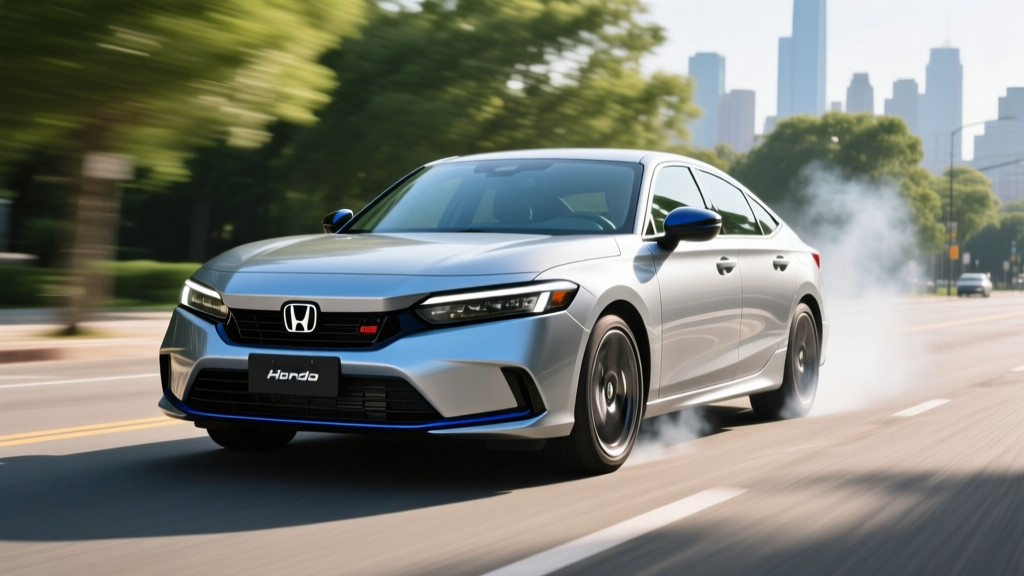
The Honda Civic Hybrid has quietly become one of the most compelling electrified sedans on the market — not because it breaks records, but because it nails the fundamentals that real buyers actually care about: fuel economy, daily drivability, and long-term reliability. If you've been searching for the 0-60 Honda Civic Hybrid time alongside its MPG figures, you're asking the right questions. Performance and efficiency aren't separate conversations for this car; they're two sides of the same powertrain.
For the 2026 model year, Honda continues with the two-motor hybrid system introduced in the current-generation Civic, pairing a 2.0-liter Atkinson-cycle four-cylinder engine with dual electric motors. The result is a compact sedan that sprints to 60 mph in the mid-7-second range while delivering nearly 50 MPG combined. This guide breaks down every spec that matters — acceleration, fuel economy, hybrid system architecture, battery longevity, and whether the Civic Hybrid or a full EV is the smarter buy for your situation.
2026 Honda Civic Hybrid 0-60 Time and Powertrain Specs
The 2026 Honda Civic Hybrid uses Honda's fourth-generation two-motor hybrid system. Unlike a traditional parallel hybrid that simply assists the gas engine, this system operates primarily as a series hybrid at lower speeds — the engine generates electricity that powers the drive motor, which actually turns the wheels. At highway speeds, a lock-up clutch connects the engine directly to the drivetrain for optimal efficiency.
| Specification | 2026 Honda Civic Hybrid |
|---|---|
| Combined Horsepower | 200 hp |
| Combined Torque | 232 lb-ft |
| Gas Engine | 2.0L Atkinson-cycle 4-cylinder (146 hp) |
| Drive Motor Output | 184 hp / 232 lb-ft |
| 0-60 mph (tested) | ~7.2 seconds |
| Drivetrain | Front-wheel drive (FWD) |
| Transmission | e-CVT (single-speed direct drive + engine clutch) |
| Body Styles | Sedan, Hatchback (Sport Hybrid, Sport Touring Hybrid) |
The 0-60 mph time of approximately 7.2 seconds places the Civic Hybrid well ahead of the non-hybrid 2.0L Civic (which runs closer to 8.5 seconds) and within a half-second of the discontinued 1.5T turbo models. The electric motor's instant torque delivery — all 232 lb-ft available from zero RPM — makes the car feel quicker in real-world driving than the stopwatch number suggests. Around-town acceleration from 30-50 mph is particularly strong, where the electric motor does the heavy lifting before the engine kicks in for sustained highway passing.
Compared to the Toyota Corolla Hybrid (138 hp combined, ~9.0 seconds 0-60), the Civic Hybrid is significantly quicker. It also edges out the Hyundai Elantra Hybrid (139 hp combined, ~7.8 seconds 0-60) in both power and acceleration, making it the performance leader in the compact hybrid sedan segment.
EPA Fuel Economy: City, Highway, and Combined MPG
Fuel economy is the headline act here, and the Civic Hybrid delivers numbers that rival dedicated hybrid models costing thousands more. According to fueleconomy.gov, the EPA ratings for the 2026 Civic Hybrid sedan are:
| Trim / Configuration | City MPG | Highway MPG | Combined MPG |
|---|---|---|---|
| Sport Hybrid Sedan | 50 | 47 | 49 |
| Sport Touring Hybrid Sedan | 50 | 47 | 49 |
| Sport Hybrid Hatchback | 49 | 43 | 46 |
| Sport Touring Hybrid Hatchback | 49 | 43 | 46 |
The Honda Civic Hybrid is a conventional hybrid (HEV), not a plug-in hybrid (PHEV). This means:
- No plug required. The battery recharges through regenerative braking and the gas engine — you never need to plug it in.
- No electric-only range. Unlike a PHEV (e.g., Toyota Prius Prime with ~44 miles EV-only), the Civic Hybrid always uses a blend of gas and electric power.
- No federal EV tax credit. The §30D credit applies to BEVs and PHEVs only. Conventional HEVs do not qualify.
- Simpler ownership. No charging infrastructure needed, no range planning, no dependency on electrical access.
Real-World MPG vs. EPA Estimates
One of the most consistent patterns we observe with Honda's two-motor hybrid system is that real-world city MPG often meets or slightly exceeds the EPA city estimate. This is because city driving — with frequent stops and low speeds — keeps the car in its most efficient EV-dominant mode, where the engine runs only as a generator at its optimal RPM.
Highway driving tells a different story. Expect real-world highway fuel economy in the 42-45 MPG range at 70-75 mph, slightly below the 47 MPG EPA sticker. The engine must work harder at sustained high speeds, and the aerodynamic drag of any sedan works against efficiency. In mixed driving with a heavy city bias, owners consistently report 48-51 MPG on enthusiast forums and fuel-tracking apps.
Cold weather reduces efficiency by roughly 5-10% due to increased engine warm-up time (the engine runs more frequently to heat the cabin and catalytic converter). In sub-freezing conditions, expect combined real-world figures closer to 43-45 MPG for the sedan.
Hybrid System Architecture: How It Actually Works
Honda's two-motor system is fundamentally different from Toyota's planetary-gear Hybrid Synergy Drive. Here's the operating logic:
- EV Drive (low speeds, light load): The battery powers the drive motor directly. The engine is off. This covers parking lots, residential streets, and stop-and-go traffic up to roughly 25-30 mph under gentle throttle.
- Hybrid Drive (most driving): The engine runs but is mechanically disconnected from the wheels. Instead, it spins a generator motor that produces electricity. That electricity either powers the drive motor directly or charges the battery, depending on demand. The engine can run at its most efficient RPM regardless of vehicle speed.
- Engine Drive (highway cruising): Above approximately 45-55 mph under steady load, a lock-up clutch engages, connecting the engine directly to the wheels through a single fixed gear ratio. This avoids the energy conversion losses of the generator path.
This architecture gives the Civic Hybrid its characteristic smooth, EV-like acceleration feel in city driving while maintaining excellent highway efficiency. The transition between modes is nearly imperceptible from the driver's seat — a significant refinement advantage over earlier-generation Honda hybrids.
Battery Size, Warranty, and Replacement Cost
| Battery Type | Lithium-ion (Li-ion) |
| Battery Capacity | ~1.1 kWh (gross) — small buffer pack, not a traction battery for EV driving |
| Hybrid System Warranty | 8 years / 100,000 miles (10 years / 150,000 miles in CARB states) |
| Estimated Out-of-Warranty Replacement | $2,500 – $4,000 (battery pack + labor) |
| Degradation Expectation | Minimal — small HEV batteries cycle shallowly and rarely require replacement within 150k+ miles |
The Civic Hybrid's battery pack is intentionally small — roughly 1.1 kWh gross, with an even smaller usable window. This is by design. Unlike a PHEV or BEV that deeply discharges its battery over long distances, a conventional hybrid like the Civic uses very shallow charge-discharge cycles (typically keeping the battery between 40-60% state of charge). This shallow cycling dramatically reduces degradation stress.
Honda covers the hybrid battery and all hybrid-system components (motors, inverter, control unit) under its 8-year/100,000-mile hybrid system warranty nationwide. In states that follow California Air Resources Board (CARB) emissions standards — including California, New York, Massachusetts, Oregon, Washington, and several others — that coverage extends to 10 years / 150,000 miles.
If the battery does need replacement outside warranty, the cost is significantly lower than a full EV battery swap. Based on dealer parts pricing and independent hybrid shop data, expect $2,500 to $4,000 for a new OEM battery pack including labor. Third-party refurbished packs can reduce this to $1,500-$2,500. Given the shallow-cycling design, most Civic Hybrids will never need a battery replacement within typical ownership periods.
Pricing, Trims, and Tax Credit Eligibility
The 2026 Honda Civic Hybrid is offered in two trims for both the sedan and hatchback body styles. Pricing reflects Honda's positioning of the hybrid as a premium upgrade over the standard Civic:
| Trim | Body Style | MSRP (incl. destination) |
|---|---|---|
| Sport Hybrid | Sedan | ~$30,550 |
| Sport Touring Hybrid | Sedan | ~$33,550 |
| Sport Hybrid | Hatchback | ~$31,550 |
| Sport Touring Hybrid | Hatchback | ~$34,550 |
The Honda Civic Hybrid is a conventional hybrid (HEV), not a plug-in hybrid or battery-electric vehicle. Under current IRS §30D rules, the federal clean vehicle credit (up to $7,500) applies only to BEVs and PHEVs that meet battery sourcing, MSRP cap, and buyer income requirements. The Civic Hybrid does not qualify for any federal purchase incentive.
Some states and local utilities offer rebates or HOV lane access for conventional hybrids, but these vary widely by jurisdiction. Check your state's energy office or utility provider for current programs.
For buyers who specifically want a Honda with federal tax credit eligibility, the closest option is the fully electric Honda Prologue (an EV built on GM's Ultium platform), which may qualify for the full $7,500 credit depending on your income, the vehicle's MSRP, and battery sourcing compliance. Always verify eligibility with a tax professional before purchase, as §30D rules have specific income caps ($150,000 single / $300,000 joint for new vehicles) and MSRP limits ($55,000 for sedans, $80,000 for SUVs/trucks).
Real-World Ownership: What to Expect Daily
Living with the Civic Hybrid day-to-day reveals practical advantages that spec sheets don't capture:
- No behavior change required. You fuel it like any gas car. There's no charging to plan, no range to monitor, no apps to manage. If your apartment or workplace doesn't offer charging, this is a major advantage over a PHEV or BEV.
- Regenerative braking feel. Honda offers adjustable regen via steering-wheel paddles (four levels). The highest setting provides strong deceleration but does not bring the car to a complete stop — so true one-pedal driving isn't available. This is normal for HEVs.
- Cabin heat in winter. The gas engine runs more frequently in cold weather to provide cabin heat and maintain emissions system temperature. This is the primary reason winter MPG drops 5-10%. A heat pump (common in BEVs) is not used here.
- Driving modes. ECON mode softens throttle response and optimizes climate control for maximum efficiency. Sport mode keeps the engine running more aggressively for responsiveness. Normal mode balances both — and is what most owners leave it in.
- Fuel cost savings. At 49 MPG combined and $3.50/gallon gas, the Civic Hybrid costs roughly $0.071 per mile in fuel. A comparable non-hybrid Civic (33 MPG combined) costs about $0.106 per mile. Over 15,000 miles/year, that's a savings of approximately $525 annually — or about $2,625 over five years.
Civic Hybrid vs. Full EV vs. Gas Civic: Which Should You Choose?
Choose the Civic Hybrid (HEV) if:
- You can't charge at home or work (apartment living, street parking, no garage)
- You want maximum MPG without any behavioral change
- You take frequent long road trips and don't want to plan charging stops
- You want the lowest total cost of ownership with minimal upfront premium
- You live in an area with limited public charging infrastructure
Choose a Plug-in Hybrid (PHEV) if:
- You can install a Level 2 charger at home and have a short commute (<30 miles)
- You want EV-like daily driving with gas-engine backup for road trips
- You want to qualify for the federal §30D tax credit (up to $7,500)
- Consider the Toyota Prius Prime (44 mi EV-only) or Hyundai Tucson PHEV (33 mi EV-only)
Choose a Full EV (BEV) if:
- You have reliable home Level 2 charging
- Your daily driving is under 200 miles and you can plan for longer trips
- You want the lowest per-mile energy cost ($0.03-0.05/mi on home electricity)
- You want zero tailpipe emissions and minimal maintenance
- Consider the Tesla Model 3, Hyundai Ioniq 6, or Honda Prologue
Choose the Gas Civic if:
- Your annual mileage is very low (<8,000 miles) and the hybrid premium won't pay back
- You want the lowest possible purchase price
- You prefer the lighter weight and simpler mechanical layout of a non-hybrid
Pros and Cons at a Glance
- Class-leading 200 hp combined — quickest compact hybrid sedan
- EPA 49 MPG combined sedan; real-world city often exceeds 50 MPG
- No charging infrastructure needed — fuel and go
- Smooth, EV-like low-speed driving character
- 8yr/100k hybrid warranty (10yr/150k in CARB states)
- Available as sedan or hatchback
- Honda Sensing safety suite standard on all trims
- No federal tax credit eligibility (HEV, not PHEV/BEV)
- Hybrid premium of ~$2,500 over equivalent gas Civic trims
- Highway MPG (47 EPA) drops to low 40s at 75+ mph
- No true one-pedal driving / full regen stop
- FWD only — no AWD option (unlike Toyota Prius)
- Modest 1.1 kWh battery — not designed for sustained EV-only driving
Frequently Asked Questions
What is the 0-60 time of the Honda Civic Hybrid?
The 2026 Honda Civic Hybrid reaches 0-60 mph in approximately 7.2 seconds. This is enabled by the combined 200 hp and 232 lb-ft of torque, with the electric motor providing instant torque from a standstill. It's roughly 1.3 seconds quicker than the base 2.0L gas Civic and competitive with the old 1.5T turbo models.
How many MPG does the Honda Civic Hybrid get?
The EPA rates the Civic Hybrid sedan at 50 city / 47 highway / 49 combined MPG. The hatchback is slightly lower at 49/43/46. In real-world driving, city-heavy commuters often report 50-52 MPG, while highway-dominant driving at 70+ mph typically yields 42-45 MPG. Cold weather reduces these figures by roughly 5-10%.
Is the Honda Civic Hybrid a plug-in?
No. The Civic Hybrid is a conventional hybrid (HEV). It does not have a charging port and cannot be plugged in. The battery recharges automatically through regenerative braking and the gas engine. If you want a Honda with plug-in capability, look at the Honda Clarity Plug-In Hybrid (discontinued after 2022, available used) or consider a PHEV from another brand.
How long will the Civic Hybrid battery last?
Honda's hybrid battery is designed for shallow charge-discharge cycles that minimize degradation. The battery is warranted for 8 years/100,000 miles (10 years/150,000 miles in CARB states). Real-world data from earlier Honda hybrid models (Insight, Accord Hybrid) suggests these batteries routinely last 150,000-200,000+ miles before significant capacity loss. Out-of-warranty replacement costs approximately $2,500-$4,000.
Does the Civic Hybrid qualify for any tax credit?
The Civic Hybrid does not qualify for the federal §30D clean vehicle tax credit, which is limited to plug-in hybrids (PHEVs) and battery-electric vehicles (BEVs). Some states or local utilities may offer small rebates for conventional hybrids — check your state energy office. For the full $7,500 federal credit, you would need to look at a qualifying PHEV or BEV.
How does the Civic Hybrid compare to the Toyota Prius?
The Toyota Prius (57 MPG combined, 196 hp, ~8.0 sec 0-60) is more fuel-efficient but less powerful. The Civic Hybrid gives up about 8 MPG combined but gains significantly in acceleration feel, interior space, and driving engagement. The Prius also offers AWD (on select trims) and a PHEV variant (Prius Prime), neither of which the Civic Hybrid provides. Both are excellent choices — the Prius wins on pure efficiency, the Civic Hybrid on performance and refinement.
Is the Civic Hybrid reliable?
Honda's hybrid systems have a strong reliability track record. The two-motor architecture has fewer wear components than traditional automatic transmissions (no torque converter, no multi-speed gearbox). NHTSA and Consumer Reports data on prior model-year Civic Hybrids show average to above-average reliability ratings. The hybrid-specific components (battery, motors, inverter) are covered by the extended 8-10 year warranty, reducing long-term risk.
Final Verdict
The 2026 Honda Civic Hybrid occupies a precise sweet spot: it's the quickest compact hybrid sedan available, delivers nearly 50 MPG without requiring any change to your fueling habits, and carries a price premium small enough to recoup through fuel savings within 4-5 years of average driving. Its 0-60 time of ~7.2 seconds eliminates the "slow hybrid" stigma, and the two-motor system's EV-like low-speed behavior previews what full electric driving feels like — without the charging dependency.
For buyers who can't charge at home, who road-trip regularly, or who simply want a set-it-and-forget-it efficiency upgrade over a gas car, the Civic Hybrid is arguably the best compact sedan choice on the market. If you have home charging and want to maximize electric driving, a PHEV or BEV will deliver lower running costs and potential tax credits. But for the vast middle ground of drivers who want excellent MPG with zero compromise on convenience, the Civic Hybrid delivers exactly what it promises.