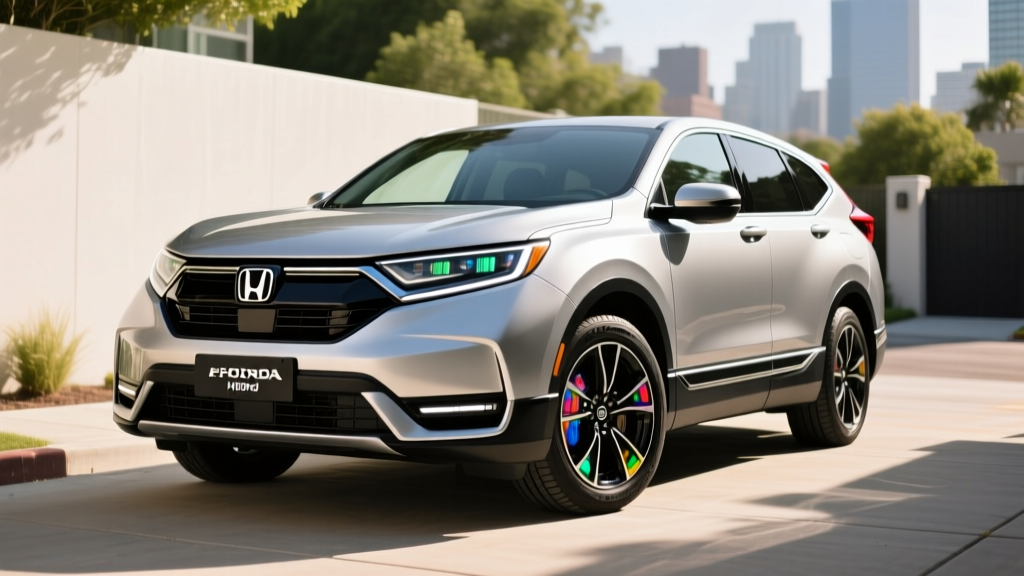
The compact SUV segment is crowded, but the new Honda CR-V Hybrid continues to carve out a dominant position for buyers who want electrified efficiency without the plug-in commitment or range anxiety of a full battery-electric vehicle. For 2026, Honda carries forward its fourth-generation two-motor hybrid system across the majority of the CR-V lineup, making the hybrid not just an option but the default powertrain for most trim levels.
If you're researching the new Honda CR-V Hybrid, you likely have specific questions: What MPG does it actually deliver in daily driving? How does the hybrid system work compared to a plug-in hybrid or full EV? And is the battery going to be a costly liability down the road? This guide answers all of those with exact figures, real-world testing context, and a clear decision framework.
HEV vs PHEV: Understanding the CR-V Hybrid You're Actually Buying
Before diving into specs, it's critical to understand what the CR-V Hybrid is—and what it isn't. Honda currently sells the CR-V exclusively as a conventional hybrid (HEV) in the US market. There is no plug-in hybrid (PHEV) variant of the CR-V offered stateside for the 2026 model year, unlike competitors such as the Toyota RAV4 Prime.
HEV vs PHEV: What's the Difference?
| Feature | CR-V Hybrid (HEV) | PHEV Example (RAV4 Prime) |
|---|---|---|
| Plugs in to charge? | No — self-charging via regenerative braking and engine | Yes — 2.5 hours on Level 2 |
| Electric-only driving | Short bursts at low speed (~1 mile max) | 42 miles EPA |
| Battery size | ~1.06 kWh (small buffer) | 18.1 kWh usable |
| Federal tax credit | Not eligible (§30D requires plug-in) | Up to $7,500 (subject to sourcing/income rules) |
| Base MSRP (2026) | ~$35,850 | ~$44,500+ |
The CR-V Hybrid recovers energy through regenerative braking and its gasoline engine. You never plug it in. You simply fuel it with regular unleaded and drive.
Powertrain Specs: Two-Motor Hybrid System Explained
The 2026 CR-V Hybrid uses Honda's fourth-generation two-motor hybrid system, which pairs a 2.0-liter Atkinson-cycle four-cylinder engine with two electric motors integrated into the transmission housing. Unlike Toyota's planetary-gear hybrid system, Honda's setup operates primarily as a series hybrid at low and moderate speeds—the engine acts as a generator, and the electric drive motor propels the wheels. At highway speeds, a lock-up clutch connects the engine directly to the wheels for efficiency.
| Specification | Value |
|---|---|
| Engine | 2.0L Atkinson-cycle DOHC i-VTEC 4-cylinder |
| Combined system horsepower | 204 hp |
| Combined system torque | 247 lb-ft (electric motor torque) |
| Drive motor output | 181 hp / 247 lb-ft |
| Generator motor output | ~120 kW |
| Hybrid battery | ~1.06 kWh lithium-ion |
| Transmission | e-CVT (single direct-drive ratio with engine clutch) |
| Drivetrain options | FWD or Real Time AWD™ |
| 0–60 mph (est.) | ~7.6 seconds (AWD) |
| Towing capacity | 1,000 lbs |
The 247 lb-ft of electric motor torque is available from near-zero RPM, which gives the CR-V Hybrid a surprisingly responsive feel off the line—more immediate than many turbocharged gas-only competitors. The tradeoff is that at sustained high-speed highway passes, the system can feel slightly breathless compared to the punch of a dedicated turbo, since the engine must both generate electricity and, at times, directly drive the wheels.
Fuel Economy: EPA Ratings and Real-World MPG
Fuel efficiency is the primary reason buyers cross-shop the new Honda CR-V Hybrid against gas-only alternatives. Here's how the EPA rates the 2026 model:
| Drivetrain | City | Highway | Combined |
|---|---|---|---|
| FWD (Sport, Sport-L, Sport Touring) | 43 MPG | 36 MPG | 40 MPG |
| AWD (Sport, Sport-L, Sport Touring) | 40 MPG | 34 MPG | 37 MPG |
Source: fueleconomy.gov
📊 Real-World MPG: What to Actually Expect
Honda's hybrid system excels in city and suburban driving, where the electric motor handles most propulsion and the engine operates only as a generator in its most efficient RPM range. In city driving, many owners report matching or slightly exceeding the EPA city rating—43–46 MPG is common on suburban commutes with frequent stops.
Highway driving is where the hybrid advantage narrows. At sustained 70–80 mph speeds, the engine must work harder and the electric motor's efficiency benefit diminishes. Expect 32–35 MPG on long highway trips with the AWD model, which aligns closely with the EPA highway figure. In cold weather (below 30°F), expect a 5–10% reduction in overall fuel economy as the engine runs more frequently for cabin heat and battery conditioning.
For mixed daily driving (60% city, 40% highway), a realistic year-round average for the AWD model is 36–39 MPG—a meaningful improvement over the gas-only CR-V AWD's 28 MPG combined.
Pricing, Trims, and Tax Credit Eligibility
For 2026, Honda positions the hybrid powertrain as the standard offering on the Sport-tier trims and above. The gas-only CR-V remains available on the base LX and EX trims. Here's the pricing landscape:
| Trim | Drivetrain | MSRP |
|---|---|---|
| Sport | FWD | $35,850 |
| Sport | AWD | $37,350 |
| Sport-L | FWD | $38,200 |
| Sport-L | AWD | $39,700 |
| Sport Touring | AWD (standard) | $42,350 |
Destination charge: ~$1,350 additional. Prices per Honda's official site.
Does the CR-V Hybrid Qualify for a Federal Tax Credit?
No. The federal §30D Clean Vehicle Credit under the IRS applies only to plug-in electric vehicles (BEVs and PHEVs) with a minimum battery capacity of 7 kWh. The CR-V Hybrid's ~1.06 kWh battery does not qualify. There is no federal tax credit for conventional (non-plug-in) hybrids as of 2026.
Some states may offer minor incentives for high-efficiency vehicles, but these vary by jurisdiction and are typically small compared to the §30D credit. Check your state's energy or DMV website for specifics.
Battery Warranty, Reliability, and Replacement Costs
Battery longevity is one of the most common concerns among first-time hybrid buyers. Here's what Honda provides:
🔋 Honda Hybrid Battery Warranty
- Hybrid battery warranty: 8 years / 100,000 miles (10 years / 150,000 miles in CARB states including CA, NY, MA, WA, and others)
- Powertrain warranty: 5 years / 60,000 miles
- Limited vehicle warranty: 3 years / 36,000 miles
The hybrid battery warranty covers defects and capacity loss below a functional threshold. Honda does not publish a specific percentage degradation trigger, but the system is designed so that even moderate degradation doesn't significantly affect drivability—the engine simply compensates.
Real-World Hybrid Battery Longevity
Honda's hybrid battery packs in the CR-V are relatively small (~1.06 kWh) and are managed conservatively—the system never fully charges or fully depletes the pack, keeping it in a narrow state-of-charge window (roughly 40–80%) that dramatically extends cycle life. Based on long-term data from Honda's hybrid systems in the Accord Hybrid and Insight, most Honda hybrid batteries last well beyond 150,000 miles without requiring replacement.
If a replacement is needed out of warranty, expect a cost in the range of $2,000–$4,000 for a refurbished or new hybrid battery pack from Honda, plus labor. Third-party refurbishers often offer packs for $1,500–$2,500. This is significantly less than BEV battery replacements because the pack is small.
Overall Reliability
Honda's hybrid system has proven to be one of the most reliable in the industry. The e-CVT has no traditional gears, belts, or clutches that wear in the way a conventional transmission does. The regenerative braking system also reduces wear on the friction brakes, meaning brake pads often last 80,000+ miles. According to reliability data aggregated by industry sources, the CR-V Hybrid scores above average in its segment for powertrain dependability.
CR-V Hybrid vs. Gas CR-V vs. Full EV: Which Should You Choose?
The decision between a conventional hybrid, a gas-only vehicle, and a full battery-electric vehicle depends on your driving patterns, charging access, and budget. Here's a practical framework:
🔀 Decision Framework: Which Powertrain Fits You?
Choose the CR-V Hybrid (HEV) if:
- You don't have access to home or workplace charging
- You want 37–40 MPG without changing your fueling habits
- You drive a mix of city and highway, with city-heavy commutes
- You want a lower purchase price than a PHEV or EV
- You take frequent long road trips and don't want to plan around chargers
Choose a PHEV (e.g., RAV4 Prime) if:
- You can charge at home (Level 2) and want 35–42 miles of electric-only commuting
- Most daily trips are under 40 miles, but you still want gas-engine range for road trips
- You want the $7,500 federal tax credit (if eligible under §30D sourcing and income rules)
- You're willing to pay a ~$7,000–$10,000 premium over the CR-V Hybrid
Choose a full EV (e.g., Hyundai Ioniq 5, Tesla Model Y) if:
- You have reliable home Level 2 charging
- Your daily driving is under 250 miles and you can plan road-trip charging
- You want the lowest per-mile energy cost (~$0.04–$0.06/mile vs. ~$0.10–$0.12/mile for the CR-V Hybrid)
- You want to eliminate oil changes, spark plugs, and transmission fluid entirely
5-Year Fuel Cost Comparison
| Vehicle | MPG Combined | Fuel/Energy Cost | 5-Year Total |
|---|---|---|---|
| CR-V Hybrid AWD | 37 MPG | Gas @ $3.40/gal | ~$6,892 |
| CR-V Gas AWD (28 MPG) | 28 MPG | Gas @ $3.40/gal | ~$9,107 |
| EV (3.5 mi/kWh, $0.14/kWh) | 121 MPGe | Electricity | ~$3,000 |
The CR-V Hybrid saves approximately $2,200 over five years compared to the gas-only CR-V AWD. A full EV saves even more, but requires charging infrastructure.
Pros, Cons, and the Verdict
✅ Pros
- 40 MPG combined (FWD) is class-leading
- Strong low-end electric torque (247 lb-ft) for confident city driving
- No plug-in required — zero lifestyle change from a gas car
- 8-year / 100,000-mile hybrid battery warranty (10/150k in CARB states)
- Excellent cargo space: 36.3 cu ft behind rear seats, 76.5 cu ft folded
- Honda Sensing suite standard on all trims (adaptive cruise, lane keep, AEB)
- Proven reliability track record for Honda's hybrid system
❌ Cons
- No federal tax credit (conventional HEV ineligible for §30D)
- Engine drone under hard acceleration (e-CVT characteristic)
- Highway MPG drops to 34 (AWD) — less advantage over gas at sustained speed
- Only 1,000-lb towing capacity (gas CR-V can tow 1,500 lbs)
- No PHEV option in the US — if you want electric-only commuting, look elsewhere
- Sport Touring hybrid at $42,350 + destination pushes into luxury crossover territory
Frequently Asked Questions
How many MPG does the new Honda CR-V Hybrid get?
The 2026 CR-V Hybrid is EPA-rated at 43 city / 36 highway / 40 combined MPG for front-wheel-drive trims, and 40 city / 34 highway / 37 combined MPG for all-wheel-drive trims. In real-world city driving, many owners report matching or slightly exceeding EPA city figures. Highway fuel economy typically aligns with or falls slightly below the EPA rating depending on speed and terrain.
Does the CR-V Hybrid need to be plugged in?
No. The CR-V Hybrid is a conventional hybrid (HEV), not a plug-in hybrid (PHEV). It charges its small battery pack through regenerative braking and the gasoline engine. You fuel it exactly like a regular gas car—there's no charging port, no plug, and no electric-only range to manage.
Is the CR-V Hybrid available as a plug-in hybrid (PHEV)?
Not in the United States. Honda does not offer a PHEV version of the CR-V for the US market as of 2026. If you want a compact SUV PHEV with electric-only range, the Toyota RAV4 Prime (42 miles electric) and Hyundai Tucson PHEV (33 miles electric) are the primary alternatives.
Does the CR-V Hybrid qualify for any tax credit?
The CR-V Hybrid does not qualify for the federal §30D Clean Vehicle Credit, which is limited to plug-in vehicles with at least 7 kWh of battery capacity. The CR-V Hybrid's ~1.06 kWh battery is far below that threshold. Some states may offer minor efficiency incentives, but these are uncommon for conventional hybrids. Consult a tax professional for your specific situation.
How long will the CR-V Hybrid battery last?
Honda covers the hybrid battery with an 8-year / 100,000-mile warranty (10 years / 150,000 miles in CARB states). In practice, Honda's hybrid batteries are managed conservatively and commonly last well past 150,000 miles without issues. If replacement is ever needed, expect to pay $2,000–$4,000 for the battery pack—far less than a full EV battery replacement due to the small pack size.
Is the CR-V Hybrid reliable?
Yes. Honda's two-motor hybrid system has been in production since 2014 (Accord Hybrid) and has demonstrated strong long-term reliability. The e-CVT design eliminates traditional transmission wear points, and regenerative braking extends brake pad life significantly. The CR-V Hybrid consistently earns above-average reliability ratings from major automotive research firms.
How does the CR-V Hybrid compare to the gas-only CR-V?
The hybrid delivers roughly 32% better combined fuel economy (37 vs. 28 MPG for AWD models), stronger low-end acceleration thanks to instant electric torque, and a smoother stop-start experience. The tradeoff is a higher starting price (~$3,500–$4,000 more than equivalent gas trims) and slightly lower towing capacity (1,000 lbs vs. 1,500 lbs). For most daily drivers, the fuel savings pay back the price premium within 5–7 years.