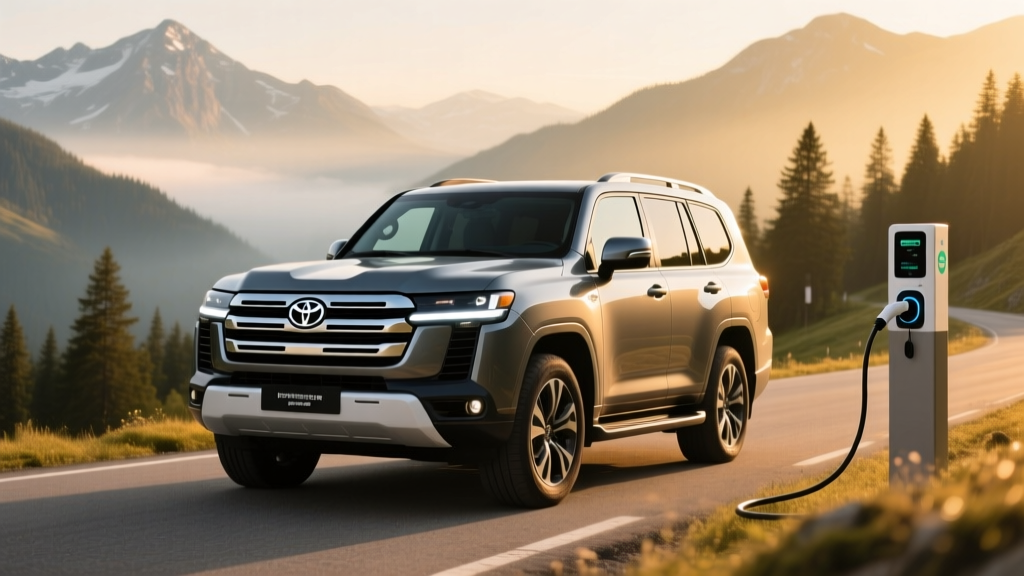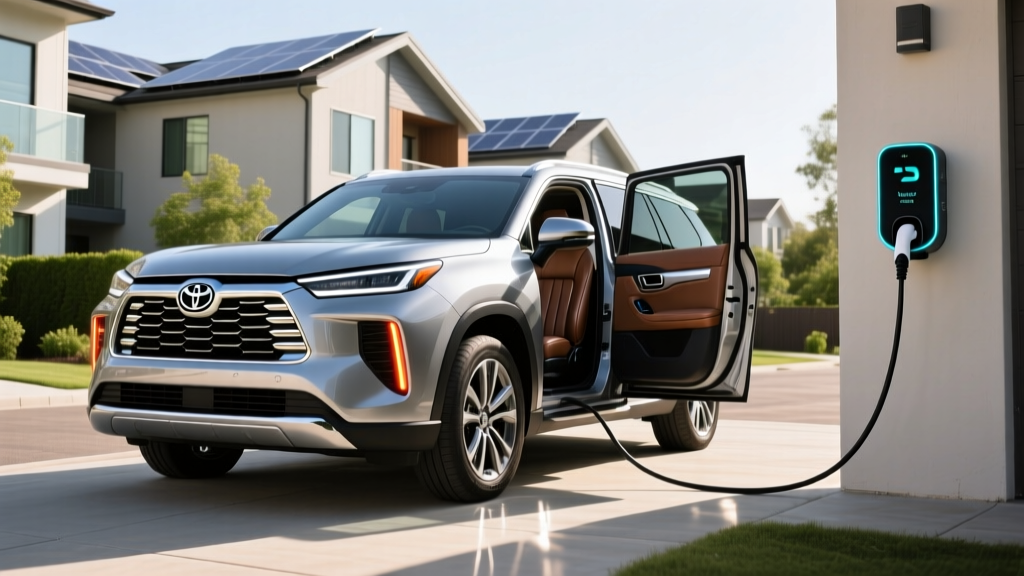
Quick Verdict: The Grand Highlander Platinum Hybrid MAX at a Glance
The 2026 Toyota Grand Highlander Platinum Hybrid MAX occupies a specific niche: a three-row family hauler that delivers V6-class acceleration without V6-class fuel bills. It pairs a turbocharged 2.4-liter four-cylinder with a high-output electric motor for a combined 367 horsepower and 400 lb-ft of torque — enough to hit 60 mph in roughly 5.7 seconds — while still returning an EPA-estimated 27 MPG combined. The Platinum trim bundles nearly every feature Toyota offers, from a panoramic roof to a 14-speaker JBL audio system, at a premium price point near $59,000.
But this is a conventional hybrid (HEV), not a plug-in hybrid (PHEV). You cannot charge it from a wall outlet, it has no electric-only driving range, and it does not qualify for the federal §30D EV tax credit. Understanding that distinction is critical before you sign a purchase agreement. Below, we break down exactly what the Hybrid MAX powertrain delivers, where the real-world MPG lands, and whether this trim makes sense versus a PHEV or full battery-electric SUV.
Hybrid MAX Powertrain: Engine, Motor, and Performance Specs
| Spec | Value |
|---|---|
| Engine | 2.4L turbocharged 4-cylinder |
| Electric Motor | High-output front + rear eAxle motors |
| Combined Horsepower | 367 HP |
| Combined Torque | 400 lb-ft |
| 0–60 mph | ~5.7 seconds |
| Drivetrain | Electronic AWD (eAxle rear motor) |
| Transmission | 6-speed automatic (Direct Shift) |
| Towing Capacity | 5,000 lbs (max, properly equipped) |
| Hybrid Battery | ~1.9 kWh NiMH (self-charging, no plug) |
| EPA MPG (City / Hwy / Combined) | 26 / 27 / 27 |
| Fuel Tank | 17.1 gallons |
| Total Driving Range | ~462 miles (EPA est.) |
| Base MSRP (Platinum Hybrid MAX) | ~$58,170 (incl. destination) |
The Hybrid MAX system is fundamentally different from the standard Grand Highlander Hybrid powertrain. The standard hybrid uses a naturally aspirated 2.5-liter four-cylinder paired with electric motors for 245 HP and an EPA-estimated 36 MPG combined. The Hybrid MAX sacrifices roughly 9 MPG at the combined figure to gain 122 additional horsepower and a more responsive 6-speed automatic transmission instead of the eCVT found in the standard hybrid.
On the road, that trade-off is tangible. The Hybrid MAX pulls confidently onto highways with a full load of passengers and cargo, and the traditional stepped automatic avoids the "drone" sensation some drivers dislike in eCVT-equipped hybrids. The rear eAxle motor provides electronic all-wheel drive without a mechanical driveshaft, improving traction in rain and light snow while keeping packaging efficient.
Fuel Economy: EPA Numbers vs. Real-World MPG
| Driving Cycle | EPA Estimate | Real-World Expectation |
|---|---|---|
| City | 26 MPG | 25–28 MPG (hybrids often beat EPA in stop-and-go) |
| Highway | 27 MPG | 25–27 MPG (turbo engine works harder at sustained speed) |
| Combined | 27 MPG | 25–27 MPG |
The Hybrid MAX's EPA ratings are modest for a hybrid — closer to what you'd expect from a turbocharged gas-only midsize SUV. That's the direct cost of the performance upgrade. According to fueleconomy.gov, the standard Grand Highlander Hybrid (non-MAX) achieves 36 MPG combined, a substantial 9-MPG advantage.
In real-world driving, Toyota hybrids tend to match or slightly exceed their EPA city estimates because regenerative braking recovers energy in stop-and-go traffic. Highway driving is where the Hybrid MAX's turbocharged engine works harder under load, especially at speeds above 70 mph or in mountainous terrain. Expect roughly 25–27 MPG on a loaded highway road trip and potentially 28+ MPG in urban commuting with moderate acceleration habits.
For context, a gas-only Grand Highlander with the turbo 2.4L (non-hybrid) returns an EPA-estimated 24 MPG combined. The Hybrid MAX improves on that by about 3 MPG while adding substantially more power — a meaningful but not transformative efficiency gain.
HEV vs. PHEV vs. Full EV: Which Powertrain Fits Your Family?
Conventional Hybrid (HEV) — This Vehicle
How it works: A small battery (~1.9 kWh) is charged by the engine and regenerative braking. You never plug it in. The electric motor assists the gas engine during acceleration and can propel the vehicle at low speeds for very short distances.
Pros: No charging infrastructure needed. No range anxiety. Lower purchase price than PHEV/EV. Familiar gas-station refueling.
Cons: No electric-only range. No federal tax credit. Still burns gasoline for every trip.
Plug-In Hybrid (PHEV) — e.g., Toyota RAV4 Prime, Hyundai Tucson PHEV
How it works: A larger battery (typically 13–20 kWh) provides 30–45 miles of electric-only driving before the gas engine takes over. You plug in to recharge (Level 1 or Level 2).
Pros: Daily commutes can be fully electric. Gas engine available for road trips. May qualify for partial federal or state incentives.
Cons: Higher purchase price. Requires home charging setup for maximum benefit. Heavier, reducing gas-mode MPG.
Battery Electric (BEV) — e.g., Kia EV9, Tesla Model X
How it works: A large battery pack (80–100+ kWh) powers electric motors exclusively. No gas engine. Requires plug-in charging.
Pros: Lowest fuel cost per mile. Zero tailpipe emissions. Minimal maintenance. Eligible for up to $7,500 federal tax credit (subject to IRS §30D eligibility rules).
Cons: Higher upfront cost. Charging infrastructure dependency. Range reduction in cold weather. Longer refueling time on road trips.
The decision framework: If you lack reliable access to home or workplace charging, the Grand Highlander Hybrid MAX (HEV) is the pragmatic choice — it requires zero behavioral change from a gas vehicle. If you can install a Level 2 charger at home and most daily driving is under 40 miles, a PHEV offers the best of both worlds. If your household has a second vehicle for road trips and you want maximum fuel savings, a three-row BEV like the Kia EV9 (EPA 270+ miles of range) eliminates gasoline entirely.
Pricing, Trims, and Tax Credit Eligibility
The 2026 Toyota Grand Highlander Platinum Hybrid MAX carries an MSRP of approximately $58,170 including destination charges. This is the top-tier trim for the Hybrid MAX powertrain and includes:
- Panoramic glass roof
- 12.3-inch digital instrument cluster and 14-inch infotainment touchscreen
- JBL 14-speaker premium audio
- Heated and ventilated front and second-row seats
- 360-degree camera with curb-view
- Head-up display
- Digital rearview mirror
- Toyota Safety Sense 3.0 suite (pre-collision, lane tracing, adaptive cruise, road sign assist)
Federal Tax Credit: Not Eligible
The Grand Highlander Hybrid MAX is a conventional hybrid (HEV), not a plug-in vehicle. It does not qualify for the IRS §30D Clean Vehicle Credit (up to $7,500 for new EVs and PHEVs). The federal hybrid tax credit that existed pre-2010 has been expired for over a decade. Some states may offer minimal incentives for high-efficiency vehicles, but these vary widely — check your state's energy office or department of revenue for current programs. Consult a tax professional for personalized guidance.
Without a federal credit to offset the premium, the Hybrid MAX's value proposition rests on performance and equipment. A comparably equipped gas-only Grand Highlander Platinum (turbo 2.4L, non-hybrid) lists for roughly $54,000 — about $4,000 less. The Hybrid MAX's fuel savings over the gas-only model are modest at roughly 3 MPG combined, meaning the payback period on that $4,000 premium stretches well beyond typical ownership horizons. You're paying for the acceleration upgrade and the hybrid system's refinement, not dramatic fuel savings.
Battery Warranty, Reliability, and Long-Term Costs
Hybrid Battery Warranty
Toyota covers the Hybrid MAX battery and hybrid system components for 10 years or 150,000 miles (whichever comes first) from date of first use. This applies to all 50 states. The broader powertrain warranty is 5 years / 60,000 miles, and the basic (bumper-to-bumper) warranty is 3 years / 36,000 miles.
Toyota's hybrid systems have an extensive reliability track record spanning over two decades since the original Prius. The Hybrid MAX uses a relatively small nickel-metal hydride (NiMH) battery pack that cycles shallowly — it never fully depletes or fully charges, which significantly reduces degradation stress. In Toyota's earlier hybrid systems, battery packs routinely last 150,000–200,000+ miles before needing replacement.
If the hybrid battery does require out-of-warranty replacement, expect costs in the range of $2,000–$4,000 for parts and labor at a Toyota dealer, though third-party refurbishment options can reduce this to $1,000–$2,000. Given the 10-year/150,000-mile warranty and Toyota's hybrid durability history, battery replacement is unlikely during typical first- or second-owner periods.
The Hybrid MAX's 6-speed automatic transmission is also a reliability positive compared to the eCVT in the standard hybrid — conventional automatics have well-understood service intervals and repair networks. Routine maintenance costs are comparable to a gas vehicle: oil changes, brake service (though regenerative braking extends pad life significantly), and fluid checks.
Pros and Cons: The Honest Assessment
Pros
- 367 HP delivers confident highway merging and towing (5,000 lbs)
- 6-speed automatic avoids eCVT "drone" under hard acceleration
- No plug-in charging required — zero lifestyle change from gas
- 10-year / 150,000-mile hybrid battery warranty
- Platinum trim is fully loaded with premium features
- Third row accommodates adults on short trips
- Toyota Safety Sense 3.0 standard (Level 2 driver assist)
Cons
- 27 MPG combined is only 3 MPG better than the gas-only turbo model
- No federal tax credit eligibility
- ~$4,000 premium over gas-only Platinum with long payback period
- Standard Hybrid (non-MAX) gets 36 MPG — 9 MPG more for less power
- No electric-only driving capability whatsoever
- Platinum trim pushes price near $60K with options
- Turbo engine requires premium fuel for maximum performance
Who Should Buy the Grand Highlander Platinum Hybrid MAX?
Choose the Hybrid MAX if:
- You regularly drive with a full load of passengers and cargo and need the 367 HP for highway confidence
- You tow up to 5,000 lbs (camping trailer, small boat) and want hybrid torque assist
- You prefer a traditional automatic transmission over an eCVT
- You cannot install home charging and want zero dependency on charging infrastructure
- You value a fully loaded luxury-adjacent interior without stepping to a luxury brand
Choose the standard Grand Highlander Hybrid (non-MAX) if:
- Fuel economy is your top priority (36 MPG combined saves ~$500–$700/year over the MAX at 15,000 miles)
- You don't need 367 HP for your typical driving
- You want a lower starting price (standard Hybrid Limited starts around $48,000)
Choose a PHEV or full EV if:
- You have home charging access and want to eliminate or drastically reduce gasoline use
- You want to take advantage of the federal §30D tax credit (up to $7,500 for qualifying EVs/PHEVs)
- Your daily commute is under 40 miles (a PHEV covers it entirely on electricity)
- You're willing to plan charging stops on road trips (BEV) or accept lower gas-mode MPG (PHEV)
Frequently Asked Questions
How many MPG does the Grand Highlander Hybrid MAX get?
The EPA rates it at 26 city / 27 highway / 27 combined. Real-world driving typically falls in the 25–28 MPG range depending on driving style, terrain, and speed. This is 9 MPG less than the standard Grand Highlander Hybrid (36 combined) but 3 MPG more than the gas-only turbo model (24 combined).
Does the Hybrid MAX have any electric-only driving range?
No. The Hybrid MAX is a conventional self-charging hybrid (HEV). Its small ~1.9 kWh battery assists the gas engine during acceleration and enables very brief low-speed electric-only movement (typically under 1 mile at parking-lot speeds), but it has no meaningful electric-only range. You cannot plug it in.
Does the Grand Highlander Hybrid MAX qualify for a federal tax credit?
No. The IRS §30D Clean Vehicle Credit applies only to plug-in electric vehicles (BEVs and PHEVs) meeting specific battery sourcing, MSRP, and buyer income requirements. Conventional hybrids like the Hybrid MAX are not eligible. The older federal hybrid credit expired years ago.
Is the Hybrid MAX reliable, and what does battery replacement cost?
Toyota's hybrid systems have a strong two-decade reliability record. The hybrid battery is warrantied for 10 years / 150,000 miles. Out-of-warranty replacement, if needed after 150K+ miles, typically costs $2,000–$4,000 at a dealer. Many Toyota hybrid batteries exceed 200,000 miles without replacement.
How does the Hybrid MAX compare to the standard Grand Highlander Hybrid?
The standard hybrid produces 245 HP and achieves 36 MPG combined with an eCVT. The Hybrid MAX produces 367 HP and gets 27 MPG combined with a 6-speed automatic. The MAX is for buyers who prioritize acceleration and towing performance; the standard hybrid is for buyers who prioritize fuel economy. Both seat up to seven or eight and share the same platform.
Is Toyota Safety Sense 3.0 self-driving?
No. Toyota Safety Sense 3.0 is a Level 2 driver-assistance system per SAE classification. It provides adaptive cruise control, lane-centering, and automatic emergency braking, but the driver must remain fully attentive with hands on the wheel at all times. It is not autonomous driving.