The 2026 Genesis Hybrid Lineup at a Glance
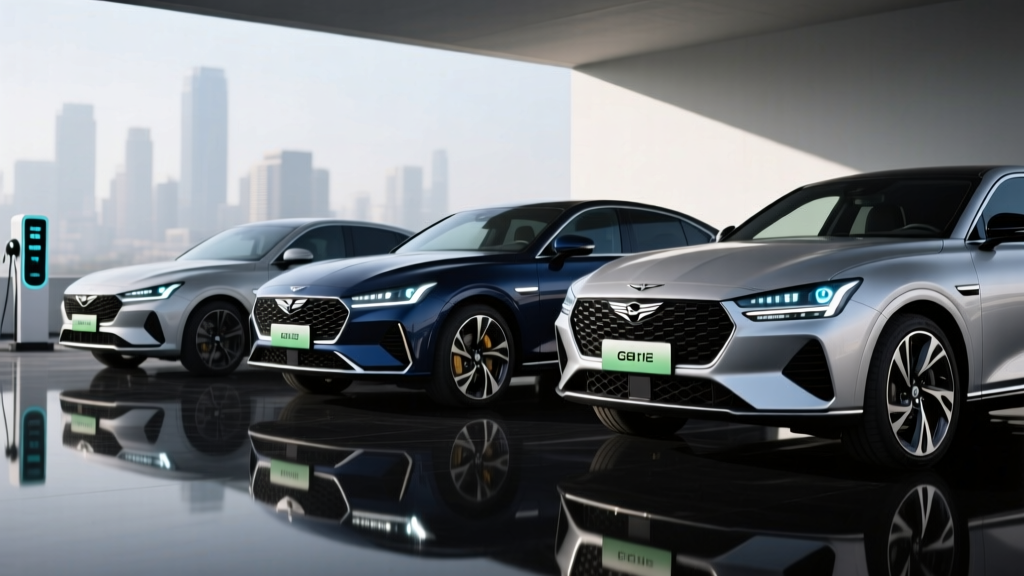
Genesis has carved a distinct path in the luxury electrification space. While rivals like BMW and Mercedes-Benz have pushed heavily into battery-electric vehicles, Genesis maintains a dual-track strategy: offering both full EVs (the Electrified G80, Electrified GV70, and GV60) and plug-in hybrid electric vehicles (PHEVs) for buyers who want electric commuting without range compromise. For the 2026 model year, the Genesis hybrid portfolio centers on two PHEV models: the GV70 PHEV luxury compact SUV and the G80 PHEV midsize luxury sedan.
Notably, Genesis does not currently sell a conventional hybrid (HEV) in the U.S. market — every electrified Genesis with a gas engine is a plug-in hybrid designed to cover daily commuting on battery power alone. This is a critical distinction for shoppers cross-referencing "Genesis hybrids" against competitors like the Lexus RX Hybrid or BMW X5 xDrive50e.
HEV vs. PHEV: What's the Difference?
Conventional Hybrid (HEV): Uses a small battery (typically 1–2 kWh) recharged solely by regenerative braking and the engine. You never plug it in. Electric-only driving is limited to low-speed, short-distance creep. Think Toyota RAV4 Hybrid.
Plug-In Hybrid (PHEV): Carries a much larger battery (12–25+ kWh) that you charge via a wall outlet or public charger. It can drive 20–50+ miles on electricity alone before the gas engine engages. Both Genesis hybrid models are PHEVs.
Genesis GV70 PHEV: Specs, Range, and Fuel Economy
The GV70 PHEV is the higher-volume Genesis hybrid, competing against the BMW X5 xDrive50e, Volvo XC60 Recharge, and Lincoln Corsair Grand Touring. It pairs a turbocharged 2.5-liter inline-four engine with an electric motor integrated into the transmission, driving all four wheels through Genesis's e-HTRAC AWD system.
| Attribute | Value |
|---|---|
| Powertrain | 2.5L turbo I-4 + electric motor, AWD |
| Combined Horsepower | ~305 hp (est.) |
| Battery Capacity | ~18.1 kWh (usable ~15 kWh) |
| Electric-Only Range (EPA) | ~32 miles |
| Total Combined Range | ~430 miles |
| MPGe (EV mode) | ~72 MPGe combined |
| MPG (gas-only, combined) | ~26 MPG combined |
| Level 2 Charge Time (10–100%) | ~3.5 hours at 7.2 kW |
| DC Fast Charging | No (Level 2 max) |
| 0–60 mph | ~6.5 seconds |
| Starting MSRP | ~$57,000 (Advanced trim) |
| Mode | City | Highway | Combined |
|---|---|---|---|
| Electric (MPGe) | ~75 | ~69 | ~72 |
| Gas Only (MPG) | ~24 | ~28 | ~26 |
Source: EPA Fuel Economy — Genesis GV70 PHEV
Real-World MPG vs. EPA Sticker
The GV70 PHEV's ~32-mile electric range is achievable in mixed suburban driving at moderate temperatures. In cold weather (below 35°F), expect that range to drop to roughly 24–27 miles due to cabin heating demands and reduced battery efficiency. Once the battery depletes, the 26 MPG combined gas figure is realistic for mixed driving, though sustained highway cruising at 75+ mph may yield 23–24 MPG. In city driving with frequent regenerative braking opportunities, some owners report 27–28 MPG after battery depletion.
Genesis G80 PHEV: The Electrified Luxury Sedan
The G80 PHEV targets buyers cross-shopping the BMW 5 Series PHEV (550e xDrive) and Mercedes-Benz E-Class PHEV. It shares its plug-in hybrid architecture with the GV70 but benefits from a lower, more aerodynamic sedan body, translating to slightly better efficiency.
| Attribute | Value |
|---|---|
| Powertrain | 2.5L turbo I-4 + electric motor, AWD |
| Combined Horsepower | ~305 hp (est.) |
| Battery Capacity | ~18.1 kWh (usable ~15 kWh) |
| Electric-Only Range (EPA) | ~36 miles |
| Total Combined Range | ~470 miles |
| MPGe (EV mode) | ~78 MPGe combined |
| MPG (gas-only, combined) | ~28 MPG combined |
| Level 2 Charge Time (10–100%) | ~3.5 hours at 7.2 kW |
| DC Fast Charging | No (Level 2 max) |
| 0–60 mph | ~6.2 seconds |
| Starting MSRP | ~$65,000 (Prestige trim) |
| Mode | City | Highway | Combined |
|---|---|---|---|
| Electric (MPGe) | ~81 | ~74 | ~78 |
| Gas Only (MPG) | ~26 | ~30 | ~28 |
Source: EPA Fuel Economy — Genesis G80 PHEV
The G80 PHEV's ~36-mile electric-only range edges out the GV70 thanks to its lower curb weight and superior aerodynamics. For a commuter with a 30-mile round trip, this means the possibility of running on electricity virtually every weekday — provided you charge at home overnight.
Charging the Genesis PHEV Fleet: What You Need to Know
Neither the GV70 PHEV nor the G80 PHEV supports DC fast charging — a common limitation among PHEVs, whose smaller batteries make the added cost and weight of DC hardware hard to justify. Here's what charging looks like in practice:
| Level | Power (kW) | Full Charge Time | Connector |
|---|---|---|---|
| Level 1 (120V household) | ~1.4 kW | ~12–14 hours | J1772 |
| Level 2 (240V home/public) | 7.2 kW | ~3.5 hours | J1772 |
| DC Fast Charge | N/A | N/A | Not supported |
With a dedicated Level 2 home charger — typically a 32-amp or 40-amp wallbox on a 240V circuit — a full overnight charge takes about 3.5 hours. This means even if you forget to plug in when you get home, the battery will be full before morning. Level 1 (standard 120V outlet) works but is painfully slow at ~12+ hours; it's viable only as a backup or for very low-mileage days.
The J1772 connector is the North American standard for Level 2 charging. If you also own a NACS-equipped EV (Tesla or newer 2025+ models), you'll need a J1772-to-NACS adapter or a dual-standard home charger to share the same wallbox.
Pricing, Tax Credits, and Total Cost of Ownership
The 2026 Genesis GV70 PHEV starts at approximately $57,000 (Advanced trim), while the G80 PHEV begins around $65,000 (Prestige). These prices position both vehicles firmly in luxury territory, though Genesis's value proposition — bundling features that German rivals charge extra for — remains compelling.
Federal Tax Credit Eligibility (§30D)
Under current IRS §30D rules, PHEVs may qualify for up to $7,500 in federal tax credits, but eligibility depends on several strict criteria:
- MSRP Cap: SUVs (GV70) must be under $80,000; sedans (G80) under $55,000. The G80 PHEV's ~$65,000 starting price likely exceeds the sedan cap, disqualifying it unless a lower-priced trim becomes available.
- Battery Sourcing: A percentage of critical minerals and battery components must be sourced from the U.S. or free-trade-agreement partners. These thresholds tighten annually.
- Buyer Income Limits: AGI must not exceed $150,000 (single), $225,000 (head of household), or $300,000 (joint).
- Point-of-Sale Transfer: Eligible buyers can transfer the credit to the dealer at purchase for an immediate price reduction.
Bottom line: The GV70 PHEV is more likely to qualify (MSRP under the $80K SUV cap), but battery-sourcing compliance varies by production batch. Always verify with your dealer and a tax professional before assuming credit eligibility.
5-Year Ownership Cost Snapshot
Assuming 12,000 miles/year, 70% of driving within electric range, home charging at $0.14/kWh, and premium gasoline at $4.00/gallon, a Genesis PHEV owner might spend roughly $2,800–$3,200 on energy over five years — compared to $6,000–$7,000 for a gas-only luxury SUV averaging 22 MPG. Insurance premiums for Genesis PHEVs tend to run 10–15% higher than their gas counterparts due to the cost of battery and powertrain repairs.
Battery Warranty, Reliability, and Replacement Costs
Genesis Hybrid Battery Warranty
Genesis provides a 10-year / 100,000-mile warranty on the high-voltage PHEV battery pack, covering defects and excessive capacity loss (typically defined as dropping below 70% of original capacity). The broader powertrain warranty also runs 10 years / 100,000 miles — among the best in the luxury segment.
Hyundai Motor Group (Genesis's parent company) has extensive experience with PHEV battery packs, and failure rates in the first 5–7 years are historically low. The lithium-ion polymer cells used in the GV70 and G80 PHEV are liquid-cooled, which significantly extends lifespan compared to passively cooled packs.
If a battery replacement is needed out of warranty, expect a cost in the range of $6,000–$9,000 (parts and labor) based on comparable Hyundai Motor Group PHEV packs. However, with the 10-year warranty and typical PHEV battery degradation rates of 1–2% per year, most owners will never face this expense during their ownership period.
Genesis Hybrids vs. Full EVs vs. Gas: Which Fits You?
Choosing between a Genesis PHEV, a full battery-electric vehicle (BEV), or a conventional gas car depends on your driving patterns, charging access, and risk tolerance. Here's a practical decision framework:
Decision Framework
Choose a Genesis PHEV if:
- Your daily commute is under 35 miles round-trip and you can charge at home
- You take 3+ road trips per year exceeding 200 miles and don't want to plan around charging stops
- You live in an area with sparse DC fast-charging infrastructure
- You want electric commuting but aren't ready to commit to a full BEV
Choose a full EV (like the Genesis Electrified GV70 or GV60) if:
- You have reliable home Level 2 charging
- Your daily driving is under 200 miles
- You want to eliminate oil changes, spark plugs, and exhaust-system maintenance entirely
- You want access to the full $7,500 federal tax credit (EV credits have fewer sourcing restrictions for some models)
Stick with gas if:
- You lack home charging access (apartment/condo without outlet)
- Your annual mileage is very low (under 6,000 miles — the PHEV premium won't pay back)
- You regularly tow heavy loads (PHEV electric range drops sharply under towing)
Genesis Hybrids Pros and Cons
Pros
- 30–36 miles of electric-only range covers most commutes
- Luxury interior quality rivaling BMW and Mercedes at a lower price
- Industry-leading 10-year/100,000-mile powertrain and battery warranty
- Smooth transition between EV and gas — no range anxiety on road trips
- Standard AWD across both PHEV models
- Generous standard features (no expensive packages needed for core tech)
Cons
- No DC fast charging — road-trip EV driving requires overnight stops
- G80 PHEV likely exceeds the $55,000 sedan MSRP cap for the federal tax credit
- Gas-only MPG (~26–28 combined) is modest once the battery depletes
- Smaller dealer network than BMW, Lexus, or Mercedes-Benz
- No conventional HEV option for buyers who can't plug in at all
- Cargo space reduced vs. gas-only GV70/G80 due to battery placement
Frequently Asked Questions
How many MPG do Genesis hybrids get?
The 2026 Genesis GV70 PHEV achieves an EPA-estimated ~26 MPG combined once the battery is depleted, with ~72 MPGe in electric mode. The G80 PHEV returns ~28 MPG combined on gas and ~78 MPGe in electric mode. In real-world city driving with regenerative braking, some drivers report 1–2 MPG above the EPA gas-only estimate.
How far can Genesis PHEVs go on electric only?
The GV70 PHEV delivers approximately 32 miles of EPA-rated electric-only range, while the more aerodynamic G80 PHEV achieves about 36 miles. In cold weather (below 35°F), expect a 15–20% reduction, bringing real-world electric range to roughly 24–30 miles.
Do Genesis hybrids need to be plugged in?
Yes — all current Genesis hybrids are plug-in hybrids (PHEVs), meaning you must plug them in to access their electric-only range. If you never plug in, they will operate like a conventional hybrid using the gas engine and regenerative braking, but you'll forfeit the efficiency benefit and effectively drive a slightly heavier gas car at ~26–28 MPG.
Is the Genesis hybrid battery reliable and what does replacement cost?
Genesis backs its PHEV battery with a 10-year / 100,000-mile warranty. Hyundai Motor Group's PHEV battery packs have demonstrated low failure rates in the first 7+ years of use, aided by liquid thermal management. Out-of-warranty replacement costs are estimated at $6,000–$9,000, though most owners will not encounter this during the warranty period.
Do Genesis hybrids qualify for a tax credit?
The GV70 PHEV may qualify for up to $7,500 under the IRS §30D federal clean vehicle credit, provided the buyer meets income limits ($150K single / $300K joint) and the vehicle's battery meets critical-mineral and component-sourcing thresholds. The G80 PHEV likely exceeds the $55,000 MSRP cap for sedans, making it ineligible under current rules. Always verify with IRS guidance and a tax professional.
How does Genesis compare to BMW and Volvo PHEVs?
The GV70 PHEV undercuts the BMW X5 xDrive50e (~$67,000 starting) and Volvo XC60 Recharge (~$59,000) on price while offering comparable electric range and a longer warranty. However, BMW's PHEV system supports DC fast charging on some models, and Volvo's Google-based infotainment may appeal to tech-forward buyers. Genesis wins on value and warranty; BMW and Volvo lead in brand cachet and charging flexibility.
Can I charge a Genesis PHEV at a Tesla Supercharger?
Not directly. Genesis PHEVs use the J1772 connector for Level 2 charging and do not support DC fast charging at all. Tesla Superchargers (NACS) are irrelevant for these vehicles. You'll charge at home with a J1772 Level 2 wallbox or at public Level 2 stations (ChargePoint, EVgo Level 2, etc.).
Specs and pricing reflect 2026 model-year estimates and EPA data available at time of publication. Tax credit rules under IRS §30D are subject to change. Verify all figures with your Genesis dealer and fueleconomy.gov before purchasing.