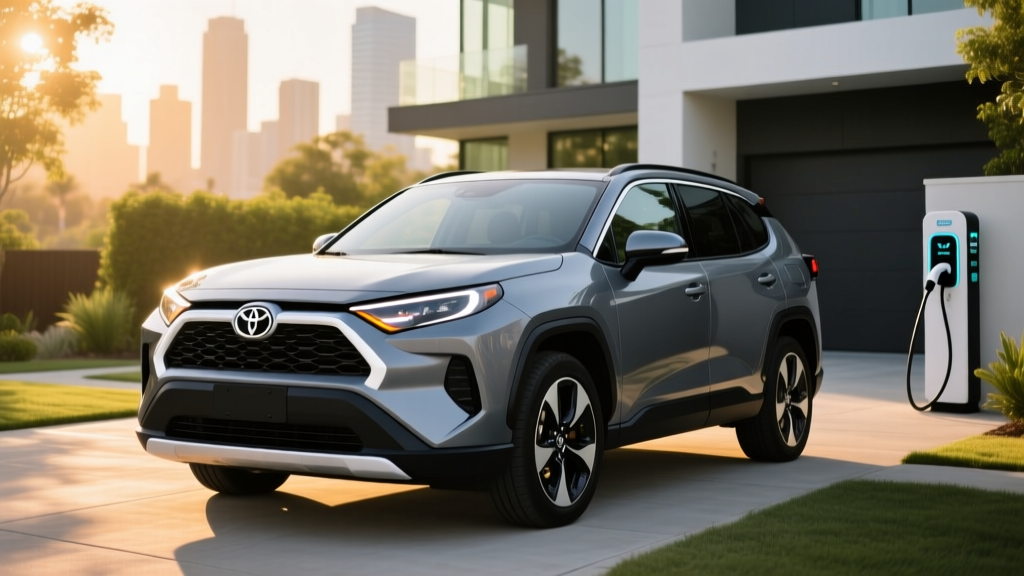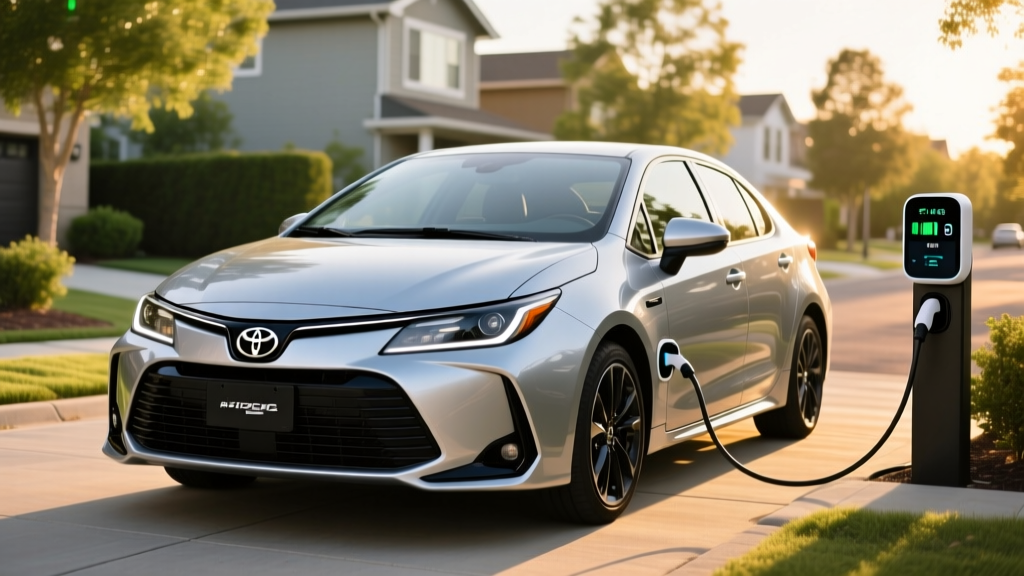
The 2026 Toyota Corolla Hybrid SE sits in a sweet spot that most electrified vehicles can't match: genuine 50-MPG efficiency without a plug, a price tag under $30,000, and the kind of everyday usability that has made the Corolla nameplate a global benchmark for over five decades. For buyers weighing the jump to electrification but hesitant about charging infrastructure, range anxiety, or the upfront cost of a full EV, this conventional hybrid (HEV) makes a compelling, data-backed case.
In this guide, we break down every number that matters — EPA fuel economy, real-world MPG expectations, powertrain output, battery warranty, and total cost of ownership — so you can decide whether the Corolla Hybrid SE is the right electrified vehicle for your driveway.
2026 Toyota Corolla Hybrid SE: Quick Specs at a Glance
| Specification | 2026 Corolla Hybrid SE (AWD) |
|---|---|
| Powertrain Type | Conventional Hybrid (HEV) — no plug required |
| Engine | 1.8L 4-cylinder Atkinson-cycle + dual electric motors |
| Combined Horsepower | 138 hp (net system output) |
| Drivetrain | Electronic On-Demand AWD (rear electric motor) |
| Transmission | Continuously Variable (eCVT) |
| EPA Fuel Economy (City / Hwy / Combined) | 53 / 46 / 50 MPG |
| Fuel Tank Capacity | 11.4 gallons |
| Estimated Total Range | ~570 miles |
| Hybrid Battery | Lithium-ion, ~1.3 kWh (self-charging, not plug-in) |
| 0–60 mph | ~9.0 seconds (est.) |
| Starting MSRP (SE AWD) | ~$27,450 (incl. destination) |
| Hybrid Battery Warranty | 10 years / 150,000 miles |
| Federal Tax Credit (§30D) | Not eligible — HEVs do not qualify |
Fuel Economy: EPA Numbers vs. Real-World MPG
The EPA rates the 2026 Corolla Hybrid SE AWD at 53 MPG city, 46 MPG highway, and 50 MPG combined, according to data published on fueleconomy.gov. Those figures place it among the most efficient non-plug-in vehicles sold in the United States.
| Driving Scenario | EPA Estimate | Real-World Expectation |
|---|---|---|
| City / Stop-and-Go | 53 MPG | 52–58 MPG (hybrids often exceed EPA in city) |
| Highway (70–80 mph) | 46 MPG | 42–47 MPG (aero drag reduces regen benefit) |
| Combined (Mixed Driving) | 50 MPG | 47–53 MPG |
| Cold Weather (Below 32°F) | — | 40–45 MPG (engine runs more for cabin heat) |
HEV vs. PHEV vs. EV: Which Electrified Vehicle Fits You?
The Corolla Hybrid SE is a conventional hybrid (HEV). It has no plug, no electric-only driving range to monitor, and no charging logistics to manage. The small lithium-ion battery recharges itself through regenerative braking and the gasoline engine. This is fundamentally different from a plug-in hybrid (PHEV) or a battery-electric vehicle (BEV).
| Feature | HEV (Corolla Hybrid SE) | PHEV (e.g., Prius Prime) | BEV (e.g., Tesla Model 3) |
|---|---|---|---|
| Plug-In Required? | No | Yes (for EV range) | Yes (always) |
| Electric-Only Range | None (EV assist only) | ~40–44 miles | 250–350+ miles |
| Total Range | ~570 miles | ~400+ miles combined | 250–350+ miles |
| Home Charging Needed? | No | Recommended (Level 2) | Essential (Level 2) |
| Federal Tax Credit (§30D) | Not eligible | Up to $7,500 (if eligible) | Up to $7,500 (if eligible) |
| Starting Price Range | ~$27,450 | ~$33,000+ | ~$38,000+ |
| Best For | No home charging, budget-first buyers | Short commutes + road trips | Home charging access, lowest fuel cost |
- You don't have access to home or workplace charging
- Your budget is under $30,000 and you want maximum MPG
- You take frequent long road trips and don't want to plan around chargers
- You want electrified efficiency with zero lifestyle change
- You have Level 2 home charging and a short daily commute (PHEV/BEV)
- You want to drive on electricity alone most days (PHEV/BEV)
- You want to qualify for the federal §30D tax credit (PHEV/BEV only)
Powertrain and Performance: 138 HP with AWD
The 2026 Corolla Hybrid SE pairs Toyota's fifth-generation hybrid system with a 1.8-liter four-cylinder Atkinson-cycle gasoline engine and two front-mounted motor-generators. A third electric motor on the rear axle provides electronic on-demand all-wheel drive — a significant traction advantage in rain and snow without the mechanical losses of a traditional AWD system.
Net system output is 138 horsepower. The 0–60 mph sprint takes approximately 9.0 seconds, which is adequate for merging and passing but won't win any stoplight races. The eCVT transmission delivers seamless, shift-free acceleration, and the transition between electric-only low-speed operation and gasoline engine engagement is nearly imperceptible from the driver's seat.
The AWD system activates automatically when the front wheels lose traction, sending up to roughly 50% of available torque to the rear axle via the dedicated rear motor. In normal dry-road driving, the car operates primarily in front-wheel drive to maximize efficiency. This is the same proven architecture Toyota uses across the Corolla Hybrid and Prius AWD lineups.
Hybrid Battery: Chemistry, Warranty, and Replacement Cost
One of the most common concerns among first-time hybrid buyers is battery longevity. Let's address this with data.
Toyota covers the hybrid battery assembly for 10 years or 150,000 miles (whichever comes first) on 2026 models — one of the longest hybrid battery warranties in the industry. The broader hybrid system (inverter, control module, motors) is covered for 8 years / 100,000 miles. Source: Toyota Warranty Guide.
The Corolla Hybrid SE uses a relatively small lithium-ion battery pack (approximately 1.3 kWh of usable capacity). Unlike a full EV battery, this pack is never deeply discharged — the hybrid control system keeps the state of charge within a narrow, battery-friendly window (roughly 40–80% SoC). This shallow cycling is why Toyota hybrid batteries routinely last 150,000–200,000+ miles in real-world use.
Replacement cost if out of warranty: A new OEM hybrid battery for the Corolla Hybrid typically runs between $2,500 and $4,000 installed at a dealership, depending on labor rates. Independent hybrid specialists and refurbished battery options can reduce this to $1,500–$2,500. For context, this is a fraction of a full EV battery replacement and comparable to the cost of a transmission replacement on a conventional gasoline vehicle.
Degradation reality: Toyota's hybrid battery management is conservative by design. Most owners experience minimal capacity loss over the first decade. If degradation does occur, it typically manifests as a slight reduction in electric-only assist at low speeds — not a catastrophic failure. The 10-year/150,000-mile warranty provides substantial protection.
Pricing, Trims, and Tax Credit Eligibility
The 2026 Toyota Corolla Hybrid SE AWD starts at approximately $27,450 including destination charges. The SE trim adds sport-tuned suspension, a leather-trimmed steering wheel, paddle shifters (simulated gear steps in the eCVT), and unique exterior styling cues over the base LE Hybrid.
Key pricing context:
- Corolla Hybrid LE AWD: ~$25,050 MSRP
- Corolla Hybrid SE AWD: ~$27,450 MSRP
- Popular options: Premium paint ($425), cargo tray, door edge guards — dealer-installed accessories can add $500–$1,000
- Typical out-the-door: $28,000–$30,000 depending on options and dealer fees
Ownership Costs: 5-Year Fuel Savings vs. Gas-Only Corolla
The Corolla Hybrid SE's 50 MPG combined rating delivers measurable savings over a gasoline-only compact sedan. Here's a practical comparison assuming 15,000 miles per year and $3.40 per gallon (national average):
| Cost Factor (5 Years / 75,000 mi) | Corolla Hybrid SE (50 MPG) | Gas Compact Sedan (30 MPG) |
|---|---|---|
| Total Fuel Cost | ~$5,100 | ~$8,500 |
| Estimated Maintenance | ~$2,200 | ~$2,800 |
| Fuel Savings vs. Gas Car | ~$3,400 saved over 5 years | |
| Insurance (avg. annual) | ~$1,400–$1,700/yr | ~$1,300–$1,600/yr |
The hybrid's regenerative braking also reduces brake pad wear — many Toyota hybrid owners report original brake pads lasting 80,000+ miles. Combined with the absence of a traditional transmission (the eCVT has no belts, clutch packs, or torque converter to service), long-term maintenance costs tend to be lower than a conventional gasoline vehicle.
Pros and Cons: The Honest Assessment
- 50 MPG combined — real-world city MPG often exceeds EPA
- Standard AWD at no extra cost on SE trim
- No plug required — zero charging logistics
- 10-year / 150,000-mile hybrid battery warranty
- Sub-$28K starting price with strong resale value
- Toyota Safety Sense 3.0 standard (pre-collision, lane trace, adaptive cruise)
- No federal tax credit eligibility (HEV)
- Modest 138 hp — acceleration is adequate, not quick
- eCVT drone under hard acceleration
- Rear seat and cargo space tighter than some rivals
- No electric-only driving mode — always uses some gasoline
- SE sport suspension slightly firmer ride than LE
Frequently Asked Questions
How many MPG does the 2026 Toyota Corolla Hybrid SE get?
The EPA rates it at 53 MPG city, 46 MPG highway, and 50 MPG combined. In real-world driving, city commuters often see 52–58 MPG thanks to frequent regenerative braking. Highway fuel economy at 75–80 mph typically falls in the 42–47 MPG range. Cold weather (below freezing) can reduce combined MPG to roughly 40–45 as the engine runs more often for cabin heat.
Does the Corolla Hybrid SE need to be plugged in?
No. The Corolla Hybrid SE is a conventional hybrid (HEV), not a plug-in hybrid (PHEV). The small lithium-ion battery charges itself through regenerative braking and the gasoline engine. You simply fill up at a gas station like any other car — there is no charging port, no plug, and no electric-only driving range.
Is the Corolla Hybrid SE reliable, and what does battery replacement cost?
Toyota's hybrid powertrain has one of the strongest reliability records in the industry, refined over more than 25 years since the original Prius. The hybrid battery is warranted for 10 years / 150,000 miles. Out-of-warranty replacement typically costs $2,500–$4,000 at a dealer, or $1,500–$2,500 through independent hybrid shops. Most Toyota hybrid batteries last well beyond 150,000 miles with minimal degradation due to the shallow-cycling battery management strategy.
Does the 2026 Corolla Hybrid SE qualify for a tax credit?
It does not qualify for the federal §30D Clean Vehicle Credit, which is limited to plug-in vehicles (PHEVs and BEVs). Some states offer their own incentives for hybrid purchases, but these vary widely by jurisdiction. Check your state's energy office or the Alternative Fuels Data Center for local programs. If a federal tax credit is a priority, consider a PHEV like the Toyota Prius Prime instead.
Hybrid vs. PHEV vs. EV — which should I choose?
Choose the Corolla Hybrid SE (HEV) if you want maximum fuel efficiency without changing your refueling habits, don't have home charging access, or frequently take long road trips. Choose a PHEV (like the Prius Prime) if you have home charging and want 40+ miles of electric-only commuting with a gas engine backup. Choose a full EV if you have reliable Level 2 home charging, want the lowest per-mile fuel cost, and your daily driving stays within the vehicle's range.
How does AWD affect fuel economy on the Corolla Hybrid SE?
The electronic on-demand AWD system has a minimal impact on fuel economy. The rear electric motor only activates when front-wheel traction is needed (wet roads, snow, hard acceleration). During normal dry-road cruising, the car operates as a front-wheel-drive hybrid. The AWD Corolla Hybrid SE achieves 50 MPG combined — only about 1–2 MPG less than the FWD-only variant in some model years, a negligible trade-off for the added all-weather capability.
Sources: EPA fuel economy data via fueleconomy.gov; Toyota specifications and warranty information via Toyota.com; Federal tax credit rules via IRS.gov. Pricing and specifications reflect 2026 model year data available at time of publication and are subject to change. Verify all incentive eligibility with a tax professional.