Search "most fuel efficient non hybrid cars" and you'll find the same handful of models dominating the list: the Mitsubishi Mirage, Nissan Versa, and Hyundai Elantra with their continuously variable transmissions and lightweight builds. But in 2026, the real question isn't which gas-only car sips the least fuel — it's whether those MPG leaders can compete with modern hybrids and plug-in hybrids on cost, drivability, and long-term ownership.
This guide breaks down the most fuel efficient non hybrid cars available today, then stacks them against the hybrid (HEV) and plug-in hybrid (PHEV) alternatives that are reshaping the efficiency conversation. We'll use exact EPA figures, real-world testing notes, and total fuel-cost math so you can make a data-driven decision.
The Most Fuel Efficient Non Hybrid Cars for 2026
Before we compare, let's establish the baseline. These are the highest-MPG gasoline-only vehicles currently on sale in the US, with no hybridization — just internal combustion engines optimized for efficiency through CVT transmissions, low curb weight, and aerodynamic tuning.
| Vehicle | City MPG | Highway MPG | Combined MPG | Starting MSRP |
|---|---|---|---|---|
| Mitsubishi Mirage (1.2L 3-cyl, CVT) | 36 | 43 | 39 | $18,695 |
| Hyundai Elantra SE (2.0L 4-cyl, CVT) | 32 | 41 | 36 | $22,125 |
| Nissan Versa (1.6L 4-cyl, CVT) | 32 | 40 | 35 | $17,070 |
| Kia Rio (1.6L 4-cyl, CVT) | 32 | 41 | 36 | $19,090 |
| Toyota Corolla LE (2.0L 4-cyl, CVT) | 31 | 40 | 34 | $23,460 |
Data sourced from fueleconomy.gov (US EPA). The Mirage leads the pack at 39 MPG combined, but its 78-horsepower 3-cylinder engine and spartan interior come with significant trade-offs in performance and comfort. The Elantra and Corolla offer more livable daily-driver experiences at 34–36 MPG combined.
How Hybrids and PHEVs Compare on Pure MPG
Here's where the comparison shifts dramatically. Modern hybrid electric vehicles (HEVs) use a small battery and electric motor to assist the gas engine — they never plug in and recover energy through regenerative braking. Plug-in hybrid electric vehicles (PHEVs) add a larger battery you can charge at home, giving you 25–45 miles of electric-only driving before the gas engine kicks in.
Conventional Hybrid (HEV)
- Plugs in? No
- Battery: 1–2 kWh (self-charging via regen + engine)
- Electric-only driving: Minimal (low-speed assist only)
- Best for: Drivers without home charging access
Plug-In Hybrid (PHEV)
- Plugs in? Yes (Level 1 or Level 2)
- Battery: 10–25 kWh
- Electric-only range: 25–45 miles EPA
- Best for: Commuters with home/work charging who also take road trips
| Vehicle | Type | City MPG / MPGe | Hwy MPG | Combined | EV Range (mi) | MSRP |
|---|---|---|---|---|---|---|
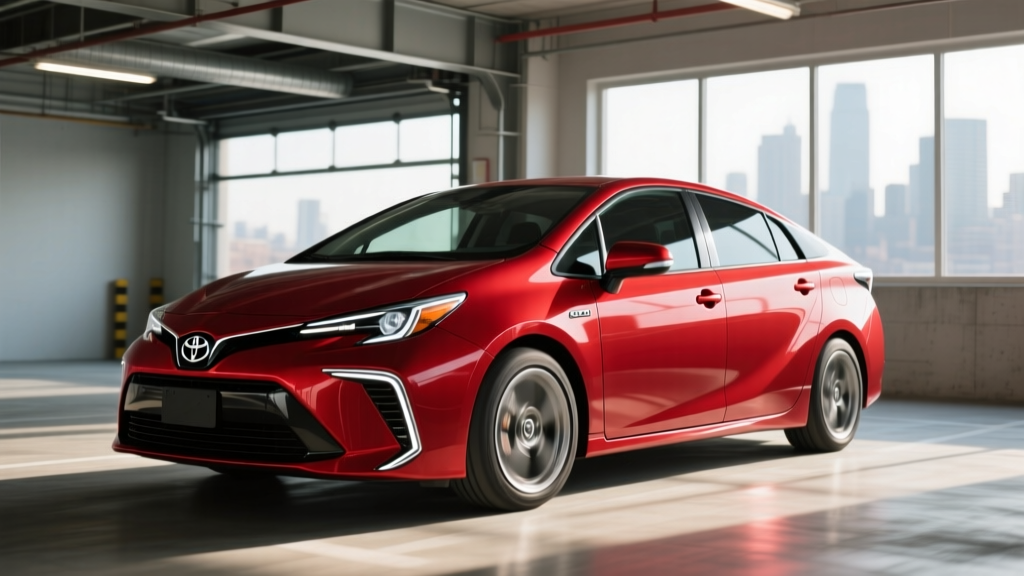
| Toyota Prius LE | HEV | 57 | 56 | 57 MPG | N/A | $29,445 |
| Hyundai Elantra Hybrid Blue | HEV | 53 | 56 | 54 MPG | N/A | $26,900 |
| Toyota Prius Prime SE | PHEV | 127 MPGe | — | 52 MPG (gas) | 44 | $33,975 |
| Toyota RAV4 Prime | PHEV | 94 MPGe | — | 38 MPG (gas) | 42 | $44,905 |
| Hyundai Tucson PHEV | PHEV | 80 MPGe | — | 35 MPG (gas) | 33 | $39,400 |
| Mitsubishi Mirage (gas) | Gas Only | 36 | 43 | 39 MPG | N/A | $18,695 |
The numbers tell a clear story: the most fuel efficient non hybrid cars top out around 36–39 MPG combined. The Toyota Prius HEV nearly doubles that at 57 MPG combined. A PHEV like the Prius Prime adds 44 miles of zero-gas driving on top of 52 MPG once the battery depletes. Even the RAV4 Prime — a compact SUV — matches the Mirage sedan's MPG while offering all-wheel drive and vastly more cargo space.
PHEV Deep Dive: Electric-Only Range, Battery Specs, and Charging
For buyers considering a plug-in hybrid, the critical specs go beyond MPG. Here's a detailed breakdown of three popular 2026 PHEVs with the battery and charging details that determine daily usability.
| Spec | Prius Prime SE | RAV4 Prime | Tucson PHEV |
|---|---|---|---|
| Battery capacity (usable) | 13.6 kWh | 18.1 kWh | 13.8 kWh |
| Chemistry | Lithium-ion (NMC) | Lithium-ion (NMC) | Lithium-ion (NMC) |
| EPA electric-only range | 44 mi | 42 mi | 33 mi |
| Total range (EV + gas) | ~475 mi | ~520 mi | ~400 mi |
| Combined horsepower | 220 hp | 302 hp | 261 hp |
| Level 1 charge (120V, ~1.4 kW) | ~11 hours | ~14 hours | ~11 hours |
| Level 2 charge (240V, ~3.3–6.6 kW) | ~4 hours (3.6 kW) | ~2.5 hours (6.6 kW) | ~3.5 hours (7.2 kW) |
| DC fast charge capable? | No | No | No |
| 0–60 mph | 6.6 sec | 5.7 sec | 7.1 sec |
Key takeaway: No mainstream 2026 PHEV offers DC fast charging. These batteries are sized for overnight Level 2 top-ups or all-day Level 1 trickle charges. If your daily commute falls within the 33–44 mile EV range, you may go weeks without visiting a gas station — but you'll want a Level 2 home charger to make the most of it.
Real-World MPG: What the EPA Sticker Doesn't Tell You
EPA fuel economy figures are standardized laboratory tests — useful for comparison, but not a guarantee. Here's what real-world ownership data reveals about gas-only cars versus hybrids:
Gas-Only Vehicles: Highway Optimists
The Mirage's 43 MPG highway rating assumes a steady 60 mph cruise. At 75–80 mph with A/C running, expect 37–39 MPG highway. City driving is where gas-only cars suffer most — every stop wastes kinetic energy as heat in the brake pads. Real-world city MPG for the Elantra gas model typically lands at 28–30 MPG.
Hybrids: City Champions
Hybrids invert the usual city/highway split. The Prius's regenerative braking recaptures energy during stop-and-go driving, meaning it often exceeds its EPA city rating in real urban commutes. Many Prius owners report 55–60 MPG in city driving. Highway efficiency still dips at higher speeds (expect ~50–52 MPG at 75 mph), but the combined real-world figure stays remarkably close to the 57 MPG sticker.
PHEVs: It Depends on Your Charging Habit
A PHEV's real-world efficiency depends entirely on whether you charge it. A Prius Prime owner who charges nightly and commutes 30 miles may use zero gasoline for months. An owner who never plugs in is simply driving a slightly heavier Prius at roughly 48–50 MPG — still excellent, but below the HEV Prius. The math only works if you charge.
Battery Warranty, Reliability, and Replacement Costs
Hybrid battery reliability has improved dramatically since the early-2000s Prius. Modern NMC lithium-ion packs in HEVs are comparatively small (1–2 kWh) and rarely see deep discharge cycles, which preserves longevity. Data from Consumer Reports consistently ranks the Prius and Prius Prime among the most reliable vehicles in their lineup.
Replacement Costs if the Battery Fails
| Vehicle | Battery Type | Estimated Replacement Cost |
|---|---|---|
| Toyota Prius (HEV) | ~1.3 kWh Li-ion | $2,500–$4,000 |
| Toyota Prius Prime (PHEV) | 13.6 kWh Li-ion | $6,000–$9,000 |
| Toyota RAV4 Prime (PHEV) | 18.1 kWh Li-ion | $8,000–$12,000 |
| Hyundai Tucson PHEV | 13.8 kWh Li-ion | $7,000–$10,000 |
For conventional hybrids, the small battery is relatively affordable to replace — and failures before 150,000 miles are uncommon. PHEV batteries are larger and costlier, but they're covered by longer warranties and typically managed with less aggressive charge/discharge windows to preserve lifespan. Most hybrid owners will never need a battery replacement during their ownership.
Tax Credits: Do Hybrids or PHEVs Qualify?
Under current IRS §30D rules, only plug-in vehicles with sufficient battery capacity qualify for the federal clean vehicle credit. Here's how that breaks down:
- Conventional hybrids (HEV): Do NOT qualify for the §30D federal tax credit. The Prius HEV, Elantra Hybrid, and all self-charging hybrids are ineligible.
- Plug-in hybrids (PHEV): May qualify for up to $7,500 if they meet all requirements.
- MSRP cap: PHEVs must have an MSRP at or below $80,000 (SUVs/vans/pickups) or $55,000 (sedans).
- Buyer income cap: AGI must not exceed $150,000 (single), $225,000 (head of household), or $300,000 (joint).
- Battery sourcing: Critical minerals and battery component requirements must be met — these thresholds tighten annually through 2029.
- Point-of-sale transfer: Eligible buyers can transfer the credit to the dealer for an immediate price reduction at purchase.
For 2026, the Prius Prime ($33,975 sedan MSRP) and RAV4 Prime ($44,905 SUV MSRP) both fall under their respective MSRP caps. However, battery-sourcing compliance varies by build date and supply-chain shifts. Always verify current eligibility on the IRS Clean Vehicle Credit page before purchasing, and consider consulting a tax professional for your specific situation.
Cost Per Mile: Gas-Only vs Hybrid vs PHEV
Let's run the math using national averages. As of early 2026, the US average regular gasoline price is approximately $3.20/gallon, and the average residential electricity rate is about $0.16/kWh.
| Vehicle | Effective MPG / MPGe | Annual Fuel Cost | 5-Year Fuel Cost |
|---|---|---|---|
| Mitsubishi Mirage (gas) | 37 MPG (real-world) | $1,297 | $6,486 |
| Hyundai Elantra (gas) | 33 MPG (real-world) | $1,455 | $7,273 |
| Toyota Prius LE (HEV) | 55 MPG (real-world) | $873 | $4,364 |
| Toyota Prius Prime (PHEV, charged daily) | ~120 MPGe avg | $420* | $2,100* |
| Toyota Prius Prime (PHEV, never charged) | 48 MPG (real-world gas) | $1,000 | $5,000 |
*Assumes 80% of miles driven on electricity at $0.16/kWh and 20% on gasoline.
The Prius HEV saves roughly $2,100 over five years compared to the Mirage and $2,900 compared to the Elantra gas model. A Prius Prime that's charged daily cuts fuel costs by two-thirds — but only if you actually plug it in. The price premium for a Prius LE over a Mirage ($10,750) takes roughly 5–6 years to recoup through fuel savings alone at current gas prices, though that gap narrows significantly if gas prices rise.
Hybrid vs PHEV vs Full EV: Which Fits You?
Choose a Gas-Only Car If:
- Your budget is strictly under $20,000
- You drive fewer than 8,000 miles/year (fuel savings won't offset higher purchase price)
- You want the lowest possible purchase price with no battery concerns
Choose a Conventional Hybrid (HEV) If:
- You want maximum MPG without changing your habits (no plugging in)
- You live in an apartment or lack access to home/work charging
- You want proven reliability with minimal maintenance changes from a gas car
- You drive 12,000+ miles/year and want meaningful fuel savings
Choose a Plug-In Hybrid (PHEV) If:
- Your daily commute is under 40 miles round-trip
- You have Level 2 charging at home or work
- You want electric daily driving but need gas flexibility for road trips
- You may qualify for the §30D tax credit (up to $7,500)
Choose a Full EV (BEV) If:
- You have reliable home charging (Level 2)
- Your daily driving is under 250 miles
- You want to eliminate gas entirely and minimize moving parts
- You qualify for the full $7,500 federal credit on an eligible model
Frequently Asked Questions
What is the most fuel efficient non hybrid car in 2026?
The Mitsubishi Mirage with the CVT transmission leads gas-only vehicles at 39 MPG combined (36 city / 43 highway) per the EPA. However, it achieves this with a 78-horsepower engine, limited features, and a very basic interior. The Hyundai Elantra SE and Kia Rio offer 36 MPG combined with far better drivability.
How many MPG does a Toyota Prius hybrid get compared to the most efficient gas car?
The 2026 Toyota Prius LE achieves 57 MPG combined — roughly 46% better than the Mirage's 39 MPG combined. In real-world city driving, the Prius often exceeds its EPA rating thanks to regenerative braking, with many owners reporting 55–60 MPG in urban conditions.
How far can a PHEV go on electric only?
Current 2026 PHEVs offer 25–44 miles of EPA-rated electric-only range. The Prius Prime SE leads sedans at 44 miles, while the RAV4 Prime provides 42 miles in an SUV package. This covers most daily commutes entirely on electricity before the gas engine activates.
Is a hybrid battery expensive to replace?
Conventional hybrid batteries (1–2 kWh) cost $2,500–$4,000 to replace, while PHEV batteries (13–18 kWh) run $6,000–$12,000. However, all hybrid batteries carry a minimum 8-year/100,000-mile federal warranty (10 years/150,000 miles in CARB states), and failures within the warranty period are rare based on long-term reliability data from IIHS and consumer surveys.
Do conventional hybrids qualify for any tax credit?
No. The IRS §30D federal clean vehicle credit only applies to plug-in vehicles — battery electric vehicles (BEVs) and plug-in hybrids (PHEVs). Conventional hybrids like the Prius HEV and Elantra Hybrid do not qualify. Some states may offer separate incentives for HEVs, so check your state energy office for local programs.
Is a PHEV worth it if I can't charge at home?
Generally, no. Without regular charging, a PHEV operates as a slightly heavier, less efficient hybrid. You're paying a premium for battery capacity you never use. If you lack home or workplace charging, a conventional HEV like the Prius LE delivers outstanding MPG without the plug-in requirement or the higher purchase price.