Quick Verdict: Two Hybrid SUVs, Two Very Different Formulas
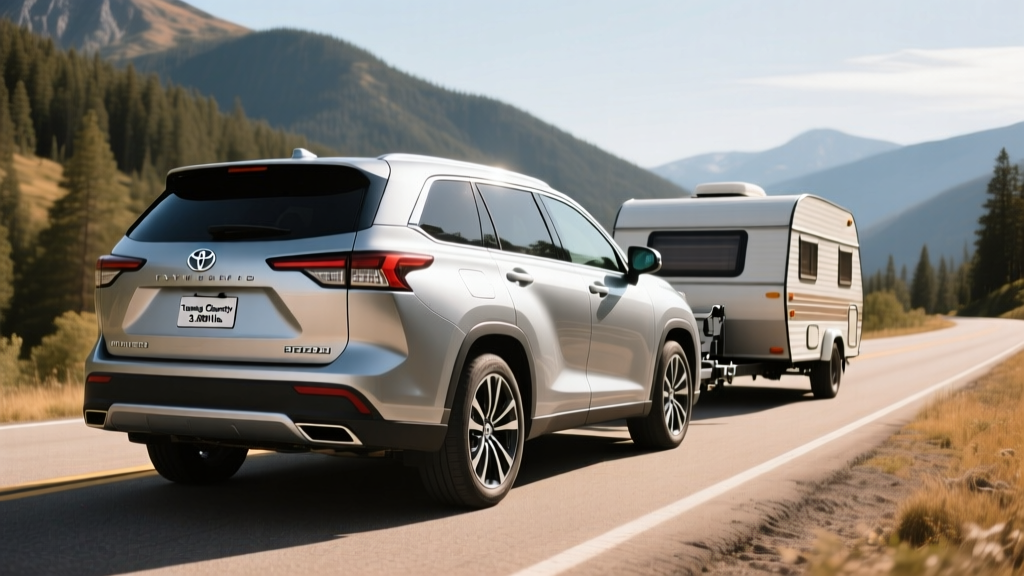
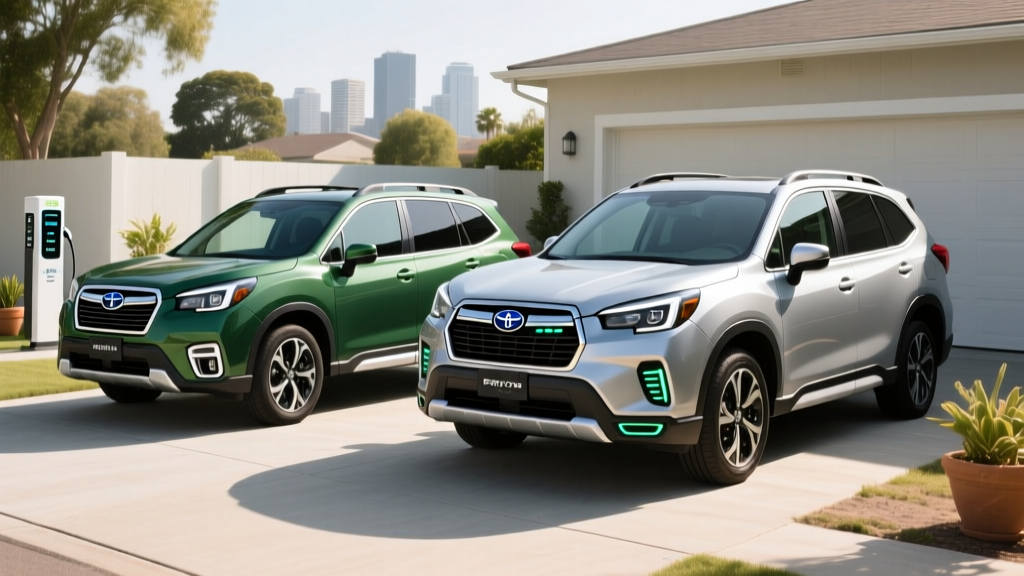
The 2026 Subaru Forester Hybrid and 2026 Toyota RAV4 Hybrid are the two most-searched compact hybrid SUVs for buyers who want all-wheel drive, strong cargo utility, and 35+ MPG without plugging in. Both are conventional hybrids (HEVs) — no charging cord required — but they achieve their efficiency through fundamentally different powertrain strategies. The RAV4 Hybrid leans on Toyota's proven 2.5-liter four-cylinder paired with a powerful rear electric motor for electronic AWD, while the Forester Hybrid pairs Subaru's 2.5-liter boxer engine with an electric motor integrated into its legendary symmetrical mechanical AWD system.
If you need maximum cargo space and slightly better real-world fuel economy, the RAV4 Hybrid wins. If you prioritize standard mechanical AWD, outward visibility, and Subaru's EyeSight safety suite on every trim, the Forester Hybrid makes the stronger case. Here's the full data breakdown.
EPA Fuel Economy: Forester Hybrid vs RAV4 Hybrid MPG
| Metric | Subaru Forester Hybrid | Toyota RAV4 Hybrid |
|---|---|---|
| City MPG | 35 MPG | 41 MPG |
| Highway MPG | 33 MPG | 38 MPG |
| Combined MPG | 34 MPG | 39 MPG |
| AWD Type | Symmetrical mechanical AWD | Electronic AWD (eAWD) |
| Fuel Tank (gal) | 13.2 | 14.5 |
| Total Range (mi) | ~449 | ~566 |
Real-world MPG note: Toyota's hybrid system excels in stop-and-go city driving, where the electric motor handles low-speed propulsion and regenerative braking recovers energy. Expect the RAV4 Hybrid to exceed its EPA city estimate by 1–3 MPG in urban commuting. The Forester Hybrid, with its mechanical AWD creating more drivetrain drag, tends to track closer to its EPA numbers or slightly below on highway-heavy trips. In mixed suburban driving, owners typically report 33–36 MPG in the Forester and 37–41 MPG in the RAV4.
Source: fueleconomy.gov (EPA estimates; your results will vary with driving style, terrain, and climate).
Powertrain Specs: How Each Hybrid System Works
Both SUVs use a 2.5-liter four-cylinder engine, but the hybrid architectures diverge significantly.
| Spec | Subaru Forester Hybrid | Toyota RAV4 Hybrid |
|---|---|---|
| Engine | 2.5L flat-4 (Boxer) | 2.5L inline-4 (Dynamic Force) |
| Engine HP | 180 hp | 176 hp |
| Electric Motor | Single motor (integrated) | Front + rear motors |
| Combined System HP | 194 hp | 219 hp |
| Transmission | CVT (Lineartronic) | eCVT (planetary gearset) |
| 0–60 mph | ~8.0 sec | ~7.4 sec |
| Towing Capacity | 1,500 lbs | 1,750 lbs |
| Drivetrain | Symmetrical AWD (mechanical) | Electronic AWD (eAWD) |
What this means on the road: The RAV4 Hybrid's 219 combined horsepower and independent rear electric motor give it a meaningful acceleration advantage — it pulls away from stops with electric torque and engages the rear motor only when slip is detected, making its eAWD system lighter and more efficient. Subaru's mechanical AWD sends power to all four wheels continuously, which provides superior traction confidence in deep snow or off-pavement situations, at the cost of a few MPG. If you regularly drive unplowed roads or steep gravel, Subaru's system has a real-world edge. For paved-road rain and light snow, Toyota's eAWD is more than adequate and more efficient.
HEV vs PHEV vs EV: Which Powertrain Fits You?
Conventional Hybrid (HEV) — Forester Hybrid & RAV4 Hybrid: No plug, no charging cord. The gasoline engine and regenerative braking charge a small battery (~1–2 kWh). You simply fill up at any gas station. Best for: drivers without home charging access, apartment dwellers, road-trippers, and anyone who wants better MPG without changing their fueling habits.
Plug-in Hybrid (PHEV) — RAV4 Prime (RAV4 PHEV): Larger battery (~18.1 kWh), 42 miles of electric-only range, and a standard gasoline engine for longer trips. Requires access to a 120V or 240V outlet for regular charging to realize fuel savings. Best for: homeowners with a garage who commute under 40 miles round-trip and want electric daily driving plus gas-engine flexibility.
Battery Electric Vehicle (BEV): Zero gasoline, lowest per-mile "fuel" cost, but requires reliable home or workplace charging. Best for: drivers with consistent charging access, predictable commutes, and willingness to plan road-trip charging stops.
Neither the Forester Hybrid nor the RAV4 Hybrid requires any plug-in charging. If you want the plug-in option in this segment, Toyota offers the RAV4 Prime (PHEV) with 42 miles of electric-only range, 94 MPGe combined, and 404 combined horsepower — starting around $45,000 MSRP. Subaru does not currently offer a Forester PHEV in the US market for 2026.
Pricing, Trims & Tax Credit Eligibility
| Trim | Subaru Forester Hybrid | Toyota RAV4 Hybrid |
|---|---|---|
| Base / LE | ~$33,500 | ~$33,500 |
| Mid Trim (Premium / XLE) | ~$36,000 | ~$35,500 |
| Upper Trim (Limited / XSE) | ~$39,500 | ~$38,000 |
| AWD Included? | Yes (all trims) | Yes (all trims) |
Federal tax credit: Conventional hybrids (HEVs) like the Forester Hybrid and RAV4 Hybrid do not qualify for the IRS §30D Clean Vehicle Credit. That credit applies only to plug-in vehicles (PHEVs and BEVs) meeting battery sourcing, MSRP, and buyer income requirements. If tax-credit eligibility is a priority, you would need to consider the RAV4 Prime (PHEV) — which may qualify for up to $7,500 depending on your income, the vehicle's MSRP cap compliance, and critical-mineral/battery-component sourcing rules that shift annually. Always verify current-year eligibility on IRS.gov before purchasing.
Some states offer their own rebates for conventional hybrids, though these are increasingly rare as incentive programs shift toward plug-in vehicles. Check your state energy office or department of environmental quality for current programs.
Battery Warranty, Lifespan & Replacement Cost
Subaru Forester Hybrid Battery Warranty: 8 years / 100,000 miles (hybrid battery and components). Subaru's hybrid battery uses proven nickel-metal hydride (NiMH) or lithium-ion chemistry depending on trim year; replacement cost is estimated at $3,000–$5,000 if out of warranty, though hybrid battery failures before 150,000 miles are uncommon based on Subaru's track record with the Crosstrek Hybrid and previous Forester Hybrid generations.
Toyota RAV4 Hybrid Battery Warranty: 10 years / 150,000 miles (hybrid battery). Toyota's hybrid battery coverage is among the best in the industry. The RAV4 Hybrid uses a sealed NiMH battery pack that has proven exceptionally durable — Toyota's hybrid system has accumulated billions of real-world miles across the Prius, Camry Hybrid, and RAV4 Hybrid lineups. Out-of-warranty replacement runs approximately $3,500–$5,500, but many Toyota hybrid batteries last 200,000+ miles with minimal degradation.
Do hybrid batteries need replacement? In practice, most hybrid owners never replace the traction battery during their ownership. Unlike full EVs, hybrid batteries are small (1–2 kWh) and are never deeply discharged — the system keeps them between roughly 40–80% state of charge, which dramatically extends cycle life. The 12V auxiliary battery, however, will need replacement every 4–6 years like any conventional vehicle.
Interior, Cargo & Practicality
| Spec | Subaru Forester Hybrid | Toyota RAV4 Hybrid |
|---|---|---|
| Cargo (behind rear seats) | 28.9 cu ft | 37.6 cu ft |
| Cargo (rear seats folded) | 69.1 cu ft | 69.8 cu ft |
| Ground Clearance | 8.7 in | 8.1 in |
| Roof Rail Capacity | 176 lbs (dynamic) | 176 lbs (dynamic) |
| Visibility | Excellent (large windows, thin pillars) | Good (thicker C-pillars) |
The RAV4 Hybrid has a decisive cargo advantage with nearly 9 more cubic feet behind the rear seats — enough for two additional carry-on suitcases or a large dog crate. The Forester Hybrid counters with superior outward visibility (a Subaru hallmark), slightly more ground clearance for trail access, and a more upright seating position that many drivers find more comfortable on long trips. Both vehicles include a full-size spare tire, a feature increasingly rare in the segment.
Safety & Driver Assistance
Both SUVs come with comprehensive standard driver-assistance suites — Subaru's EyeSight and Toyota's Safety Sense (TSS 3.0). These are SAE Level 2 systems, meaning they provide adaptive cruise control and lane-centering assistance but require the driver to remain fully engaged at all times. Neither system is "self-driving."
| Feature | Subaru Forester Hybrid (EyeSight) | Toyota RAV4 Hybrid (TSS 3.0) |
|---|---|---|
| Adaptive Cruise Control | Standard | Standard |
| Lane-Centering Assist | Standard | Standard |
| Automatic Emergency Braking | Standard (with pedestrian detection) | Standard (with pedestrian detection) |
| Blind-Spot Monitoring | Standard on most trims | Standard on most trims |
| IIHS Rating (2025 model year) | Top Safety Pick+ | Top Safety Pick+ |
Safety data from IIHS and NHTSA consistently rates both vehicles at the top of the compact SUV segment. Subaru's EyeSight uses a stereo camera system mounted near the rearview mirror, while Toyota uses a combination of camera and radar. Both are highly effective in real-world highway and city driving.
Decision Framework: Which Should You Choose?
Choose the Toyota RAV4 Hybrid if:
- Maximum fuel economy is your priority (39 combined MPG vs 34)
- You need the most cargo space behind the rear seats (37.6 vs 28.9 cu ft)
- You want stronger acceleration (219 hp, 0–60 in ~7.4 sec)
- You primarily drive on pavement and want the longest total range (~566 mi per tank)
- Long-term hybrid battery warranty matters most (10 yr / 150,000 mi)
Choose the Subaru Forester Hybrid if:
- You regularly drive on snow, gravel, or unplowed roads (mechanical AWD advantage)
- Outward visibility and a commanding driving position are priorities
- You value Subaru's standard EyeSight on every trim with no package upgrades
- You prefer Subaru's boxer-engine packaging and slightly more ground clearance (8.7 in)
- You're a current Subaru owner loyal to the brand's reliability track record
Frequently Asked Questions
How many MPG does the Forester Hybrid get in real-world driving?
The EPA rates the 2026 Forester Hybrid at 35 city / 33 highway / 34 combined MPG. In real-world suburban commuting, owners typically report 33–36 MPG combined. Highway-heavy trips at 75+ mph tend to yield 31–33 MPG due to the aerodynamic drag of its boxy shape and mechanical AWD drivetrain losses.
Does the RAV4 Hybrid need to be plugged in?
No. The RAV4 Hybrid is a conventional hybrid (HEV). Its small battery charges through the gasoline engine and regenerative braking. You never plug it in. If you want plug-in capability, the RAV4 Prime (PHEV) offers 42 miles of electric-only range and requires a standard 120V or 240V outlet for charging.
Is the Forester Hybrid or RAV4 Hybrid better in snow?
Both are excellent in snow, but the Forester Hybrid has a slight edge in deep-snow or off-pavement scenarios thanks to its mechanical symmetrical AWD, which sends power to all four wheels continuously. The RAV4 Hybrid's electronic AWD engages the rear motor only when front-wheel slip is detected — it's highly effective on plowed roads and in moderate snow, but Subaru's system reacts more predictably in extreme low-traction conditions.
What is the hybrid battery replacement cost?
Out-of-warranty hybrid battery replacement for either vehicle runs approximately $3,000–$5,500 depending on the source (dealer vs. independent hybrid specialist). However, hybrid battery failure before 150,000 miles is rare. Toyota's 10-year/150,000-mile hybrid battery warranty provides additional peace of mind over Subaru's 8-year/100,000-mile coverage.
Does either hybrid qualify for a federal tax credit?
No. The IRS §30D Clean Vehicle Credit applies only to plug-in electric vehicles (PHEVs and BEVs). Neither the Forester Hybrid nor the RAV4 Hybrid qualifies because they are conventional hybrids without plug-in capability. The RAV4 Prime (PHEV) may qualify for up to $7,500 depending on your adjusted gross income, the vehicle's MSRP, and current-year battery sourcing requirements. Verify at IRS.gov.
Hybrid vs PHEV vs EV — which is right for me?
Choose a conventional hybrid (HEV) like the Forester or RAV4 Hybrid if you lack home charging, take frequent road trips, or simply want better MPG with zero lifestyle change. Choose a PHEV like the RAV4 Prime if you have home charging and a sub-40-mile commute — you'll drive mostly on electricity with a gas backup. Choose a full EV if you have reliable home charging, want the lowest per-mile energy cost (~$0.04/mi vs ~$0.14/mi for hybrid), and can plan DC fast-charging stops on road trips.