The Compact Truck Renaissance: Efficiency Meets Utility
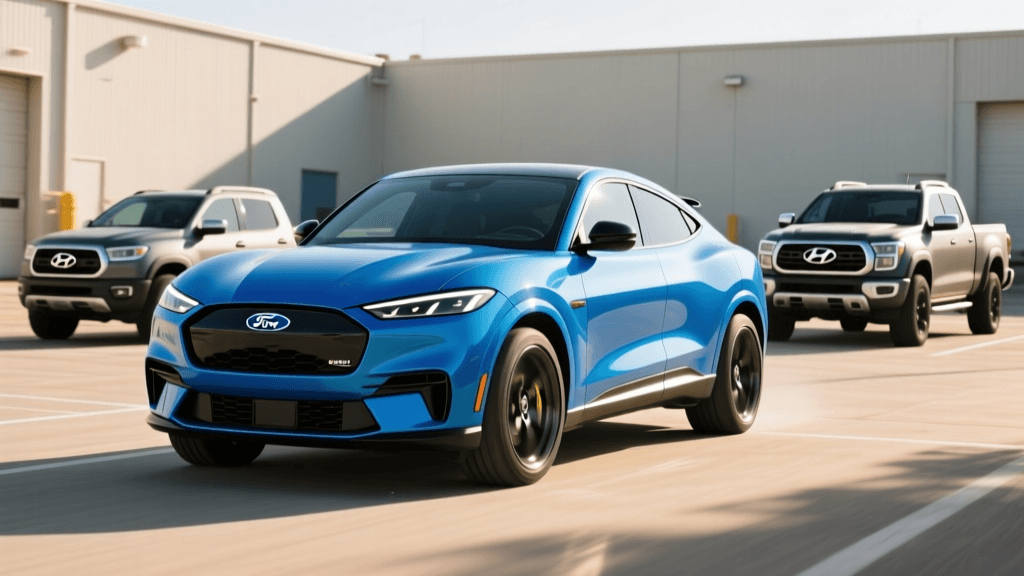
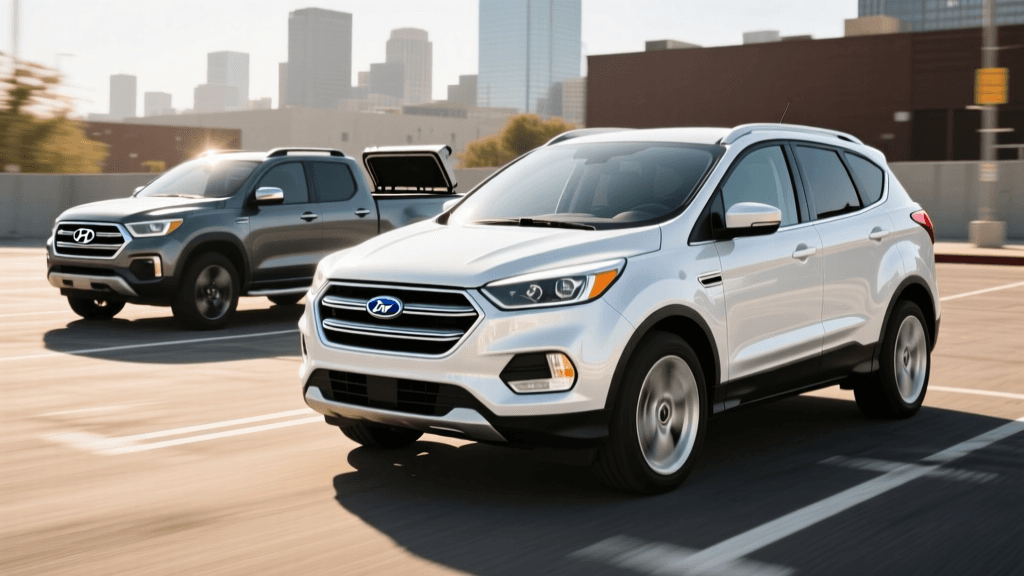
The automotive landscape has shifted dramatically over the last decade, but one of the most exciting developments is the rebirth of the compact pickup truck. For years, buyers who needed a truck bed but didn't want the massive footprint, poor fuel economy, and steep price tag of a full-size pickup were left with few options. Today, the segment is dominated by two unibody titans: the Ford Maverick and the Hyundai Santa Cruz. But when you introduce electrification into the mix, the battle lines are drawn in a very specific way. In this head-to-head product showdown, we are putting the Ford Maverick Hybrid up against the top-tier Hyundai Santa Cruz 2.5L Turbo AWD to see if the Maverick's hybrid efficiency and clever utility can overcome the Santa Cruz's turbocharged performance and all-weather capability.
Whether you are a weekend warrior, a DIY homeowner, or a commuter looking to save at the pump without sacrificing cargo space, choosing between these two requires a deep dive into the numbers. Let's break down the real-world MPG, payload capacities, towing limits, and total cost of ownership to determine which compact truck truly deserves a spot in your driveway.
Powertrain Showdown: Hybrid Efficiency vs. Turbocharged AWD
The most significant differentiator between these two trucks lies beneath the hood. The Ford Maverick comes standard with a 2.5-liter Atkinson-cycle four-cylinder hybrid powertrain paired with an electric motor and a continuously variable transmission (CVT). This system generates a combined 191 horsepower and sends power exclusively to the front wheels. While front-wheel drive might sound like a limitation for a truck, the Maverick's hybrid system is engineered primarily for maximum efficiency and low-end electric torque, making it incredibly adept at city driving and light hauling.
On the other side of the ring, the Hyundai Santa Cruz offers a 2.5-liter turbocharged four-cylinder engine producing 281 horsepower and 311 lb-ft of torque, mated to an 8-speed wet dual-clutch automatic transmission and a sophisticated HTRAC all-wheel-drive system. The Santa Cruz is undeniably faster and more capable in low-traction environments, but this performance comes at a steep cost to fuel economy.
Powertrain and Fuel Economy Specifications
| Feature | Ford Maverick Hybrid (FWD) | Hyundai Santa Cruz 2.5T (AWD) |
|---|---|---|
| Engine | 2.5L I-4 Hybrid | 2.5L Turbocharged I-4 |
| Horsepower | 191 hp (combined) | 281 hp |
| Drivetrain | Front-Wheel Drive | All-Wheel Drive |
| EPA City MPG | 42 MPG | 19 MPG |
| EPA Highway MPG | 33 MPG | 27 MPG |
| EPA Combined MPG | 37 MPG | 22 MPG |
According to EPA Fuel Economy guidelines, the Maverick Hybrid achieves an astonishing 42 MPG in the city. In real-world testing, many owners report exceeding this number during stop-and-go traffic, where the electric motor does the heavy lifting. The Santa Cruz, burdened by its turbocharger, AWD hardware, and heavier curb weight, struggles to break 20 MPG in similar urban conditions.
Real-World MPG: Does the Maverick Hybrid Deliver?
It is one thing to look at EPA estimates; it is another to live with the truck. The Maverick Hybrid's 1.1 kWh lithium-ion battery pack is cleverly packaged under the rear seats, preserving both cabin space and bed utility. Because the battery is relatively small, you won't find a plug-in EV mode here. Instead, the system operates as a traditional series-parallel hybrid, seamlessly switching between gas and electric power.
During mixed-driving loops that include highway cruising, suburban errands, and light payload hauling, the Maverick Hybrid consistently returns between 35 and 40 MPG. When driving unladen in Eco mode, the regenerative braking system is aggressive enough to allow for true one-pedal-like driving in city traffic, further conserving brake wear and recapturing energy. Conversely, the Santa Cruz 2.5T requires premium fuel to achieve its peak output and will easily dip into the mid-teens if you are hauling heavy materials or driving aggressively on hilly terrain. For buyers whose primary concern is commuting and light-duty weekend chores, the Maverick's hybrid system is an undeniable masterpiece of efficiency.
Utility and Cargo: FLEXBED vs. Composite Innovation
A truck is only as good as its bed, and this is where the head-to-head showdown gets incredibly interesting. The Ford Maverick features a 4.5-foot steel bed, while the Hyundai Santa Cruz offers a slightly shorter 4.3-foot bed made from a durable composite material. However, Ford's approach to utility with its FLEXBED system is a game-changer for DIYers.
The Maverick's bed is riddled with threaded mounting points, D-rings, and customizable dividers that allow owners to build their own shelving systems, secure motorcycles, or separate groceries from dirty gear. Furthermore, the Maverick's tailgate features a clever mid-position that lowers the load floor, making it easier to slide heavy items in and out while still supporting 4x8 sheets of plywood with the tailgate down. According to Car and Driver's Maverick hub, the FLEXBED's DIY-friendly nature has sparked a massive aftermarket and 3D-printing community, allowing owners to customize their trucks for pennies on the dollar.
The Santa Cruz fights back with its composite bed, which is resistant to dents and scratches, and features a brilliant under-floor storage compartment. This lockable, drainable trunk is perfect for storing wet gear, tools, or a portable cooler, keeping the main bed area completely free. However, the Santa Cruz lacks the sheer structural modularity of the Maverick's steel bed and threaded tie-downs.
Dimensions, Payload, and Towing Capacity
| Utility Metric | Ford Maverick Hybrid | Hyundai Santa Cruz 2.5T AWD |
|---|---|---|
| Bed Length | 54.4 inches (4.5 ft) | 52.1 inches (4.3 ft) |
| Max Payload Capacity | 1,500 lbs | 1,753 lbs |
| Standard Towing Capacity | 2,000 lbs | 5,000 lbs |
| Bed Material | Stamped Steel | Composite Plastic |
| Under-Bed Storage | No | Yes (Lockable/Drainable) |
Crucial Buyer Note: If you need to tow a heavy camper or a pair of jet skis, the Maverick Hybrid is capped at 2,000 lbs. Ford's 4K Tow Package (which bumps capacity to 4,000 lbs) is strictly reserved for the 2.0L EcoBoost AWD model. The Santa Cruz, when properly equipped with its turbo engine and factory tow package, boasts a class-leading 5,000 lbs of towing capacity, making it the clear winner for heavy hauling.
Interior Comfort and Daily Drivability
Because both trucks utilize unibody architectures derived from compact crossover platforms (the Escape for Ford, the Tucson for Hyundai), they ride and handle much like passenger cars. The Maverick Hybrid offers a surprisingly spacious cabin, with excellent rear legroom that outclasses many mid-size trucks. The interior design is unapologetically utilitarian, featuring easy-to-clean surfaces, physical buttons for climate control, and clever storage solutions like the integrated cupholders and door pockets designed to hold standard water bottles and tablets.
The Santa Cruz, however, leans heavily into premium territory. Its interior materials, noise insulation, and available luxury features (like ventilated seats and a premium audio system) make it feel more like a luxury SUV with a bed attached. The trade-off is that the Santa Cruz's sloping roofline cuts into rear headroom, making the back seat feel significantly more claustrophobic than the Maverick's upright, airy cabin.
Total Cost of Ownership: The 5-Year Fuel Savings
When evaluating a hybrid vehicle, the total cost of ownership (TCO) is a critical metric. Let's look at the fuel costs over a 5-year period, assuming 15,000 miles driven annually (75,000 miles total) and an average gas price of $3.50 per gallon.
- Ford Maverick Hybrid (37 MPG Combined): Requires approximately 2,027 gallons over 5 years. Total fuel cost: $7,094.
- Hyundai Santa Cruz 2.5T AWD (22 MPG Combined): Requires approximately 3,409 gallons over 5 years. Total fuel cost: $11,931.
By choosing the Maverick Hybrid, a buyer can expect to save nearly $4,800 in fuel costs alone over five years. When you factor in the Maverick's generally lower starting MSRP and the reduced wear on brake pads thanks to regenerative braking, the financial argument for the Ford hybrid becomes overwhelming for daily drivers and light-duty users.
The Verdict: Which Compact Truck Should You Buy?
This head-to-head showdown ultimately comes down to how you define 'utility.' If your definition of utility involves towing heavy trailers, tackling muddy job sites, and accelerating onto the highway with a bed full of gravel, the Hyundai Santa Cruz 2.5T AWD is the superior tool. Its towing capacity, AWD traction, and premium interior make it a fantastic lifestyle vehicle for the outdoorsy adventurer who doesn't mind paying a premium at the gas pump.
However, if your daily reality consists of commuting, navigating tight urban streets, picking up landscaping supplies, and executing weekend home improvement projects, the Ford Maverick Hybrid is an absolute triumph. Its staggering 42 MPG city rating, innovative FLEXBED system, and massive 5-year fuel savings make it not just the best compact truck on the market, but one of the most practical and financially sensible vehicles you can buy today. For the vast majority of modern truck buyers, the Maverick Hybrid takes the championship belt.