Quick Verdict: The 2018 Fusion Hybrid SE in 2026
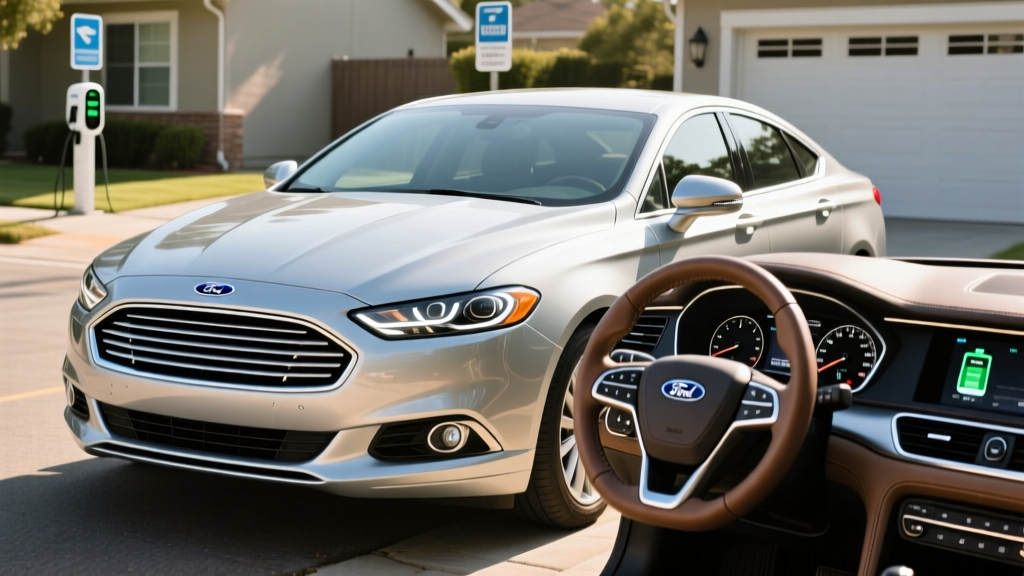
The Ford Fusion Hybrid was discontinued after the 2020 model year, but the 2018 Fusion Hybrid SE remains one of the most capable used midsize sedans on the market for buyers who want hybrid efficiency without plug-in complexity. With an EPA-estimated 42 MPG combined, a proven 188-horsepower powertrain, and a nickel-metal hydride (NiMH) traction battery backed by Ford's long hybrid warranty, the 2018 SE trim hits a sweet spot of value, efficiency, and daily-drivability. In the 2026 used-car market, well-maintained examples typically sell between $11,000 and $16,000 depending on mileage and condition — making it a compelling alternative to both newer gas-only sedans and pricier used EVs.
| Spec | Value |
|---|---|
| EPA Fuel Economy (City / Highway / Combined) | 43 / 41 / 42 MPG |
| Powertrain | 2.0L Atkinson-cycle I-4 + electric motor (188 HP combined) |
| Transmission | eCVT (planetary gearset, no fixed gears) |
| Traction Battery | 1.4 kWh NiMH (sealed, air-cooled) |
| 0–60 mph | ~7.8 seconds |
| Fuel Tank | 13.5 gallons |
| Total Driving Range | ~567 miles (EPA est.) |
| Battery Warranty (original) | 8 years / 100,000 miles |
| Plug-In Required? | No — conventional HEV, charges via regenerative braking |
| Federal Tax Credit (new) | Expired December 31, 2018 (was up to $4,007) |
HEV vs. PHEV: Understanding the Fusion Hybrid Lineup
Ford sold two electrified Fusion variants in 2018, and confusing them is a common buyer mistake. Here's the distinction:
| Feature | Fusion Hybrid (HEV) | Fusion Energi (PHEV) |
|---|---|---|
| Plug-in charging | No — self-charging via regen + engine | Yes — 120V or 240V plug-in |
| Battery capacity | 1.4 kWh NiMH | 7.6 kWh Li-ion |
| Electric-only range | ~1 mile at low speed | 21 miles (EPA) |
| EPA combined MPG / MPGe | 42 MPG | 97 MPGe (elec.) / 42 MPG (gas) |
| Total range | ~567 miles | ~610 miles |
| Trunk space | 12.0 cu ft | 8.2 cu ft (battery intrusion) |
| Original tax credit | Up to $4,007 (expired 2018) | Up to $4,007 (expired 2018) |
This article focuses on the Fusion Hybrid SE — the conventional HEV. If you need electric-only commuting and have home charging access, the Fusion Energi PHEV is worth a separate look, but its smaller trunk and higher used-car premium are real trade-offs.
Fuel Economy: EPA Ratings vs. Real-World MPG
The EPA rates the 2018 Ford Fusion Hybrid at 43 city / 41 highway / 42 combined MPG. These are strong numbers for a 3,500-pound midsize sedan, but real-world results depend heavily on driving style and conditions.
| Scenario | Expected MPG |
|---|---|
| EPA City | 43 MPG |
| EPA Highway | 41 MPG |
| EPA Combined | 42 MPG |
| Real-world city (stop-and-go, moderate temps) | 44–48 MPG |
| Real-world highway (70+ mph, sustained) | 36–39 MPG |
| Cold-weather combined (below 30°F) | 34–38 MPG |
Why city MPG often beats the EPA sticker: Conventional hybrids like the Fusion recapture energy through regenerative braking. Stop-and-go traffic means more braking events, which recharges the 1.4 kWh battery and lets the electric motor handle more low-speed driving. Owners on Fuelly and similar tracking sites frequently report 45+ MPG in urban commutes.
Why highway MPG drops: At sustained speeds above 65 mph, the gasoline engine does nearly all the work. Aerodynamic drag rises with the square of speed, and the hybrid system offers minimal assist at steady-state cruising. Expect 36–39 MPG on flat interstate runs at 70–75 mph, and somewhat less in hilly terrain or headwinds.
Cold-weather penalty: The Fusion Hybrid's engine must run more frequently in winter to maintain cabin heat (it has no electric heater on the HEV trim). Below 30°F, expect a 10–15% MPG reduction. This is normal for all hybrids and is not a defect.
Powertrain Deep Dive: How 188 HP Moves 3,500 Pounds
The 2018 Fusion Hybrid pairs a 2.0-liter Atkinson-cycle four-cylinder engine (141 HP, 129 lb-ft torque) with a permanent-magnet electric motor (120 HP, 117 lb-ft). Combined system output is 188 HP. The two power sources are blended through Ford's eCVT — a planetary gearset that seamlessly varies the ratio between engine and motor. Unlike a traditional belt-driven CVT, this design has no belts or cones to wear, contributing to the Fusion Hybrid's strong reliability record.
The 1.4 kWh NiMH battery sits behind the rear seats. It's small by modern standards, but in a conventional HEV it doesn't need to store much energy — it buffers regenerative braking captures and provides short electric-assist bursts. The battery never fully charges or fully depletes; the system maintains a roughly 40–60% state-of-charge window to maximize longevity.
Acceleration is adequate for daily driving: 0–60 mph in approximately 7.8 seconds. The electric motor's instant torque makes the car feel quicker from stoplights than the number suggests, though highway merging requires planning. The eCVT eliminates shift shock but can produce a droning engine note under hard acceleration — a characteristic of all planetary-gearset hybrids.
Battery Longevity, Warranty & Replacement Cost
Original Battery Warranty: 8 years / 100,000 miles (whichever comes first), covering defects and capacity loss below 60% of original capacity. In California Air Resources Board (CARB) states, the warranty extends to 10 years / 150,000 miles.
For a 2018 model in 2026, the original 8-year/100,000-mile warranty has expired unless the car was sold late in the model year or has unusually low mileage. Buyers should budget as if the battery is out of warranty.
How long do Fusion Hybrid batteries last? Ford's NiMH packs have proven durable. Taxi fleets running Fusion Hybrids have logged 200,000+ miles on original batteries. Nickel-metal hydride chemistry degrades more gracefully than early lithium-ion — capacity loss is slow and linear rather than sudden. Most owners will never need a replacement, but data from hybrid repair shops shows some units begin showing noticeable capacity loss (reduced EV-mode time, slightly lower MPG) around 150,000–180,000 miles.
Replacement cost: A new OEM NiMH battery pack from Ford runs approximately $2,500–$3,500 including installation at a dealership. Independent hybrid specialists often offer refurbished or reconditioned packs for $1,200–$2,000 installed. Individual cell replacement is possible for $300–$600 if only a few cells have failed, but this requires specialized diagnostic equipment.
Signs of battery degradation to watch for on a used 2018:
- Noticeably reduced fuel economy (below 35 MPG combined in warm weather)
- Engine running more frequently at low speeds or stops
- Dashboard warning lights related to the hybrid system
- Reduced regenerative braking feel
Before purchasing, request a hybrid battery health report from a Ford dealer or independent hybrid shop. An OBD-II scan tool can read the battery's state-of-health percentage directly from the hybrid control module.
SE Trim Features & What You Get
The SE was the mid-level trim in the 2018 Fusion Hybrid lineup, sitting above the base S and below the Titanium. For most buyers, it offers the best value proposition:
- 17-inch aluminum wheels
- SYNC 3 infotainment with 8-inch touchscreen, Apple CarPlay, and Android Auto
- Dual-zone automatic climate control
- Push-button start with intelligent access
- Power-adjustable driver's seat (10-way)
- Leather-wrapped steering wheel and shift knob
- Ford Co-Pilot360 suite: pre-collision assist with pedestrian detection, lane-keeping system, auto high-beam headlamps, blind-spot information system (BLIS) with cross-traffic alert
- Rear-view camera
The SE trim lacks the Titanium's leather seats, premium Sony audio, and navigation, but these are cosmetic upgrades that don't affect the hybrid powertrain or efficiency. Many SE examples also include the optional Fusion Hybrid SE Cold Weather Group (heated front seats, heated steering wheel, heated side mirrors) — a worthwhile find for northern-climate buyers.
Does the 2018 Fusion Hybrid Qualify for a Tax Credit in 2026?
No. When purchased new, the 2018 Fusion Hybrid was eligible for a federal tax credit of up to $4,007 under the pre-2023 IRS §30D rules. However, that credit expired on December 31, 2018, and the current IRS §30D clean vehicle credit (effective 2023 onward) applies only to new vehicles meeting battery-sourcing, critical-mineral, MSRP, and buyer-income requirements. The Fusion Hybrid is no longer in production, so no federal tax credit is available for a used purchase.
Under the current §30D rules, a used clean vehicle credit of up to $4,000 (30% of sale price, capped) may apply to eligible used EVs and PHEVs — but conventional hybrids like the Fusion HEV do not qualify. Only the Fusion Energi PHEV could potentially qualify for the used-vehicle credit, subject to the $25,000 sale-price cap, buyer income limits ($75K single / $150K joint), and dealer reporting requirements. Always consult a tax professional and verify current IRS guidance before relying on credit eligibility.
Hybrid vs. PHEV vs. EV: Which Powertrain Fits You?
Choose the 2018 Fusion Hybrid (HEV) If:
- You lack access to home or workplace charging
- You want zero behavior change — just fill up with gas less often
- Your budget is under $16,000 for a reliable, efficient sedan
- You drive a mix of city and highway with no predictable short commute
- You want lower maintenance costs (no oil changes as frequently, regenerative braking saves brake pads)
Consider a PHEV (e.g., Fusion Energi, Toyota Prius Prime) If:
- You have Level 2 home charging and a commute under 25 miles
- You want electric-only daily driving with gas backup for road trips
- You can find a used PHEV under $25,000 and qualify for the used-vehicle credit
Consider a Full EV (e.g., Chevy Bolt, Nissan Leaf, Tesla Model 3) If:
- You have reliable home Level 2 charging
- Your daily driving is under 200 miles and you rarely road-trip beyond DC fast-charger coverage
- You want the lowest per-mile fuel cost (electricity at $0.12/kWh ≈ $0.04/mile vs. gas at $3.50/gal and 42 MPG ≈ $0.08/mile)
- You want to qualify for current federal or state EV incentives
The Fusion Hybrid's strongest argument in 2026 is simplicity. There is no plug, no charging app, no range anxiety, no cold-weather range loss beyond a normal MPG dip. You drive it exactly like any gas car — it just visits the gas station roughly half as often.
Ownership Costs: What to Budget in 2026
| Category | Estimated Annual Cost |
|---|---|
| Fuel (12,000 mi/yr at 42 MPG, $3.50/gal) | $1,000 |
| Insurance (national avg., varies by profile) | $1,400–$1,800 |
| Maintenance (oil, filters, tires, brakes) | $400–$600 |
| Depreciation (est. year-over-year) | $800–$1,200 |
| Total estimated annual cost | $3,600–$4,600 |
For comparison, a gas-only 2018 midsize sedan averaging 28 MPG combined would cost roughly $1,500/year in fuel at the same mileage and gas price — a $500/year fuel penalty versus the Fusion Hybrid. Over five years, that's $2,500 in fuel savings alone, which more than offsets the typical used-car price premium for the hybrid variant.
Brake wear is notably lower on the Fusion Hybrid. The regenerative braking system handles most deceleration, meaning the friction brakes engage primarily at very low speeds or during hard stops. Many Fusion Hybrid owners report original brake pads lasting 80,000–100,000 miles — roughly double the lifespan of a conventional sedan's brakes.
Reliability & Safety Record
The 2018 Fusion Hybrid has a strong reliability record. The eCVT transmission, with no belts, clutches, or torque converter, is one of the most durable drivetrain designs in the industry. Consumer Reports has historically rated the Fusion Hybrid as average to above-average for reliability, with the hybrid powertrain itself generating very few complaints.
On the safety front, the 2018 Fusion earned a 5-star overall safety rating from NHTSA and was an IIHS Top Safety Pick when equipped with the optional adaptive headlights. The standard Ford Co-Pilot360 suite on the SE trim includes automatic emergency braking, lane-keeping assist, and blind-spot monitoring — active safety features that remain competitive with 2026 models.
Common issues to check on a used 2018:
- Infotainment screen freezing (SYNC 3 software updates usually resolve this)
- Minor wind noise around the A-pillars at highway speed
- Slight steering wander on uneven pavement (normal for the Fusion's electric power steering tuning)
- Trunk space is 12.0 cu ft — adequate but smaller than some competitors due to battery placement behind the rear seats
Frequently Asked Questions
How many MPG does the 2018 Ford Fusion Hybrid SE get?
The EPA rates it at 43 city / 41 highway / 42 combined MPG. Real-world city driving often yields 44–48 MPG thanks to regenerative braking, while sustained highway driving at 70+ mph typically returns 36–39 MPG. Cold weather (below 30°F) reduces combined economy to roughly 34–38 MPG.
Does the 2018 Fusion Hybrid need to be plugged in?
No. The Fusion Hybrid is a conventional HEV (hybrid electric vehicle). It charges its 1.4 kWh battery entirely through regenerative braking and the gasoline engine. You never plug it in — you simply refuel with gasoline as you would any other car.
How long does the Fusion Hybrid battery last?
Ford's NiMH battery packs in the Fusion Hybrid have proven durable, with many examples exceeding 150,000–200,000 miles before significant degradation. The original warranty was 8 years / 100,000 miles (10 years / 150,000 miles in CARB states), but for a 2018 model in 2026, most factory warranties have expired. Budget $1,200–$3,500 for a potential replacement depending on whether you choose refurbished or OEM new.
Is the 2018 Fusion Hybrid SE a good used car buy in 2026?
Yes, for the right buyer. If you want a spacious, safe, efficient sedan under $16,000 that requires no charging infrastructure and minimal behavior change, the 2018 Fusion Hybrid SE is one of the strongest options in the used market. Its fuel savings over a gas-only equivalent typically pay for the price premium within 3–5 years of average driving.
How does the Fusion Hybrid compare to the Toyota Camry Hybrid?
The 2018 Toyota Camry Hybrid LE is rated at 51 city / 53 highway / 52 combined MPG — significantly higher than the Fusion Hybrid's 42 combined. However, used Camry Hybrids typically command a $2,000–$4,000 premium over equivalent Fusion Hybrids. If fuel economy is your top priority and budget is flexible, the Camry Hybrid wins on efficiency. If value is paramount, the Fusion Hybrid offers similar reliability and technology at a lower entry price.
Can I still get federal tax credits for buying a used 2018 Fusion Hybrid?
No. The federal tax credit for the Fusion Hybrid (up to $4,007) expired in 2018. Under current IRS §30D rules, conventional hybrids do not qualify for either the new or used clean vehicle tax credit. Only battery-electric vehicles and qualifying plug-in hybrids are eligible. Consult a tax professional for personalized guidance.