Quick Verdict: The PowerBoost Lariat at a Glance
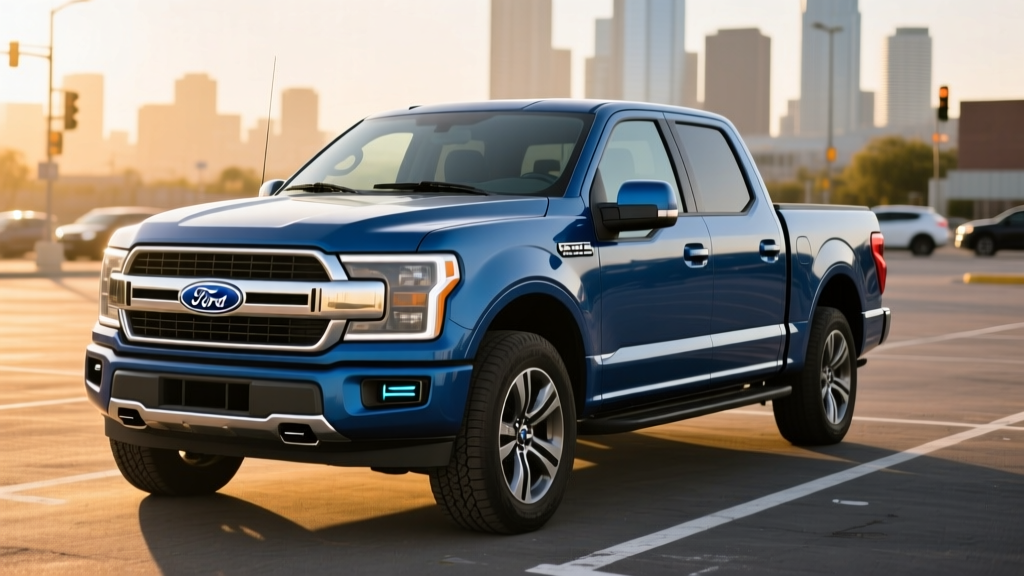
If you've been searching for the 2024 Ford F-150 Lariat 3.5L PowerBoost Hybrid MSRP official figures, you've likely found conflicting numbers across dealer sites and configurators. Let's cut through the noise. The 2024 F-150 Lariat SuperCrew 4×4 equipped with the 3.5L PowerBoost full-hybrid V6 starts at an official MSRP of $64,885 (including destination). That buys you a 430-horsepower, 570 lb-ft torque hybrid powertrain, EPA-rated 23 MPG combined, and a maximum towing capacity of 12,700 pounds — making it one of the most capable hybrid trucks on the market.
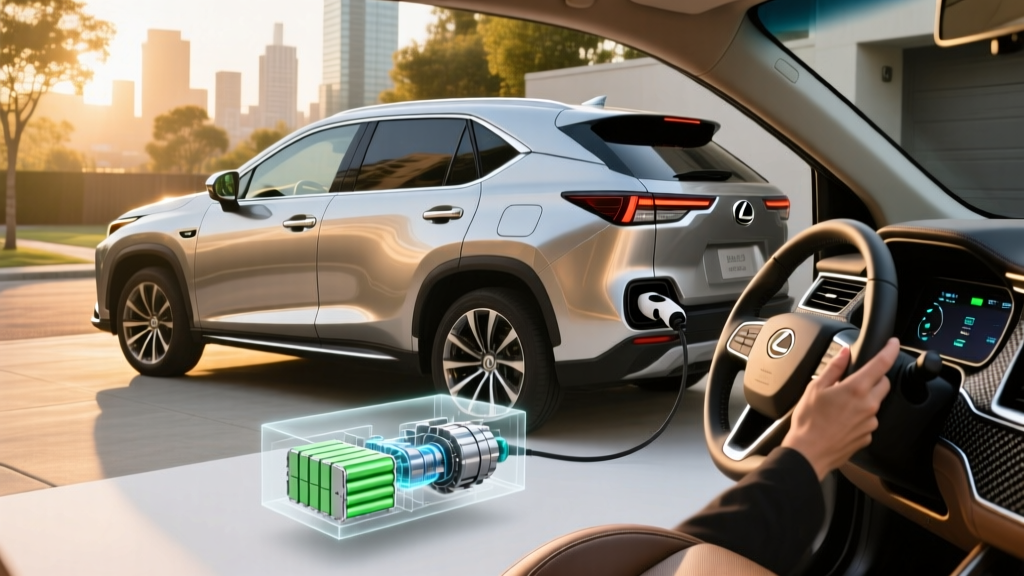
This is a conventional hybrid (HEV), not a plug-in. You never plug it in. The 1.5 kWh lithium-ion battery recharges through regenerative braking and the engine, so there's no electric-only driving range and no home charger to install. If you need plug-in capability, you'll want to look at the F-150 Lightning (full EV) or a competitor PHEV like the upcoming Silverado hybrid variants.
Official Powertrain Specifications
| Specification | Value |
|---|---|
| Engine | 3.5L twin-turbo V6 + 47-hp electric motor (integrated in 10-speed auto) |
| Combined Horsepower | 430 hp |
| Combined Torque | 570 lb-ft |
| Transmission | Modular hybrid 10-speed automatic |
| Hybrid Battery | 1.5 kWh lithium-ion (under floor, not plug-in) |
| Drivetrain | 4×4 (standard on Lariat PowerBoost) |
| 0–60 mph | ~5.3 seconds (tested) |
| Max Towing | 12,700 lbs (with Max Trailer Tow Package) |
| Max Payload | ~2,120 lbs |
| Pro Power Onboard | 7.2 kW (standard with PowerBoost) |
| Base MSRP (Lariat SC 4×4) | $64,885 (incl. destination) |
The PowerBoost pairs Ford's twin-turbo 3.5L EcoBoost V6 with a 47-horsepower electric motor sandwiched inside the bell housing of the 10-speed automatic transmission. The combined system output of 430 hp and 570 lb-ft exceeds the non-hybrid 3.5L EcoBoost (400 hp / 500 lb-ft) and lands between the 5.0L V8 and the high-output 3.5L in Ford's powertrain lineup. The electric motor fills torque gaps at low RPM, giving the PowerBoost noticeably stronger off-the-line response than its gas-only counterpart.
One of the PowerBoost's standout features is the standard 7.2 kW Pro Power Onboard system, which turns the truck into a mobile generator. You get 120V and 240V outlets in the bed — enough to run power tools at a job site, a small welder, or essentials during a home power outage. This capability is unique to the PowerBoost hybrid and isn't available on gas-only F-150 trims at this output level.
EPA Fuel Economy and Real-World MPG
| Driving Cycle | EPA Rating | Real-World Expectation |
|---|---|---|
| City | 25 MPG | 25–27 MPG (hybrids often beat EPA in stop-and-go) |
| Highway | 22 MPG | 20–22 MPG (aero drag hurts trucks at 75+ mph) |
| Combined | 23 MPG | 22–24 MPG (mixed driving) |
Source: EPA Fuel Economy — 2024 Ford F-150 PowerBoost 4WD
Let's put these numbers in context. The non-hybrid 3.5L EcoBoost 4×4 rates at 19 city / 24 highway / 21 combined. The PowerBoost's advantage is most pronounced in city driving, where regenerative braking and electric-motor assist reduce fuel consumption significantly. In real-world suburban and urban commuting with frequent stops, owners routinely report 25–27 MPG — genuinely beating the EPA city estimate, which is common for hybrids because the EPA test cycle doesn't fully capture regenerative braking benefits.
On the highway, however, the advantage narrows. A full-size pickup pushing through air at 75 mph doesn't benefit much from a small electric motor. If your driving is 80%+ highway, the PowerBoost's fuel-economy edge over the standard 3.5L is modest — roughly 2 MPG combined. Where the hybrid shines is mixed suburban driving, construction-site idling (the engine shuts off and the battery powers accessories), and stop-and-go traffic.
Pricing Breakdown: Lariat PowerBoost MSRP and Options
The official 2024 Ford F-150 Lariat PowerBoost pricing structure breaks down as follows:
- Lariat SuperCrew 4×4 with PowerBoost: $64,885 MSRP (destination included)
- PowerBoost engine upgrade: ~$3,300 over the standard 2.7L EcoBoost on Lariat
- Equipment Group 502A High: ~$8,000+ (adds massaging seats, B&O sound, head-up display, power tailgate)
- Max Trailer Tow Package: ~$1,200 (required for 12,700-lb rating)
- Panoramic sunroof: ~$1,400
A well-equipped Lariat PowerBoost with the 502A High package, tow mirrors, and the Max Trailer Tow Package typically lands between $74,000 and $78,000 before any dealer adjustments. Higher trim levels (King Ranch, Platinum) also offer PowerBoost but at significantly higher MSRPs starting above $75,000 and $80,000 respectively.
Federal Tax Credit Eligibility
The F-150 PowerBoost is a conventional hybrid (HEV), not a plug-in hybrid or battery-electric vehicle. Under current IRS §30D Clean Vehicle Credit rules, the PowerBoost does not qualify for the federal $7,500 EV tax credit. That credit requires a minimum 7 kWh battery capacity and plug-in charging capability — the PowerBoost's 1.5 kWh battery and lack of a charge port disqualify it.
Some states offer their own hybrid incentives, but these vary widely and change frequently. Check your state energy office or department of environmental quality for current programs. No federal incentive currently applies to conventional (non-plug-in) hybrids purchased new.
Hybrid vs PHEV vs Full EV: Which F-150 Fits You?
Ford offers three distinct F-150 powertrains that buyers cross-shop. Here's how they compare:
| Factor | PowerBoost HEV | Lightning (BEV) | 3.5L EcoBoost (Gas) |
|---|---|---|---|
| Plugs in? | No | Yes (Level 2 + DC fast) | No |
| Combined MPG / MPGe | 23 MPG | ~70 MPGe | 21 MPG |
| Range | ~600+ miles | 230–320 miles (EPA) | ~550 miles |
| Max Towing | 12,700 lbs | 10,000 lbs | 13,000 lbs |
| Federal Tax Credit | None | Up to $7,500 (§30D, eligibility varies) | None |
| Home Charger Needed | No | Yes (Level 2 strongly recommended) | No |
| Best For | Towing + daily driving, no charging access | Home charging, shorter commutes, low fuel cost | Max towing, lowest upfront cost |
- Choose the PowerBoost HEV if: You tow regularly, drive mixed suburban/city routes, want Pro Power Onboard for job-site or backup power, and don't have reliable home charging access for an EV.
- Choose the Lightning BEV if: You can install a Level 2 home charger, your daily driving is under 200 miles, you want the lowest per-mile fuel cost, and you rarely tow over 8,000 lbs long-distance.
- Choose the gas 3.5L EcoBoost if: You need maximum towing capacity at the lowest purchase price and fuel cost is a secondary concern.
Battery Warranty, Reliability, and Replacement Cost
The PowerBoost's 1.5 kWh battery is relatively small compared to a PHEV or BEV battery pack, which actually works in its favor for longevity. The battery operates in a narrow state-of-charge window (never fully depleted, never fully charged), which minimizes degradation stress. Ford's hybrid system is derived from the architecture used in the Escape Hybrid and Maverick Hybrid, which have demonstrated strong reliability in fleet and consumer use.
Should the hybrid battery require replacement outside of warranty, expect a cost in the range of $2,000 to $3,500 for the battery module itself, plus labor. This is significantly less than a full EV battery replacement (which can exceed $15,000) because the PowerBoost pack is compact and accessible. The 10-speed automatic transmission and twin-turbo V6 are conventional components serviced through Ford's existing dealer network.
Reliability data for the PowerBoost specifically is still maturing — the system debuted for the 2021 model year. Early owner surveys and NHTSA complaint records show no systemic hybrid-battery failures, though some owners have reported software-related drivability quirks (rough engine start-stop transitions, occasional dashboard warning lights) that were typically resolved through dealer software updates. The mechanical powertrain — the 3.5L EcoBoost block and 10-speed transmission — has years of proven service in non-hybrid F-150s.
Pros and Cons of the Lariat PowerBoost
- 430 hp / 570 lb-ft — strongest base F-150 powertrain below the Raptor
- 25 MPG city is excellent for a 5,500-lb 4×4 truck
- 7.2 kW Pro Power Onboard is standard — turns the truck into a job-site generator
- No charging infrastructure required — works like a normal truck
- 12,700-lb towing capacity is competitive with gas V8 rivals
- Smooth, quiet electric assist at low speeds and in traffic
- No federal tax credit eligibility (HEV, not PHEV/BEV)
- $3,300 engine upgrade cost with only ~2 MPG combined improvement
- Highway fuel economy (22 MPG) is only marginally better than the gas 3.5L
- Lariat trim starting near $65K is a significant investment
- Engine start-stop transitions can feel abrupt in early software versions
- Regenerative braking feel takes adjustment if you're new to hybrids
Frequently Asked Questions
How many MPG does the 2024 F-150 PowerBoost hybrid get?
The EPA rates the F-150 PowerBoost 4×4 at 25 city / 22 highway / 23 combined MPG. In real-world city and suburban driving, many owners report 25–27 MPG thanks to regenerative braking. Highway fuel economy at sustained speeds above 70 mph typically drops to 20–22 MPG, which is typical for a full-size truck's aerodynamic profile.
Does the PowerBoost hybrid need to be plugged in?
No. The PowerBoost is a conventional hybrid (HEV). The 1.5 kWh battery charges through regenerative braking and the gasoline engine. There is no charge port and no electric-only driving mode. You refuel at any gas station as you would with a standard F-150.
Does the 2024 F-150 PowerBoost qualify for a federal tax credit?
No. The IRS §30D Clean Vehicle Credit requires a plug-in vehicle with at least 7 kWh of battery capacity. The PowerBoost's 1.5 kWh battery and lack of a charge port make it ineligible. Only the F-150 Lightning (full EV) qualifies for federal EV incentives, and its eligibility depends on current-year sourcing, MSRP, and buyer income requirements.
Is the PowerBoost hybrid reliable, and what does battery replacement cost?
The PowerBoost's hybrid components are covered by Ford's 8-year/100,000-mile hybrid warranty (10 years/150,000 miles in CARB states). Out-of-warranty battery replacement is estimated at $2,000–$3,500 including labor — far less than a full EV battery swap. The underlying 3.5L V6 and 10-speed transmission are well-established components with extensive service history.
What is the official MSRP of the 2024 F-150 Lariat PowerBoost?
The 2024 Ford F-150 Lariat SuperCrew 4×4 with the 3.5L PowerBoost hybrid has an official base MSRP of $64,885 including destination charges. The PowerBoost engine option itself adds approximately $3,300 over the standard Lariat powertrain. Well-optioned examples with the 502A High equipment group and Max Trailer Tow Package typically sticker between $74,000 and $78,000.
Can the PowerBoost run on electric power alone?
Only at very low speeds for extremely short distances (under a mile, typically in parking lots or stop-and-go traffic). The 1.5 kWh battery doesn't store enough energy for meaningful electric-only driving. The system is designed to assist the gas engine and recover braking energy, not to replace it. If you need substantial electric-only range, you need a PHEV or a full BEV like the F-150 Lightning.