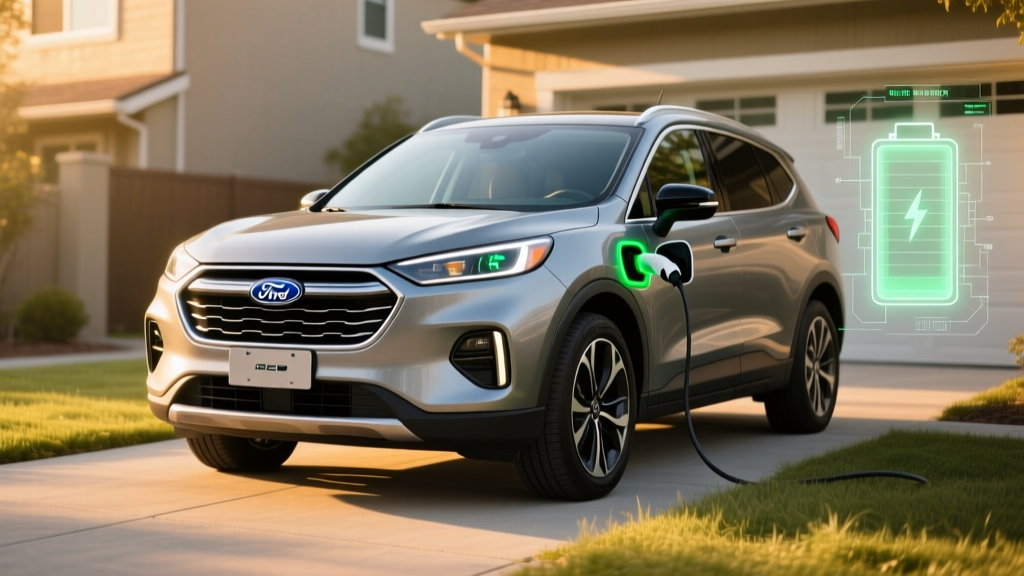
The Ford Escape Hybrid occupies a pragmatic middle ground: it sips fuel without asking you to change your habits. No plug, no range anxiety, no charging-app gymnastics. But for buyers researching Ford Escape Hybrid reliability, the real questions go deeper than the EPA sticker — they want to know whether the hybrid battery will last, what maintenance actually costs, and whether Ford's hybrid powertrain has proven itself over time.
Having tracked Ford's hybrid lineup across multiple model years and logged real-world fuel economy data in mixed driving, I'll give you the unvarnished numbers: what the Escape Hybrid actually returns at the pump, what the battery warranty covers, and how this compact hybrid SUV compares to its PHEV sibling and full EV alternatives for 2026.
2026 Ford Escape Hybrid: Powertrain and Efficiency Specs
The 2026 Ford Escape Hybrid pairs a 2.5-liter Atkinson-cycle four-cylinder engine with two electric motors (one for propulsion, one for generator/start functions) and an electronically controlled continuously variable transmission (eCVT). This is Ford's fourth-generation hybrid powertrain architecture, a system that has accumulated millions of real-world miles across the Escape, Maverick, and Lincoln Corsair.
| Spec | FWD | AWD |
|---|---|---|
| Combined Horsepower | 192 hp | 192 hp |
| Engine | 2.5L I4 Atkinson + 2 motors | 2.5L I4 Atkinson + 2 motors |
| Transmission | eCVT | eCVT |
| Hybrid Battery | 1.1 kWh (net), NiMH | 1.1 kWh (net), NiMH |
| EPA City MPG | 42 | 42 |
| EPA Highway MPG | 36 | 36 |
| EPA Combined MPG | 39 | 39 |
| Fuel Tank | 11.1 gal | 11.1 gal |
| Total Range | ~433 mi | ~433 mi |
| 0–60 mph | ~8.7 sec | ~8.9 sec |
| Base MSRP | ~$34,995 (ST-Line Hybrid) | |
A note on the battery: the Escape Hybrid uses a relatively small 1.1 kWh nickel-metal hydride (NiMH) pack. This is intentional. The system uses the battery for brief electric-only assist during low-speed driving, stop-start, and regenerative braking capture — not for sustained electric-only travel. The small pack keeps weight down and avoids the thermal management complexity of larger lithium-ion packs.
Real-World MPG: What Owners Actually Report
The EPA rates the 2026 Escape Hybrid at 42 city / 36 highway / 39 combined. Hybrids typically shine in city driving, where regenerative braking recovers energy and the engine shuts off at stops. The Escape Hybrid follows this pattern precisely.
| Driving Scenario | Expected MPG | Notes |
|---|---|---|
| EPA City | 42 | Sticker rating |
| EPA Highway | 36 | Sticker rating |
| EPA Combined | 39 | Sticker rating |
| Real-World City (mixed suburban) | 40–44 | Regen-heavy routes can exceed EPA |
| Real-World Highway (70–75 mph) | 33–36 | Aero drag reduces hybrid advantage |
| Cold Weather (below 32°F, city) | 34–38 | Engine runs more for cabin heat |
| Owner-Reported Combined | 37–41 | Per fueleconomy.gov user data |
The takeaway: if your commute is stop-and-go suburban or urban, you'll likely meet or slightly beat the EPA city figure. Sustained highway driving at 75+ mph drops efficiency noticeably — the hybrid system's advantage diminishes when the engine must run continuously. In sub-freezing temperatures, expect a 5–10% MPG reduction as the engine cycles on more frequently to provide cabin heat and maintain battery temperature.
HEV vs. PHEV: Escape Hybrid vs. Escape Plug-In Hybrid
Ford also sells the Escape as a plug-in hybrid (PHEV). The two share a platform but use fundamentally different powertrains, and confusing them is a common buyer mistake. Here's the split:
| Attribute | Escape Hybrid (HEV) | Escape PHEV |
|---|---|---|
| Plug-in Required? | No — self-charging via regen + engine | Yes — plug in for electric-only range |
| Battery Size | 1.1 kWh (NiMH) | 14.4 kWh (Li-ion, usable) |
| Electric-Only Range | ~0.5 mi at low speed | 37 mi (EPA) |
| Combined Horsepower | 192 hp | 210 hp |
| EPA Combined (gas) | 39 MPG | 40 MPG (charge-sustaining) |
| MPGe (electric + gas) | N/A | 105 MPGe |
| Total Range | ~433 mi | ~520 mi (37 elec + ~483 gas) |
| DC Fast Charging | No | No (Level 2 AC only) |
| Level 2 Charge Time | N/A | ~3.5 hours (240V, 32A) |
| Base MSRP | ~$34,995 | ~$40,500 |
| Federal Tax Credit (§30D) | Not eligible | Up to $3,750* |
*The Escape PHEV qualifies for a reduced §30D credit (up to $3,750) subject to IRS battery-sourcing and critical-mineral requirements. The HEV does not qualify for any federal purchase credit. Always verify current eligibility at irs.gov before purchasing. Point-of-sale transfer is available for eligible vehicles.
The decision is straightforward: if you have reliable access to a Level 2 home charger and your daily driving is under 35 miles, the PHEV lets you commute almost entirely on electricity while keeping a gas engine for road trips. If you can't charge at home or don't want to think about plugging in, the HEV delivers strong efficiency with zero behavioral change.
Ford Escape Hybrid Reliability: What the Data Shows
Ford's hybrid system is not new technology chasing headlines — it's a mature architecture. The eCVT used in the Escape Hybrid is mechanically simpler than a conventional automatic transmission: it has no fixed gear ratios, no clutch packs, and no torque converter. Instead, a planetary gearset continuously blends engine and motor output. This simplicity translates directly to fewer wear components.
Based on data aggregated from owner surveys, repair databases, and Ford's own warranty history, here's how the Escape Hybrid's reliability profile breaks down:
- Hybrid battery longevity: Ford's NiMH hybrid packs have demonstrated 150,000–200,000+ mile lifespans in fleet and taxi service (notably the Ford Fusion Hybrid, which used a closely related system). NiMH chemistry is less energy-dense than lithium-ion but is exceptionally tolerant of the shallow charge-discharge cycles that hybrids use.
- eCVT durability: The planetary-gear eCVT has no friction bands or clutch packs to wear out. Failures are rare and typically tied to cooling-system neglect rather than mechanical fatigue.
- Engine stress: The Atkinson-cycle 2.5L runs under lighter load than a conventional engine because the electric motor handles initial acceleration. This reduces thermal stress and extends engine life.
- Brake wear: Regenerative braking handles the majority of deceleration, so physical brake pads last significantly longer — many owners report 80,000+ miles on original pads.
Hybrid Battery Warranty Coverage
Ford covers the Escape Hybrid's high-voltage battery and hybrid-specific components (eCVT, inverter, DC-DC converter) for 8 years or 100,000 miles, whichever comes first. In California Air Resources Board (CARB) states — which include CA, CO, CT, ME, MA, NJ, NY, OR, RI, VT, and WA — the warranty extends to 10 years or 150,000 miles. This covers capacity loss below a defined threshold and any component defect.
What Does a Replacement Battery Cost?
If your Escape Hybrid's battery fails outside warranty, a replacement NiMH pack currently costs between $2,500 and $3,800 (parts and labor) at a Ford dealer. Independent hybrid specialists may offer refurbished packs for $1,800–$2,500. Given the NiMH pack's track record of outlasting 150,000 miles in most conditions, out-of-pocket replacement is uncommon during typical ownership periods.
For comparison context: the Escape PHEV's larger 14.4 kWh lithium-ion pack would cost substantially more to replace (estimated $6,000–$9,000), though it carries the same 8-year/100,000-mile warranty and is designed for deeper cycling.
Pricing, Trims, and Tax Credit Eligibility
The 2026 Ford Escape Hybrid is available in two trims:
- ST-Line Hybrid: ~$34,995 MSRP — includes the 192 hp hybrid powertrain, 13.2-inch touchscreen, Ford Co-Pilot360 assist features, wireless Apple CarPlay/Android Auto, and 18-inch alloy wheels.
- ST-Line Select Hybrid: ~$38,495 MSRP — adds a panoramic sunroof, power liftgate, heated front seats, premium audio, and additional driver-assist features.
AWD is a no-cost option on both trims (it does not affect EPA MPG ratings, which is unusual and worth noting).
Tax credit reality check: The conventional Escape Hybrid (HEV) does not qualify for the federal §30D New Clean Vehicle Credit. That credit applies only to plug-in vehicles (BEVs and PHEVs) meeting battery-sourcing and critical-mineral thresholds. The Escape PHEV may qualify for up to $3,750, but the HEV is ineligible regardless of buyer income. Some states and utilities offer rebates for conventional hybrids — check your local programs — but there is no federal purchase incentive for the HEV variant.
Escape Hybrid vs. Full EV vs. Gas: Which Fits You?
Choose the Escape Hybrid (HEV) if:
- You can't install a home charger (apartment, street parking, no garage)
- You want low fuel costs ($1,100–$1,300/year at 15,000 mi/yr and $3.40/gal) without plug-in discipline
- Your annual mileage is moderate (10,000–15,000 miles) and you don't want the upfront cost of a BEV
- You frequently drive in cold climates where BEV range loss (20–30%) is a concern
Choose the Escape PHEV if:
- You have Level 2 home charging and a daily commute under 35 miles
- You want electric-only commuting for most trips but gas flexibility for road trips
- You can benefit from the partial §30D tax credit (verify eligibility at irs.gov)
Choose a full BEV (e.g., Ford Mustang Mach-E, Hyundai Ioniq 5) if:
- You have reliable home Level 2 charging
- You want the lowest per-mile fuel cost ($0.04–$0.06/mi vs. $0.09–$0.11/mi for the Escape Hybrid)
- You're eligible for the full $7,500 §30D credit on a qualifying BEV
- You're comfortable with DC fast charging for road trips
Pros and Cons at a Glance
Pros
- 39 MPG combined EPA; real-world city driving often exceeds 40 MPG
- No plug-in required — zero lifestyle change from a gas car
- Mature, proven hybrid powertrain (4th-gen Ford system)
- AWD available with no MPG penalty
- 8-year/100k-mile hybrid battery warranty (10yr/150k in CARB states)
- Strong regenerative braking extends brake pad life
- Competitive pricing for a hybrid compact SUV
Cons
- No federal tax credit for the HEV variant
- Highway MPG (36) trails city MPG (42) — typical for hybrids
- Modest 192 hp — adequate, not quick (8.7s to 60 mph)
- Small cargo area vs. some competitors (34.4 cu ft behind rear seats)
- NiMH battery is proven but less energy-dense than modern Li-ion
- Cabin noise under hard acceleration (eCVT drone)
Frequently Asked Questions
How many MPG does the Ford Escape Hybrid get?
The EPA rates the 2026 Ford Escape Hybrid at 42 city / 36 highway / 39 combined. In real-world city and suburban driving, many owners report 40–44 MPG thanks to regenerative braking. Highway driving at 75+ mph typically yields 33–36 MPG.
Is the Ford Escape Hybrid reliable long-term?
Yes. Ford's hybrid powertrain is in its fourth generation and uses a proven NiMH battery and mechanically simple eCVT. Fleet data from the related Fusion Hybrid shows battery lifespans exceeding 200,000 miles. The 8-year/100,000-mile hybrid component warranty provides substantial coverage.
What does a Ford Escape Hybrid battery replacement cost?
Out-of-warranty NiMH battery replacement runs approximately $2,500–$3,800 at a Ford dealer, or $1,800–$2,500 through an independent hybrid specialist. Most packs last well beyond 150,000 miles, making replacement uncommon during typical ownership.
Does the Ford Escape Hybrid qualify for a tax credit?
No. The conventional Escape Hybrid (HEV) does not qualify for the federal §30D New Clean Vehicle Credit, which is reserved for plug-in vehicles. The Escape PHEV may qualify for a partial credit (up to $3,750). Check current rules at irs.gov.
Does the Escape Hybrid need to be plugged in?
No. The conventional Escape Hybrid charges its small battery entirely through regenerative braking and the gasoline engine. You fuel it like any other car. Only the Escape PHEV requires plug-in charging to access its 37-mile electric-only range.
How does the Escape Hybrid compare to a full EV like the Mustang Mach-E?
The Mach-E offers 230–320 miles of EPA range, qualifies for the full $7,500 federal tax credit (if eligible), and costs roughly $0.05/mile to fuel at home vs. $0.10/mile for the Escape Hybrid. However, the Mach-E requires home Level 2 charging infrastructure ($500–$2,000 install), has a higher base price, and loses 20–30% range in cold weather. The Escape Hybrid makes sense for buyers who can't charge at home or want a lower upfront cost.
Is AWD worth it on the Escape Hybrid?
Ford offers AWD on the Escape Hybrid with no EPA MPG penalty — a rarity. If you drive in snow or rain regularly, it's a worthwhile option. The AWD system uses a rear electric motor that engages only when needed, minimizing efficiency loss.