Quick Verdict: Ford's Hybrid SUV Wears the Mustang's Efficiency DNA
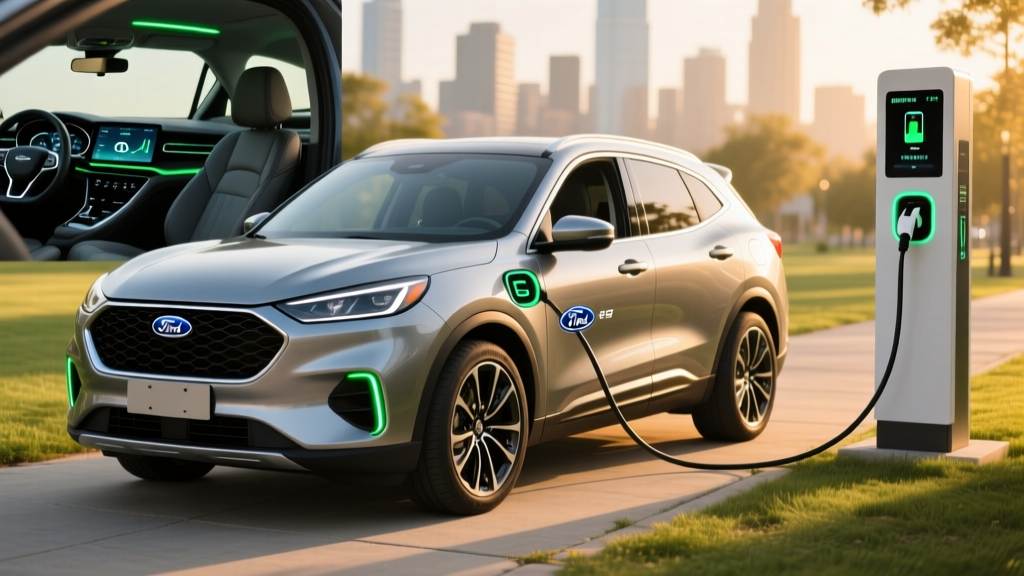
Search for a "Mustang SUV hybrid" and you will not find a badge that reads exactly that — but the 2026 Ford Escape Hybrid is the closest match in Ford's current lineup. It shares the C2 platform architecture that underpins modern Ford crossovers, delivers up to 200 combined horsepower from its 2.5-liter Atkinson-cycle engine paired with an electric motor, and achieves an EPA-estimated 39 MPG combined. For buyers who want Mustang-adjacent styling cues in a practical, fuel-sipping SUV package without ever plugging in, the Escape Hybrid occupies a specific and compelling niche.
Ford discontinued the Escape PHEV (plug-in hybrid) variant after the 2024 model year, meaning the 2026 Escape Hybrid is a conventional HEV — it charges its own 1.1 kWh battery through regenerative braking and the gasoline engine. No plug, no charging cable, no range anxiety. This guide breaks down everything a buyer needs to know: real-world MPG, powertrain specs, battery longevity, tax-credit eligibility, and whether this hybrid SUV fits your garage better than a full EV or a gas-only competitor.
HEV vs PHEV: What the Escape Hybrid Actually Is
Conventional Hybrid (HEV) — 2026 Ford Escape Hybrid:
- Battery: ~1.1 kWh (small, self-charging)
- Plug-in required: No — the engine and regen braking keep it charged
- Electric-only range: Less than 1 mile at very low speeds
- Primary benefit: Improved MPG over gas-only models, zero behavior change for the driver
Plug-In Hybrid (PHEV) — Discontinued Escape PHEV (2024 and earlier):
- Battery: 14.4 kWh usable
- Plug-in required: Yes — Level 2 charging recommended for full battery replenishment
- Electric-only range: EPA 37 miles
- Primary benefit: Short commutes on electricity alone, gas engine for longer trips
The distinction matters enormously. If you were hoping for a plug-in Mustang-badged SUV that does 30+ miles on electricity before the gas engine kicks in, that vehicle does not currently exist in Ford's 2026 lineup. The Escape Hybrid is a traditional HEV designed to maximize fuel economy without any change to your fueling routine.
Fuel Economy: EPA Numbers and Real-World MPG
Fuel economy is the Escape Hybrid's headline act. Here is the official EPA data from fueleconomy.gov for the 2026 model year front-wheel-drive configuration:
| Configuration | City MPG | Highway MPG | Combined MPG |
|---|---|---|---|
| FWD Hybrid | 42 | 36 | 39 |
| AWD Hybrid | 42 | 36 | 39 |
Real-world MPG vs. EPA sticker: Hybrid vehicles frequently exceed their EPA city estimates in stop-and-go urban driving because regenerative braking recaptures energy that gas-only cars waste as heat. Owners who drive predominantly in city conditions regularly report 41–44 MPG. Highway driving is the opposite story — at sustained 70–75 mph speeds, the electric motor contributes less and aerodynamic drag dominates, often yielding 33–35 MPG. Cold weather (below 35°F) typically reduces fuel economy by 5–10% as the engine runs longer to heat the cabin and the battery's charge/discharge efficiency drops.
Compared to the gas-only 2026 Escape with the 1.5L EcoBoost (EPA 30 MPG combined), the hybrid delivers roughly a 30% improvement in combined fuel economy — translating to approximately 100 fewer gallons consumed per 15,000 miles of annual driving.
Powertrain Specs: 200 HP Without a Plug
| Specification | 2026 Ford Escape Hybrid |
|---|---|
| Engine | 2.5L Atkinson-cycle inline-4 |
| Electric Motor | Permanent-magnet synchronous, integrated in transaxle |
| Combined Horsepower | 200 hp (net system output) |
| Transmission | eCVT (electronically controlled continuously variable) |
| Drivetrain | FWD standard; AWD available (rear electric motor) |
| Battery Capacity | ~1.1 kWh (lithium-ion) |
| 0–60 mph | ~7.5 seconds (estimated) |
| Towing Capacity | 1,500 lbs (when properly equipped) |
| Cargo Volume | 34.4 cu ft (behind 2nd row) / 60.8 cu ft (max) |
The eCVT is not a traditional belt-and-pulley CVT. It uses a planetary gearset to blend engine and motor power seamlessly — there are no rubber bands or slushy shifts. Acceleration from a stop is brisk thanks to the electric motor's instant torque, and highway merging is confident with 200 hp on tap. The AWD version uses a separate rear-axle electric motor rather than a mechanical driveshaft, which improves packaging and allows the rear wheels to engage only when traction is needed.
Pricing, Trims, and Tax-Credit Eligibility
| Trim Level | MSRP (FWD) | MSRP (AWD) |
|---|---|---|
| Base (ST-Line) | $33,490 | $34,990 |
| ST-Line Select | $36,890 | $38,390 |
| ST-Line Elite | $39,990 | $41,490 |
| Premium | $41,490 | $42,990 |
Federal tax credit status: The 2026 Ford Escape Hybrid is a conventional HEV and does not qualify for the federal §30D clean vehicle credit, which is reserved for plug-in electric vehicles (BEVs and PHEVs) meeting battery-sourcing and critical-mineral requirements. The discontinued Escape PHEV previously qualified for a partial credit, but that is no longer available for new purchases.
§30D Tax Credit Quick Reference (2026 Rules):
- Eligible vehicles: BEVs and PHEVs with ≥7 kWh battery capacity — conventional HEVs excluded
- Maximum credit: Up to $7,500 for qualifying new plug-in vehicles
- MSRP caps: $80,000 for SUVs/pickups/vans; $55,000 for sedans
- Buyer income caps: $300,000 (joint), $225,000 (head of household), $150,000 (single)
- Battery sourcing and critical-mineral requirements apply — check IRS qualifying vehicle list before purchasing
- Point-of-sale transfer available for qualifying plug-in vehicles
Some states and utilities offer rebates for conventional hybrids, though these are less common than EV incentives. Check your state energy office and local utility for current programs — amounts and eligibility vary by jurisdiction and change frequently.
Battery Longevity, Warranty, and Replacement Cost
Ford Hybrid Battery Warranty:
- Hybrid battery: 8 years / 100,000 miles (whichever comes first)
- In California and states adopting CARB emissions standards: 10 years / 150,000 miles
- Capacity retention threshold: Ford warrants the battery will not fall below approximately 60–70% of original capacity during the warranty period
The 1.1 kWh lithium-ion pack in the Escape Hybrid is small and operates within a narrow state-of-charge window — typically between 40% and 60% SoC during normal driving. This shallow cycling is extremely gentle on battery chemistry and is a primary reason hybrid batteries routinely last 150,000–200,000+ miles before significant degradation. Unlike a full EV battery that cycles from 10% to 90% regularly, the Escape Hybrid's battery is managed by the powertrain control module to minimize stress.
Battery replacement cost: If the hybrid battery does require replacement outside of warranty, expect a total cost between $2,500 and $4,500 including parts and labor at a Ford dealership. Third-party hybrid battery rebuild services can reduce this to $1,500–$2,500. Given the battery's small size and conservative management, out-of-warranty failures remain uncommon in Ford's hybrid system — the same architecture has been refined since the Fusion Hybrid debuted in 2010.
Reliability context: Ford's hybrid powertrain has matured considerably. The eCVT planetary gearset has no belts, clutches, or bands to wear out, and the Atkinson-cycle engine operates under lower thermal stress than a conventional Otto-cycle engine. The Escape Hybrid consistently earns average-to-above-average reliability ratings from major automotive survey sources.
Who Should Choose the Escape Hybrid vs. a Full EV or Gas Car
Choose the Escape Hybrid if:
- You want 35–43 MPG without changing your fueling habits
- You lack access to home or workplace charging (apartment, street parking)
- You take frequent road trips and do not want to plan around charging stops
- You live in an area with sparse DC fast-charging infrastructure
- You want a lower purchase price than a comparable EV ($33,490 vs. $40,000+ for most compact EV SUVs)
Choose a full EV (like the Ford Mustang Mach-E) if:
- You have reliable Level 2 home charging
- Your daily commute is under 250 miles round-trip
- You want to eliminate gasoline purchases entirely
- You qualify for the full $7,500 §30D federal tax credit, which narrows the price gap
- You prioritize lower per-mile energy cost (electricity at $0.14/kWh ≈ $0.04/mile vs. gas at $3.50/gal ≈ $0.12/mile at 30 MPG)
Choose the gas-only Escape (1.5L EcoBoost) if:
- Your budget is strictly under $30,000
- You drive fewer than 8,000 miles per year (fuel savings may not justify the hybrid premium)
- You plan to keep the vehicle under 4 years (hybrid premium payback takes time)
Pros and Cons at a Glance
Pros
- 39 MPG combined EPA — excellent for a compact SUV with 200 hp
- No plug-in required — zero infrastructure or behavior change
- AWD available with a rear electric motor (no mechanical drivetrain penalty)
- 8-year/100,000-mile hybrid battery warranty (10 yr in CARB states)
- Strong city MPG — often exceeds EPA in stop-and-go driving
- Proven hybrid architecture refined over 15+ years
Cons
- No federal tax credit (HEV, not a plug-in vehicle)
- Highway MPG drops to 33–35 real-world at 70+ mph
- eCVT drone under hard acceleration (no simulated gear shifts)
- Towing limited to 1,500 lbs — far below truck-based SUVs
- Discontinued PHEV variant means no electric-only commuting option
- Hybrid premium of ~$3,000–$4,000 over gas-only trims takes 3–5 years to recoup at average mileage
Frequently Asked Questions
How many MPG does the Ford Escape Hybrid get?
The 2026 Ford Escape Hybrid achieves an EPA-estimated 42 city / 36 highway / 39 combined MPG in both FWD and AWD configurations. Real-world city driving often yields 41–44 MPG thanks to regenerative braking, while sustained highway driving at 70+ mph typically returns 33–35 MPG.
How far can the Escape Hybrid go on electric only?
Less than one mile at very low speeds. The Escape Hybrid is a conventional HEV with a ~1.1 kWh battery — it is not designed for meaningful electric-only driving. The electric motor assists the gasoline engine continuously to improve efficiency, but the engine is always the primary power source at any speed above approximately 25 mph. If you need electric-only commuting, look at a PHEV (such as the Toyota RAV4 Prime with 42 miles EV range) or a full BEV.
Hybrid vs PHEV vs EV — which fits my lifestyle?
A conventional hybrid (HEV) like the Escape Hybrid is ideal if you cannot charge at home and want better fuel economy with zero routine changes. A PHEV is the middle ground — 25–42 miles of electric commuting on a plug, with a gas engine for road trips — but requires a Level 2 charger to realize its full benefit. A full EV (BEV) offers the lowest per-mile cost and zero tailpipe emissions but demands reliable charging access and route planning for longer trips. The right choice depends almost entirely on your charging access and daily mileage.
Is the Escape Hybrid reliable, and what does a battery replacement cost?
Ford's hybrid system is one of the most mature in the industry, with the planetary-gearset eCVT architecture dating back to 2010. The hybrid battery is warranted for 8 years/100,000 miles (10 years/150,000 miles in CARB states). Out-of-warranty replacement costs $2,500–$4,500 at a dealer or $1,500–$2,500 through independent hybrid specialists. Because the battery operates in a narrow 40–60% SoC window, degradation is minimal and most hybrid batteries outlast the vehicle itself.
Does the Escape Hybrid qualify for any tax credit?
No. The 2026 Ford Escape Hybrid is a conventional HEV and is not eligible for the federal §30D clean vehicle credit, which applies only to plug-in vehicles (BEVs and PHEVs). Some states or local utilities may offer small rebates for hybrid purchases — check your state energy office and utility provider for current programs. For the full $7,500 federal credit, you would need to look at a qualifying plug-in vehicle such as the Ford Mustang Mach-E or another eligible BEV/PHEV on the IRS qualifying list.
Is there a Mustang-branded hybrid SUV from Ford?
Not as of the 2026 model year. The Ford Mustang Mach-E is a fully electric SUV — it has no hybrid variant. The closest Ford hybrid SUV to a "Mustang SUV hybrid" in spirit is the Escape Hybrid, which shares Ford's C2 crossover platform and offers sporty ST-Line trims. Ford has not announced any plans for a Mustang-branded hybrid crossover.
Final Assessment: The Practical Case for Ford's Hybrid SUV
The 2026 Ford Escape Hybrid occupies a rational middle ground: it delivers nearly 40 MPG combined without asking anything of the driver — no plug, no app, no charging schedule, no range calculation. For the buyer who searched "Mustang SUV hybrid" hoping for Ford sport-crossover styling with exceptional fuel economy, the Escape ST-Line Hybrid is the closest production vehicle available today. Its 200-hp powertrain is adequate for daily driving, the battery warranty is robust, and the real-world fuel savings over a gas-only Escape are substantial enough to pay back the hybrid premium within three to five years for most drivers.
The trade-offs are clear: no federal tax credit, no electric-only commuting, and highway efficiency that falls short of the EPA city number. But for the large segment of SUV buyers who cannot install a home charger and are not ready for a full EV, the Escape Hybrid remains one of the most sensible compact hybrid SUVs on the market.