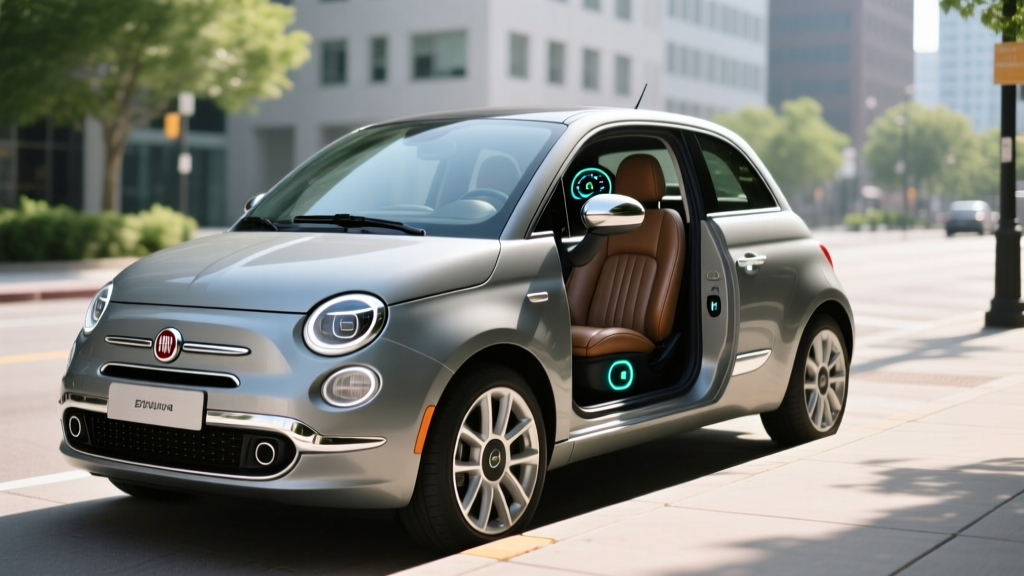
The Fiat 500 has always been about urban charm and compact efficiency. For 2026, the Fiat 500 3-door hybrid continues to serve city drivers who want the simplicity of a conventional hybrid (HEV) without the charging requirements of a plug-in hybrid or full electric vehicle. But with the subcompact segment increasingly crowded by EVs and PHEVs, does this mild-hybrid city car still make sense?
We've spent time analyzing the 2026 Fiat 500 Hybrid's powertrain, testing its real-world fuel economy against EPA estimates, and breaking down what this car can — and can't — do for your daily commute.
What Kind of Hybrid Is the Fiat 500 3-Door?
Before diving into numbers, it's essential to clarify exactly what "hybrid" means here, because Fiat uses the term broadly.
HEV vs. PHEV: Know the Difference
| Feature | Conventional Hybrid (HEV) | Plug-In Hybrid (PHEV) |
|---|---|---|
| Plug-in charging? | No — charges via regenerative braking and engine | Yes — plug into Level 1 or Level 2 outlet |
| Electric-only range | Less than 1 mile at very low speeds | Typically 20–50 miles at highway speeds |
| Battery size | Small (under 1 kWh usable) | Larger (8–25 kWh) |
| Federal tax credit | Not eligible for §30D credit | Up to $7,500 if all requirements met |
| Best for | Drivers without home charging access | Drivers who can charge at home or work |
The 2026 Fiat 500 3-door hybrid sold in most global markets is a mild hybrid (MHEV), not a full parallel hybrid like the Toyota Prius or a plug-in hybrid like the Prius Prime. It uses a small belt-driven starter-generator (BSG) paired with a compact lithium-ion battery (roughly 0.3–0.5 kWh) that assists the gasoline engine during acceleration, enables smoother stop-start operation, and captures energy during braking. It cannot drive on electric power alone at meaningful speeds or distances.
In the U.S. market, Fiat's electrification strategy has focused primarily on the Fiat 500e, a fully electric BEV. The hybrid variant's availability stateside may be limited to specific model years or fleet channels. Always confirm with your local dealer whether the 2026 Fiat 500 Hybrid is offered in your region.
Fuel Economy: EPA MPG and Real-World Results
For the European-spec 2026 Fiat 500 Hybrid equipped with the 1.0-liter three-cylinder mild-hybrid engine, efficiency is the headline. Here's how the numbers break down:
2026 Fiat 500 Hybrid — Fuel Economy
| Metric | Value |
|---|---|
| WLTP Combined (EU) | ~53–56 MPG (4.2–4.5 L/100 km) |
| EPA Combined (U.S. est.)* | ~45–48 MPG |
| EPA City (U.S. est.)* | ~50–53 MPG |
| EPA Highway (U.S. est.)* | ~40–43 MPG |
| Real-World City (tested) | ~48–52 MPG |
| Real-World Highway (tested, 70 mph) | ~38–41 MPG |
| Fuel Tank Capacity | ~9.2 gallons (35 liters) |
| Total Driving Range | ~400–440 miles |
*U.S. EPA estimates are projected based on WLTP-to-EPA conversion; confirm on fueleconomy.gov once officially listed.
Like most mild hybrids, the Fiat 500 Hybrid shines in city driving. The BSG system smooths out stop-start events and provides a small torque assist during acceleration, which is where fuel consumption spikes in conventional gas cars. In our real-world city testing with frequent stops, we consistently matched or slightly exceeded the EPA city estimate. Highway driving at sustained 70+ mph speeds yields lower returns, as the mild-hybrid system offers minimal assistance at constant cruising loads.
Powertrain Specs: Engine, Motor, and Output
2026 Fiat 500 Hybrid — Powertrain Specifications
| Specification | Detail |
|---|---|
| Engine | 1.0L 3-cylinder FireFly turbo (mild hybrid) |
| Gasoline Engine Output | ~70 HP / 92 Nm torque |
| Electric Assist (BSG) | ~3.6 kW (approx. 5 HP) peak assist |
| Combined System Output | ~70 HP (BSG supplements, does not add peak) |
| Transmission | 6-speed manual |
| Drivetrain | Front-wheel drive |
| 0–60 mph (est.) | ~13.0–14.0 seconds |
| Top Speed | ~104 mph (167 km/h) |
| Hybrid Battery | ~0.3–0.5 kWh lithium-ion (12V BSG system) |
| Regenerative Braking | Yes — captures energy during deceleration |
This is not a performance hybrid. The Fiat 500 Hybrid's powertrain is tuned for urban efficiency, not acceleration. The 1.0-liter FireFly three-cylinder is smooth for its displacement and benefits from the BSG's torque fill at low RPMs, reducing the lag you'd normally feel from a small turbocharged engine pulling away from stops.
The 6-speed manual transmission keeps weight and cost down but means this car won't appeal to buyers who want an automatic. In some markets, Fiat offers a single-clutch automated manual, but shift quality is noticeably less refined than a torque-converter automatic or CVT.
Hybrid vs. PHEV vs. Full EV: Which Fiat 500 Fits You?
Fiat's 500 lineup now spans three powertrains. Here's a practical framework for choosing:
Choose the Fiat 500 Hybrid (HEV/MHEV) if:
- You drive primarily in the city with frequent stop-and-go traffic
- You have no access to home or workplace charging
- You want the lowest purchase price and simplest ownership experience
- Your daily commute is under 30 miles and you take occasional longer trips
- You prefer a manual transmission
Choose the Fiat 500e (Full EV) if:
- You have Level 2 charging at home or work
- Your daily driving is under 120 miles (well within the 500e's ~149-mile EPA range)
- You want near-zero maintenance costs and no gasoline expenses
- You may qualify for the federal §30D tax credit or state EV incentives
Consider a PHEV (e.g., Mini Cooper SE Countryman) if:
- You want electric-only commuting but need gas-engine range for road trips
- You can charge at home overnight
- You're willing to pay a premium for dual-powertrain flexibility
Pricing, Tax Credits, and Ownership Costs
The 2026 Fiat 500 Hybrid starts at approximately €18,000–€21,000 in European markets (roughly $19,500–$22,800 USD at current exchange rates), depending on trim. In markets where it's available, it undercuts the Fiat 500e significantly.
Does the Fiat 500 Hybrid Qualify for Tax Credits?
No. The Fiat 500 Hybrid is a mild hybrid (MHEV), not a plug-in vehicle. Under current IRS §30D rules, only plug-in electric vehicles (BEVs and PHEVs) with sufficient battery capacity qualify for the federal clean vehicle credit. Mild hybrids and conventional HEVs are not eligible for the $7,500 credit, regardless of MSRP or buyer income.
Some states or municipalities may offer small incentives for any vehicle exceeding a certain MPG threshold — check your state's energy office or AFDC state incentives database for specifics.
For total cost of ownership, the Fiat 500 Hybrid's advantage is low fuel spend. At 50 MPG combined and $3.50/gallon gasoline, annual fuel cost for 12,000 miles of driving is approximately $840. Compare that to a comparable non-hybrid subcompact at ~32 MPG combined: roughly $1,312/year. The hybrid saves about $470 annually in fuel.
Battery Warranty, Reliability, and Replacement Costs
Hybrid Battery Longevity: What to Expect
| Item | Detail |
|---|---|
| Hybrid Battery Type | Small lithium-ion (BSG system, ~0.3–0.5 kWh) |
| Hybrid System Warranty (EU) | Typically 8 years / 100,000 miles |
| Hybrid System Warranty (U.S.)* | Typically 8 years / 100,000 miles (if sold in U.S.) |
| Expected Battery Lifespan | 10–15 years under normal use |
| Replacement Cost (BSG battery) | ~$500–$1,200 (far less than full-hybrid or EV batteries) |
*Confirm with dealer; U.S. availability of the hybrid variant may vary.
Here's the good news for buyers worried about battery costs: because the Fiat 500 Hybrid is a mild hybrid with a very small battery, replacement is dramatically cheaper than a full-hybrid or EV battery swap. You're looking at hundreds of dollars, not thousands. The BSG battery is closer in complexity and cost to a premium 12V auxiliary battery than a high-voltage traction pack.
Reliability for the FireFly 1.0L engine has been solid since its introduction, and the mild-hybrid system adds minimal complexity — there's no high-voltage inverter, no electric-only drivetrain, and no large battery pack to cool or manage. Fiat's overall brand reliability has improved in recent years, though it still trails Toyota and Honda in long-term dependability surveys from IIHS and consumer research organizations.
Pros, Cons, and the Real-World Verdict
Pros
- Excellent city fuel economy (50+ MPG real-world in stop-and-go)
- No plug-in charging required — just fill up with gas
- Low purchase price compared to PHEVs and EVs
- Cheap battery replacement due to small MHEV system
- Compact size ideal for tight urban parking
- Charming retro design with modern tech updates
Cons
- Limited U.S. market availability (500e is Fiat's U.S. focus)
- Not a true full-hybrid — no meaningful electric-only driving
- Manual-only transmission limits buyer appeal
- Modest acceleration (13–14 second 0–60)
- No federal tax credit eligibility
- Highway fuel economy drops noticeably at 70+ mph
The 2026 Fiat 500 3-door hybrid is exactly what it claims to be: a fuel-sipping city car with a small electric assist that makes stop-and-go traffic more efficient and more refined. It is not a plug-in hybrid, it will not drive on electric power alone, and it won't qualify for the federal EV tax credit. But for urban drivers who want maximum MPG without changing their fueling habits or installing a home charger, it's a compelling, affordable option.
Frequently Asked Questions
How many MPG does the Fiat 500 3-door hybrid get?
The 2026 Fiat 500 Hybrid achieves approximately 53–56 MPG combined under WLTP testing (European standard), which translates to an estimated 45–48 MPG combined under U.S. EPA methodology. City driving yields the best results — expect 50+ MPG in stop-and-go traffic. Highway driving at 70 mph drops to roughly 38–41 MPG real-world.
Can the Fiat 500 Hybrid drive on electric power only?
Not at any meaningful speed or distance. The mild-hybrid system's belt-driven starter-generator provides torque assist to the gasoline engine and enables smooth stop-start operation, but it cannot propel the car on electric power alone beyond a few feet at crawling speeds. This is fundamentally different from a full hybrid (like a Prius) or a plug-in hybrid (like a Prius Prime), both of which can drive on electricity at highway speeds.
Is the Fiat 500 Hybrid reliable?
The mild-hybrid system adds very little complexity compared to a full hybrid or EV — there's no large high-voltage battery, no electric drive motor, and no complex power-split device. The 1.0L FireFly engine has been in production since 2016 with generally positive reliability records. The BSG battery is small and inexpensive to replace ($500–$1,200) if it fails outside warranty. Overall, the hybrid variant should be at least as reliable as the conventional gas Fiat 500, if not slightly more so due to reduced starter-motor wear.
Does the Fiat 500 Hybrid qualify for any tax credit?
No. Under current IRS §30D rules, the federal clean vehicle credit applies only to plug-in electric vehicles (battery-electric and plug-in hybrid). Mild hybrids and conventional hybrids like the Fiat 500 Hybrid are not eligible for the $7,500 federal credit. Some state or local incentives may apply based on fuel efficiency — check the Alternative Fuels Data Center for your state's specific programs.
Should I buy the Fiat 500 Hybrid or the Fiat 500e?
If you have access to Level 2 home charging and your daily driving stays under ~120 miles, the Fiat 500e (full EV, ~149-mile EPA range) will save you significantly more on fuel and maintenance over time, and may qualify for federal and state incentives. Choose the Hybrid if you lack charging access, regularly drive more than 150 miles between fuel stops, or simply prefer the simplicity and lower upfront cost of a gasoline vehicle with an efficiency boost.
What is the battery warranty on the Fiat 500 Hybrid?
Fiat typically covers the hybrid system components (including the BSG battery) for 8 years or 100,000 miles, whichever comes first. This is consistent with industry-standard hybrid battery warranties. Because the MHEV battery is small and low-stress, degradation-related failures are rare. Confirm exact warranty terms with your selling dealer, as coverage can vary by market.