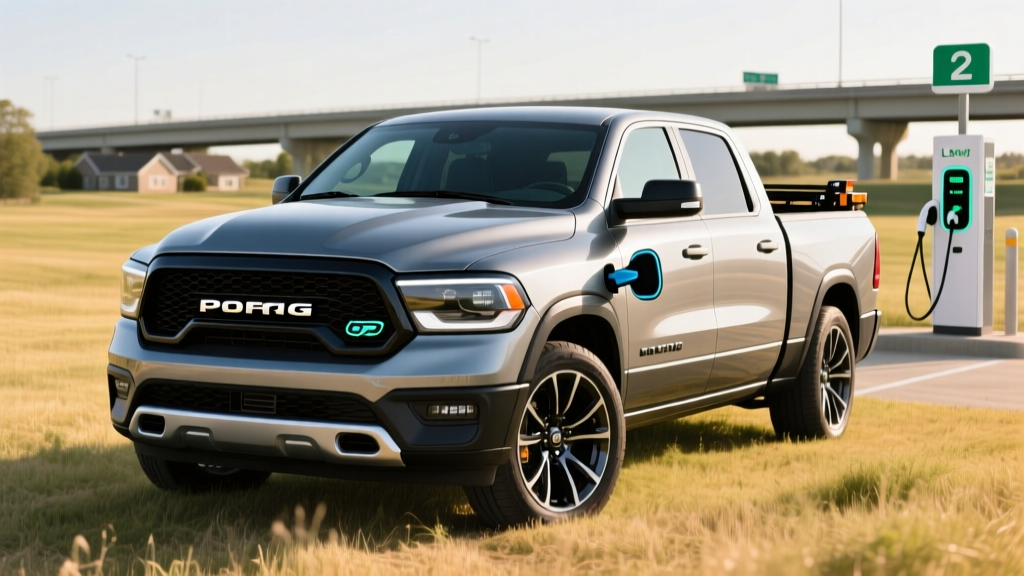
Full-size pickup trucks have long been gas-guzzlers, but the 2026 Dodge Ram Hybrid aims to change that equation without sacrificing the towing and payload capabilities truck buyers demand. Ram's hybrid system pairs a proven internal combustion engine with an electric motor to deliver measurable fuel economy gains — but how does it stack up in the real world, and is it worth the premium over a conventional gas Ram?
In this guide, we break down the 2026 Dodge Ram Hybrid's powertrain, EPA fuel economy, real-world efficiency, pricing, tax credit eligibility, and long-term reliability — so you can decide whether this hybrid truck fits your driveway.
2026 Dodge Ram Hybrid Powertrain and Specs
The 2026 Ram 1500 Hybrid uses Ram's eTorque mild-hybrid system, which replaces the traditional alternator with a belt-driven motor generator unit (MGU) that provides torque assist during acceleration, enables smoother stop-start operation, and captures energy during deceleration. This is a conventional hybrid (HEV) — not a plug-in hybrid (PHEV). You never plug it in; the small battery recharges through regenerative braking and the engine.
| Specification | 2026 Ram 1500 Hybrid (eTorque) |
|---|---|
| Engine | 3.6L Pentastar V6 + eTorque MGU |
| Combined Horsepower | 305 hp (engine) + 48V electric assist |
| Combined Torque | 269 lb-ft + up to 130 lb-ft electric assist |
| Hybrid System Type | Mild Hybrid (HEV) — no plug-in |
| Battery | 0.43 kWh lithium-ion (48V system) |
| Transmission | 8-speed automatic (TorqueFlite) |
| Drivetrain | RWD or 4WD available |
| Max Towing Capacity | Up to 7,730 lbs (properly equipped) |
| Max Payload | Up to 2,300 lbs |
| Base MSRP | $42,695 (Tradesman trim) |
The 5.7L HEMI V8 with eTorque is also available on higher trims, producing 395 hp with the same mild-hybrid assist. The V8 option sacrifices some fuel economy for greater towing capability (up to 12,750 lbs when properly equipped).
EPA Fuel Economy: What the Numbers Say
The eTorque system's primary benefit is improved fuel economy — especially in stop-and-go city driving, where the electric motor handles accessory loads and enables extended engine-off coasting.
| Configuration | City MPG | Highway MPG | Combined MPG |
|---|---|---|---|
| V6 eTorque RWD | 20 | 25 | 22 |
| V6 eTorque 4WD | 19 | 24 | 21 |
| V8 eTorque RWD | 17 | 23 | 19 |
| V8 eTorque 4WD | 15 | 22 | 17 |
Source: EPA Fuel Economy. Actual results vary with driving conditions, payload, and towing.
Real-World MPG vs. EPA Sticker
Hybrid systems typically outperform their EPA city ratings in real-world urban driving because regenerative braking and electric assist shine at low speeds. Owners of the eTorque Ram consistently report 1–2 MPG above the EPA city estimate in stop-and-go traffic. However, highway MPG often falls slightly short of the sticker, especially at sustained speeds above 70 mph or when hauling a load. If you tow frequently, expect combined MPG to drop to the 12–14 range with a loaded trailer.
HEV vs. PHEV: Why the Ram Hybrid Is Not a Plug-In
A common source of confusion: the Ram 1500 Hybrid is a mild hybrid (HEV), not a plug-in hybrid (PHEV). Here's the critical difference:
| Feature | HEV (Ram eTorque) | PHEV (e.g., Ford F-150 PowerBoost / PHEV concepts) |
|---|---|---|
| Plug-in Charging | No — never plug in | Yes — plug into Level 1/2 charger |
| Electric-Only Range | None (assist only) | 20–40+ miles (typical PHEV trucks) |
| Battery Size | ~0.4 kWh (48V) | 15–20+ kWh (high voltage) |
| Fuel Economy Benefit | Moderate (1–3 MPG gain) | Major (when driving on electric) |
| Federal Tax Credit (§30D) | Not eligible | May qualify (income/MSRP/sourcing rules apply) |
| Price Premium Over Gas | Minimal ($500–$1,500) | Significant ($5,000–$10,000+) |
The eTorque system is best understood as an efficiency enhancer rather than a true electrification system. It smooths out the stop-start experience, adds low-end torque fill, and shaves a couple of MPG off fuel consumption — but it cannot propel the truck on electricity alone.
How Does the Ram Hybrid Compare to Gas and Full EV Trucks?
Truck buyers in 2026 face three powertrain choices: conventional gas, mild/full hybrid, or battery electric (BEV). Here's how they stack up for different use cases:
Which Powertrain Fits You?
Choose the Ram Hybrid (eTorque) if: You want a familiar truck with slightly better fuel economy, no change in refueling habits, minimal price premium, and proven towing capability. Ideal for daily drivers who occasionally tow.
Choose a full EV truck (e.g., Rivian R1T, Ford F-150 Lightning, Ram 1500 REV) if: You have home charging access, drive under 250 miles daily, want maximum torque and lowest per-mile energy costs, and can accept current limitations on towing range.
Choose a gas-only Ram if: You need the absolute lowest purchase price, tow at maximum capacity frequently, or operate in areas with extreme cold where range matters less than proven reliability.
2026 Ram Hybrid Pricing and Tax Credit Eligibility
The eTorque hybrid system is standard on most 2026 Ram 1500 trims, meaning there is no separate "hybrid trim" to select. Here's the pricing breakdown by key trims:
| Trim | MSRP (with eTorque V6) | MSRP (with eTorque V8) |
|---|---|---|
| Tradesman | $42,695 | $46,195 |
| Big Horn / Lone Star | $48,095 | $51,595 |
| Laramie | $56,095 | $59,595 |
| Limited | $68,495 | $71,995 |
Federal Tax Credit Status
The 2026 Ram 1500 with eTorque is a mild hybrid (HEV) and does NOT qualify for the IRS §30D Clean Vehicle Credit. That credit applies only to plug-in electric vehicles (BEVs and PHEVs) meeting specific battery sourcing, MSRP, and buyer income requirements.
- §30D credit: Not eligible (HEV, not a plug-in vehicle)
- State incentives: Some states offer rebates for any hybrid — check your state energy office or AFDC state incentives database
- Alternative Fuel Tax Credit: Not applicable to mild hybrids
If the federal tax credit is a priority, you would need to look at a plug-in option like the Ram 1500 REV (Ram's upcoming battery-electric truck) or the Ram 1500 Ramcharger (an extended-range EV with a gasoline range extender), both of which may qualify for §30D depending on final battery sourcing and your income level. Consult a tax professional and the IRS Clean Vehicle Credits page for current eligibility.
Battery Warranty, Reliability, and Replacement Costs
One of the top concerns for any hybrid buyer: what happens when the hybrid battery fails? With the eTorque system, the answer is reassuringly simple compared to full hybrids or PHEVs.
eTorque Battery Warranty
The 48V lithium-ion battery pack in the Ram 1500 eTorque is covered under Ram's standard powertrain warranty: 5 years / 60,000 miles. However, the eTorque system components (motor generator unit, DC-DC converter) are also covered under the 8 years / 80,000 miles emissions-related warranty in many states, and California-emissions states extend this further.
Because the eTorque battery is only 0.43 kWh — roughly 1/150th the size of a full EV battery — replacement costs are dramatically lower. Independent estimates place eTorque battery replacement at $800–$1,500 (parts and labor), compared to $5,000–$20,000+ for full hybrid or EV battery packs.
The eTorque system has been in production since the 2019 model year, and reliability data from NHTSA and owner forums shows the system is generally robust. The most common issues reported are related to the 48V-to-12V DC-DC converter rather than the battery itself. The belt-driven motor generator has fewer failure points than a traditional alternator, and there is no high-voltage system requiring specialized service.
Long-Term Ownership Considerations
- Oil changes: Same intervals as the gas-only Ram (~8,000 miles with synthetic)
- Brake wear: Slightly reduced due to regenerative braking assist
- Insurance: Typically identical to gas-only Ram — no EV surcharge
- Depreciation: Hybrid Rams hold value comparably to gas models; no significant premium or penalty in the used market
Pros and Cons of the 2026 Dodge Ram Hybrid
Pros
- Smoother stop-start experience than non-hybrid Rams
- 1–3 MPG improvement over gas-only equivalent, especially in city driving
- Electric torque fill improves low-speed responsiveness
- No change in refueling habits — no plug, no range anxiety
- Minimal price premium since eTorque is standard on most trims
- Small battery means low replacement cost if failure occurs
- Full towing and payload capability maintained
Cons
- Not a plug-in hybrid — no electric-only driving mode
- Fuel economy gains are modest compared to full hybrids or PHEVs
- Does not qualify for the $7,500 federal EV tax credit (§30D)
- Highway MPG improvement is negligible at sustained speeds
- V8 eTorque fuel economy still trails many competitors' turbo-four options
- Mild hybrid cannot power accessories (A/C, etc.) with engine off for extended periods
Who Should Buy the Dodge Ram Hybrid?
The 2026 Ram 1500 with eTorque is best suited for truck buyers who:
- Want a full-size truck for daily commuting with occasional towing or hauling
- Prefer not to change their refueling routine (no charging infrastructure needed)
- Value the smoother stop-start and low-end torque assist in urban driving
- Are not primarily motivated by tax credits (since HEVs don't qualify for §30D)
- Want to avoid the current limitations of EV trucks — particularly towing range reduction and charging infrastructure gaps on rural routes
If your priority is maximum fuel savings and you have home charging, a full EV truck like the Ford F-150 Lightning or Rivian R1T will deliver dramatically lower per-mile energy costs. If you want a middle ground with plug-in capability and electric-only commuting, watch for PHEV truck offerings expanding in the 2026–2027 model years.
Frequently Asked Questions
How many MPG does the Dodge Ram Hybrid get?
The 2026 Ram 1500 V6 eTorque achieves an EPA-estimated 20 city / 25 highway / 22 combined MPG (RWD). The V8 eTorque drops to 17 city / 23 highway / 19 combined. Real-world city driving often yields 1–2 MPG above the EPA estimate thanks to regenerative braking, while highway and towing scenarios typically fall below the sticker.
Can the Dodge Ram Hybrid drive on electric power alone?
No. The eTorque system is a mild hybrid — it assists the gasoline engine but cannot propel the truck independently. There is no electric-only mode and no plug-in charging capability.
Does the Dodge Ram Hybrid qualify for any tax credit?
The Ram 1500 eTorque does not qualify for the federal §30D Clean Vehicle Credit because it is not a plug-in vehicle. Some states may offer minor incentives for hybrid vehicles — check your state's energy office or the AFDC state incentives database.
Is the eTorque hybrid system reliable?
The eTorque system has been in production since 2019 and is generally reliable. The 48V battery is small (0.43 kWh) and inexpensive to replace ($800–$1,500) compared to full hybrid or EV batteries. Most reported issues involve the DC-DC converter, not the battery or motor generator.
How much does it cost to replace the Ram Hybrid battery?
Estimated replacement cost for the 48V eTorque battery is $800–$1,500 including parts and labor — a fraction of what full hybrid or EV battery replacements cost. The battery is also covered under Ram's powertrain and emissions warranties.
Hybrid vs. PHEV vs. EV truck — which should I choose?
Choose the hybrid (eTorque) if you want a no-compromise truck with slight MPG gains and zero lifestyle change. Choose a PHEV truck (when available) if you want electric-only commuting with gas backup for road trips. Choose a full EV truck if you have home charging, drive under 250 miles daily, and want the lowest operating costs and instant torque.
Does the Ram Hybrid sacrifice towing capacity?
No. The eTorque system maintains full towing ratings — up to 7,730 lbs for the V6 and up to 12,750 lbs for the V8 (when properly equipped). The electric assist actually improves low-speed trailer maneuvering.