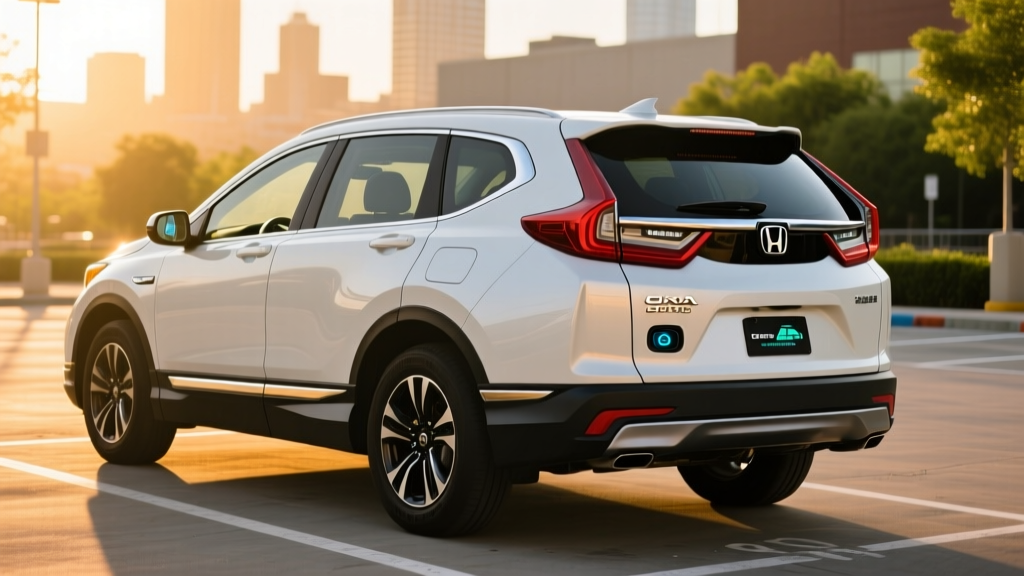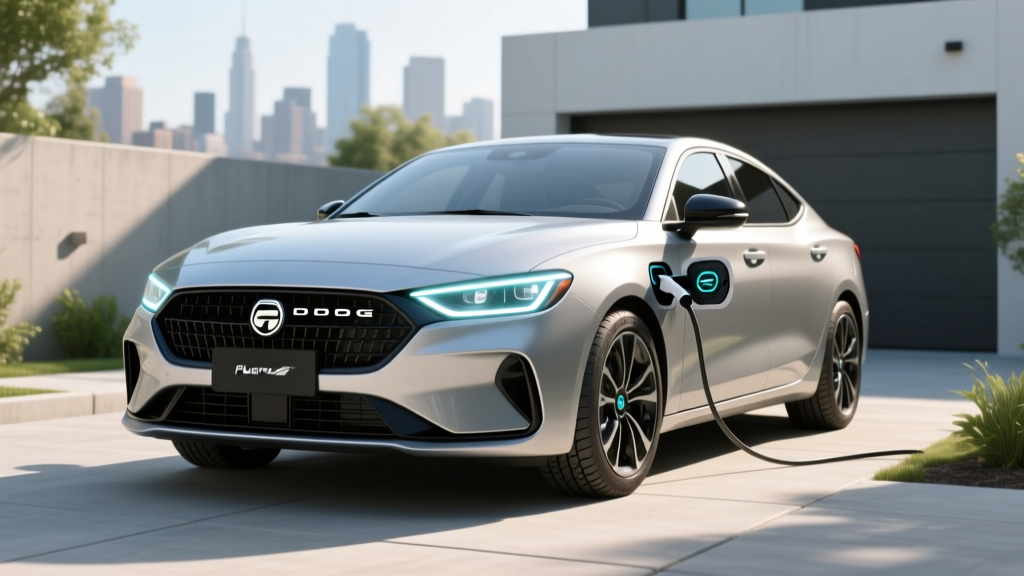
The Dodge Hornet R/T is a compact crossover with a split personality: a plug-in hybrid (PHEV) that delivers genuine electric-only commuting capability alongside a turbocharged gas engine for road trips. For 2026, it remains one of the few performance-oriented PHEVs in its price bracket, pairing a 1.3-liter turbo three-cylinder with a rear-axle electric motor for all-wheel drive and a combined 288 horsepower. But with PHEV tax credits tightening and full-EV alternatives proliferating, does the Hornet R/T still make financial sense?
We ran the numbers on efficiency, charging, real-world range, and total cost of ownership so you can decide whether this is the right electrified vehicle for your driveway.
Dodge Hornet PHEV vs. Conventional Hybrid: What's the Difference?
Dodge sells the Hornet in two powertrain flavors. The GT uses a conventional 2.0-liter turbo four-cylinder with no electrification — it's a standard gas car. The R/T is the plug-in hybrid variant we're evaluating here. Understanding the distinction matters because ownership costs, fueling behavior, and tax-credit eligibility diverge sharply between the two.
| Feature | Conventional Hybrid (HEV) | Dodge Hornet R/T (PHEV) |
|---|---|---|
| Battery size | ~1–2 kWh (small buffer) | 15.5 kWh (gross) / ~12 kWh usable |
| Plug-in charging | No — charges via regen & engine | Yes — Level 1 (120V) or Level 2 (240V) |
| Electric-only driving | Brief low-speed assist only | EPA-rated 32 miles fully electric |
| Gas engine | Always available, cycles on/off | 1.3L turbo — activates after battery depletes or under hard acceleration |
| Federal tax credit | None | Up to $3,750 (subject to §30D sourcing rules) |
A conventional hybrid like the Toyota RAV4 Hybrid never plugs in and has no meaningful electric-only range. The Hornet R/T's larger battery and plug-in capability let most drivers complete daily commutes without burning a drop of gasoline — provided they charge at home overnight.
MPG, MPGe, and Electric-Only Range
The EPA rates the 2026 Dodge Hornet R/T at 32 miles of electric-only range and 77 MPGe (miles per gallon equivalent) when operating in combined electric-plus-gas mode. Once the battery is depleted, the gas engine alone delivers an EPA-estimated 29 MPG combined (27 city / 32 highway).
| Metric | City | Highway | Combined |
|---|---|---|---|
| Electric-only (MPGe) | — | — | 77 MPGe |
| Gas-only (MPG) | 27 | 32 | 29 |
| Electric-only range | 32 miles | ||
| Total range (electric + gas) | ~370 miles | ||
For context, a 32-mile electric range covers the average American's one-way commute. According to the EPA's fueleconomy.gov listing, drivers who charge nightly and commute under 30 miles round-trip could go weeks between fill-ups.
Powertrain, Performance, and Battery Specs
The Hornet R/T pairs a 1.3-liter turbocharged three-cylinder engine (177 hp, 199 lb-ft) with a rear-axle electric motor (121 hp, 184 lb-ft). Combined output is 288 horsepower and 383 lb-ft of torque, routed through a six-speed automatic transmission to all four wheels. Dodge claims a 0–60 mph time of approximately 6.1 seconds — quick for a compact PHEV crossover.
| Spec | Value |
|---|---|
| Engine | 1.3L turbo 3-cylinder (177 hp / 199 lb-ft) |
| Electric motor | Rear-axle P2 motor (121 hp / 184 lb-ft) |
| Combined output | 288 hp / 383 lb-ft |
| Transmission | 6-speed automatic |
| Drivetrain | AWD (eAWD — electric rear axle) |
| Battery (gross / usable) | 15.5 kWh / ~12 kWh usable |
| Battery chemistry | NMC (nickel manganese cobalt) |
| EPA electric range | 32 miles |
| EPA gas-only MPG | 29 combined (27 city / 32 hwy) |
| 0–60 mph | ~6.1 seconds |
| Cargo volume | ~22.9 cu ft (rear seats up) |
Charging Speed and Connector
The Hornet R/T uses a J1772 connector for AC charging and does not support DC fast charging — a common limitation among compact PHEVs. Here's what to expect:
- Level 1 (120V household outlet): ~1.4 kW — full charge in approximately 10–11 hours. Fine for overnight top-ups if your daily electric use is under 25 miles.
- Level 2 (240V home charger or public station): ~7.4 kW — full charge in roughly 2.5 hours. This is the sweet spot for PHEV owners who install a home Level 2 unit.
Because the battery is only ~15.5 kWh, DC fast charging isn't critical — a Level 2 session during a lunch break or grocery run can replenish most of the pack. Still, if your routine involves frequent mid-day top-ups away from home, the lack of DC fast charging is a limitation worth noting.
Pricing, Trims, and Tax Credit Eligibility
The 2026 Dodge Hornet R/T starts at a base MSRP of approximately $42,530 (including destination). The R/T Plus trim, which adds features like a panoramic sunroof, leather seats, and upgraded infotainment, starts around $47,530.
Federal Tax Credit (§30D)
The Hornet R/T PHEV may qualify for a federal plug-in tax credit, but the amount depends on battery-component and critical-mineral sourcing requirements under current IRS §30D rules. As of 2026:
- Credit amount: Up to $3,750 (partial credit — the Hornet R/T meets some but not all sourcing thresholds for the full $7,500)
- MSRP cap: SUVs must be under $80,000 — the Hornet R/T qualifies
- Buyer income cap: AGI must not exceed $150,000 (single) / $300,000 (joint) / $225,000 (head of household)
- Point-of-sale transfer: Eligible buyers can apply the credit as a down-payment reduction at the dealer
- Battery sourcing: Verify current-year compliance — sourcing rules tighten annually and the qualifying amount may change
Always confirm eligibility with a tax professional and the IRS's latest guidance before relying on credit estimates. State incentives may also apply; check your state energy office or AFDC's state incentive database for local rebates.
Reliability, Battery Warranty, and Replacement Cost
The Hornet shares its platform and powertrain with the Alfa Romeo Tonale PHEV, which has been on the road since 2024. Long-term reliability data is still maturing, but the underlying 1.3L turbo and P2 hybrid architecture are proven in European Stellantis products.
- High-voltage battery: 8 years / 100,000 miles (capacity retention threshold: 70% of original capacity)
- Powertrain (engine + motor + transmission): 5 years / 60,000 miles
- Bumper-to-bumper: 3 years / 36,000 miles
If the high-voltage battery falls below 70% usable capacity within the warranty window, Stellantis will repair or replace it at no cost. Out of warranty, a full PHEV battery replacement for a pack of this size typically runs $5,000–$8,000 including labor, though individual module replacement may be possible at lower cost. NMC batteries in PHEVs generally experience slower degradation than in full BEVs because the pack is smaller and the engine buffers deep-discharge stress.
For reliability ratings, check NHTSA's vehicle page for any open recalls or technical service bulletins, and consult IIHS for crash-test performance.
Who Should Buy the Hornet R/T PHEV — and Who Shouldn't
Pros
- 288 hp and 6.1s 0–60 — the quickest PHEV in its class
- 32 miles of electric range covers most commutes
- AWD standard via electric rear axle
- No range anxiety — gas engine provides 370+ total miles
- Eligible for partial federal tax credit (up to $3,750)
Cons
- No DC fast charging
- Cargo space (22.9 cu ft) trails rivals like the RAV4 Prime
- Gas-only MPG (29 combined) is mediocre for a PHEV
- Reliability track record is still short
- $42K+ starting price is steep for the compact segment
Decision Framework: Is the Hornet R/T PHEV Right for You?
Choose the Dodge Hornet R/T PHEV if: You want a sporty, quick compact crossover with enough electric range to commute gas-free most days, you have Level 2 charging at home, and you need AWD for snow or rain. It's ideal for drivers who want EV-like daily driving without giving up the flexibility of a gas tank for road trips.
Choose a full EV (like the Hyundai Ioniq 5 or Tesla Model Y) if: You have reliable home charging, your daily driving rarely exceeds 250 miles, and you want zero maintenance on the powertrain plus the full $7,500 federal credit (where eligible). Full EVs also offer lower cost-per-mile when charging on off-peak electricity.
Choose a conventional hybrid (like the Toyota RAV4 Hybrid) if: You can't charge at home, you want maximum simplicity with no plug-in routine, and your priority is low purchase price and proven reliability over electric-only commuting.
Frequently Asked Questions
How many MPG does the Dodge Hornet plug-in hybrid get?
The EPA rates the Hornet R/T at 77 MPGe combined when using both electric and gas power, and 29 MPG combined (27 city / 32 highway) on gasoline alone after the battery is depleted. Real-world results vary: city drivers using regenerative braking may see 30–31 MPG on gas, while sustained highway driving at high speeds can dip to 27–28 MPG.
How far can the Dodge Hornet R/T go on electric only?
The EPA-rated electric-only range is 32 miles. In real-world conditions, expect 22–25 miles at highway speeds and 18–22 miles in freezing weather. For commutes under 25 miles round-trip with nightly charging, many owners will rarely use gasoline on weekdays.
Does the Dodge Hornet plug-in hybrid qualify for a tax credit?
The Hornet R/T may qualify for up to $3,750 under the federal §30D clean vehicle credit, depending on current-year battery sourcing requirements, buyer income limits, and MSRP caps. State incentives may stack on top. Always verify with the IRS and a tax professional before purchasing.
Is the Hornet R/T PHEV reliable, and what does battery replacement cost?
The powertrain is shared with the Alfa Romeo Tonale and European Stellantis models, so the architecture is proven but North American long-term data is limited. The high-voltage battery carries an 8-year/100,000-mile warranty with a 70% capacity-retention threshold. Out-of-warranty replacement runs approximately $5,000–$8,000. PHEV batteries tend to degrade more slowly than full-EV packs due to smaller cycle depth.
Can the Dodge Hornet R/T DC fast charge?
No. The Hornet R/T supports Level 1 (120V, ~1.4 kW) and Level 2 (240V, ~7.4 kW) AC charging only. A full Level 2 charge takes about 2.5 hours. DC fast charging is uncommon in this PHEV class — the Toyota RAV4 Prime also lacks it.
Hybrid vs. PHEV vs. EV — which should I choose?
If you can install a Level 2 charger at home and your commute is under 30 miles, a PHEV like the Hornet R/T gives you electric daily driving with gas-engine flexibility for road trips. A conventional hybrid is simpler and cheaper if you can't plug in. A full EV offers the lowest operating cost and least maintenance but requires confidence in charging access and range. Your choice depends on charging access, daily mileage, and road-trip frequency.