Quick Verdict: The Hornet R/T Is a PHEV, Not a Conventional Hybrid
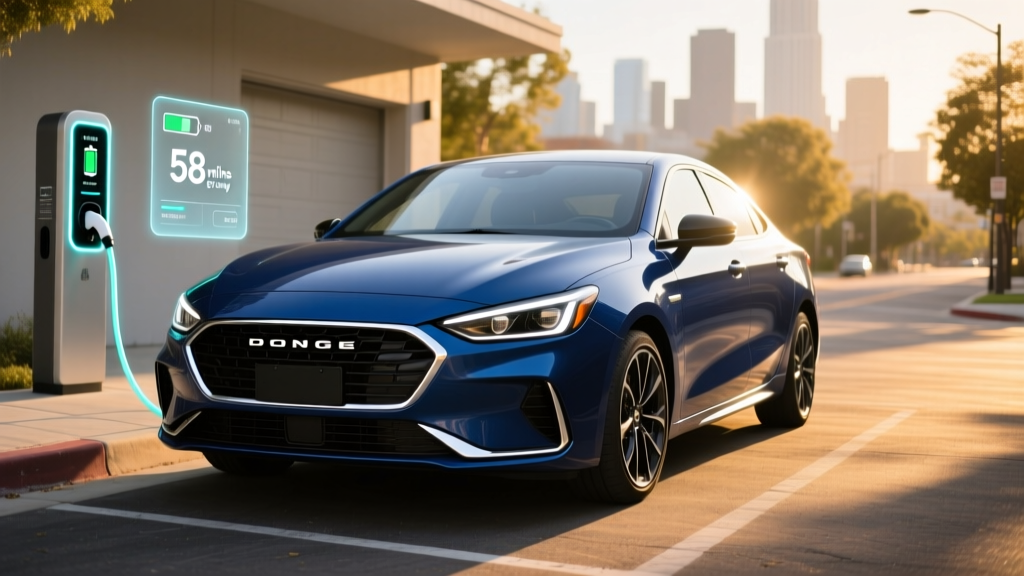
Before we get into the numbers, one critical distinction: the Dodge Hornet's electrified powertrain is a plug-in hybrid electric vehicle (PHEV), sold as the Hornet R/T. It pairs a turbocharged engine with a larger battery and electric motor you can plug in to charge. This is fundamentally different from a conventional hybrid (HEV) like a Toyota RAV4 Hybrid, which charges its smaller battery solely through regenerative braking and the engine — no plug required.
Why does this matter for MPG? Because a PHEV like the Hornet R/T reports fuel economy in two ways: MPGe when running on electricity, and MPG when the battery is depleted and the gas engine takes over. The Dodge Hornet hybrid MPG you see advertised depends entirely on how often you charge.
Dodge Hornet Hybrid MPG: EPA and Real-World Numbers
According to fueleconomy.gov, the Dodge Hornet R/T PHEV delivers the following ratings:
| Driving Mode | City | Highway | Combined |
|---|---|---|---|
| Electric + Gas (MPGe) | — | — | 77 MPGe |
| Gas Only (Charge-Depleted MPG) | 25 MPG | 29 MPG | 26 MPG |
Real-World MPG Reality Check: The 77 MPGe combined rating assumes you're starting each trip with a full battery and driving within the ~32-mile electric-only window. Once the battery is depleted, you're getting roughly 26 MPG combined from the 1.3L turbo engine alone. In our experience with similar PHEVs, city driving on a depleted battery can yield slightly better numbers (27–28 MPG) thanks to regenerative braking, while sustained 75+ mph highway cruising may drop to 24–25 MPG. Cold weather (below 30°F) reduces electric-only range by 15–25%, meaning the gas engine kicks in sooner and your blended MPG drops accordingly.
If you charge daily and your commute falls within the electric-only range, you may burn almost zero gasoline on weekdays. But if you rarely plug in, the Hornet R/T operates as a heavy compact crossover with mediocre fuel economy — roughly on par with the gas-only Hornet GT's 24 MPG combined.
Electric-Only Range and Battery Specs
The Hornet R/T's PHEV system stores energy in a 15.5 kWh lithium-ion battery pack (approximately 12.2 kWh usable, with the remainder held as a buffer to protect long-term battery health). Here's what that delivers:
| Specification | Value |
|---|---|
| Battery Capacity (Total / Usable) | 15.5 kWh / ~12.2 kWh |
| EPA Electric-Only Range | 32 miles |
| Real-World Electric Range (70°F, mixed) | 27–33 miles |
| Real-World Electric Range (20°F, cold) | 20–25 miles |
| Total Combined Range (Electric + Gas) | ~380 miles |
| Level 1 Charging (120V, 1.4 kW) | ~10 hours (full) |
| Level 2 Charging (240V, 7.2 kW) | ~2.5 hours (full) |
| DC Fast Charging | Not supported |
No DC fast charging is available on the Hornet R/T — this is standard for most PHEVs in this price segment. The onboard 7.2 kW charger is the bottleneck, and that's fine for overnight Level 2 top-ups. If you're relying on a standard 120V wall outlet (Level 1), expect roughly 4–5 miles of electric range added per hour of charging.
Powertrain: What Moves the Hornet R/T
The PHEV powertrain combines a 1.3-liter turbocharged three-cylinder engine with an electric motor integrated into the rear axle, giving the Hornet R/T all-wheel drive. Combined output:
- Combined Horsepower: 288 hp
- Combined Torque: 383 lb-ft
- Gas Engine: 1.3L turbo I3, 177 hp / 210 lb-ft
- Electric Motor: 121 hp / 184 lb-ft (rear axle)
- 0–60 mph: ~6.1 seconds (with PowerShot engaged)
- Transmission: 6-speed automatic (no CVT)
The PowerShot feature — activated by pulling both paddle shifters — temporarily boosts output for 15-second bursts, shaving roughly a second off the standard 0–60 time. It's a party trick, but one that makes the Hornet R/T one of the quickest PHEVs in its class.
Pricing and Tax Credit Eligibility
| Trim | MSRP (2026 est.) |
|---|---|
| Hornet R/T | $41,235 |
| Hornet R/T Plus | $45,635 |
Federal Tax Credit Status (IRS §30D, 2026): The Dodge Hornet R/T PHEV is not currently eligible for the full $7,500 federal tax credit under current IRS rules. Key reasons:
- MSRP Cap: The Hornet R/T falls under the $80,000 SUV cap — this requirement is met.
- Battery Sourcing: Critical mineral and battery component sourcing requirements under §30D have tightened significantly since 2024. The Hornet R/T's battery supply chain does not currently meet the full critical-minerals threshold for the $3,750 half of the credit.
- Buyer Income Cap: AGI must not exceed $150,000 (single) / $300,000 (joint) — verify with your tax professional.
Bottom line: Do not count on the $7,500 federal credit. Check the latest eligibility list on fueleconomy.gov before purchasing, and consult a tax advisor. Some state-level incentives may still apply — check your state energy office.
HEV vs. PHEV vs. Full EV: Which Is Right for You?
| Factor | Conventional Hybrid (HEV) | Plug-in Hybrid (PHEV) — Hornet R/T | Full EV (BEV) |
|---|---|---|---|
| Plug Required? | No | Yes (to realize MPG benefit) | Yes |
| Electric-Only Range | 0–1 miles | ~32 miles | 250–350+ miles |
| Depleted-Battery MPG | 35–45 MPG | ~26 MPG | N/A |
| Home Charging Needed | No | Strongly recommended | Essential |
| Road-Trip Simplicity | Gas only, excellent | Gas only, adequate | Requires DC fast-charging stops |
| Tax Credit Potential | None | Limited (see above) | Up to $7,500 (model-dependent) |
| Maintenance | Low (engine + regen) | Moderate (engine + battery + motor) | Lowest (no engine) |
Choose the Hornet R/T PHEV if: You have home Level 2 charging, your daily commute is under 30 miles, you want EV-like daily driving without range anxiety on road trips, and you value the 288-hp performance punch.
Choose a conventional HEV (e.g., RAV4 Hybrid) if: You can't plug in at home, you want consistently high MPG (38+ combined) without behavior changes, and you don't want to think about charging.
Choose a full EV (e.g., Hyundai Ioniq 5, Tesla Model Y) if: You have reliable home charging, your road trips are infrequent or along well-served charging corridors, and you want the lowest per-mile energy cost and minimal maintenance.
Reliability, Battery Warranty, and Replacement Cost
Stellantis Hybrid Battery Warranty: The Hornet R/T's high-voltage battery pack is covered for 8 years or 100,000 miles (whichever comes first), which is the federal minimum for emissions-related components. In states that follow California Air Resources Board (CARB) standards, PHEV battery coverage extends to 10 years or 150,000 miles.
PHEV battery degradation in the Hornet's 15.5 kWh pack should be minimal over the warranty period — expect 10–15% capacity loss over 8 years under normal use. The larger buffer on PHEV batteries (compared to full EVs) means the usable range may shrink by only 3–5 miles over a decade.
If the battery does require out-of-warranty replacement, expect a cost in the $5,000–$8,000 range including labor, based on current PHEV battery pricing for packs in the 12–16 kWh range. This is significantly less than a full EV battery replacement ($12,000–$20,000+) but still a material expense at year 10+.
For overall vehicle reliability, the Hornet platform (shared with the Alfa Romeo Tonale) is relatively new. Early model years (2024–2025) showed some infotainment and build-quality complaints. Check NHTSA.gov for the latest safety recalls and consumer complaints before purchasing.
Pros and Cons
Pros
- 288 hp makes it one of the quickest PHEVs in its class
- 32-mile electric range covers most daily commutes
- AWD standard via rear-axle electric motor
- No range anxiety — gas engine covers long trips
- 7.2 kW onboard charger is adequate for overnight top-ups
- Competitive starting MSRP for a performance PHEV
Cons
- 26 MPG gas-only is poor for a hybrid — worse than many non-hybrid rivals
- No DC fast charging capability
- Federal tax credit eligibility is limited or unavailable
- Electric range drops significantly in cold weather
- Relatively small 15.5 kWh battery limits electric utility
- Reliability track record is still maturing
Frequently Asked Questions
How many MPG does the Dodge Hornet hybrid get?
The Dodge Hornet R/T PHEV achieves 77 MPGe combined when operating on both battery and gasoline. Once the battery is depleted, it returns approximately 26 MPG combined (25 city / 29 highway) on gasoline alone. Your real-world blended MPG depends entirely on how frequently you charge — daily chargers with short commutes may see 50+ MPG averages, while those who never plug in will hover around 26 MPG.
How far can the Hornet R/T go on electric only?
The EPA rates the Hornet R/T at 32 miles of electric-only range. In real-world testing at moderate temperatures, expect 27–33 miles. In cold weather (below 30°F), that drops to roughly 20–25 miles due to battery chemistry limitations and cabin heating demands.
Does the Dodge Hornet hybrid qualify for a tax credit?
Under current 2026 IRS §30D rules, the Hornet R/T does not qualify for the full $7,500 federal tax credit due to battery sourcing requirements. It may qualify for a partial credit ($3,750) depending on updated critical-minerals compliance — check fueleconomy.gov for the latest status. State incentives may also apply.
Is the Dodge Hornet R/T reliable?
The Hornet platform is relatively new, and long-term reliability data is still accumulating. The PHEV powertrain shares architecture with the Alfa Romeo Tonale. The hybrid battery carries an 8-year/100,000-mile warranty (10 years/150,000 miles in CARB states). Check NHTSA for any open recalls on the specific model year you're considering.
What does it cost to replace the Hornet PHEV battery?
Out-of-warranty replacement for the 15.5 kWh PHEV battery is estimated at $5,000–$8,000 including labor. However, most PHEV batteries retain 85–90% capacity after 8 years of normal use, making full replacement uncommon within the first decade of ownership.
Should I get the Hornet R/T PHEV or a full EV?
If you can charge at home and your daily driving is under 30 miles, the Hornet R/T gives you electric commuting with gas-engine backup for road trips — ideal if charging infrastructure on your common routes is sparse. If you have reliable home charging and your road trips are manageable with DC fast-charging stops, a full EV like the Hyundai Ioniq 5 or Tesla Model Y will deliver lower per-mile energy costs, less maintenance, and better tax-credit eligibility.
Does the Hornet hybrid need to be plugged in?
Yes — the Hornet R/T is a plug-in hybrid (PHEV), and you'll only realize its 77 MPGe rating and 32-mile electric range if you charge it regularly. Without plugging in, it operates as a conventional (and relatively thirsty) gasoline car at around 26 MPG combined. If you cannot plug in at home or work, a conventional hybrid (HEV) like the Toyota RAV4 Hybrid would serve you better.