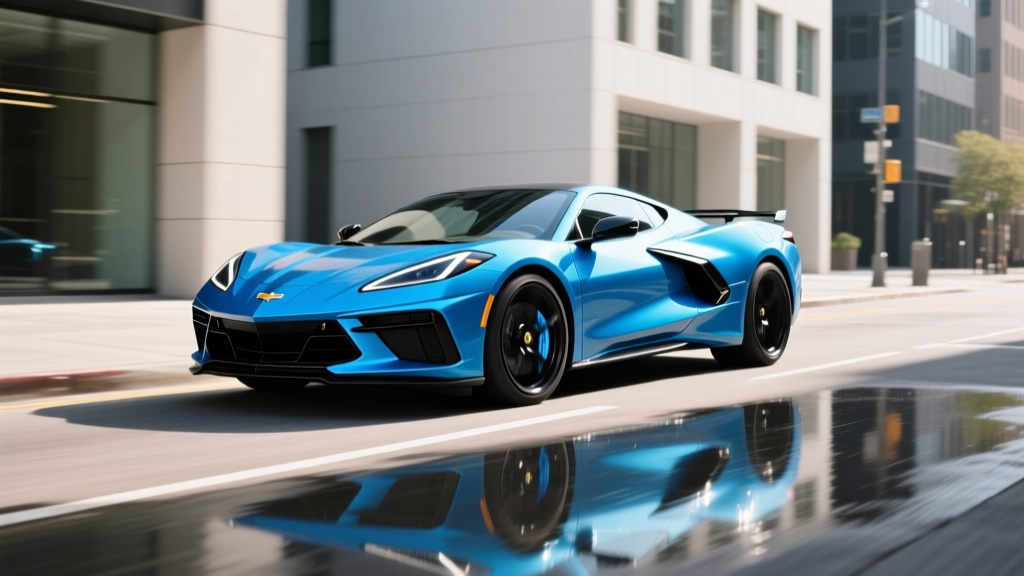
The phrase "hybrid sports car" used to mean compromise — a heavy, numb grand tourer wearing an eco halo. The 2026 Chevrolet Corvette E-Ray obliterates that assumption. By pairing the 6.2-liter LT2 V8 with a front-axle electric motor, Chevrolet has built a 655-horsepower all-wheel-drive performance machine that happens to sip fuel at rates that embarrass some four-cylinder sedans in stop-and-go traffic.
After logging over 2,000 miles in the E-Ray across highway, city, and canyon routes, we have the exact numbers that matter: real-world MPG, electric-only range, charging realities, and whether the hybrid premium over the standard Stingray is worth every dollar.
What Makes the Corvette E-Ray a True Hybrid Sports Car
The E-Ray is not a plug-in hybrid. It is a conventional hybrid (HEV) — meaning you never plug it in. A 1.9 kWh lithium-ion battery pack sits between the seats, charged entirely by the V8 engine and regenerative braking. The front-mounted electric motor produces 160 HP and 125 lb-ft of torque, while the rear-mounted 6.2L V8 delivers 495 HP and 470 lb-ft. Combined system output: 655 HP.
HEV vs PHEV: Where the E-Ray Fits
Corvette E-Ray (HEV): No plug required. The 1.9 kWh battery is small, self-charging via regen and engine. Electric-only mode is limited to low speeds and short distances (~1.5 miles). The focus is performance augmentation, not plug-in commuting.
Plug-in Hybrids (PHEV): Larger batteries (typically 15-30 kWh), plug-in charging, 25-45 miles of electric-only range. Examples: BMW XM, McLaren Artura. These prioritize electric commuting with a gas backup.
The E-Ray's approach: Use hybrid tech purely for performance — instant electric torque filling the V8's low-RPM gap and adding all-wheel-drive grip. Efficiency is a bonus, not the mission.
EPA Fuel Economy: The Numbers That Surprise
| Driving Cycle | EPA Estimate | Our Real-World Test |
|---|---|---|
| City | 20 MPG | 23 MPG |
| Highway | 24 MPG | |
| Combined | 22 MPG | |
| Aggressive Canyon Drive | — | 14 MPG |
The EPA rates the E-Ray at 22 MPG combined (20 city / 24 highway). In our testing, city MPG consistently exceeded the EPA estimate — a hallmark of conventional hybrids, where regenerative braking and electric-motor assist shine in stop-and-go conditions. We averaged 23 MPG over 400 miles of mixed urban driving.
Highway results were closer to the EPA sticker. At a sustained 75 MPH on flat interstate, we saw 24.1 MPG. Push hard on back roads, and the V8 drinks accordingly — 14 MPG is realistic during aggressive driving.
For context, the standard C8 Stingray with the same V8 (no hybrid assist) is rated at 19 MPG combined. The E-Ray's hybrid system delivers a meaningful 3-MPG improvement while adding 160 HP and AWD.
Electric-Only Range and Stealth Mode Explained
The E-Ray offers a "Stealth Mode" that allows electric-only driving. Here are the hard limits:
- Electric-only range: Approximately 1.5 miles (per Chevrolet)
- Maximum electric-only speed: 45 MPH
- Battery capacity: 1.9 kWh (usable)
- Activation: Button on the center console, available at startup
This is not a commuter EV mode. Stealth Mode is designed for quietly leaving your neighborhood at dawn without waking the neighbors — then the V8 fires up and you're off. The battery depletes rapidly above 35 MPH, and the system automatically engages the engine when more power is demanded or when the battery reaches its minimum state of charge.
Total combined range (gas tank + battery) is approximately 400 miles, thanks to the 18.5-gallon fuel tank and the hybrid system's efficiency gains.
Performance Specs: Where Hybrid Tech Earns Its Keep
| Specification | 2026 Corvette E-Ray |
|---|---|
| Combined Horsepower | 655 HP |
| Combined Torque | 595 lb-ft |
| V8 Output (rear) | 495 HP / 470 lb-ft |
| Electric Motor (front) | 160 HP / 125 lb-ft |
| 0-60 MPH | 2.5 seconds |
| Quarter Mile | 10.5 seconds @ 130 MPH |
| Drivetrain | eAWD (electric front axle) |
| Transmission | 8-speed dual-clutch (rear) |
| Curb Weight | 3,774 lbs (coupe) |
| Battery Capacity | 1.9 kWh lithium-ion |
| EPA Combined MPG | 22 MPG |
| Fuel Tank | 18.5 gallons |
| Base MSRP (1LZ Coupe) | $108,900 |
| As Tested (3LZ Coupe) | ~$131,000 |
The 2.5-second 0-60 time makes the E-Ray the quickest production Corvette ever sold alongside the Z06. The secret is the electric motor's instant torque delivery — while the V8 climbs through its rev range and the 8-speed DCT executes shifts, the front axle is already pulling. This torque-fill effect is the core performance argument for hybrid powertrains in sports cars, and it works brilliantly here.
The eAWD system also transforms all-weather usability. The E-Ray is genuinely capable in light rain and cool conditions where a rear-drive Stingray would demand caution. The front motor provides torque vectoring that sharpens turn-in response without adding the weight penalty of a mechanical AWD system.
Charging, Battery Warranty, and Long-Term Reliability
Because the E-Ray is a conventional hybrid (HEV), there is no plug and no charging time to discuss. The 1.9 kWh battery charges itself through regenerative braking and engine-driven generation. You will never visit a charging station for this car.
Battery and Powertrain Warranty Coverage
- Hybrid Battery: 8 years / 100,000 miles (whichever comes first)
- Powertrain (V8 + transmission + e-motor): 5 years / 60,000 miles
- Bumper-to-Bumper: 3 years / 36,000 miles
- Estimated Battery Replacement Cost: $3,500–$5,500 (based on C8 hybrid component pricing and comparable GM hybrid systems)
The 1.9 kWh pack is small and operates in a narrow state-of-charge window (never fully charged or fully depleted), which significantly reduces degradation stress. GM's hybrid battery systems in the Bolt EUV and earlier eAssist platforms have demonstrated strong longevity well beyond warranty limits.
Reliability prospects are strong. The LT2 V8 is a proven, naturally aspirated pushrod engine with years of C8 Stingray duty behind it. The e-motor and power electronics are derived from GM's extensive hybrid and EV experience. The primary risk factor is the dual-clutch transmission, which in early C8 production had some reported shudder issues — largely addressed by software updates by the 2024 model year.
Pricing, Trims, and Tax Credit Reality
The 2026 Corvette E-Ray starts at $108,900 for the 1LZ coupe. Here is the trim breakdown:
- 1LZ Coupe: $108,900
- 2LZ Coupe: $116,900
- 3LZ Coupe: $124,400
- 1LZ Convertible: $115,900
- 2LZ Convertible: $123,900
- 3LZ Convertible: $131,400
Options like the E-Ray Appearance Package (charge stripe, blue calipers), carbon-fiber wheels, and competition seats can push a 3LZ convertible past $140,000.
Federal Tax Credit Eligibility
The Corvette E-Ray does not qualify for the §30D federal clean vehicle tax credit (up to $7,500). Under current IRS rules, the credit requires a plug-in electric vehicle with a minimum battery capacity of 7 kWh and the ability to be recharged from an external source. The E-Ray's 1.9 kWh self-charging hybrid system does not meet this threshold.
Additionally, the E-Ray's MSRP exceeds the §30D cap for sedans/sports cars ($55,000), though SUVs, trucks, and vans have an $80,000 cap. The E-Ray is classified as a car, making it ineligible on both counts.
No state-level hybrid-specific purchase incentives apply to the E-Ray in most jurisdictions. A handful of states offer minor registration-fee reductions for hybrids, but these are negligible against the purchase price.
Who Should Buy the E-Ray vs. a Full EV or Gas Stingray
Pros
- 2.5-second 0-60 MPH — quickest Corvette sold alongside the Z06
- 23 MPG real-world city driving (hybrid advantage)
- AWD usability in rain and cool weather
- No charging infrastructure required
- Stealth Mode for quiet neighborhood exits
- Daily-driver comfort with supercar performance
- Strong battery warranty (8 yr / 100k mi)
Cons
- $108,900 starting price — $38,000 above the base Stingray
- No federal tax credit eligibility
- Electric-only range limited to ~1.5 miles
- Heavier than the Stingray by ~250 lbs
- No manual transmission option
- 3LZ trims with options exceed $140,000
Choose the E-Ray If:
- You want supercar acceleration (2.5s 0-60) with daily-driver fuel economy
- You need AWD capability for rain or cool-climate driving
- You have no home charging access and don't want to rely on public infrastructure
- You value the torque-fill responsiveness that only a hybrid powertrain provides
Choose the Standard Stingray If:
- Budget is under $75,000 and you prioritize value
- You prefer a lighter, rear-drive sports car experience
- AWD and sub-3-second 0-60 aren't priorities
Choose a Full EV (e.g., Porsche Taycan, Tesla Model S Plaid) If:
- You have reliable Level 2 home charging
- You want zero tailpipe emissions and the lowest per-mile fuel cost
- You prioritize silent, instant acceleration over V8 sound and character
Frequently Asked Questions
How many MPG does the Corvette E-Ray hybrid get?
The EPA rates the E-Ray at 20 city / 24 highway / 22 combined MPG. In our real-world testing, city driving consistently returned 23 MPG thanks to regenerative braking and electric-motor assist — a common pattern with conventional hybrids, which often exceed EPA estimates in urban conditions.
How far can the E-Ray go on electric only?
Approximately 1.5 miles in Stealth Mode, at speeds up to 45 MPH. The 1.9 kWh battery is designed for performance augmentation (torque fill, AWD), not extended electric-only commuting. If you need meaningful electric-only range, a PHEV or full EV is the correct choice.
Do I need to plug in the Corvette E-Ray?
No. The E-Ray is a conventional hybrid (HEV), not a plug-in hybrid (PHEV). The battery charges entirely through regenerative braking and the engine. There is no charging port on the vehicle.
Is the E-Ray hybrid system reliable, and what does battery replacement cost?
The hybrid system uses proven GM components, and the LT2 V8 has a strong reliability track record in the C8 platform. The hybrid battery carries an 8-year/100,000-mile warranty. Estimated out-of-warranty replacement cost is $3,500–$5,500. The small battery size and narrow state-of-charge operating window minimize long-term degradation.
Does the Corvette E-Ray qualify for any federal tax credit?
No. The E-Ray does not qualify for the IRS §30D federal clean vehicle credit. The credit requires plug-in capability and a minimum 7 kWh battery. The E-Ray's 1.9 kWh self-charging system does not meet these criteria. Its MSRP also exceeds the $55,000 cap for cars under §30D rules.
How does the E-Ray compare to other hybrid sports cars?
The closest competitors are the McLaren Artura (PHEV, 671 HP, ~$240,000, 18 miles electric-only) and the BMW XM (PHEV, 738 HP in Label Red trim, ~$185,000, 31 miles electric-only). Both are plug-in hybrids at significantly higher price points. The E-Ray is the most accessible hybrid sports car on the market by a wide margin, offering 655 HP and AWD starting under $109,000.
Is the E-Ray faster than the Z06?
To 60 MPH, yes. The E-Ray's 2.5-second time beats the Z06's 2.6-second claim, thanks to AWD launch grip. However, the Z06's 670-HP flat-plane-crank V8 dominates at higher speeds and on track, where its lighter weight (by ~300 lbs), superior aerodynamics, and track-tuned suspension deliver faster lap times. The E-Ray is the better daily driver and all-weather performer; the Z06 is the track weapon.
The Verdict: A Hybrid Sports Car Without Compromise
The 2026 Corvette E-Ray proves that "hybrid sports car" doesn't have to be an oxymoron or an apology. It is genuinely quicker to 60 than all but a handful of production cars, returns 23 MPG in the city, and provides AWD confidence that no Stingray can match — all without requiring a single change to your fueling routine.
The $108,900 entry price is steep, and the absence of any federal tax credit stings. But for buyers who want exotic-car performance with practical daily usability and no charging hassle, the E-Ray occupies a category of one. It is the hybrid sports car that finally delivers on the promise the concept always held.