Quick Verdict: A Pioneer That Still Has Teeth
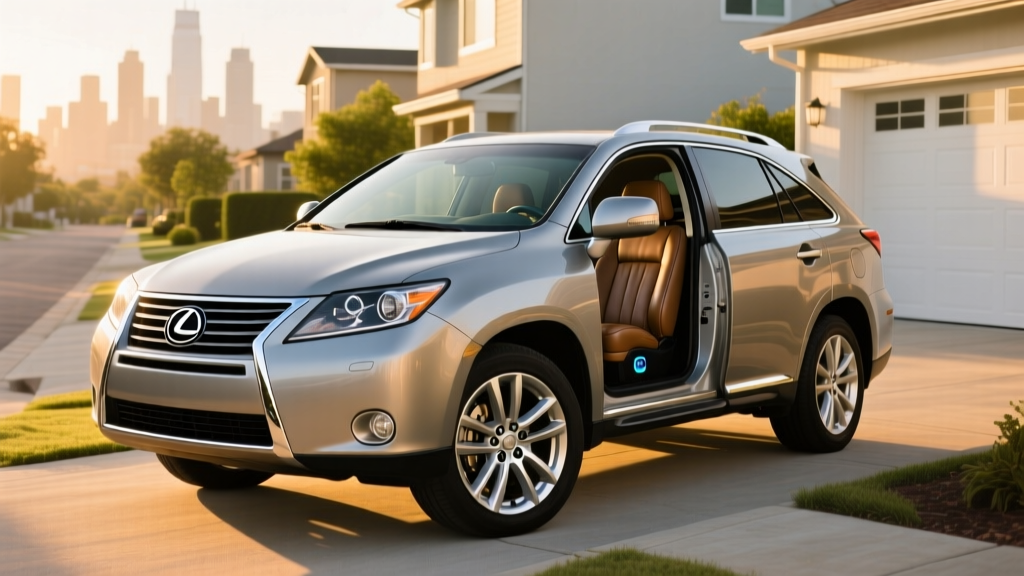
The 2007 Lexus RX 400h was one of the first luxury hybrid SUVs to reach American driveways, combining a 3.3-liter V6 with Toyota's proven Hybrid Synergy Drive. Nearly two decades later, it remains a surprisingly capable used buy — if you know what to look for. With an EPA-rated 28 MPG combined, 272 combined system horsepower, and Lexus-grade build quality, the RX 400h can still deliver meaningful fuel savings over its gas-only RX 350 sibling. The critical question for any 2026 buyer is the health of its 15-year-old nickel-metal hydride (NiMH) traction battery.
This guide covers every spec, real-world efficiency expectation, battery longevity concern, and ownership cost you need before purchasing a 2007 RX 400h today.
HEV vs PHEV: What the 2007 RX 400h Actually Is
Before diving into specs, it is essential to classify this vehicle correctly. The 2007 Lexus RX 400h is a conventional hybrid electric vehicle (HEV), not a plug-in hybrid (PHEV).
Conventional Hybrid (HEV) — 2007 RX 400h
- No plug required. The battery recharges through regenerative braking and the gasoline engine.
- Small battery: approximately 2.4 kWh total capacity (NiMH chemistry).
- No electric-only driving range beyond very low-speed, short-distance creep (roughly 1 mile at under 25 mph under ideal conditions).
- No federal tax credit available for used HEV purchases in 2026.
Plug-In Hybrid (PHEV) — For Comparison
- Plugs in to a Level 1 or Level 2 charger to fill a larger battery (typically 10–25 kWh).
- Electric-only range: 20–50 miles on most modern PHEVs before the gas engine engages.
- May qualify for the federal §30D tax credit (up to $7,500 for new PHEVs meeting battery sourcing, MSRP, and income requirements per IRS guidelines).
The RX 400h never leaves a factory with a charge port. You fuel it with gasoline, and the hybrid system handles the rest. This is the same architecture that powers the Toyota Prius and Toyota Highlander Hybrid of the same era.
Fuel Economy: EPA Ratings and Real-World MPG
The 2007 RX 400h carries EPA fuel economy ratings that were impressive for a 4,500-pound luxury crossover in its day and remain respectable now.
| Driving Cycle | EPA Rating | Real-World Expectation (2026) |
|---|---|---|
| City | 31 MPG | 28–33 MPG (hybrids often match or beat EPA city) |
| Highway | 25 MPG | 23–27 MPG (highway driving reduces regen benefit) |
| Combined | 28 MPG | 25–29 MPG depending on driving mix and battery health |
Why city MPG exceeds highway: Like all Toyota/Lexus hybrids of this era, the RX 400h benefits enormously from stop-and-go driving where regenerative braking recaptures kinetic energy and the electric motor handles low-speed propulsion. Sustained highway speeds above 70 mph rely more heavily on the gasoline engine, reducing the hybrid advantage.
Real-world caveat: A 2007 RX 400h with a degraded hybrid battery will see fuel economy drop toward the gas-only RX 350's numbers (roughly 20–22 MPG combined). If your pre-purchase test drive shows sub-24 MPG combined on a mixed route, the NiMH battery likely needs attention.
Source: fueleconomy.gov — 2007 Lexus RX 400h
Powertrain Specs: Engine, Motors, and Combined Output
| Specification | 2007 Lexus RX 400h |
|---|---|
| Gasoline Engine | 3.3L V6 (3MZ-FE), 211 HP @ 5,600 RPM |
| Front Electric Motor | Permanent magnet, 123 kW (165 HP) |
| Rear Electric Motor | Permanent magnet, 50 kW (67 HP) |
| Combined System Output | 272 HP |
| Transmission | CVT (planetary gearset, eCVT) |
| Drivetrain | AWD (electric rear axle — no mechanical driveshaft) |
| 0–60 MPH | ~7.3 seconds |
| Curb Weight | ~4,500 lbs |
| Towing Capacity | 3,500 lbs |
| Hybrid Battery | ~2.4 kWh, NiMH, 240V nominal |
The RX 400h's AWD system is worth noting: rather than a traditional mechanical connection between front and rear axles, the rear wheels are driven exclusively by the rear electric motor. This means AWD engagement is instant and seamless, though the system is tuned for traction in wet and light snow conditions rather than serious off-road use. At higher speeds or under hard acceleration, the system primarily operates in front-wheel drive to preserve efficiency.
The eCVT transmission has no physical belts or pulleys — it uses a planetary gearset to seamlessly blend power from the engine and front motor. This design is exceptionally durable and largely maintenance-free, a key reason these vehicles regularly surpass 200,000 miles.
Hybrid Battery Longevity, Replacement Cost, and Warranty
Original Battery Warranty
When new, the 2007 RX 400h hybrid battery was covered by Lexus for 8 years / 100,000 miles (extended to 10 years / 150,000 miles in California Air Resources Board states including CA, NY, MA, and others adopting CARB emissions standards).
In 2026, all original battery warranties have expired. Any remaining coverage depends on whether a previous owner purchased an extended warranty or had the battery replaced with a Lexus-remanufactured unit carrying its own warranty (typically 3 years / unlimited miles for OEM remanufactured packs).
Battery Degradation Reality at 18–19 Years Old
The NiMH battery in the RX 400h is remarkably robust by the standards of early hybrid technology. Many examples have reached 150,000–200,000 miles on the original pack. However, at nearly two decades of age, age-related degradation is a genuine concern regardless of mileage:
- Capacity loss: Expect 20–40% capacity reduction on an original battery, manifesting as more frequent engine cycling, slightly reduced acceleration assist, and lower MPG.
- Cell imbalance: NiMH packs contain 30 modules. When one or two modules weaken, the entire pack's performance drops. A hybrid battery specialist can test individual module voltages.
- Warning signs: Dashboard hybrid system warning light, rapid charge/discharge cycling on the energy monitor, or the engine running almost constantly.
Battery Replacement Costs (2026 Pricing)
| Replacement Option | Estimated Cost | Warranty |
|---|---|---|
| New OEM Lexus battery | $4,500–$6,500 (parts + labor) | 3 years / unlimited miles |
| Remanufactured OEM pack | $2,500–$4,000 | 1–3 years depending on supplier |
| Aftermarket rebuilt pack | $1,500–$3,000 | 1–2 years |
| Individual module replacement | $500–$1,200 (specialist shop) | Varies; only fixes failed modules |
Our recommendation: Before purchasing any 2007 RX 400h, budget $2,000–$4,000 for a potential battery replacement. If the current battery is original and shows signs of weakness, negotiate the purchase price down by at least $2,500 to account for this near-certain future expense.
Reliability and Common Issues Beyond the Battery
The 2007 RX 400h benefits from Lexus's reputation for build quality and the proven reliability of the 3MZ-FE V6 engine, which also powered the Toyota Camry and Highlander of the same era. Key reliability considerations:
- eCVT transmission: Extremely reliable. Planetary gearset design has no wear items like belts or clutches. Routine fluid changes every 60,000 miles are recommended.
- Inverter/cooling system: The hybrid inverter coolant pump has been a known failure point on 2006–2008 models. Lexus issued a recall and extended warranty for some units — verify recall status via NHTSA.gov using the VIN.
- Brake actuator: The regenerative braking system uses an electro-hydraulic brake actuator that can fail at high mileage (150,000+). Replacement runs $1,200–$2,000. Test for a firm, consistent pedal during your pre-purchase drive.
- Standard wear items: Suspension components (struts, bushings), steering rack, and HVAC blend door actuators are typical 15-year-old Lexus maintenance items, not hybrid-specific.
Overall, the RX 400h earns a strong reliability reputation among hybrids of its era, with the hybrid battery and inverter coolant pump being the two systems most likely to generate unexpected repair bills.
Tax Credits and Incentives: What Applies in 2026?
The short answer: no federal tax credits are available for purchasing a used 2007 Lexus RX 400h in 2026.
- §30D New Clean Vehicle Credit: Only applies to new vehicles meeting battery critical-mineral sourcing, MSRP caps ($80,000 for SUVs), and buyer income limits. The RX 400h is long discontinued and was never a plug-in vehicle.
- §25E Used Clean Vehicle Credit: Offers up to $4,000 (30% of sale price, capped) for used EVs and PHEVs purchased from a dealer. However, the RX 400h is a conventional HEV and does not qualify — only BEVs and PHEVs with at least 4 kWh of battery capacity and plug-in capability are eligible.
- State incentives: A handful of states offer rebates or HOV lane access for hybrids, but most have shifted focus to BEVs and PHEVs. Check your state's energy office or DMV for current programs.
The RX 400h's value proposition in 2026 is purely about fuel savings and reliability, not incentive-driven purchase economics.
Who Should Buy the 2007 RX 400h — and Who Should Look Elsewhere?
Choose the RX 400h If:
- You want a luxury crossover with lower running costs and cannot plug in at home
- Your commute is city-heavy, where the hybrid system delivers maximum MPG benefit
- You value proven reliability and are willing to budget for hybrid battery maintenance
- You need AWD capability for rain and light snow without the fuel penalty of a conventional AWD SUV
- You want a comfortable, quiet daily driver in the $5,000–$10,000 used price range
Look Elsewhere If:
- You want electric-only driving — consider a PHEV like the Toyota RAV4 Prime or a BEV
- You want federal tax credits — only new or used BEVs/PHEVs qualify
- You prioritize the latest safety tech (the 2007 RX lacks modern ADAS features like automatic emergency braking, lane-keeping assist, or blind-spot monitoring)
- You want warranty peace of mind — everything on this vehicle is out of factory coverage
- You drive primarily highway miles, where the hybrid fuel advantage narrows significantly
Decision Framework: HEV vs PHEV vs BEV for Your Situation
- Choose the 2007 RX 400h (HEV) if you have no home charging access, drive under 15,000 miles/year, and want a low-upfront-cost luxury SUV with modest fuel savings.
- Choose a modern PHEV (e.g., Toyota RAV4 Prime, Lexus NX 450h+) if you can install a Level 2 charger at home, want 30–40 miles of electric-only commuting, and want to minimize gasoline use without full EV commitment.
- Choose a BEV (e.g., Tesla Model Y, Hyundai Ioniq 5) if you want zero gasoline, can charge at home, and are ready for the lowest per-mile operating cost with higher upfront pricing offset by the §30D tax credit.
Used Pricing and Value in 2026
The 2007 Lexus RX 400h trades in the used market at roughly the following ranges depending on mileage, condition, and battery health:
| Condition / Mileage | Approximate Price Range |
|---|---|
| Under 100K miles, battery tested healthy | $8,000–$11,000 |
| 100K–150K miles, original battery | $5,500–$8,500 |
| 150K+ miles, battery replaced or needs replacement | $3,500–$6,000 |
For comparison, a 2007 Lexus RX 350 (gas-only, 23 MPG combined) typically sells for $1,000–$2,500 less than an equivalent RX 400h. The hybrid premium pays for itself in fuel savings within 3–5 years at current gas prices for drivers covering 12,000+ miles annually.
Frequently Asked Questions
How many MPG does the 2007 Lexus RX 400h get?
The EPA rates the 2007 RX 400h at 31 MPG city, 25 MPG highway, and 28 MPG combined. In real-world mixed driving with a healthy battery, expect 25–29 MPG combined. City-heavy routes can push toward 31–33 MPG, while sustained highway driving at 75+ MPH may drop to 23–25 MPG.
Does the 2007 RX 400h need to be plugged in?
No. The RX 400h is a conventional hybrid (HEV). It charges its own battery through regenerative braking and the gasoline engine. There is no charge port and no plug-in capability.
How far can the 2007 RX 400h drive on electric power alone?
Effectively zero meaningful distance. Under very specific conditions (flat ground, under 25 MPH, gentle acceleration, warm battery), the RX 400h can creep roughly one mile on electric power. This is not a usable electric-only range. For meaningful electric driving, you need a PHEV or BEV.
Is the 2007 Lexus RX 400h reliable?
Yes, with caveats. The powertrain (3MZ-FE engine and eCVT) is among the most reliable Lexus has ever built. The main risk items are the hybrid battery (budget $2,000–$4,000 for eventual replacement), the inverter coolant pump (verify recall status), and the brake actuator at high mileage. A well-maintained example can comfortably reach 200,000+ miles.
What does a replacement hybrid battery cost for the 2007 RX 400h?
A new OEM Lexus battery costs approximately $4,500–$6,500 installed. Remanufactured options range from $2,500–$4,000. Aftermarket rebuilt packs start around $1,500–$3,000. Individual module replacement by a hybrid specialist can cost $500–$1,200 if only a few cells have failed.
Does the 2007 RX 400h qualify for any tax credits?
No. The federal §30D new vehicle credit and §25E used vehicle credit both require plug-in capability (BEV or PHEV). The RX 400h is a conventional HEV and does not qualify for any federal tax credit. Check your state's energy office for any local hybrid incentives.
How does the RX 400h compare to a modern hybrid like the 2026 Toyota Highlander Hybrid?
Modern hybrids have improved substantially. The 2026 Highlander Hybrid achieves an EPA-rated 35–36 MPG combined (vs. 28 for the RX 400h), offers standard ADAS safety features, and comes with a 10-year/150,000-mile hybrid battery warranty. However, a new Highlander Hybrid starts around $42,000 — roughly 5–8 times the cost of a used RX 400h. The value proposition depends entirely on your budget and risk tolerance for an aging vehicle.