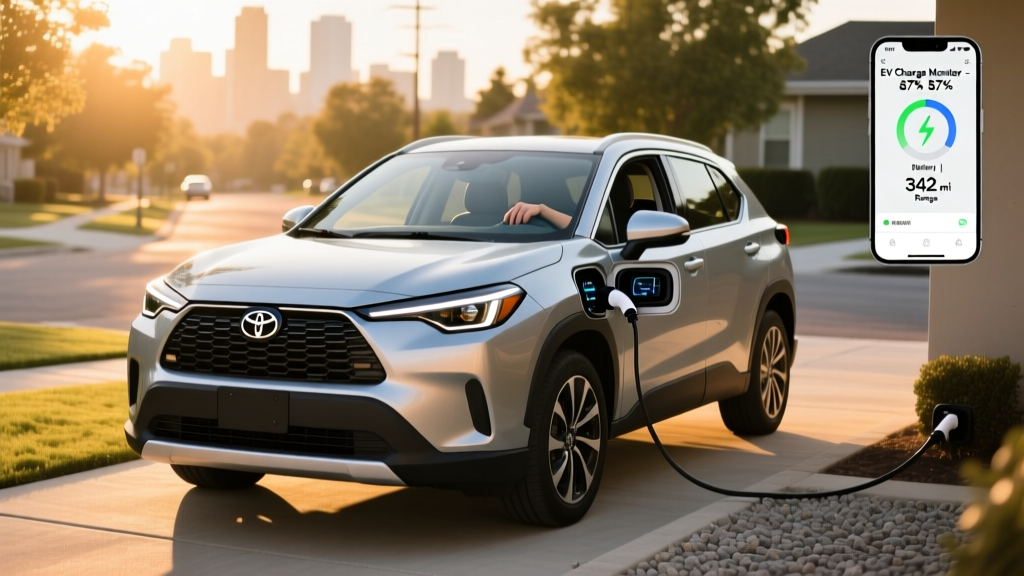
The compact crossover segment is crowded, but the Toyota Corolla Cross Hybrid XSE carves out a specific niche: all-wheel drive, strong fuel economy, and a sport-tuned suspension in a package that starts under $34,000. For buyers who want electrified efficiency without plugging in, this top-trim hybrid pairs Toyota's fifth-generation hybrid system with a 2.0-liter engine for a combined 196 horsepower.
This guide breaks down everything you need to know about the 2026 Corolla Cross Hybrid XSE — from EPA-verified MPG to real-world fuel economy, battery longevity, and how it stacks up against plug-in hybrids and full EVs.
Corolla Cross Hybrid XSE: Quick Specs at a Glance
| Specification | Value |
|---|---|
| Powertrain | 2.0L 4-cyl + 2 electric motors (AWD) |
| Combined Horsepower | 196 hp |
| EPA MPG (City / Hwy / Combined) | 45 / 38 / 42 |
| Fuel Tank Capacity | 10.6 gallons |
| Total Range | ~445 miles |
| 0–60 mph | ~7.5 seconds |
| Drivetrain | Electronic AWD (e-AWD) |
| Cargo Volume (rear seats up) | 25.5 cu ft |
| Hybrid Battery | ~1.0 kWh lithium-ion (self-charging HEV) |
| Base MSRP (XSE AWD) | $33,260 |
| Hybrid Battery Warranty | 10 years / 150,000 miles |
Understanding the HEV vs PHEV Distinction
Before we go further, it's critical to understand what you're buying. The Corolla Cross Hybrid is a conventional hybrid electric vehicle (HEV), not a plug-in hybrid (PHEV). Here's what that means in practice:
| Feature | Corolla Cross Hybrid (HEV) | Plug-In Hybrid (PHEV) |
|---|---|---|
| Plugs in to charge? | No — charges via regenerative braking and engine | Yes — via Level 1 or Level 2 outlet/charger |
| Electric-only range | Less than 1 mile at low speeds | Typically 20–45 miles |
| Battery size | ~1.0 kWh | 10–20 kWh |
| Federal tax credit (§30D) | Not eligible | Up to $7,500 (with sourcing/income restrictions) |
| Driving experience | Seamless gas-electric blend | EV-like quietness until battery depletes |
Bottom line: The Corolla Cross Hybrid XSE never needs a charger. You fuel it like any gas car, and the hybrid system handles the rest. If you want electric-only commuting, you'd need to look at a PHEV like the Toyota RAV4 Prime or a full battery EV.
Fuel Economy: EPA Numbers and Real-World MPG
The EPA rates the 2026 Corolla Cross Hybrid at 42 MPG combined (45 city / 38 highway). That city advantage is a hallmark of hybrid powertrains — regenerative braking recaptures energy in stop-and-go traffic that a gas car simply wastes as heat.
| Driving Cycle | EPA Rating | Real-World Expectation |
|---|---|---|
| City | 45 MPG | 43–48 MPG (hybrids often beat EPA in city) |
| Highway | 38 MPG | 35–40 MPG (depends on speed, terrain, wind) |
| Combined | 42 MPG | 39–44 MPG |
According to fueleconomy.gov, the Corolla Cross Hybrid's 42 MPG combined puts it ahead of most AWD compact crossovers. For comparison, the non-hybrid Corolla Cross AWD achieves roughly 30 MPG combined — a 40% improvement from the hybrid system.
Real-World MPG: What Owners Actually See
In mixed driving — suburban errands, highway commutes, and some hilly terrain — owners typically report 39–44 MPG. Hybrids tend to overperform their EPA city rating because regenerative braking is highly effective in traffic. Highway driving at 75+ mph will push you toward the lower end of that range, as aerodynamic drag dominates and the electric motors contribute less at sustained high speed.
Cold weather (below 30°F) can reduce fuel economy by 5–10% as the engine runs more frequently to maintain cabin heat and battery temperature. This is normal for all hybrids and is less severe than the 20–30% range loss a full EV experiences in winter.
Powertrain and Driving Performance
The Corolla Cross Hybrid uses Toyota's fifth-generation hybrid system, pairing a 2.0-liter Dynamic Force four-cylinder engine with two motor-generators and an electronically controlled CVT (eCVT). A third electric motor on the rear axle provides electronic AWD — there's no mechanical driveshaft connecting front and rear wheels.
Combined output is 196 horsepower, which is substantial for this segment. The 0–60 mph time of approximately 7.5 seconds puts it ahead of the non-hybrid Corolla Cross (which manages around 9 seconds) and makes highway merging confident.
The XSE trim adds a sport-tuned suspension with stiffer damping and a slightly firmer ride compared to the XLE and S trims. You'll feel more road texture, but body roll is better controlled in corners. The trade-off is acceptable if you value handling; less so if you prioritize plush ride quality.
The eCVT operates without the rubber-band feeling of older CVTs. Toyota's hybrid system locks engine RPM more naturally under acceleration, and the electric motors fill in torque instantly from a stop, eliminating the lag you'd feel in a turbocharged gas engine.
Hybrid Battery Longevity, Warranty, and Replacement Cost
Toyota Hybrid Battery Warranty: 10 years or 150,000 miles (whichever comes first), covering defects and capacity loss below a functional threshold. This applies to all 2026 Toyota hybrids.
Expected Lifespan: Toyota's hybrid batteries in the Corolla/Prius lineage have demonstrated 150,000–250,000+ mile longevity with minimal degradation. The small ~1.0 kWh battery in an HEV operates within a narrow state-of-charge window (roughly 40–80%), which dramatically reduces stress and extends cycle life compared to a full EV battery that cycles through deeper ranges.
Replacement Cost (Out of Warranty): Approximately $2,000–$3,500 for a refurbished or new HEV battery pack, plus labor. This is far less than a full EV battery replacement ($8,000–$20,000+) because the HEV pack is small and simpler.
The Corolla Cross Hybrid's battery is air-cooled and mounted under the rear seats. Unlike full EVs, you won't find a liquid thermal management system here — but for a ~1 kWh pack operating in a shallow charge window, active cooling isn't necessary. Toyota has built millions of hybrids with this architecture, and catastrophic battery failure before 150,000 miles is statistically rare.
Reliability Track Record
Toyota's hybrid powertrains consistently rank at or near the top of long-term reliability studies from sources like Consumer Reports and J.D. Power. The eCVT has no traditional transmission bands or clutches to wear out, and the regenerative braking system reduces wear on the friction brakes — many hybrid owners report original brake pads lasting 80,000–100,000 miles.
The 2026 Corolla Cross Hybrid carries forward a powertrain architecture that debuted in the Prius over 25 years ago. The core engineering is mature, proven, and well-understood by Toyota's service network.
Pricing, Trims, and Tax Credit Eligibility
The 2026 Toyota Corolla Cross Hybrid is offered in three trims, all with standard AWD:
| Trim | MSRP (incl. destination) | Key Features |
|---|---|---|
| S | $30,010 | 18" alloy wheels, 8" touchscreen, TSS 3.0, LED headlights |
| XLE | $31,685 | SofTex seats, power driver seat, dual-zone climate, 10.5" display |
| XSE | $33,260 | Sport suspension, 18" black alloys, paddle shifters, black roof option |
Does the Corolla Cross Hybrid Qualify for a Federal Tax Credit?
No. The federal §30D Clean Vehicle Credit applies only to plug-in electric vehicles (PHEVs and BEVs) with a minimum battery capacity of 7 kWh and the ability to charge from an external source. As a conventional hybrid, the Corolla Cross Hybrid's ~1 kWh battery does not meet these requirements. Per IRS guidelines, HEVs are excluded from the $7,500 credit.
Some states offer their own incentives for hybrids, but these are increasingly rare as incentive programs shift toward plug-in vehicles. Check your state's energy office or DMV for any current hybrid rebates — but don't count on one.
The trade-off: while you don't get a tax credit, you also don't pay the $5,000–$10,000 price premium that a PHEV or EV commands. The Corolla Cross Hybrid XSE at $33,260 is thousands less than a comparably equipped RAV4 Prime or bZ4X.
Who Should Buy the Corolla Cross Hybrid XSE — and Who Shouldn't
Pros
- 42 MPG combined with AWD — best in its compact crossover class
- No plug-in charging required — fuel and go
- 196 hp provides confident acceleration
- 10-year / 150,000-mile hybrid battery warranty
- XSE sport suspension adds genuine handling engagement
- Toyota Safety Sense 3.0 standard (pre-collision, lane tracing, adaptive cruise)
- Low brake wear thanks to regenerative braking
Cons
- No federal tax credit eligibility
- Cargo space (25.5 cu ft) trails some competitors
- XSE sport ride may feel firm on rough roads
- No electric-only driving mode for zero-emission miles
- Rear-seat headroom is average for the segment
- Infotainment system functional but not class-leading
Decision Framework: Hybrid vs PHEV vs EV
Choose the Corolla Cross Hybrid XSE if:
- You don't have reliable access to home or workplace charging
- You want AWD and 40+ MPG without changing your fueling habits
- Your budget is under $35,000 and you want low total cost of ownership
- You drive 12,000–15,000 miles/year and want fuel savings without a price premium
Consider a PHEV (like the RAV4 Prime) if:
- You can charge at home and your daily commute is under 40 miles
- You want electric-only driving for most trips but gas flexibility for road trips
- You qualify for the §30D federal tax credit and can offset the higher purchase price
Consider a full EV (like the Hyundai Ioniq 5 or Tesla Model Y) if:
- You have home Level 2 charging and want zero tailpipe emissions
- Your daily driving is under 250 miles and you take occasional road trips
- You want the lowest per-mile energy cost and minimal maintenance
5-Year Cost of Ownership Estimate
| Category | Estimated Cost |
|---|---|
| Purchase Price (MSRP) | $33,260 |
| Fuel (42 MPG avg, $3.40/gal) | $4,857 |
| Insurance (national avg) | $7,500 |
| Maintenance (oil, filters, tires, brakes) | $2,200 |
| Federal Tax Credit | $0 (HEV not eligible) |
| Estimated Depreciation (5 yr) | -$12,500 |
| Net 5-Year Cost | ~$35,317 |
For comparison, a gas-only Corolla Cross AWD (30 MPG combined) would cost approximately $6,800 in fuel over the same period — a $1,943 fuel savings with the hybrid. Toyota hybrids also tend to depreciate less than average, which partially offsets the slightly higher initial price.
Frequently Asked Questions
How many MPG does the Corolla Cross Hybrid XSE get?
The EPA rates it at 45 city / 38 highway / 42 combined. In real-world mixed driving, most owners see 39–44 MPG, with city driving often exceeding the EPA estimate thanks to regenerative braking.
Does the Corolla Cross Hybrid need to be plugged in?
No. It is a conventional hybrid (HEV), not a plug-in hybrid. The battery charges through regenerative braking and the gasoline engine. You never need to plug it in — just fill up at any gas station.
How far can it drive on electric power alone?
Less than one mile at very low speeds (under 25 mph in parking lots or heavy traffic). The ~1 kWh battery isn't designed for sustained electric-only driving. If you want 30+ miles of EV range, you need a PHEV like the Toyota RAV4 Prime.
Is the hybrid battery reliable, and what does replacement cost?
Toyota's hybrid batteries have an excellent track record, often lasting 150,000–250,000+ miles. The battery is covered by a 10-year / 150,000-mile warranty. Out-of-warranty replacement costs approximately $2,000–$3,500 — significantly less than an EV battery.
Does the Corolla Cross Hybrid qualify for any tax credit?
It does not qualify for the federal §30D Clean Vehicle Credit, which is reserved for plug-in vehicles (PHEVs and BEVs). Some states may offer small hybrid incentives, but these are uncommon. Check your state's energy office for current programs.
How does the XSE trim differ from the S and XLE?
The XSE adds a sport-tuned suspension, unique 18" black alloy wheels, paddle shifters, a available two-tone black roof, and sport interior accents. The powertrain and fuel economy are identical across all trims. The XSE's ride is firmer; test-drive it to decide if the sportier feel suits you.
Is AWD standard on the Corolla Cross Hybrid?
Yes. All Corolla Cross Hybrid trims come with electronic AWD (e-AWD) as standard equipment. A rear electric motor provides rear-wheel torque when needed — there is no mechanical driveshaft.