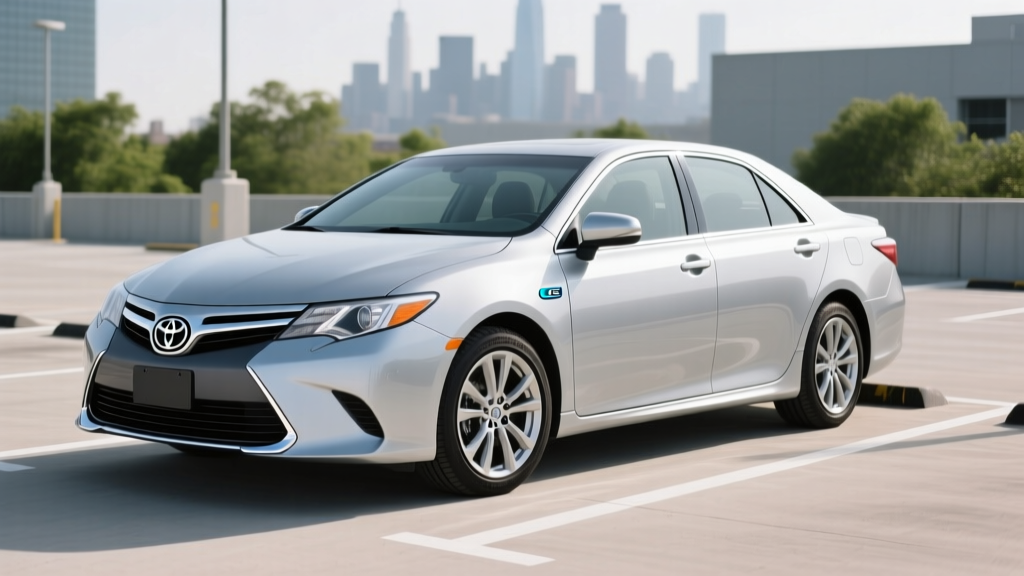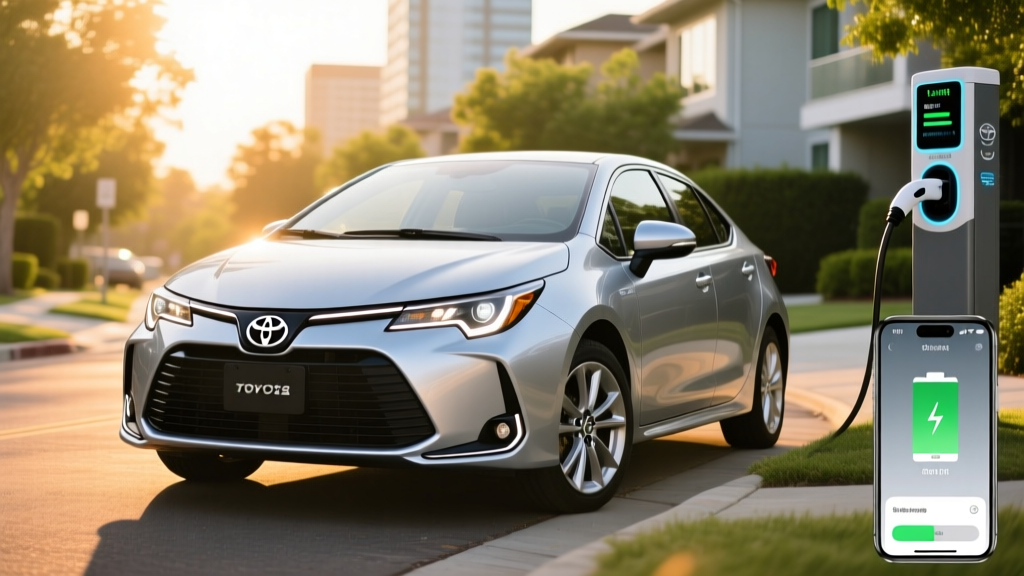
The Toyota Corolla has been the world's best-selling nameplate for decades, and its hybrid variant has quietly become one of the smartest fuel-economy plays on the market. The Corolla 2025 hybrid carries forward Toyota's fifth-generation hybrid system with minor refinements, offering an EPA-estimated 50 MPG combined in its most efficient trim — a number that, in real-world city driving, many owners find they can actually beat.
Unlike a plug-in hybrid (PHEV) such as the Toyota Prius Prime, the Corolla Hybrid is a conventional hybrid electric vehicle (HEV). It never needs to be plugged in. The gasoline engine and regenerative braking handle all battery charging automatically. If you're looking for electric-only driving, this isn't the car — but if you want maximum fuel savings with zero lifestyle change, the Corolla Hybrid makes a compelling case.
HEV vs PHEV: Where the Corolla Hybrid Fits
Before we dig into specs, it's worth clarifying what the Corolla Hybrid is — and isn't. Toyota offers two distinct hybrid architectures across its lineup, and confusing them is one of the most common buyer mistakes we see.
| Feature | Corolla Hybrid (HEV) | Prius Prime (PHEV) | Full EV (e.g., bZ4X) |
|---|---|---|---|
| Plugs in? | No | Yes | Yes |
| Electric-only range | ~1 mile at low speed | 44 miles (EPA) | 236–252 miles (EPA) |
| Total range | ~550+ miles | ~440+ miles combined | 236–252 miles |
| Fueling | Gas only | Gas + electricity | Electricity only |
| Federal tax credit (§30D) | Not eligible | Up to $3,750* | Up to $7,500* |
| Starting MSRP | $23,625 | $33,475 | $37,070 |
*Tax credit eligibility depends on buyer income, battery sourcing, and MSRP caps under current IRS §30D rules. Consult a tax professional.
The Corolla Hybrid is an HEV. It pairs a small traction battery (roughly 1.0 kWh, not plug-accessible) with a 1.8-liter four-cylinder engine and two motor-generators. You fill it with gas and drive. The hybrid system recaptures energy during braking and coasting, and the engine shuts off at stops and low speeds to save fuel. No plug, no range anxiety, no charging apps.
Fuel Economy: EPA Numbers and Real-World MPG
The headline number is what draws most buyers. Here's the official EPA fuel economy data for the 2025 Corolla Hybrid lineup:
| Trim | Drivetrain | City MPG | Highway MPG | Combined MPG |
|---|---|---|---|---|
| LE | FWD | 53 | 46 | 50 |
| LE | AWD | 51 | 44 | 48 |
| SE | AWD | 50 | 43 | 47 |
| XLE | AWD | 50 | 43 | 47 |
With an 11.4-gallon fuel tank, the LE FWD delivers a real-world total range of approximately 500–570 miles between fill-ups, depending on driving conditions. That's one of the longest effective ranges of any compact sedan on the market, gas or electric.
Powertrain: How the Fifth-Gen Hybrid System Works
The 2025 Corolla Hybrid uses Toyota's fifth-generation Toyota Hybrid System (THS), which debuted in the current-generation Prius. Key powertrain specifications:
| Specification | Detail |
|---|---|
| Engine | 1.8L 4-cylinder Atkinson-cycle |
| Engine output | 96 hp / 105 lb-ft torque |
| Front electric motor | 94 hp / 139 lb-ft |
| Rear electric motor (AWD) | 40 hp / 38 lb-ft |
| Net combined horsepower | 138 hp |
| Transmission | Electronic CVT (eCVT) |
| Traction battery | ~1.0 kWh lithium-ion (sealed, not plug-accessible) |
| 0–60 mph | ~9.0 seconds (est.) |
| Drivetrain options | FWD (LE only) or electronic AWD |
The eCVT is not a traditional belt-and-pulley CVT — it uses a planetary gearset to seamlessly blend engine and motor power. The result is smooth, linear acceleration with no shift shock. The AWD system is fully electronic: there's no mechanical driveshaft to the rear wheels. Instead, a separate rear motor engages automatically when slippage is detected, improving traction in rain and light snow without the fuel-economy penalty of a mechanical AWD system.
At 138 net horsepower, the Corolla Hybrid isn't quick by modern standards. The 0–60 time of roughly 9.0 seconds places it behind turbocharged competitors and far behind any EV. But for its mission — efficient commuting — the powertrain is smooth, quiet, and responsive enough for merging and passing.
Pricing, Trims, and Tax Credit Eligibility
The 2025 Corolla Hybrid is offered in three trims, with AWD available on all and FWD exclusive to the base LE:
| Trim | Drivetrain | MSRP (incl. destination) |
|---|---|---|
| LE | FWD | $23,625 |
| LE | AWD | $25,025 |
| SE | AWD | $27,425 |
| XLE | AWD | $29,225 |
Standard equipment on the LE includes Toyota Safety Sense 3.0 (pre-collision, lane-departure, adaptive cruise, lane-tracing, automatic high beams), an 8-inch touchscreen with wireless Apple CarPlay and Android Auto, LED headlights, and smart-key entry. The SE adds sport-tuned suspension, 18-inch alloy wheels, and a leather-trimmed steering wheel. The XLE brings SofTex-trimmed heated front seats, a 7-inch digital gauge cluster, and wireless phone charging.
At a starting price under $24,000, the Corolla Hybrid LE FWD remains one of the most affordable high-MPG vehicles available. Compared to a similarly equipped Corolla gas model (~$22,725 for the LE), the hybrid premium is roughly $900. At current fuel prices and a 50 MPG vs 35 MPG combined difference, that premium pays for itself in approximately 10,000–15,000 miles of driving for an average commuter.
Battery Longevity, Warranty, and Replacement Costs
Battery lifespan is consistently the top concern among first-time hybrid buyers. Here's what the data shows:
| Category | Detail |
|---|---|
| Hybrid battery warranty | 10 years / 150,000 miles (whichever comes first) |
| Powertrain warranty | 5 years / 60,000 miles |
| Basic vehicle warranty | 3 years / 36,000 miles |
| Battery chemistry | Lithium-ion (sealed, thermally managed) |
| Expected battery lifespan | 150,000–200,000+ miles based on fleet data |
| Out-of-warranty replacement cost | $2,500–$4,000 (dealer); $1,500–$2,500 (independent hybrid specialist) |
Toyota's hybrid battery warranty is one of the strongest in the industry at 10 years/150,000 miles. For context, that covers most owners through the entire period they'll own the vehicle. Toyota's Prius fleet — which uses a closely related hybrid system — has demonstrated that these batteries routinely last 200,000+ miles before needing replacement, with gradual capacity loss rather than sudden failure.
Because the Corolla Hybrid's traction battery is small (~1.0 kWh) and never deep-cycled the way an EV or PHEV battery is, degradation is minimal. The battery operates in a narrow state-of-charge window (roughly 40–80%), which dramatically extends cycle life. If a replacement is eventually needed, aftermarket hybrid specialists can often recondition or replace individual modules for significantly less than a full dealer battery swap.
Who Should Choose the Corolla Hybrid?
The Corolla Hybrid occupies a specific niche in the electrified-vehicle landscape. Here's a decision framework:
- You want maximum fuel savings with zero lifestyle changes — no plug, no apps, no range planning
- You lack access to home or workplace charging (apartment dwellers, street parkers)
- Your budget is under $30,000 and you want a proven, reliable commuter
- You drive mostly in city or suburban traffic where hybrid efficiency peaks
- You want AWD for weather without the fuel-economy penalty of a traditional AWD system
- You have reliable home Level 2 charging and a commute under 40 miles round-trip
- You want to drive on electricity most days but need gas flexibility for road trips
- You want to reduce tailpipe emissions significantly without full EV commitment
- You have home charging and want the lowest cost-per-mile (electricity is roughly 1/3 the cost of gas per mile)
- You want instant torque, one-pedal driving, and zero tailpipe emissions
- You qualify for the $7,500 federal tax credit, which can make an EV cheaper than a hybrid after incentives
- 50 MPG combined EPA (LE FWD) — among the highest of any non-plug-in sedan
- Under $24K starting price; hybrid premium pays for itself quickly
- No charging infrastructure needed — works with any gas station
- AWD available with minimal MPG penalty
- Toyota Safety Sense 3.0 standard on all trims
- 10-year/150,000-mile hybrid battery warranty
- Strong resale value and proven long-term reliability
- 138 hp and ~9.0s 0–60 — noticeably slower than turbocharged rivals
- No federal tax credit eligibility (HEV, not PHEV)
- Rear-seat legroom is tight (35.0 inches) compared to some competitors
- Only the LE FWD achieves 50 MPG; AWD and SE/XLE drop to 47–48
- No plug-in option in the Corolla lineup (look to Prius Prime for PHEV)
- Highway MPG drops more than city MPG — less ideal for 100% highway commuters
Frequently Asked Questions
How many MPG does the 2025 Corolla Hybrid get?
The most efficient trim — the LE with front-wheel drive — is EPA-rated at 53 city / 46 highway / 50 combined MPG. AWD trims drop slightly to 47–48 combined. In real-world city driving, many owners report exceeding the EPA city estimate, sometimes reaching 52–56 MPG in stop-and-go traffic.
Does the Corolla Hybrid need to be plugged in?
No. The Corolla Hybrid is a conventional hybrid (HEV). Its small traction battery charges automatically through regenerative braking and the gasoline engine. You never plug it in — you simply refuel at any gas station.
Is the Corolla Hybrid reliable, and what does battery replacement cost?
Toyota's hybrid system is among the most proven in the industry, with decades of Prius fleet data supporting its longevity. The hybrid battery carries a 10-year/150,000-mile warranty. Out-of-warranty replacement typically costs $2,500–$4,000 at a dealer or $1,500–$2,500 through an independent hybrid specialist. Most batteries last well beyond 150,000 miles.
Does the 2025 Corolla Hybrid qualify for any tax credit?
No. Under current IRS §30D rules, only plug-in electric vehicles (BEVs and PHEVs) qualify for the federal New Clean Vehicle Credit. The Corolla Hybrid is a conventional HEV and does not qualify. Some states offer separate incentives for high-efficiency vehicles — check your state energy office or DMV.
Corolla Hybrid vs Prius: which is better?
The 2025 Prius (redesigned for 2023) offers 57 MPG combined in its LE trim and a more powerful 196-hp powertrain, but starts at $28,350 — roughly $4,700 more than the Corolla Hybrid LE. The Prius also offers the Prime PHEV variant with 44 miles of electric-only range. If maximum MPG and a more modern design matter most, the Prius wins. If budget is the priority, the Corolla Hybrid delivers nearly the same efficiency for significantly less.
How does AWD affect fuel economy?
The electronic AWD system adds a rear electric motor that engages only when needed. The fuel-economy penalty is modest: the LE AWD drops from 50 to 48 combined MPG, and the SE/XLE AWD achieve 47 combined. For buyers in snow-belt states, the traction benefit outweighs the 2–3 MPG difference.
The 2025 Toyota Corolla Hybrid doesn't chase headlines. It doesn't offer 300 horsepower, autonomous driving features, or a 15-inch touchscreen. What it does offer is a proven, reliable, no-compromise path to 50 MPG for under $24,000 — and for millions of commuters who simply want to spend less at the pump without changing how they drive, that's exactly the right formula.