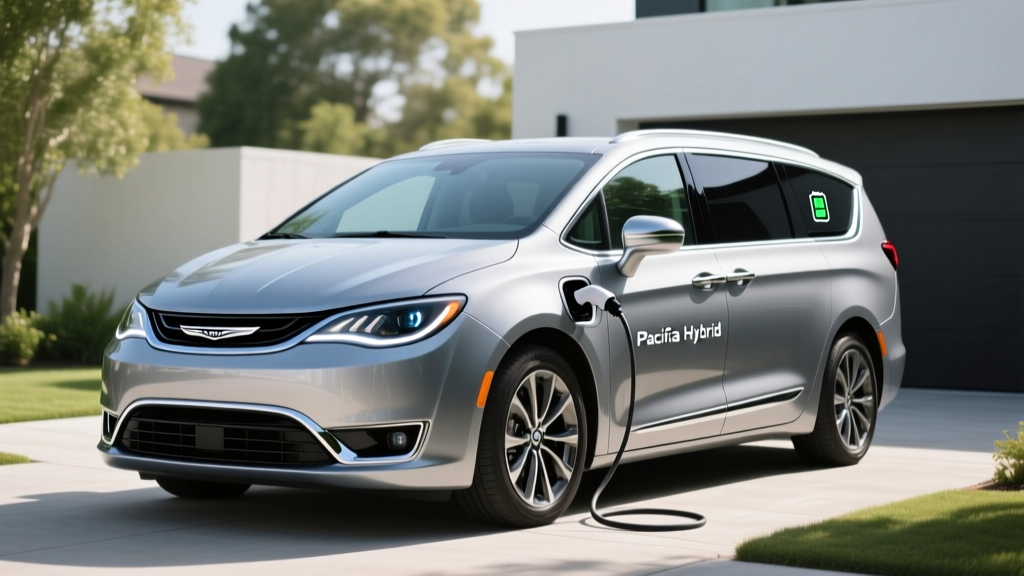
The Chrysler Pacifica Hybrid occupies a unique space in the American market: it remains the only plug-in hybrid minivan available new in the United States. For families who want electric commuting without sacrificing the cross-country flexibility of a gas engine, it's compelling. But with a complex dual-motor powertrain and a high-voltage battery pack, buyers are right to ask about long-term durability. Here's what the data says about Chrysler Pacifica Hybrid reliability, from battery degradation patterns to real-world fuel economy.
HEV vs PHEV: What the Pacifica Hybrid Actually Is
Before dissecting reliability, it's critical to understand what you're buying. The Pacifica Hybrid is a plug-in hybrid electric vehicle (PHEV), not a conventional hybrid (HEV). The distinction matters for ownership:
| Feature | Conventional Hybrid (HEV) | Pacifica Hybrid (PHEV) |
|---|---|---|
| Battery Size | 1–2 kWh | 16 kWh (usable ~13 kWh) |
| Plug-In Charging | No — charges via regen/engine | Yes — Level 1 and Level 2 |
| Electric-Only Driving | Brief low-speed assist only | 32 miles EPA at full EV speeds |
| Fuel Economy (after battery depletes) | Consistent MPG always | 30 MPG combined (hybrid mode) |
| Tax Credit Eligibility | None (federal) | Historically eligible; check current §30D rules |
If you never plug it in, the Pacifica Hybrid still functions as a conventional hybrid — but you'll forfeit the 32 miles of electric range and the associated fuel savings that justify its price premium over the gas-only Pacifica.
Fuel Economy and Electric Range: EPA vs Real World
The Pacifica Hybrid's powertrain pairs a 3.6-liter Pentastar V6 with two electric motors and a 16 kWh lithium-ion battery pack. Here's what the EPA rates and what owners actually experience:
| Metric | EPA Estimate | Real-World Expectation |
|---|---|---|
| Electric-Only Range | 32 miles | 25–30 mi (highway/cold); up to 35 mi (city, mild weather) |
| MPGe (Electric Mode) | 82 MPGe | 70–85 MPGe depending on conditions |
| Hybrid Mode — City | 29 MPG | 30–34 MPG (regen-heavy city driving often exceeds EPA) |
| Hybrid Mode — Highway | 30 MPG | 27–29 MPG (minivan aerodynamics hurt at 75+ mph) |
| Hybrid Mode — Combined | 30 MPG | 28–32 MPG depending on driving mix |
| Total Combined Range | 430 miles | 380–450 miles (varies with charge/depletion pattern) |
Hybrids, including PHEVs in hybrid mode, often exceed their EPA city ratings because regenerative braking recaptures energy in stop-and-go traffic. Highway driving is where the Pacifica's 4,900-pound curb weight and boxy shape work against efficiency. Expect a meaningful range drop in winter — cold temperatures reduce battery capacity by roughly 15–25%, cutting electric-only range to around 22–26 miles.
According to fueleconomy.gov, the Pacifica Hybrid achieves 82 MPGe in combined electric operation and 30 MPG combined once the battery is depleted. These figures have remained consistent across recent model years, as the powertrain has not undergone major revision.
Battery and Powertrain Reliability Data
This is where Chrysler Pacifica Hybrid reliability gets nuanced. The Pacifica PHEV has been in production since the 2017 model year, giving us roughly nine model years of field data — enough to identify patterns.
Known Issues and Recall History
The Pacifica Hybrid has faced several notable recalls and service campaigns:
- 12V battery fires (2020–2022 models): Stellantis issued recalls for certain model years due to 12V battery electrical issues that could cause fires while parked. This was not a high-voltage traction battery issue but required dealer inspection and, in some cases, replacement of the 12V system components.
- Engine/transmission software (early models): Some 2017–2019 owners reported rough transitions between EV and hybrid modes, addressed through powertrain control module (PCM) software updates.
- High-voltage battery: There have been isolated reports of HV battery module failures requiring replacement, but no widespread pattern of premature degradation has emerged comparable to the scale of the 12V issue.
For authoritative safety and recall data, check the NHTSA recall database using your specific VIN before purchasing any used Pacifica Hybrid.
What the Reliability Ratings Show
The Pacifica Hybrid consistently scores below average in predicted reliability from major outlets. Consumer Reports has historically rated it at 2 out of 5 for predicted reliability, citing the electrical system and powertrain complexity. J.D. Power ratings have placed it in the "about average" to "below average" range for dependability in the minivan segment.
However, context matters: many reliability complaints stem from infotainment glitches, sensor errors, and the 12V system rather than the hybrid powertrain itself. The V6 engine and eCVT transmission are proven components carried over from conventional Chrysler applications.
Battery Warranty Coverage
Stellantis provides a 10-year / 100,000-mile warranty on the high-voltage battery pack for the Pacifica Hybrid (15 years / 150,000 miles in California Air Resources Board states). The warranty covers repair or replacement if the battery falls below 70% of its original capacity. This is consistent with industry-standard PHEV battery coverage and provides meaningful protection against premature degradation.
Charging Specs and Battery Details
The Pacifica Hybrid uses a 16 kWh gross battery (approximately 13 kWh usable, with top and bottom buffers to protect longevity). Here's what charging looks like in practice:
| Charging Method | Power | 0–100% Time | Notes |
|---|---|---|---|
| Level 1 (120V household outlet) | ~1.4 kW | ~14 hours | Useful for overnight if you drive <30 mi/day |
| Level 2 (240V, 32A) | ~7.2 kW | ~2 hours | Recommended for daily PHEV use |
| DC Fast Charging | N/A | N/A | Not supported — no DC fast charge port |
The lack of DC fast charging is standard for PHEVs — their smaller batteries don't require it, and the added hardware cost isn't justified. A Level 2 home charger is strongly recommended; relying on Level 1 means a full charge takes most of the night, and if you drive more than the electric range daily, you won't start each morning with a full battery.
The battery chemistry is lithium-ion (NMC-type). In PHEV applications, the smaller battery cycles more frequently than in a full BEV, but the generous buffer (roughly 3 kWh reserved) helps mitigate degradation. Most owners report minimal range loss over the first 60,000–80,000 miles, consistent with the battery's design life targeting the warranty period.
Battery Replacement Cost: What to Budget For
If your Pacifica Hybrid's high-voltage battery fails outside of warranty coverage, replacement is a significant expense:
- Full battery pack replacement: $5,500–$8,500 (parts + labor at dealer), depending on model year and regional labor rates.
- Individual module replacement: Some independent hybrid specialists can replace individual failed modules for $1,500–$3,000, though this is less common and availability varies.
- Remanufactured packs: A growing aftermarket offers remanufactured PHEV batteries at 30–40% less than new OEM pricing, though availability for the Pacifica is still limited compared to the Prius.
Given the 10-year/100,000-mile warranty (15/150k in CARB states), most original owners will never face this cost. Second and third owners buying used should verify remaining warranty coverage by checking the in-service date with a Stellantis dealer.
Powertrain and Performance Specs
| Specification | Detail |
|---|---|
| Engine | 3.6L V6 (Atkinson cycle) — 262 hp (gas only) |
| Electric Motors | Dual-motor eCVT — combined system output 260 hp |
| Combined System Horsepower | 260 hp |
| Battery (Gross / Usable) | 16 kWh / ~13 kWh |
| 0–60 mph | ~7.1 seconds |
| Curb Weight | ~5,050 lbs |
| Cargo Volume (behind 3rd row) | 32.3 cu ft (same as gas Pacifica — no battery intrusion) |
| Towing Capacity | 3,600 lbs (with tow package) |
| Drivetrain | Front-wheel drive (no AWD option on Hybrid) |
One practical note: the Pacifica Hybrid is not available with all-wheel drive. The AWD option is exclusive to the gas-only Pacifica. If AWD is non-negotiable for your climate, this is a dealbreaker — and a point where competitors like the Toyota Sienna (HEV with AWD, but not a PHEV) offer an alternative.
Pricing and Tax Credit Eligibility
The 2026 Chrysler Pacifica Hybrid starts at approximately $51,095 MSRP (Select trim) and climbs to roughly $57,595 (Pinnacle trim). Destination charges add approximately $1,995.
Federal tax credit eligibility under IRS §30D has become increasingly restrictive. As of 2026, the Pacifica Hybrid's eligibility depends on several factors that change periodically:
- MSRP cap: Vans and SUVs must be under $80,000 MSRP — the Pacifica Hybrid clears this.
- Buyer income cap: Modified adjusted gross income must not exceed $150,000 (single) / $300,000 (joint).
- Battery sourcing and critical minerals: Increasingly strict requirements on where battery components and minerals are sourced may reduce or eliminate the credit amount for some model years.
- Point-of-sale transfer: If eligible, the credit can be applied at purchase rather than claimed on your tax return.
Check current eligibility on IRS.gov and confirm with your dealer before relying on any credit amount. State incentives may also apply — check your state energy office or AFDC incentive database for local programs.
Who Should Choose the Pacifica Hybrid vs EV or Gas
Choose the Pacifica Hybrid If:
- Your daily driving is under 30 miles and you can charge at home (Level 2)
- You need minivan space but want to reduce fuel costs on school runs and errands
- You take occasional road trips where EV charging infrastructure is sparse
- You want EV-like commuting without range anxiety on longer drives
Choose a Full EV (e.g., Kia EV9, Tesla Model X) If:
- You have reliable home charging and rarely drive more than 250 miles in a day
- You want lower maintenance costs (no oil changes, no gas engine upkeep)
- You want maximum acceleration and a quieter ride
- You can absorb a higher purchase price for lower running costs
Choose the Gas Pacifica or Toyota Sienna Hybrid If:
- You can't charge at home (apartment, no garage)
- You need AWD (Sienna HEV offers it; gas Pacifica does too)
- You want a lower purchase price and simpler maintenance
- Your daily mileage is high and mostly highway — where PHEV advantages shrink
Pros
- Only PHEV minivan on the US market — unique value proposition
- 32 miles EV range covers most daily family errands
- Stow 'n Go seating retained (battery doesn't compromise cargo floor)
- 10-year/100,000-mile HV battery warranty
- Strong city MPG in hybrid mode (often exceeds EPA)
Cons
- Below-average predicted reliability ratings
- History of 12V electrical recalls on certain model years
- No AWD option
- No DC fast charging (expected for PHEV, but limits flexibility)
- High MSRP — payback period on fuel savings is 5+ years vs gas Pacifica
Frequently Asked Questions
How many MPG does the Chrysler Pacifica Hybrid get?
The EPA rates the Pacifica Hybrid at 29 MPG city / 30 MPG highway / 30 MPG combined in hybrid mode (after the battery is depleted). In electric mode, it achieves 82 MPGe combined. Real-world city driving often yields 30–34 MPG thanks to regenerative braking, while sustained highway driving at 75+ mph typically returns 27–29 MPG.
How far can the Pacifica Hybrid go on electric only?
The EPA rates the Pacifica Hybrid at 32 miles of electric-only range. In practice, expect 25–30 miles in mixed driving and as little as 22–26 miles in cold weather (below 35°F). Gentle city driving in mild weather can stretch it to 35 miles. Once depleted, the gas engine engages seamlessly and the van operates as a conventional hybrid.
Is the Chrysler Pacifica Hybrid reliable?
The Pacifica Hybrid has a mixed reliability record. The hybrid powertrain itself — the V6 engine, eCVT, and high-voltage battery — has proven reasonably durable, with few widespread failures. However, the model has suffered from 12V electrical system recalls (particularly 2020–2022 model years), infotainment bugs, and sensor issues that pull down its overall reliability scores. It rates below average at Consumer Reports and about average at J.D. Power. Buying a model year with recall work completed and an intact battery warranty is the best risk-mitigation strategy.
What does it cost to replace the Pacifica Hybrid battery?
A full high-voltage battery replacement runs $5,500–$8,500 at a Stellantis dealer. Individual module repair by a hybrid specialist can cost $1,500–$3,000. However, the battery is covered by a 10-year/100,000-mile warranty (15 years/150,000 miles in CARB states) against capacity loss below 70%, meaning most owners will not face this expense during the warranty period.
Does the Pacifica Hybrid qualify for a federal tax credit?
Eligibility under IRS §30D depends on current-year rules regarding battery sourcing, critical mineral content, buyer income caps, and MSRP limits. The Pacifica Hybrid's MSRP falls under the $80,000 van cap, but battery sourcing requirements have disqualified some previously eligible vehicles. Verify current status at IRS.gov before purchasing. The credit can be transferred to the dealer at point of sale if you qualify.
Do I need to plug in the Pacifica Hybrid?
No — the Pacifica Hybrid will operate as a conventional hybrid if you never plug it in. However, you'll miss the entire value proposition: the 32 miles of electric range, the 82 MPGe efficiency, and the fuel savings that justify the price premium. If you can't charge at home or work, a gas-only Pacifica or Toyota Sienna Hybrid is a more sensible choice.
Hybrid vs PHEV vs EV — which is right for my family?
If you drive under 30 miles daily and can install a Level 2 charger at home, the Pacifica PHEV lets you commute on electricity while keeping a gas engine for road trips. A full EV (like the Kia EV9) offers lower running costs and zero tailpipe emissions but requires confidence in public charging for long trips. A conventional hybrid (Toyota Sienna) is best if you can't plug in, want AWD, or prefer a lower purchase price. The PHEV is the bridge option — best for households that can charge at home but aren't ready to commit to electric-only.