Quick Verdict: The BMW 330e PHEV at a Glance
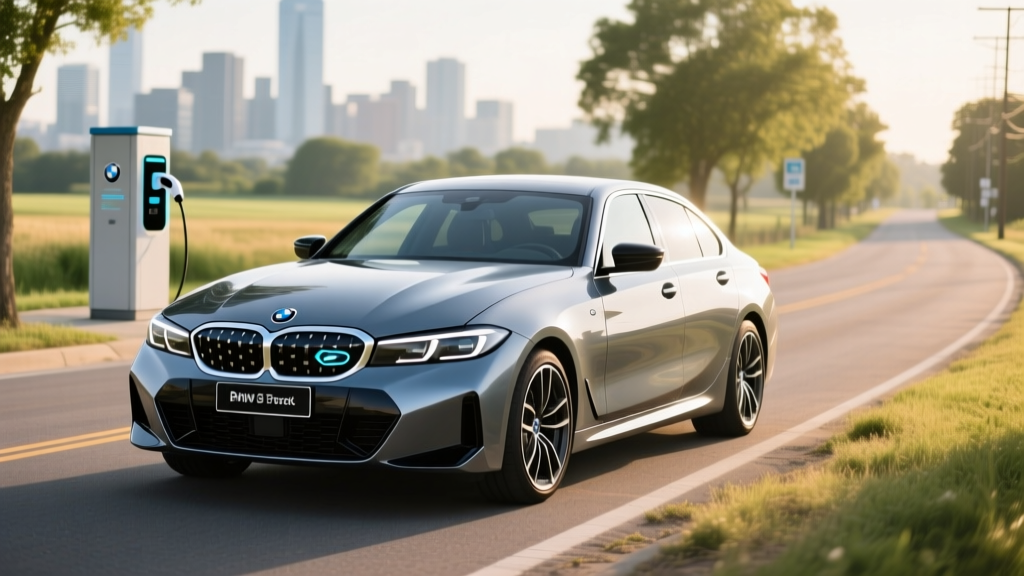
The BMW 330e is a plug-in hybrid (PHEV) sedan that pairs a turbocharged 2.0-liter four-cylinder engine with an electric motor integrated into its eight-speed automatic transmission. For 2026, it offers 22 miles of electric-only driving, a combined 75 MPGe when blending electric and gasoline operation, and roughly 30 MPG combined once the battery depletes. Starting at $46,295, it targets buyers who want BMW's driving dynamics with the flexibility to commute on electricity and road-trip on gasoline — without the range anxiety of a full battery-electric vehicle (BEV).
This is not a conventional hybrid (HEV) like a Toyota Prius. It's a plug-in hybrid with a usable battery you charge from a wall outlet or Level 2 station. That distinction matters for fuel economy, tax credits, and daily driving habits. Let's break down the numbers.
HEV vs PHEV: Where the 330e Fits
Conventional Hybrid (HEV)
- No plug — recharges via regenerative braking and the engine
- Small battery (~1–2 kWh), no meaningful electric-only range
- Improves MPG across all driving conditions (city especially)
- Example: Toyota Camry Hybrid (44 MPG combined)
Plug-in Hybrid (PHEV) — BMW 330e
- Plugs in to a standard 120V outlet or Level 2 (240V) charger
- Larger battery (19.5 kWh total, ~16.5 kWh usable) enabling 22 miles electric-only
- Operates as an EV for short commutes, then as a hybrid when the battery depletes
- Eligible for partial federal tax credit (up to $3,750 under current §30D rules)
The 330e's value proposition hinges on your commute. If your daily round trip falls under 22 miles and you can charge at home overnight, you'll burn almost zero gasoline during the work week. Stretch that commute to 50 miles and the 330e still outperforms a gas-only 330i because the engine operates more efficiently with electric assist. But if you can't charge at home or at work, you're carrying 400+ pounds of battery for no benefit — and a conventional hybrid or the gas 330i may serve you better.
Fuel Economy: EPA MPG, MPGe, and Real-World Numbers
| Metric | EPA Rating | Real-World Expectation |
|---|---|---|
| Combined MPGe (electric + gas) | 75 MPGe | 65–80 MPGe depending on charging frequency |
| Combined MPG (gas only, battery depleted) | 30 MPG | 28–33 MPG (hybrids often exceed EPA in city) |
| City MPG (gas only) | 31 MPG | 32–35 MPG — regen braking helps in stop-and-go |
| Highway MPG (gas only) | 28 MPG | 26–30 MPG — aerodynamic drag and less regen benefit |
| Electric-only range | 22 miles | 18–22 miles (less in cold weather or at highway speeds) |
| Total combined range | ~370 miles | ~340–380 miles with a full tank and full battery |
Real-world nuance: PHEV fuel economy is entirely dependent on how often you charge. If you plug in every night and drive 20 miles a day, your effective MPG approaches infinity — you may visit a gas station once a month. If you never plug in, expect 28–33 MPG, which is solid for a 288-horsepower sport sedan but not Prius territory. According to fueleconomy.gov, the 330e's combined gas-only MPG of 30 beats the gas-only BMW 330i (30 MPG combined) only marginally — the real savings come from electric-only miles.
In cold weather (below 35°F), expect electric-only range to drop 15–25%, bringing that 22-mile estimate down to roughly 16–18 miles. The cabin heater draws from the battery unless you precondition while still plugged in.
Powertrain, Battery, and Charging Specs
| Specification | 2026 BMW 330e |
|---|---|
| Engine | 2.0L turbocharged inline-4 (181 hp, 258 lb-ft) |
| Electric Motor | Integrated into transmission (107 hp) |
| Combined System Output | 288 hp, 310 lb-ft torque |
| Transmission | 8-speed automatic (ZF) |
| Drivetrain | Rear-wheel drive (xDrive AWD available) |
| 0–60 mph | 5.6 seconds (RWD), 5.5 seconds (xDrive) |
| Battery Chemistry | NMC (nickel manganese cobalt) lithium-ion |
| Battery Capacity (gross / usable) | 19.5 kWh / ~16.5 kWh |
| Electric-Only Range (EPA) | 22 miles |
| Onboard Charger (Level 2 AC) | 3.7 kW |
| Level 2 Charge Time (0–100%) | ~4.5 hours at 3.7 kW |
| Level 1 Charge Time (120V) | ~14 hours |
| DC Fast Charging | Not available |
| Fuel Tank Capacity | 10.6 gallons |
| Cargo Volume | 13.0 cu ft (trunk, reduced by battery placement) |
Charging reality check: The 330e does not support DC fast charging. Its 3.7 kW onboard AC charger is modest by modern EV standards — a full Level 2 charge takes about 4.5 hours. For most PHEV owners, this is fine: you plug in at home overnight and wake up to a full battery. But it means public Level 2 chargers (at malls or workplaces) need a multi-hour dwell time to be worthwhile. A standard 120V household outlet adds roughly 4–5 miles of range per hour, which works for overnight top-ups if you drive less than 20 miles daily.
Battery Warranty & Replacement Cost
BMW covers the 330e's high-voltage battery for 8 years or 80,000 miles (whichever comes first), warranting it against capacity loss below 70% of original. BMW's high-voltage batteries have proven durable in real-world use, with most PHEV owners reporting minimal degradation over 5+ years. If out-of-warranty replacement becomes necessary, expect a cost between $8,000 and $12,000 including parts and labor at a BMW dealer. Third-party hybrid battery specialists may offer refurbished units for $4,000–$6,000. For context, the 12V auxiliary battery (a separate, conventional battery) costs $200–$400 to replace.
Pricing, Trims, and Tax Credit Eligibility
The 2026 BMW 330e starts at $46,295 (including destination) for the rear-wheel-drive sedan. The xDrive all-wheel-drive variant adds approximately $2,000, bringing it to roughly $48,295. Popular packages — Premium ($2,500), M Sport ($3,800), and Executive ($2,100) — can push a well-equipped 330e into the $55,000–$58,000 range.
Federal Tax Credit (§30D)
Under current IRS §30D clean vehicle credit rules, the BMW 330e qualifies for a partial credit of up to $3,750. The full $7,500 credit requires meeting both critical-mineral and battery-component sourcing thresholds. Because BMW sources battery components from suppliers that may not fully satisfy the domestic-content and critical-mineral requirements, the 330e typically qualifies for the $3,750 battery-component portion only.
- MSRP cap: Sedan MSRP must not exceed $55,000 — a base 330e qualifies, but heavily optioned models may exceed this threshold
- Buyer income limits: AGI must not exceed $150,000 (single), $225,000 (head of household), or $300,000 (married filing jointly)
- Point-of-sale transfer: You can transfer the credit to the dealer at purchase, reducing your out-of-pocket cost immediately
- Assembly requirement: Vehicle must undergo final assembly in North America — verify the specific VIN on the DOE's VIN lookup tool
- Sourcing rules: Credit amount depends on battery-component and critical-mineral compliance; confirm current-year status with your dealer or a tax professional
Many states offer additional PHEV incentives (California's CVRP, Colorado's state credit, New York's Drive Clean Rebate), but these vary by jurisdiction, income, and vehicle eligibility. Check your state energy office for current amounts.
Driving Dynamics and Daily Ownership
The 330e drives like a BMW first and a hybrid second. In Electric mode, acceleration is immediate and silent up to about 75 mph. In Hybrid mode, the turbo four and electric motor blend seamlessly — the ZF 8-speed masks transitions well, and you'll rarely notice the engine firing up. The xDrive model feels planted in rain and light snow, and the extra 107 hp of electric torque fills in the low-end gap that turbo lag sometimes leaves in the gas-only 330i.
Trunk space is the compromise. The high-voltage battery sits beneath the rear seat and intrudes into the cargo area, reducing volume to 13.0 cubic feet (compared to 17.0 cu ft in the 330i). A full-size golf bag fits, but packing for a family road trip requires more planning. There is no spare tire — BMW provides a mobility kit.
The iDrive 8.5 infotainment system handles PHEV-specific functions well: you can schedule charging, set a target State of Charge (SoC), precondition the cabin while plugged in, and monitor energy flow in real time. The "Battery Control" mode lets you deliberately save battery charge for later — useful if you're driving into a city with low-emission zones or want electric assist for the final miles of a trip.
BMW 330e vs. Full EV vs. Gas 330i: Which Fits You?
Choose the BMW 330e PHEV if:
- Your daily commute is under 25 miles round-trip and you can charge at home
- You want to drive electric most weekdays but need gasoline flexibility for road trips
- You live in a region with unreliable public charging infrastructure
- You want BMW driving dynamics with lower fuel costs than the gas 330i
- You qualify for the $3,750 federal credit and any state PHEV incentives
Choose a full EV (like the BMW i4 or Tesla Model 3) if:
- You have reliable home Level 2 charging and your daily drive is under 250 miles
- You want zero tailpipe emissions and minimal maintenance (no oil changes, no spark plugs)
- You qualify for the full $7,500 federal credit on an eligible BEV
- You're ready to plan road trips around DC fast-charging stops
Choose the gas BMW 330i if:
- You cannot charge at home or work (apartment without charging access)
- You drive primarily long highway trips where PHEV electric range provides little benefit
- You prioritize maximum trunk space (17.0 cu ft vs. 13.0 cu ft)
- You want a lower purchase price — the 330i starts around $44,900
Reliability and Long-Term Ownership Costs
BMW's PHEV powertrain in the G20-generation 3 Series has proven reliable since its 2020 introduction. The electric motor, being integrated into the ZF transmission, has fewer failure points than a standalone motor. The high-voltage battery uses proven NMC chemistry with active liquid thermal management, which mitigates the heat-related degradation that plagues passively cooled packs.
Common ownership considerations:
- Maintenance: The gasoline engine still requires oil changes (~$200–$300 at a dealer), brake fluid service, and spark plug replacement. However, regenerative braking significantly extends brake pad life — many PHEV owners report original pads at 60,000+ miles.
- Insurance: Expect premiums 10–20% higher than the gas 330i due to the high-voltage system's repair cost in a collision.
- Depreciation: PHEVs depreciate faster than conventional hybrids (Toyota) but slower than some full EVs. Expect roughly 45–50% value retention at 5 years / 60,000 miles.
- Tires: The 330e's extra weight (~4,200 lbs vs. ~3,600 lbs for the 330i) increases tire wear. Budget for replacement every 30,000–40,000 miles.
Pros and Cons
Pros
- 22 miles of electric-only range covers most commutes
- 288 hp combined — quicker than the gas 330i (5.6s to 60)
- 30 MPG gas-only is excellent for a sport sedan
- Qualifies for up to $3,750 federal tax credit
- No range anxiety — 370-mile total range with gas tank
- BMW driving dynamics largely preserved
- 8-year / 80,000-mile battery warranty
Cons
- Trunk reduced to 13.0 cu ft (battery intrusion)
- No DC fast charging — 4.5 hours on Level 2
- 3.7 kW onboard charger is slow by modern standards
- Partial $3,750 credit, not full $7,500
- $46,295 starting price is $1,400+ more than the gas 330i
- Electric range drops to ~16–18 miles in cold weather
- Heavier than 330i — more tire wear
Frequently Asked Questions
How many MPG does the BMW 330e get?
The EPA rates the 330e at 75 MPGe combined when using both electric and gasoline power, and 30 MPG combined (31 city / 28 highway) when running on gasoline alone with a depleted battery. Real-world MPG depends heavily on charging habits: owners who plug in nightly and drive short commutes may see effective fuel economy well above 75 MPGe, while those who never charge will see 28–33 MPG.
How far can the BMW 330e go on electric only?
The EPA rates the 330e at 22 miles of electric-only range. In real-world driving, expect 18–22 miles in mild weather and 16–18 miles in cold conditions (below 35°F) or at sustained highway speeds above 65 mph. Preconditioning the cabin while plugged in helps preserve range in winter.
Is the BMW 330e a conventional hybrid or a plug-in hybrid?
The 330e is a plug-in hybrid (PHEV). It has a larger battery than a conventional hybrid and must be plugged in to a 120V or 240V outlet to realize its full electric range and fuel savings. It cannot recharge its high-voltage battery to full using only the gasoline engine and regenerative braking — you need to plug it in.
Does the BMW 330e qualify for a federal tax credit?
Yes, under current IRS §30D rules, the BMW 330e qualifies for a partial federal tax credit of up to $3,750. Eligibility depends on the vehicle's MSRP (must be under $55,000 for sedans), the buyer's adjusted gross income, battery-component sourcing compliance, and North American final assembly. The credit can be transferred to the dealer at the point of sale. Always verify your specific VIN and personal eligibility with a tax professional or the IRS clean vehicle credit page.
Is the BMW 330e reliable and what does battery replacement cost?
The G20-generation 330e has shown good reliability since its 2020 launch. BMW covers the high-voltage battery for 8 years or 80,000 miles against capacity loss below 70%. Real-world degradation has been modest for most owners. Out-of-warranty replacement costs approximately $8,000–$12,000 at a dealer, or $4,000–$6,000 through a third-party hybrid specialist using refurbished cells.
Can I DC fast charge the BMW 330e?
No. The 330e only supports AC charging: Level 1 (120V, ~1.4 kW) and Level 2 (240V, up to 3.7 kW). A full Level 2 charge takes approximately 4.5 hours. DC fast charging is not available on this model. For PHEV owners who charge at home overnight, this limitation rarely matters in practice.
How does the 330e compare to the BMW i4 electric sedan?
The BMW i4 is a full battery-electric vehicle with 256–307 miles of EPA range, DC fast charging up to 200 kW, and eligibility for the full $7,500 federal credit (depending on trim and sourcing). It starts around $52,200. Choose the i4 if you have reliable home charging and don't need gasoline flexibility. Choose the 330e if you need road-trip range without planning charging stops.