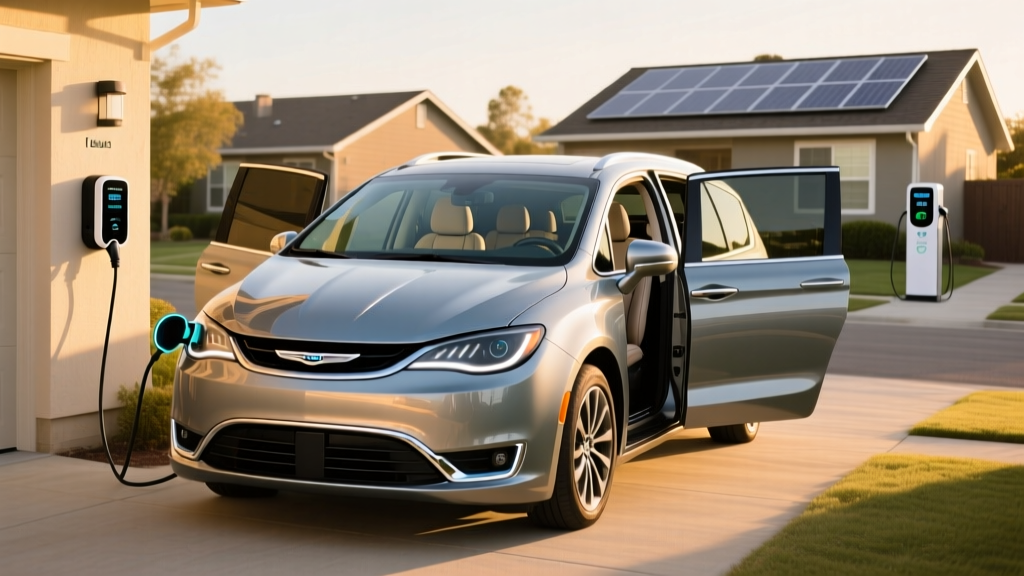
The Chrysler Pacifica Hybrid remains the only plug-in hybrid minivan on the US market, giving families a bridge between electric commuting and gas-powered road trips. But how does its mileage hold up outside the EPA lab? We've analyzed the official numbers, owner reports, and charging data to give you a complete picture of what the Pacifica Hybrid actually delivers.
Chrysler Pacifica Hybrid Mileage: EPA Numbers vs Real-World
Before diving into the data, it's critical to understand what you're buying. The Pacifica Hybrid is a plug-in hybrid electric vehicle (PHEV), not a conventional hybrid (HEV). This means it has a larger battery you can charge from a wall outlet, enabling electric-only driving before the gas engine kicks in. Chrysler does not offer a conventional (non-plug-in) hybrid Pacifica — it's PHEV or standard gasoline V6.
HEV vs PHEV: Quick Distinction
- HEV (Conventional Hybrid): Small battery charged only by regenerative braking and the engine. No plug. Improves MPG modestly. Example: Toyota Sienna Hybrid.
- PHEV (Plug-in Hybrid): Larger battery you charge via plug. Delivers 30+ miles electric-only, then operates as a hybrid. Example: Chrysler Pacifica Hybrid.
The EPA rates the Pacifica Hybrid at 82 MPGe combined when operating on electricity, and 30 MPG combined once the battery is depleted and the gas engine takes over. Here's the full breakdown:
| Mode | City | Highway | Combined |
|---|---|---|---|
| Electric + Gas (MPGe) | 84 MPGe | 80 MPGe | 82 MPGe |
| Gas Only (Charge-Depleted) | 29 MPG | 30 MPG | 30 MPG |
Source: EPA Fuel Economy
Real-World MPG: What Owners Actually See
EPA estimates are standardized lab results. In practice, Pacifica Hybrid mileage varies significantly based on driving patterns:
- Daily commuting under 30 miles (charged nightly): Many owners report using almost zero gas for weeks, achieving effective MPGe well above 100 on short, low-speed trips.
- Mixed driving (some electric, some gas): Expect 35–45 MPGe equivalent across a full tank when combining electric and gas miles.
- Long road trips (battery depleted): Real-world highway driving at 70+ mph typically yields 26–29 MPG — slightly below the EPA's 30 MPG highway rating. The minivan's 4,800-lb curb weight and boxy aerodynamics work against it at speed.
- Cold weather impact: In freezing temperatures, electric-only range drops by 20–30%, and gas MPG can dip to 24–27 MPG due to cabin heating loads and reduced battery efficiency.
Real-World Expectation: EPA rates 32 miles electric-only. Expect 25–28 miles in mild weather at mixed speeds, and as low as 20–22 miles in freezing conditions or at sustained highway speeds.
Electric-Only Range and Total Driving Range
The Pacifica Hybrid's 16 kWh lithium-ion battery pack (NMC chemistry) provides an EPA-rated 32 miles of electric-only range. That's enough to cover the average American's one-way commute and school run without burning a drop of gasoline.
Once the battery depletes to its buffer threshold, the 3.6L Pentastar V6 and dual electric motors work together in hybrid mode. With a 14-gallon fuel tank, total combined range extends to approximately 470–520 miles depending on how much electric driving you do first.
| Specification | Value |
|---|---|
| Battery Capacity | 16 kWh (NMC lithium-ion) |
| EPA Electric-Only Range | 32 miles |
| Real-World Electric Range | 22–28 miles (weather/speed dependent) |
| Fuel Tank | 14.0 gallons |
| Total Range (Est.) | ~470–520 miles |
| Combined System Power | 260 hp |
| Engine | 3.6L V6 Atkinson-cycle + 2 electric motors |
| Transmission | eFlite SI-EVT (electrically variable) |
| 0–60 mph | ~7.1 seconds |
Charging the Pacifica Hybrid: Times and Limitations
The Pacifica Hybrid uses a standard J1772 connector for AC charging. Here's what to expect at each level:
| Charging Level | Power | 0–100% Time | Notes |
|---|---|---|---|
| Level 1 (120V outlet) | ~1.4 kW | ~14 hours | Included cordset; overnight top-up only |
| Level 2 (240V, 32A) | ~7.2 kW | ~2 hours | Requires home wall charger or public L2 station |
| DC Fast Charge | Not supported | N/A | No CCS/CHAdeMO port on Pacifica Hybrid |
Critical note: The Pacifica Hybrid cannot DC fast charge. There is no CCS or CHAdeMO inlet. For a 16 kWh battery, Level 2 at 7.2 kW is practical — a full charge in about two hours means you can top up at a workplace charger or shopping-center Level 2 and return to a full battery before heading home.
Level 1 charging from a standard 120V household outlet is included but painfully slow for daily use. If your daily electric needs exceed ~10 miles, a Level 2 home installation is strongly recommended. Budget $500–$1,500 for a quality Level 2 charger and professional installation, depending on your electrical panel's proximity to the parking spot.
Pricing, Trims, and Tax Credit Eligibility
For the 2026 model year, the Chrysler Pacifica Hybrid starts at approximately $51,095 MSRP (including destination) for the Select trim, with the Pinnacle trim climbing to around $59,095.
Federal Tax Credit: §30D Eligibility
Under current IRS §30D Clean Vehicle Credit rules, the Pacifica Hybrid has faced eligibility challenges due to battery component and critical mineral sourcing requirements that tightened significantly through 2024–2025. Here's the checklist:
- MSRP cap: Vans/minivans must be under $80,000 — Pacifica Hybrid qualifies ✓
- Buyer income cap: AGI must not exceed $150,000 (single) / $300,000 (joint) — varies by buyer
- Battery sourcing: Critical minerals and battery components must meet escalating North American/free-trade-partner thresholds — this has disqualified many PHEVs in recent years
- Point-of-sale transfer: If eligible, the credit can be transferred to the dealer at purchase for an immediate price reduction
- North American assembly: Must be assembled in North America — Pacifica Hybrid is built in Windsor, Ontario ✓
Bottom line: Check the current fueleconomy.gov tax credit list before purchasing. Eligibility changes as battery supply chains shift. Do not assume the full $7,500 applies — consult a tax professional and verify VIN-level eligibility with your dealer.
State and Local Incentives
Several states offer additional PHEV rebates or HOV lane access. California's CVRP program, Colorado's state tax credit, and various utility company rebates may apply. These vary by jurisdiction and income — check your state energy office or utility provider for current programs.
Battery Warranty, Reliability, and Replacement Costs
High-Voltage Battery Warranty: Chrysler covers the Pacifica Hybrid's 16 kWh battery pack for 10 years or 100,000 miles (whichever comes first) in CARB states, and 8 years or 100,000 miles in non-CARB states. The warranty guarantees the battery will retain at least 70% of its original capacity.
The powertrain (engine, transmission, electric motors) is covered for 5 years / 60,000 miles, and the basic vehicle warranty is 3 years / 36,000 miles.
Reliability Track Record
The Pacifica Hybrid has had a mixed reliability history. Early 2017–2019 models experienced battery-related recalls (including a fire-risk recall for certain battery pack defects). Chrysler issued software updates and hardware revisions. The 2021 refresh and subsequent model years have shown improved stability, but owner forums still report occasional issues with:
- Power inverter module (PIM) failures — covered under warranty but can leave the vehicle inoperable
- 12V auxiliary battery drain from parasitic loads
- Infotainment glitches (Uconnect 5 is more stable than prior generations)
Compared to the Toyota Sienna Hybrid (conventional HEV), the Pacifica Hybrid carries more complexity due to its plug-in system and larger battery. However, it also offers functionality the Sienna cannot: true electric-only driving for short trips and the ability to precondition the cabin while plugged in without running the engine.
Battery Replacement Cost
If the high-voltage battery fails outside warranty, replacement cost is estimated at $8,000–$12,000 including parts and labor, based on dealer quotes and aftermarket availability. This is a significant expense, though it's worth noting that PHEV battery packs typically experience slower degradation than full BEV packs because the usable window is smaller and the pack is less stressed. Most Pacifica Hybrid owners report minimal range loss within the warranty period.
Who Should Choose the Pacifica Hybrid?
Pacifica Hybrid vs Alternatives
Choose the Pacifica Hybrid if:
- You need minivan space (7 passengers, Stow 'n Go seating) with electric commuting capability
- Your daily driving is under 30 miles round-trip and you can charge at home
- You take occasional long road trips where a full EV's charging stops would be inconvenient
- You want to reduce gas consumption without committing to a full BEV
Choose a full EV (e.g., Kia EV9, Tesla Model X) if:
- You have reliable home charging and your trips rarely exceed 250 miles
- You want zero tailpipe emissions and minimal maintenance (no oil changes, no engine)
- You're eligible for the full $7,500 federal credit on a qualifying BEV
Choose the Toyota Sienna Hybrid (HEV) if:
- You cannot charge at home (apartment, no garage outlet access)
- You want proven hybrid reliability with no plug-in complexity
- Consistent 35–36 MPG in all conditions matters more than electric-only miles
Pros
- Only PHEV minivan available — no direct competitor
- 32 miles electric covers most school runs and errands
- Stow 'n Go seating still works (unlike some hybrid conversions)
- 260 hp combined — adequate highway merging power
- Level 2 charging in ~2 hours is practical
Cons
- High starting price (~$51K) for a minivan
- No DC fast charging — limits road-trip electric top-ups
- Real-world highway MPG drops to 26–29 when battery is depleted
- Reliability history includes power inverter recalls
- Federal tax credit eligibility uncertain under current sourcing rules
- AWD not available on the Hybrid (gas Pacifica offers AWD)
Frequently Asked Questions
How many MPG does the Chrysler Pacifica Hybrid get?
The EPA rates it at 82 MPGe combined when using both electric and gas power, and 30 MPG combined in gas-only (charge-depleted) mode. In real-world highway driving with a depleted battery, expect 26–29 MPG. Around town with regular charging, many owners burn very little gasoline at all.
How far can the Pacifica Hybrid go on electric only?
The EPA rates 32 miles of electric-only range. Real-world results vary: expect 25–28 miles in mild conditions at moderate speeds, and as low as 20–22 miles in freezing weather or at sustained highway speeds above 65 mph.
Does the Chrysler Pacifica Hybrid qualify for a tax credit?
Eligibility for the federal §30D Clean Vehicle Credit (up to $7,500) depends on current battery sourcing rules, buyer income, and MSRP caps. The Pacifica Hybrid meets the MSRP and North American assembly requirements, but critical mineral and battery component thresholds have disqualified many PHEVs in recent years. Verify current eligibility on fueleconomy.gov and consult a tax professional before relying on the credit.
Is the Pacifica Hybrid reliable?
Reliability has improved since the 2021 refresh, but early models had battery and inverter recalls. The high-voltage battery is warranted for 8–10 years / 100,000 miles depending on your state. Compared to the Toyota Sienna Hybrid's simpler HEV system, the Pacifica Hybrid carries more complexity. Regular maintenance and software updates are important.
What does it cost to replace the Pacifica Hybrid battery?
Out-of-warranty high-voltage battery replacement is estimated at $8,000–$12,000. However, PHEV batteries experience less stress than full EV batteries, and most owners report minimal degradation within the warranty period. The 10-year/100,000-mile warranty in CARB states provides strong coverage.
Can I charge the Pacifica Hybrid at a DC fast charger?
No. The Pacifica Hybrid only supports Level 1 (120V) and Level 2 (240V) AC charging via its J1772 port. There is no DC fast charging capability. For a 16 kWh battery, Level 2 charging in approximately 2 hours is adequate for daily use.
Hybrid vs PHEV vs EV — which minivan is right for me?
If you can charge at home and drive under 30 miles daily, the Pacifica PHEV gives you electric commuting with gas road-trip flexibility. If you can't charge at home, the Toyota Sienna HEV (36 MPG combined, no plug needed) is more practical. If you want zero emissions and have charging access, a full EV like the Kia EV9 offers 270+ miles of range — but at a higher price and with charging-stop planning required on long trips.