Quick Verdict: The Only Plug-In Hybrid AWD Minivan
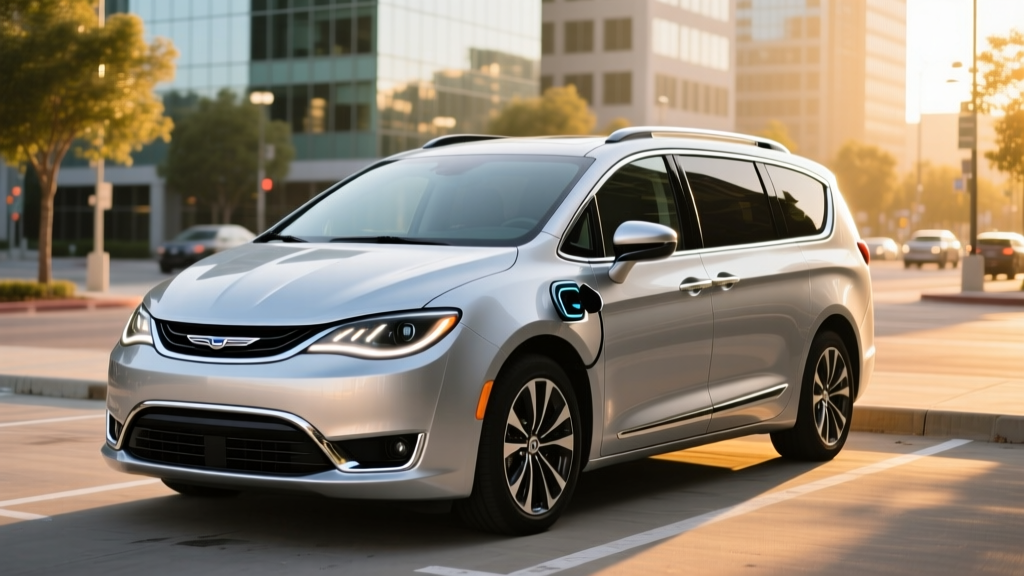
The 2026 Chrysler Pacifica Hybrid holds a unique position in the U.S. market: it remains the sole plug-in hybrid minivan available with all-wheel drive. For families who need three rows, passenger space, and the ability to run short errands on pure electricity, the Pacifica Hybrid AWD fills a gap that no full EV or conventional hybrid minivan currently addresses. With 32 miles of EPA-rated electric-only range, a combined 82 MPGe, and a 16.0 kWh battery, it's a practical bridge vehicle for households not yet ready to commit to a full battery-electric vehicle — but who still want to reduce fuel consumption on daily drives.
That said, buyers should understand exactly what they're getting. The Pacifica Hybrid is a plug-in hybrid (PHEV), not a conventional hybrid. It requires plugging in to access its electric range. And the AWD system comes with trade-offs in electric-only efficiency compared to the front-wheel-drive PHEV variant. Let's break down every number that matters.
HEV vs PHEV: What the Pacifica Hybrid Actually Is
Conventional Hybrid (HEV): A small battery (typically 1–2 kWh) is charged solely by the engine and regenerative braking. You never plug it in. Example: Toyota Sienna Hybrid. Electric-only driving is minimal or nonexistent.
Plug-In Hybrid (PHEV): A larger battery (16.0 kWh in the Pacifica Hybrid) can be charged from a wall outlet or charger. It provides meaningful electric-only range (32 miles EPA) before the gasoline engine engages. You can drive it without plugging in, but you lose the primary efficiency benefit.
The Chrysler Pacifica Hybrid is strictly a PHEV. Chrysler does not offer a conventional HEV version of the Pacifica. If you want a non-plug-in hybrid minivan, the Toyota Sienna is the direct competitor — but it lacks a plug-in option and does not offer AWD in hybrid form as of the 2026 model year.
Range, MPG, and Efficiency: The Full Breakdown
Efficiency in a PHEV is measured two ways: MPGe (miles-per-gallon-equivalent) when running on electricity plus gasoline, and standard MPG when the battery is depleted and the vehicle operates as a hybrid. Here is what the EPA rates for the 2026 Pacifica Hybrid AWD:
| Metric | EPA Rating | Real-World Expectation |
|---|---|---|
| Electric-Only Range | 32 miles | 26–30 mi (highway/cold weather) |
| Combined MPGe (electric + gas) | 82 MPGe | 70–80 MPGe (varies by driving mix) |
| Gas-Only MPG (city) | 29 MPG | 27–31 MPG |
| Gas-Only MPG (highway) | 30 MPG | 27–29 MPG |
| Gas-Only MPG (combined) | 30 MPG | 27–30 MPG |
| Total Range (electric + gas) | 520 miles | 460–500 mi |
Real-world range note: The 32-mile electric-only EPA figure assumes moderate temperatures and mixed driving. In cold weather (below 35°F), expect electric range to drop to approximately 22–26 miles due to cabin heating demands and battery chemistry limitations. Highway driving at 70+ mph will also reduce electric range to roughly 25–28 miles. The EPA's official fuel economy page for the Pacifica Hybrid confirms these baseline figures.
When the battery is depleted, the Pacifica Hybrid operates as a conventional hybrid using its 3.6L V6 engine and electric motors. The 30 MPG combined gas-only figure is respectable for a 5,000+ lb AWD minivan, though the FWD-only Pacifica Hybrid achieves slightly better numbers (around 30/31 combined) since it doesn't carry the weight and drivetrain losses of the rear axle.
Powertrain, Battery, and Charging Specifications
| Specification | 2026 Pacifica Hybrid AWD |
|---|---|
| Engine | 3.6L V6 Atkinson-cycle |
| Combined System Horsepower | 260 HP |
| Electric Motors | 2 motors (integrated in eCVT) |
| Battery Capacity (total / usable) | 16.0 kWh total / ~13.0 kWh usable |
| Battery Chemistry | Lithium-ion (NMC) |
| Transmission | eCVT (electrically variable) |
| Drivetrain | AWD (electric rear axle) |
| Level 1 Charging (120V) | ~14 hours (0–100%) |
| Level 2 Charging (240V) | ~2 hours (0–100%) |
| DC Fast Charging | Not supported |
| Charge Port | J1772 (Level 1/2 only) |
| 0–60 mph | ~7.5 seconds |
| Towing Capacity | Not rated (PHEV AWD) |
A few things worth highlighting from this spec sheet:
No DC fast charging. The Pacifica Hybrid uses a J1772 port and accepts only Level 1 (120V) and Level 2 (240V) AC charging. The onboard charger maxes out at approximately 6.6 kW. This means you cannot use DC fast chargers (CCS, NACS, CHAdeMO) to replenish the battery on road trips. For a 16 kWh battery, this is a manageable limitation — a Level 2 home charger fills it in roughly two hours, which is adequate for overnight or between-errand top-ups.
The AWD system is electrically driven. The rear axle is powered by a separate electric motor rather than a mechanical driveshaft from the engine. This means AWD engagement is seamless and only activates when needed, minimizing efficiency penalties. However, it does add weight and slightly reduces electric-only range compared to the FWD PHEV model.
Usable battery is smaller than total capacity. Of the 16.0 kWh total, roughly 13.0 kWh is usable. The rest is a buffer to protect long-term battery health by preventing full 0% and 100% states at the cell level.
Pricing, Trims, and Tax Credit Eligibility
The 2026 Chrysler Pacifica Hybrid AWD is offered across multiple trims, with pricing starting in the mid-$50,000 range:
- Pacifica Hybrid Select AWD: ~$53,990 MSRP
- Pacifica Hybrid Limited AWD: ~$57,490 MSRP
- Pacifica Hybrid Pinnacle AWD: ~$61,490 MSRP
(Destination charges add approximately $1,995.)
Federal Tax Credit Under §30D
Does the Pacifica Hybrid qualify for the federal EV tax credit? As of 2026, the Chrysler Pacifica Hybrid is eligible for a partial federal tax credit under IRS §30D — typically $3,750 — depending on whether the battery's critical minerals and components meet domestic sourcing thresholds. The full $7,500 credit requires meeting both the critical minerals and battery component requirements.
Key eligibility constraints:
- MSRP cap: Vans/minivans must be under $80,000 MSRP — the Pacifica Hybrid qualifies on all trims.
- Buyer income cap: Modified AGI must not exceed $150,000 (single), $225,000 (head of household), or $300,000 (joint).
- Point-of-sale transfer: The credit can be transferred to the dealer at purchase for an upfront price reduction, per current IRS qualified vehicle list.
- Battery sourcing rules: Critical mineral and component percentages phase up annually. Verify current-year compliance on the IRS list before purchasing.
Always confirm eligibility with your tax professional and the latest IRS guidance before relying on credit amounts.
No Federal Credit for the Gas Pacifica
The conventional gasoline Pacifica (non-hybrid) does not qualify for any federal EV or hybrid tax credit. State-level incentives vary — some states offer rebates for PHEVs regardless of federal eligibility. Check your state energy office or AFDC incentive database for local programs.
Battery Warranty, Reliability, and Replacement Cost
High-Voltage Battery Warranty: 10 years / 100,000 miles (whichever comes first), covering defects and capacity loss below a defined threshold (typically 70% state of health).
Powertrain Warranty: 5 years / 60,000 miles.
Bumper-to-Bumper: 3 years / 36,000 miles.
The Pacifica Hybrid's battery warranty is competitive and aligns with the industry standard for PHEVs (8–10 years). Chrysler's 10-year/100,000-mile hybrid battery warranty is among the better offerings, matching Hyundai/Kia's hybrid battery coverage.
Real-World Reliability
The Pacifica Hybrid's powertrain has been in production since the 2017 model year, giving it one of the longest track records of any PHEV minivan. Early model years (2017–2019) had some reported issues with the high-voltage battery recall (related to fire risk during charging) and eCVT behavior. Chrysler addressed these through recalls and software updates. For the 2026 model year, the powertrain is considered mature.
However, the Pacifica Hybrid has historically scored below average in some reliability surveys. NHTSA recall data should be reviewed for any open campaigns. The complexity of combining a V6, two electric motors, an eCVT, and an electric rear axle means more potential failure points than a simpler ICE or full-EV drivetrain.
Battery Replacement Cost
Out of warranty, a Pacifica Hybrid high-voltage battery replacement runs approximately $7,000–$9,500 including parts and labor, based on dealer estimates. This is a significant expense, but the 10-year/100,000-mile warranty should cover most original owners. For second owners, verifying remaining warranty coverage through Chrysler is essential before purchase.
Who Should Buy the Pacifica Hybrid AWD — And Who Shouldn't
Choose the Chrysler Pacifica Hybrid AWD if:
- You need three rows and minivan cargo space but want to reduce fuel use on short trips
- Your daily commute is under 30 miles round-trip (you'll run mostly on electricity)
- You live in a region with snow/rain where AWD is valuable
- You can install a Level 2 home charger (240V) to take full advantage of the PHEV system
- You take occasional long road trips and don't want to plan around EV charging infrastructure
Consider a full EV (like the Kia EV9) instead if:
- Your daily driving is predictable and under 250 miles
- You want zero tailpipe emissions and minimal powertrain maintenance
- You have reliable home and/or workplace charging
- You want access to the full $7,500 federal tax credit (on qualifying EVs)
Consider the Toyota Sienna Hybrid (HEV) instead if:
- You can't charge at home and don't want to plug in
- You want simpler powertrain reliability with a proven HEV system
- You prioritize fuel economy consistency over electric-only driving
- You don't need AWD (Sienna Hybrid is FWD or AWD, but AWD availability varies by trim/year)
Pros and Cons at a Glance
Pros
- Only PHEV minivan with available AWD
- 32 miles electric-only covers most daily errands
- 520-mile total range eliminates road-trip anxiety
- Stow 'n Go seating (second-row seats fold into floor on gas model; Hybrid retains third-row stow)
- 10-year/100,000-mile battery warranty
- Partial federal tax credit eligibility (~$3,750)
- Mature powertrain with 8+ years of production history
Cons
- No DC fast charging — road trips rely on gasoline
- AWD slightly reduces electric range vs FWD PHEV
- Level 1 charging takes ~14 hours (impractical without Level 2)
- Base price above $53K before options
- Below-average reliability ratings in some surveys
- Battery replacement cost is $7,000–$9,500 out of warranty
- Second-row Stow 'n Go not available (battery occupies under-floor space)
Frequently Asked Questions
How many MPG does the Chrysler Pacifica Hybrid AWD get?
The 2026 Pacifica Hybrid AWD is EPA-rated at 29 MPG city / 30 MPG highway / 30 MPG combined when operating on gasoline alone (battery depleted). When factoring in electric-only driving, the combined rating is 82 MPGe. Real-world gas-only MPG tends to fall between 27–31 depending on driving style, terrain, and temperature.
How far can the Pacifica Hybrid go on electric only?
The EPA rates the Pacifica Hybrid AWD at 32 miles of electric-only range. In real-world conditions — particularly cold weather or sustained highway speeds — expect 22–30 miles. For daily commutes under 30 miles round-trip with home charging, many owners report running almost entirely on electricity during the work week.
Does the Chrysler Pacifica Hybrid qualify for a tax credit?
Yes, but typically a partial credit. Under current IRS §30D rules, the Pacifica Hybrid generally qualifies for approximately $3,750 (meeting one of the two sourcing requirements but not both). Full $7,500 eligibility depends on the model year's battery sourcing compliance. The vehicle meets the MSRP cap ($80,000 for vans) and the credit can be transferred at point of sale. Always verify on the IRS qualified vehicles list and consult a tax professional.
Is the Pacifica Hybrid reliable, and what does battery replacement cost?
The powertrain is mature (in production since 2017), but the Pacifica Hybrid has received mixed reliability scores from consumer testing organizations. The high-voltage battery is covered by a 10-year/100,000-mile warranty. Out-of-warranty replacement costs approximately $7,000–$9,500. Regular maintenance (oil changes, fluid checks) still applies to the gasoline engine, though intervals may be extended if you drive primarily on electricity.
Can I charge the Pacifica Hybrid at a DC fast charger?
No. The Pacifica Hybrid only supports Level 1 (120V) and Level 2 (240V) AC charging via a J1772 connector. DC fast charging (CCS, NACS, CHAdeMO) is not available on this vehicle. Given the 16 kWh battery, a Level 2 home charger replenishes it in about 2 hours, which is practical for overnight or mid-day top-ups.
How does the Pacifica Hybrid AWD compare to the Toyota Sienna Hybrid?
The Sienna Hybrid is a conventional HEV (no plug, ~36 MPG combined) available with AWD. It doesn't offer electric-only driving but provides consistent fuel economy without charging. The Pacifica Hybrid AWD offers 32 miles of electric range and higher MPGe but requires plugging in to realize those benefits, has a higher starting price, and lacks DC fast charging. The Sienna wins on simplicity and lower cost; the Pacifica Hybrid wins on electric-only capability and total range flexibility.
Should I get a PHEV minivan or a full EV like the Kia EV9?
If you have home charging, a predictable daily routine under 250 miles, and access to DC fast charging for road trips, a full EV like the Kia EV9 (300+ mile range) offers lower running costs and zero tailpipe emissions. If you frequently drive beyond EV range, live in a charging-desert area, or need the flexibility of gasoline for long trips without planning, the Pacifica Hybrid PHEV is the safer choice. The PHEV eliminates range anxiety at the cost of maintaining two powertrains.
Sources: EPA Fuel Economy — Chrysler Pacifica Hybrid, IRS Qualified Clean Vehicles, NHTSA Vehicle Data.