The 2026 Tahoe Hybrid: What Chevy Actually Delivers
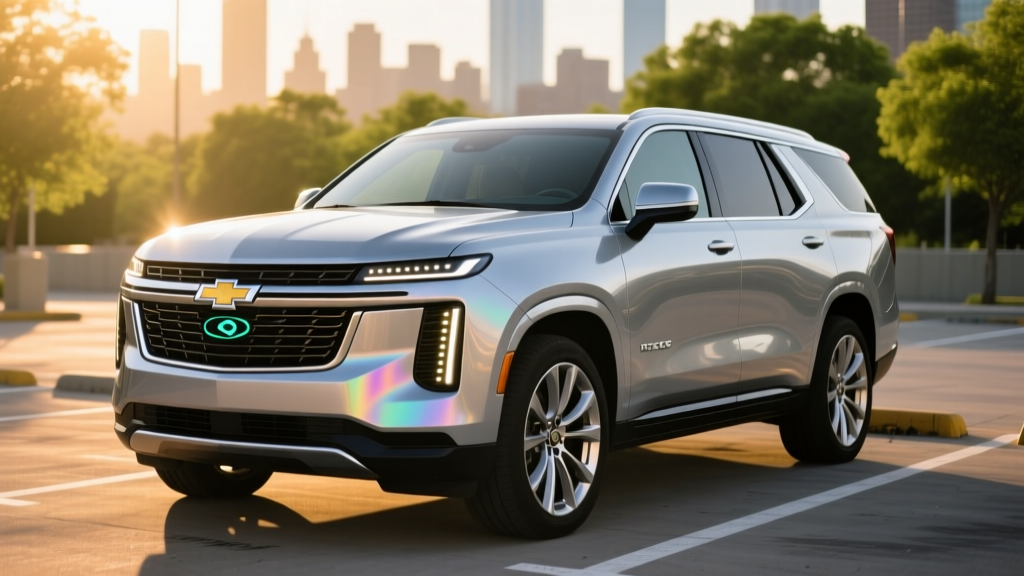
If you've been searching for a tahoe hybrid suv, the 2026 Chevrolet Tahoe is the full-size three-row SUV that now carries GM's latest hybridization strategy. But here's the critical detail many shoppers miss: the Tahoe does not use a conventional hybrid (HEV) system like a Toyota RAV4 Hybrid, nor is it a plug-in hybrid (PHEV). Instead, the 2026 Tahoe employs a mild-hybrid system paired with the 3.0L Duramax turbo-diesel inline-six — a setup GM calls the "Duramax with eBoost." This distinction matters enormously for your fuel-economy expectations, charging requirements, and tax-credit eligibility.
The mild-hybrid system uses a small 48-volt electric motor integrated into the powertrain to assist the diesel engine during acceleration, enable smoother stop-start operation, and recover energy during braking. It cannot propel the Tahoe on electric power alone, and it never needs to be plugged in. Think of it as a fuel-efficiency and refinement enhancement to an already capable diesel, not a bridge to full electrification.
| System Type | Electric-Only Driving? | Needs Plugging In? | Typical MPG Gain |
|---|---|---|---|
| Mild-Hybrid (Tahoe eBoost) | No | No | 1–3 MPG combined |
| Full Hybrid (HEV, e.g., Highlander Hybrid) | Brief, low-speed only | No | 5–12 MPG combined |
| Plug-in Hybrid (PHEV, e.g., RAV4 Prime) | Yes, 20–45 mi range | Yes (Level 1/2) | Electric commute + gas road trips |
EPA Fuel Economy: How Many MPG Does the Tahoe Hybrid Get?
The 2026 Chevrolet Tahoe with the 3.0L Duramax turbo-diesel and eBoost mild-hybrid system carries the following EPA fuel-economy estimates:
| Configuration | City | Highway | Combined |
|---|---|---|---|
| 2WD | 24 MPG | 28 MPG | 26 MPG |
| 4WD | 22 MPG | 26 MPG | 24 MPG |
For context, the gasoline 5.3L V8 Tahoe is rated at 16 city / 20 highway / 17 combined (4WD). The Duramax eBoost hybrid diesel delivers roughly a 40% improvement in combined fuel economy over the base V8 — a substantial gain in a 5,800-pound SUV.
Real-World MPG vs. EPA Sticker
Diesel powertrains, particularly in large SUVs, tend to perform close to or slightly above their EPA highway estimates in steady-state cruising. In real-world mixed driving, owners of the previous-generation Duramax Tahoe report averaging 23–27 MPG combined in 4WD models, with highway-only trips occasionally reaching 29–30 MPG at 70 mph. The mild-hybrid eBoost system's primary contribution is smoothing out stop-start traffic and providing torque fill at low RPMs, which helps city MPG more than highway figures.
Expect the 4WD model to deliver 22–25 MPG in everyday mixed driving and potentially 27–29 MPG on flat-highway road trips. Cold weather, heavy towing, and mountain grades will reduce these numbers — plan for 18–20 MPG when pulling a 6,000-lb trailer.
Powertrain Specs: Engine, Motor, and Combined Output
| Specification | Detail |
|---|---|
| Engine | 3.0L Duramax turbo-diesel I6 |
| Hybrid System | 48V eBoost mild-hybrid (belt-integrated starter-generator) |
| Combined Horsepower | 305 hp (275 hp engine + 30 hp eBoost assist) |
| Combined Torque | 510 lb-ft (495 lb-ft engine + eBoost torque fill) |
| Transmission | 10-speed automatic |
| 0–60 mph (est.) | ~7.2 seconds (4WD) |
| Max Towing Capacity | 8,200 lbs (4WD, properly equipped) |
| Fuel Tank | 24.0 gallons (diesel) |
| Total Driving Range (est.) | ~576 miles (4WD at 24 MPG combined) |
The 48-volt eBoost system doesn't add a standalone electric driving mode. Instead, it provides up to 30 hp and roughly 15 lb-ft of torque assist during hard acceleration, enables virtually seamless engine stop-start at traffic lights, and captures regenerative energy during deceleration to recharge the small 48V lithium-ion battery pack (approximately 0.5 kWh, not plug-accessible).
Pricing, Trims, and Tax-Credit Eligibility
The Duramax eBoost diesel-hybrid is available across multiple Tahoe trims for 2026. Here's the current MSRP structure:
| Trim | MSRP (4WD) | Duramax Availability |
|---|---|---|
| LT | $64,395 | Optional (+$3,295) |
| RST | $67,395 | Optional (+$3,295) |
| Z71 | $69,595 | Optional (+$3,295) |
| Premier | $73,495 | Standard |
| High Country | $79,195 | Standard |
Does the Tahoe Hybrid Qualify for a Federal Tax Credit?
No. The 2026 Tahoe's mild-hybrid system does not qualify for the federal §30D Clean Vehicle Credit. That credit requires a plug-in electric vehicle (PHEV or BEV) with a minimum battery capacity of 7 kWh and the ability to charge from an external power source. Mild-hybrids and conventional (non-plug) hybrids are ineligible.
Some states may offer minor incentives for hybrid or diesel-efficient vehicles, but these vary widely by jurisdiction and change frequently. Check your state's energy office or DMV for current programs. There is no federal incentive for this powertrain.
Battery Warranty, Reliability, and Replacement Costs
The 2026 Tahoe's 48V eBoost mild-hybrid battery and associated hybrid components are covered under GM's Hybrid/Electric Component Warranty: 8 years / 100,000 miles (whichever comes first). The 3.0L Duramax diesel engine carries a 5-year / 60,000-mile powertrain warranty, and the overall vehicle limited warranty is 3 years / 36,000 miles.
The 48V mild-hybrid system in the Tahoe is far simpler than a full-hybrid or PHEV battery pack. The battery is small (~0.5 kWh), operates at lower voltage than a traction battery, and doesn't undergo the deep charge-depletion cycles that stress larger packs. GM's eBoost architecture has been in production since the 2022 model year across the Silverado, Suburban, and Tahoe, and there have been no widespread battery-failure reports as of early 2026.
Battery Replacement Cost
If the 48V battery does require replacement outside of warranty, expect a cost in the range of $1,500–$3,000 including parts and labor — dramatically less than the $8,000–$20,000 replacement costs associated with full-hybrid or BEV traction batteries. The belt-integrated starter-generator unit, if it fails, runs approximately $1,200–$2,000 to replace.
For reliability ratings, the 2026 Tahoe's overall predicted reliability scores from major evaluators remain moderate (around 3/5), largely driven by GM's historical in-vehicle electronics and build-quality scores rather than powertrain issues specific to the hybrid system.
Tahoe Hybrid vs. Competitors: What Else Should You Consider?
Pros
- Best-in-class fuel economy for a body-on-frame 3-row SUV (24 MPG combined 4WD)
- 510 lb-ft of torque — excellent for towing (8,200 lbs max)
- No plug-in charging required — fuel and go
- ~576 miles of total range per tank
- Smooth stop-start and low-RPM torque fill from eBoost
- Available across most trims including off-road Z71
Cons
- Not a full hybrid — no electric-only driving mode
- No federal tax credit eligibility
- Diesel exhaust fluid (DEF) refills required periodically
- $3,295 premium over the gas V8 on lower trims
- Moderate predicted reliability scores (electronics, not powertrain)
- Still far less efficient than unibody hybrid SUVs (Highlander Hybrid: 35 MPG)
How It Compares
| Vehicle | Type | Combined MPG | Towing | Starting MSRP |
|---|---|---|---|---|
| 2026 Tahoe Duramax eBoost (4WD) | Mild-Hybrid Diesel | 24 MPG | 8,200 lbs | $64,395 |
| Toyota Grand Highlander Hybrid (AWD) | Full Hybrid (HEV) | 35 MPG | 5,000 lbs | $48,120 |
| Ford Expedition (3.5L EcoBoost) | Gas Turbo V6 | 19 MPG | 9,300 lbs | $61,890 |
| Jeep Wagoneer L (Hurricane I6) | Gas Turbo I6 | 19 MPG | 10,000 lbs | $65,045 |
The Tahoe Duramax eBoost occupies a unique niche: it's the only body-on-frame, truck-based SUV offering hybrid-assisted diesel efficiency. If you need genuine truck-frame durability, serious towing, and better fuel economy than any gas V8 competitor, it has no direct rival. If you prioritize maximum MPG and don't need 8,000+ lbs of towing, the unibody Toyota Grand Highlander Hybrid delivers 35 combined MPG at a significantly lower price.
Who Should Choose the Tahoe Hybrid — And Who Shouldn't?
Decision Framework
Choose the Tahoe Duramax eBoost if:
- You need a body-on-frame SUV with 8,000+ lb towing for boats, horse trailers, or campers
- You drive 20,000+ miles per year and want to minimize fuel stops (576-mile range)
- You frequently drive highway miles where diesel efficiency shines
- You want three full rows of seating plus substantial cargo space
- You don't have access to home charging and aren't ready for a PHEV or BEV
Look elsewhere if:
- You want electric-only commuting — consider a PHEV like the Chrysler Pacifica Hybrid (32 mi electric range)
- Maximum fuel economy is your priority — the Grand Highlander Hybrid (35 MPG) wins decisively
- You want federal tax-credit savings — only PHEVs and BEVs qualify under current IRS §30D rules
- You primarily drive in dense urban traffic where a full hybrid's regenerative braking delivers bigger gains
2026 Tahoe Hybrid FAQ
Does the Tahoe hybrid need to be plugged in?
No. The 2026 Tahoe's eBoost system is a mild-hybrid that charges its small 48V battery through regenerative braking and the engine. You never plug it in — you only refuel with diesel.
Can the Tahoe drive on electric power only?
No. The mild-hybrid system provides torque assist and smooths stop-start operation, but it cannot propel the vehicle without the diesel engine running. There is no EV mode.
How far can the Tahoe hybrid go on a full tank?
With a 24-gallon fuel tank and 24 MPG combined (4WD), expect approximately 576 miles of total range. Highway-heavy driving can extend this to 650+ miles.
Is the Tahoe hybrid reliable?
The 3.0L Duramax engine and 48V eBoost system have been in production since 2022 with no widespread hybrid-specific failures. GM covers hybrid components for 8 years / 100,000 miles. Overall vehicle reliability ratings are moderate, driven mainly by electronics concerns rather than the powertrain.
What does the hybrid battery replacement cost?
The 48V mild-hybrid battery replacement runs approximately $1,500–$3,000 out of warranty — far less than full-hybrid or BEV battery replacements. It is covered for 8 years / 100,000 miles.
Does the Tahoe hybrid qualify for any tax credit?
No federal tax credit is available. The §30D Clean Vehicle Credit requires plug-in capability (PHEV or BEV) with a minimum 7 kWh battery. Mild-hybrids and conventional hybrids do not qualify. Check your state for any local hybrid incentives.
How does the Tahoe hybrid compare to a full EV like the Rivian R1S?
They serve very different buyers. The Rivian R1S (EPA range up to 410 miles, $82,700 starting) offers zero tailpipe emissions, instant torque, and home charging — but costs more, has lower towing capacity (7,700 lbs), and requires charging infrastructure. The Tahoe Duramax is better for buyers who tow heavy loads frequently, lack reliable charging access, or want the lower upfront cost and established dealer service network.