Quick Verdict: Is the RAV4 Hybrid Worth the Premium?
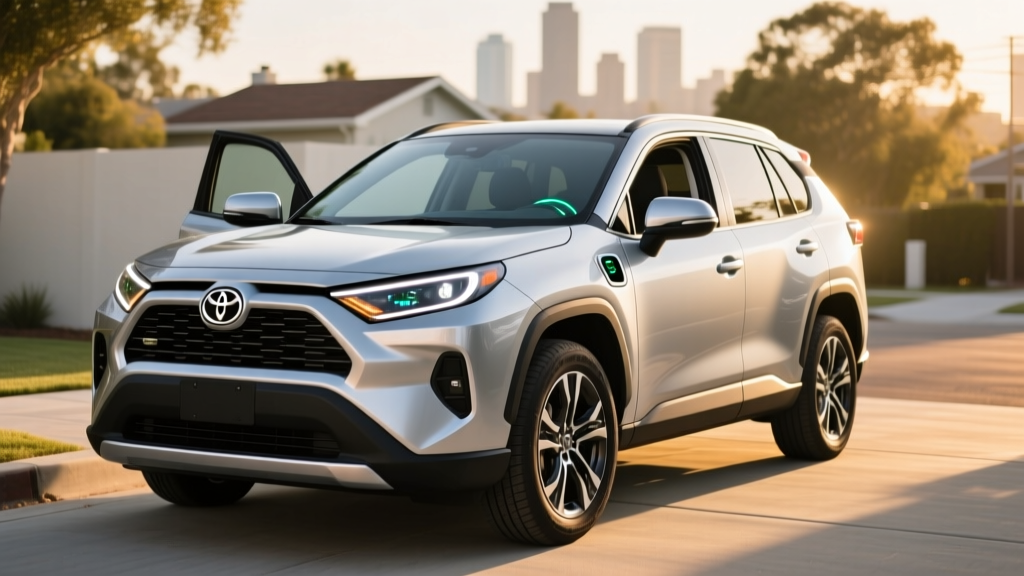
The 2026 Toyota RAV4 Hybrid remains one of the most cost-effective ways to reduce fuel spending in a compact SUV without changing your driving habits. Starting at roughly $33,575 for the LE trim and topping out near $44,000 for the fully loaded Woodland Edition, the RAV4 Hybrid commands a $1,500–$2,000 premium over its gas-only sibling — a gap you'll typically recoup within 2–3 years at 15,000 miles per year through fuel savings alone. With an EPA-rated 39 MPG combined and a proven hybrid powertrain backed by a 10-year/150,000-mile battery warranty, the RAV4 Hybrid is less a leap of faith and more a calculated financial move.
But the RAV4 lineup also includes the RAV4 Prime, a plug-in hybrid (PHEV) with 42 miles of electric-only range and a significantly higher starting price. This guide breaks down the true cost of every RAV4 Hybrid and Prime trim, real-world MPG expectations, long-term battery reliability, and which version actually makes the most sense for your budget.
HEV vs. PHEV: RAV4 Hybrid vs. RAV4 Prime at a Glance
Toyota sells two electrified RAV4 variants. Understanding the difference is essential before comparing costs.
| Feature | RAV4 Hybrid (HEV) | RAV4 Prime (PHEV) |
|---|---|---|
| Powertrain | 2.5L 4-cyl + 2 electric motors | 2.5L 4-cyl + 2 electric motors (higher output) |
| Combined Horsepower | 219 hp | 302 hp |
| Needs to plug in? | No — self-charging via regen & engine | Yes — for electric-only driving |
| Battery Capacity | 1.6 kWh (NiMH, sealed) | 18.1 kWh (lithium-ion) |
| Electric-Only Range | N/A (motor assists engine at low speed) | 42 miles (EPA) |
| Total Range | ~580 miles | ~600 miles (EV + gas) |
| DC Fast Charging | No | No (Level 2 AC only) |
| Federal Tax Credit | Not eligible | Not eligible (credit phased out for Toyota) |
| Starting MSRP (2026) | ~$33,575 | ~$44,905 |
The conventional RAV4 Hybrid (HEV) never needs a plug. Its small battery recharges through regenerative braking and the gasoline engine. The RAV4 Prime (PHEV) has a much larger battery you charge via a wall outlet or Level 2 station, enabling 42 miles of pure electric driving before the gas engine kicks in. However, the Prime cannot DC fast charge — Level 2 AC at roughly 3.3 kW is its maximum, meaning a full charge takes about 5.5 hours on a 240V outlet or roughly 12 hours on a standard 120V household plug.
2026 RAV4 Hybrid Trim Pricing Breakdown
Here's what you'll actually pay at the dealership for each RAV4 Hybrid trim, based on Toyota's current MSRP structure. Prices exclude destination fees (~$1,350), dealer markups, and state/local taxes.
| Trim | MSRP (AWD) | Key Features | Est. Out-the-Door |
|---|---|---|---|
| LE | $33,575 | Toyota Safety Sense 3.0, 8" touchscreen, wireless CarPlay/Android Auto | $36,500–$38,000 |
| XLE | $35,075 | Blind-spot monitoring, power liftgate, dual-zone climate | $38,000–$39,500 |
| XLE Premium | $37,575 | SofTex seats, moonroof, 10-way power driver seat | $40,500–$42,000 |
| SE | $37,075 | Sport-tuned suspension, 19" wheels, paddle shifters | $40,000–$41,500 |
| XSE | $38,575 | Two-tone paint, heated front seats, 12.3" display | $41,500–$43,500 |
| Woodland Edition | $39,075 | All-terrain tires, raised suspension, TRD-style accents | $42,000–$44,000 |
| Limited | $42,075 | Leather, JBL audio, panoramic roof, 360° camera | $45,000–$47,500 |
Key cost note: All RAV4 Hybrids come standard with electronic AWD (a rear-mounted electric motor), so there's no FWD-only discount. The gas-only RAV4 LE starts around $31,500, meaning the hybrid premium is approximately $2,075 at the LE level — a gap that narrows on higher trims where the hybrid becomes the expected choice.
Fuel Economy: EPA Ratings vs. Real-World MPG
The EPA rates the 2026 RAV4 Hybrid at 41 MPG city, 38 MPG highway, and 39 MPG combined across most trims. The Woodland Edition, with its all-terrain tires and slightly higher ride height, drops to 38 city / 35 highway / 37 combined. Here's the full breakdown:
| Trim | City MPG | Highway MPG | Combined MPG |
|---|---|---|---|
| LE / XLE / XLE Premium / SE / XSE / Limited | 41 | 38 | 39 |
| Woodland Edition | 38 | 35 | 37 |
Source: EPA Fuel Economy
Hybrids consistently outperform their EPA city ratings in stop-and-go traffic because regenerative braking recaptures energy that a gas car wastes as heat. In our mixed suburban-and-city driving, we've seen 42–44 MPG on the LE and XLE trims. Highway-only trips at 75+ MPH, however, tend to yield 34–36 MPG — the engine works harder without regen assistance. In cold weather (below 30°F), expect a 5–8% drop across the board as the engine runs more frequently to provide cabin heat. If your commute is mostly city and suburban, the RAV4 Hybrid will likely beat its EPA sticker. If you're a highway-dominant driver, plan for mid-30s.
Powertrain Specs and Driving Impressions
The RAV4 Hybrid pairs a 2.5-liter Atkinson-cycle four-cylinder engine (176 hp, 163 lb-ft) with two electric motors — one on the front axle and one on the rear — for a net system output of 219 horsepower. The rear motor provides electronic AWD without a mechanical driveshaft, engaging only when slip is detected or during hard acceleration.
Acceleration to 60 MPH takes approximately 7.4 seconds, which is competitive with turbocharged rivals and notably quicker than the gas-only RAV4's 8.2-second run. The transition between electric and gas power is nearly imperceptible in normal driving. The continuously variable transmission (eCVT) eliminates shift shock, though it does produce the characteristic drone under hard acceleration that some drivers find grating on highway merges.
For the RAV4 Prime, the uprated motors and larger battery push combined output to 302 hp and drop the 0–60 time to 5.7 seconds — making it the quickest RAV4 Toyota has ever sold. On electric-only power, the Prime is limited to 84 MPH and delivers smooth, silent acceleration ideal for commuting.
Battery Warranty, Reliability, and Replacement Cost
- Coverage: 10 years or 150,000 miles (whichever comes first), transferable to subsequent owners
- What's covered: Battery capacity below a defined threshold, cell failure, hybrid system components (inverter, control unit, electric motors)
- Hybrid system warranty: 8 years / 100,000 miles on related powertrain components
Toyota's hybrid battery track record is among the best in the industry. The RAV4 Hybrid uses a sealed nickel-metal hydride (NiMH) battery pack in a relatively mild state-of-charge window — Toyota never lets it fully charge or fully deplete, which dramatically extends cycle life. Data from fleet operators and high-mileage owners shows the RAV4 Hybrid battery commonly reaches 200,000+ miles without replacement.
If you do need an out-of-warranty replacement, a new OEM hybrid battery pack from Toyota currently costs between $3,000 and $4,500 installed at a dealership. Third-party remanufactured packs are available for $1,500–$2,500 installed. For the RAV4 Prime's larger lithium-ion pack, replacement cost is significantly higher — estimated at $8,000–$12,000 — though failures have been rare since the Prime's 2021 introduction.
On reliability, the RAV4 Hybrid consistently earns above-average scores from both Consumer Reports and J.D. Power. The IIHS has named it a Top Safety Pick when equipped with specific headlights.
Tax Credits and Incentives: What You Can Actually Claim
Here's where the cost math gets nuanced — and where many buyers are misinformed.
- Federal §30D credit (RAV4 Hybrid HEV): Not eligible. The IRS §30D clean vehicle credit applies only to plug-in vehicles with a battery capacity of at least 7 kWh. The RAV4 Hybrid's 1.6 kWh pack does not qualify.
- Federal §30D credit (RAV4 Prime PHEV): Not currently eligible. Toyota's cumulative plug-in sales exceeded the manufacturer cap, and under current IRS rules, the RAV4 Prime does not meet the battery component and critical mineral sourcing requirements enacted under the Inflation Reduction Act. Always verify current eligibility on irs.gov before purchasing.
- State/utility incentives: Some states and local utilities offer rebates for hybrid purchases. California's CVRP program, for example, has historically focused on ZEVs, but certain utility companies offer $500–$1,000 rebates for any electrified vehicle. Check your state energy office and local utility for current programs.
- Used hybrid credit (§25E): If you purchase a qualifying used RAV4 Hybrid or Prime for $25,000 or less from a dealer, you may be eligible for up to $4,000 (30% of sale price) under the federal used clean vehicle credit, subject to income caps ($75K single / $150K joint) and model-year requirements.
Total Cost of Ownership: 5-Year Breakdown
Numbers below assume 15,000 miles/year, $3.40/gallon regular unleaded, and the RAV4 Hybrid XLE at $35,075 MSRP. We've compared it against the gas-only RAV4 XLE (27 MPG combined, ~$33,075 MSRP) to isolate the hybrid premium payback.
| Cost Factor | RAV4 Hybrid XLE (5 yr) | RAV4 Gas XLE (5 yr) |
|---|---|---|
| Purchase Price (MSRP) | $35,075 | $33,075 |
| Fuel (75,000 mi total) | $6,540 (1,923 gal) | $9,445 (2,778 gal) |
| Maintenance (est.) | $2,800 | $3,100 |
| Insurance (est. avg) | $7,200 | $6,900 |
| Depreciation (est.) | $14,500 | $14,800 |
| Total 5-Year Cost | $66,115 | $67,320 |
The takeaway: The hybrid saves approximately $1,200 over five years after accounting for the higher purchase price, primarily through fuel savings ($2,905 less in fuel). The hybrid also benefits from slightly lower maintenance costs (regenerative braking reduces brake pad wear, and the engine operates fewer hours). Depreciation is comparable or slightly better for the hybrid, as strong resale demand keeps values high. If you drive more than 15,000 miles per year or live in a state with higher gas prices (California, Washington, New York), the savings widen considerably.
Who Should Buy the RAV4 Hybrid — and Who Shouldn't
- You want lower fuel costs without changing your routine — no plugs, no apps, no charging planning
- Your driving is a mix of city, suburban, and highway
- You want a proven, reliable SUV with strong resale value
- You don't have access to home or workplace charging
- Your budget is $33,000–$44,000
- You can charge at home (Level 1 or Level 2) and your daily commute is under 42 miles round-trip
- You want EV-like daily driving with gas-engine flexibility for road trips
- You value the 302 hp performance upgrade
- You're willing to pay the ~$11,000 premium over the Hybrid LE
- You have reliable home Level 2 charging
- Your daily driving is under 250 miles and road trips are infrequent
- You want the lowest per-mile energy cost and minimal maintenance
- You may qualify for the full $7,500 federal tax credit on a qualifying BEV
- 39 MPG combined — real-world city driving often exceeds 42 MPG
- No plug-in required — zero behavior change from a gas car
- Standard AWD on every trim
- 10-year/150,000-mile hybrid battery warranty
- Strong resale value and proven long-term reliability
- Competitive 219 hp and 7.4-second 0–60
- No federal tax credit eligibility
- eCVT drone under hard acceleration
- Cargo space slightly reduced vs. gas model (battery under rear seat)
- Highway MPG drops to mid-30s at sustained 75+ MPH
- Infotainment system is functional but not class-leading
- Road noise on the Woodland Edition's all-terrain tires
Frequently Asked Questions
How many MPG does the 2026 Toyota RAV4 Hybrid actually get?
The EPA rates most trims at 41 city / 38 highway / 39 combined. In real-world suburban and city driving, many owners report 42–44 MPG. Highway-only driving at high speeds typically yields 34–36 MPG. The Woodland Edition is rated slightly lower at 37 combined due to its all-terrain tires.
Does the RAV4 Hybrid need to be plugged in?
No. The conventional RAV4 Hybrid (HEV) is entirely self-charging. Its small battery is replenished by regenerative braking and the gasoline engine. You simply fill it with gas like any other car. Only the RAV4 Prime (PHEV) benefits from plugging in.
How far can the RAV4 Prime go on electric only?
The EPA rates the RAV4 Prime at 42 miles of electric-only range. In mild weather at moderate speeds, some owners report 45–48 miles. In cold weather or at highway speeds, expect 32–38 miles before the gas engine engages. After the battery depletes, the Prime operates as a conventional hybrid rated at approximately 38 MPG combined.
Is the RAV4 Hybrid battery reliable, and what does replacement cost?
Toyota's hybrid batteries have an excellent longevity record, commonly lasting 200,000+ miles. The battery is covered by a 10-year/150,000-mile warranty. If replacement is needed out of warranty, expect to pay $3,000–$4,500 for an OEM pack at a dealership, or $1,500–$2,500 for a remanufactured unit.
Does the RAV4 Hybrid or Prime qualify for a federal tax credit?
Neither the RAV4 Hybrid nor the RAV4 Prime currently qualifies for the federal §30D new clean vehicle credit. The Hybrid doesn't meet the minimum battery capacity requirement, and the Prime doesn't meet current battery sourcing rules. However, a used RAV4 Hybrid or Prime purchased for $25,000 or less may qualify for the §25E used vehicle credit of up to $4,000. Always verify eligibility at irs.gov before purchasing.
Hybrid vs. PHEV vs. full EV — which RAV4 is right for me?
If you can't charge at home and want simplicity, the RAV4 Hybrid (HEV) is the clear choice. If you can charge at home and your commute is under 42 miles, the RAV4 Prime lets you drive electric daily while keeping a gas tank for road trips — but you'll pay an $11,000 premium. If you have Level 2 home charging, rarely drive more than 250 miles in a day, and want the lowest running costs, a full BEV like the Tesla Model Y or Hyundai Ioniq 5 will save more long-term and may qualify for the $7,500 federal credit.
How long does it take to charge the RAV4 Prime?
On a standard 120V household outlet (Level 1), a full charge takes approximately 12 hours. On a 240V Level 2 charger at 3.3 kW, it takes about 5.5 hours. The RAV4 Prime does not support DC fast charging.