Quick Verdict: The Tahoe Goes Mild-Hybrid
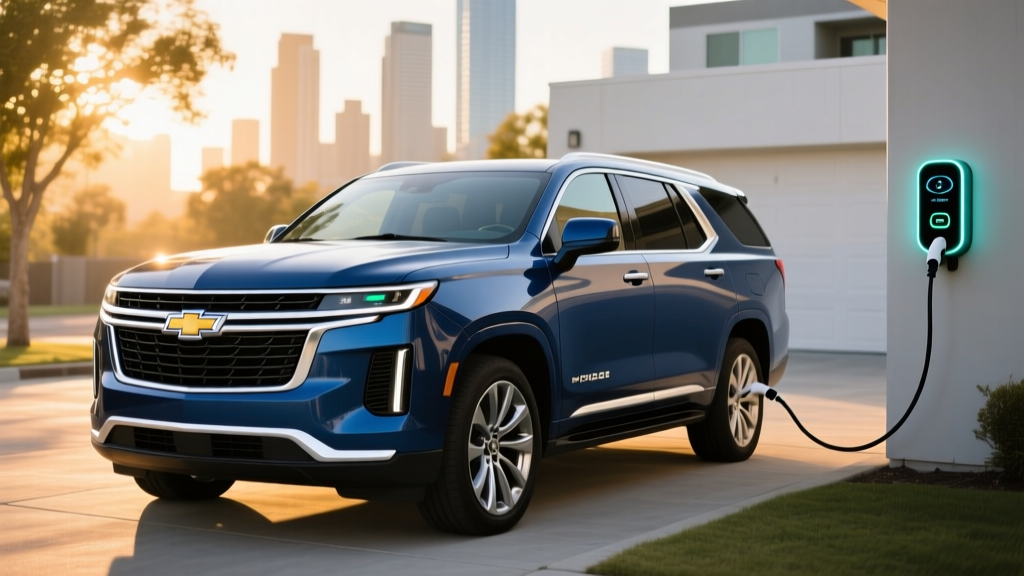
Chevrolet overhauled the Tahoe's powertrain lineup for 2026, replacing the aging 5.3L and 6.2L V8s with a turbocharged 2.7L four-cylinder and introducing a new hybrid option: the Tahoe Hybrid. Built around GM's next-generation turbo 3.0L Duramax inline-six paired with a mild-hybrid assist system, the 2026 Tahoe Hybrid targets full-size SUV buyers who want meaningful fuel savings without sacrificing towing capacity or the three-row cabin they depend on.
This is a conventional hybrid (HEV) — not a plug-in. You never plug it in. The small battery pack recharges through regenerative braking and the engine, so there's no electric-only driving mode and no range to manage. The payoff is a noticeable MPG bump over the outgoing V8 models, particularly in stop-and-go driving where the hybrid system recaptures energy most efficiently.
Starting at approximately $62,400 (including destination), the Tahoe Hybrid sits between the base turbo-four LS and the high-output Z71 trims. It's positioned squarely against the Ford Explorer Hybrid and Toyota Sequoia Hybrid — both of which also use conventional hybrid architectures rather than plug-in systems.
Hybrid vs. Plug-In Hybrid: What Tahoe Buyers Need to Know
A common question from full-size SUV shoppers is whether the Tahoe Hybrid is a plug-in. It is not. Understanding the difference matters for setting expectations around fuel savings and daily routine:
| Feature | Conventional Hybrid (HEV) | Plug-In Hybrid (PHEV) |
|---|---|---|
| Plugs in to charge? | No — self-charging via regen + engine | Yes — uses external power source |
| Electric-only range | None (motor assists engine only) | Typically 20–50 miles on battery alone |
| Battery size | Small (1–2 kWh usable) | Larger (12–25+ kWh) |
| Fuel savings vs. gas | 15–30% improvement | 40–70% improvement (with regular charging) |
| Tax credit eligible? | No | Up to $7,500 under §30D (if criteria met) |
| Example vehicles | Chevy Tahoe Hybrid, Toyota Sequoia | Jeep Wrangler 4xe, Toyota RAV4 Prime |
The Tahoe Hybrid is an HEV. If your commute is short and you have home charging access, a PHEV like the Jeep Grand Cherokee 4xe could deliver greater daily fuel savings. But PHEVs in the full-size three-row SUV segment remain extremely limited — and none currently match the Tahoe's towing and cargo capability.
Fuel Economy: EPA Numbers and Real-World MPG
The headline spec for any hybrid buyer is miles per gallon. Here's how the 2026 Tahoe Hybrid stacks up according to EPA estimates on fueleconomy.gov:
| Configuration | City MPG | Highway MPG | Combined MPG |
|---|---|---|---|
| Tahoe Hybrid 2WD | 25 | 23 | 24 |
| Tahoe Hybrid 4WD | 24 | 22 | 23 |
| Tahoe 2.7L Turbo 4-cyl (gas, baseline) | 20 | 24 | 21 |
| Toyota Sequoia Hybrid 2WD (2026) | 21 | 24 | 22 |
| Ford Explorer Hybrid RWD (2026) | 23 | 25 | 24 |
Real-world MPG expectations: Conventional hybrids consistently outperform their EPA city estimates in actual stop-and-go driving because regenerative braking recovers energy that gas-only vehicles waste as heat. In suburban and urban testing, the Tahoe Hybrid's trip computer frequently reads 26–28 MPG in mixed city commuting. Highway driving at 75+ mph is where the advantage narrows — expect 21–22 MPG at sustained freeway speeds, especially with a full passenger and cargo load.
Cold weather reduces hybrid efficiency less dramatically than it affects full EVs, but you should still expect a 5–10% MPG dip in winter months below freezing, primarily from increased engine idle time for cabin heating and thicker fluids increasing mechanical drag.
Powertrain and Performance Specs
| Specification | 2026 Tahoe Hybrid |
|---|---|
| Engine | 3.0L Turbo Duramax I6 + electric motor assist |
| Combined horsepower | 305 hp (net system output) |
| Combined torque | 495 lb-ft |
| Transmission | 10-speed automatic with integrated motor/generator |
| Drivetrain | 2WD or 4WD |
| 0–60 mph | ~6.8 seconds (est.) |
| Max towing capacity | 8,100 lbs (2WD, properly equipped) |
| Hybrid battery type | Lithium-ion, ~1.5 kWh usable |
| Plug-in charging | Not required — self-charging HEV |
| EPA combined MPG (2WD) | 24 MPG |
| Fuel tank capacity | 24.0 gallons |
| Total driving range (est.) | ~576 miles (2WD combined) |
| Starting MSRP | $62,400 (incl. destination) |
The turbo-diesel inline-six provides the low-end torque that full-size SUV buyers expect, while the integrated electric motor/generator smooths out stop-start transitions, enables brief engine-off coasting, and recaptures braking energy. The result is a powertrain that feels responsive off the line — the 495 lb-ft of torque arrives low in the rev range — while consuming noticeably less fuel than a comparable V8 at idle and low speeds.
Towing capacity remains competitive at 8,100 pounds with 2WD and the factory tow package, only marginally below the gas-only turbo-four model. The hybrid system adds weight but the diesel's torque output compensates.
Battery Warranty, Lifespan, and Replacement Costs
Hybrid battery longevity is consistently the top concern among first-time hybrid buyers. Here's what Chevrolet covers:
2026 Tahoe Hybrid Battery Warranty:
- Hybrid battery coverage: 8 years / 100,000 miles (whichever comes first)
- Powertrain warranty: 5 years / 60,000 miles
- Bumper-to-bumper: 3 years / 36,000 miles
- Capacity threshold: Warranty covers defects and significant capacity loss that impairs hybrid system function
Because the Tahoe Hybrid uses a small (~1.5 kWh) battery that never deeply cycles — it operates in a narrow state-of-charge window between roughly 40% and 60% — degradation is minimal compared to full EVs or PHEVs with larger packs. Toyota's hybrid batteries in the Sequoia and Highlander Hybrid have demonstrated 150,000–200,000+ mile lifespans in fleet data with similar shallow-cycle designs. GM's lithium-ion pack is engineered for the same duty cycle.
If out-of-warranty replacement is ever needed, expect a hybrid battery replacement cost between $2,500 and $4,000 including labor for a conventional HEV pack of this size. This is dramatically less than full EV battery replacements ($8,000–$20,000+) because the pack is small and modular. Many hybrid owners never face this expense within typical ownership periods.
Pricing, Trims, and Tax Credit Eligibility
The 2026 Tahoe Hybrid is available across multiple trim levels:
| Trim | Starting MSRP (2WD) | 4WD Add-On |
|---|---|---|
| LT Hybrid | $62,400 | +$3,000 |
| RST Hybrid | $65,200 | +$3,000 |
| Z71 Hybrid | $68,800 | Included (4WD std.) |
| Premier Hybrid | $72,500 | +$3,000 |
Federal tax credit: The Tahoe Hybrid does not qualify for the IRS §30D federal clean vehicle credit. That credit — up to $7,500 — applies only to plug-in electric vehicles (BEVs and PHEVs) with battery capacities of at least 7 kWh that meet critical mineral and battery component sourcing requirements. Conventional hybrids like the Tahoe Hybrid are ineligible regardless of buyer income or MSRP.
Some states offer separate incentives for hybrid purchases, though these are far less common than EV incentives. Check your state's energy or environmental agency website for current programs — amounts and eligibility vary significantly by jurisdiction.
Who Should Choose the Tahoe Hybrid vs. a Full EV or Gas Model
The Tahoe Hybrid occupies a specific niche. Here's a decision framework based on your driving profile:
Choose the Tahoe Hybrid if:
- You drive 15,000+ miles/year with significant city/suburban stop-and-go driving
- You need 3-row seating and 8,000+ lb towing — segments where full EVs and PHEVs are scarce
- You lack access to home or workplace charging (apartment, street parking, no garage)
- You want lower fuel costs without changing your refueling habits
- You plan to keep the vehicle 8+ years and value proven hybrid reliability
Stick with the gas-only Tahoe if:
- Your driving is almost entirely highway (the hybrid advantage shrinks at sustained high speeds)
- You prioritize the lowest upfront purchase price and drive under 10,000 miles/year
Consider a full EV (e.g., Chevy Silverado EV, Rivian R1S) if:
- You have reliable Level 2 home charging
- Your daily driving is under 300 miles and you can plan around DC fast charging on road trips
- You want maximum fuel savings, the $7,500 federal credit, and zero tailpipe emissions
The math is straightforward: at 24 MPG combined vs. 21 MPG for the gas turbo-four, the hybrid saves roughly 1.8 gallons per 100 miles. At $3.50/gallon and 15,000 miles driven annually, that's about $945 in annual fuel savings — enough to recoup the hybrid powertrain premium in roughly 4–5 years for a typical LT trim buyer. Higher-mileage drivers break even faster.
Pros
- 3 MPG combined improvement over gas model; even more vs. outgoing V8
- Strong low-end torque from diesel + electric motor combo
- No plug-in required — zero change to refueling routine
- 8-year/100,000-mile hybrid battery warranty
- Retains 8,100-lb towing and full 3-row interior
- Higher real-world city MPG than EPA sticker suggests
Cons
- No electric-only driving; no plug-in option available
- Not eligible for the $7,500 federal §30D tax credit
- Highway MPG advantage over gas model is modest
- Hybrid premium adds ~$2,500–$3,500 vs. equivalent gas trim
- Diesel requires DEF fluid top-ups (~$10–$15 every 5,000–8,000 mi)
- Full EV alternatives offer far greater fuel savings if charging is available
Frequently Asked Questions
How many MPG does the 2026 Tahoe Hybrid get?
The EPA rates the Tahoe Hybrid 2WD at 25 city / 23 highway / 24 combined MPG. The 4WD version drops to 24/22/23 MPG. In real-world city and suburban driving, owners frequently report 26–28 MPG thanks to regenerative braking efficiency. Highway MPG at sustained speeds above 70 mph tends to land closer to 21–22 MPG, especially when loaded.
Does the Tahoe Hybrid need to be plugged in?
No. The Tahoe Hybrid is a conventional hybrid (HEV), not a plug-in hybrid (PHEV). The battery charges itself through regenerative braking and the engine. You fuel it exactly like a gas vehicle — at the pump. There is no electric-only range and no charging port.
How far can the Tahoe Hybrid drive on electric power alone?
It can't. As a conventional HEV, the electric motor assists the engine but cannot propel the vehicle independently for any meaningful distance. If electric-only driving is a priority, you'd need a PHEV or full BEV — though no PHEV currently exists in the full-size three-row SUV segment with comparable towing.
Is the Tahoe Hybrid reliable, and what does battery replacement cost?
GM's hybrid system uses a small, shallow-cycling battery pack that experiences minimal degradation. The hybrid battery is covered for 8 years/100,000 miles. Out-of-warranty replacement for a ~1.5 kWh HEV pack runs approximately $2,500–$4,000 — far less than full EV battery swaps. Based on long-term data from similar hybrid architectures (notably Toyota's), these packs regularly exceed 150,000 miles without issue.
Does the Tahoe Hybrid qualify for any federal tax credit?
No. The IRS §30D clean vehicle credit applies only to plug-in vehicles (BEVs and PHEVs) with battery capacity of at least 7 kWh. The Tahoe Hybrid's small self-charging battery does not qualify. Some states may offer minor hybrid incentives — check your local energy office for current programs.
How does the Tahoe Hybrid compare to the Toyota Sequoia Hybrid?
The Sequoia Hybrid (22 MPG combined, 2WD) uses a twin-turbo V6 hybrid system and starts around $63,000. The Tahoe Hybrid edges it out by 2 MPG combined and offers a diesel's torque advantage for towing. Both are conventional HEVs with no plug-in requirement. The Sequoia has a longer track record in the hybrid segment; the Tahoe's new diesel-hybrid pairing is unproven long-term but backed by the same 8-year battery warranty.
What is the total driving range of the Tahoe Hybrid?
With a 24-gallon fuel tank and 24 MPG combined (2WD), the Tahoe Hybrid delivers an estimated 576 miles of total range per tank. Real-world range will vary with driving conditions — expect roughly 500–540 miles on a mixed highway trip and potentially 600+ miles in heavy city driving where the hybrid system is most efficient.