The midsize SUV segment is crowded, and the 2025 Chevy Blazer Hybrid enters a conversation dominated by the Toyota Highlander Hybrid and Honda CR-V Hybrid. But the Blazer brings something different: a sportier stance, a more aggressive powertrain tune, and a plug-in hybrid variant that offers genuine electric-only commuting for many drivers. This guide breaks down exactly what the 2025 Blazer Hybrid delivers in fuel economy, electric range, battery longevity, and ownership cost — with the real-world numbers that matter more than EPA stickers.
2025 Chevy Blazer Hybrid: HEV vs PHEV Explained
Before diving into specs, it's essential to understand that Chevy offers the 2025 Blazer in two distinct electrified configurations. Confusing them is the single most common mistake buyers make at the dealership.
Blazer Hybrid (HEV)
The conventional hybrid pairs a turbocharged engine with an electric motor and a small battery pack that recharges through regenerative braking and the engine. You never plug it in. It operates like a gas car that happens to be far more efficient, particularly in stop-and-go city driving where the electric motor handles low-speed propulsion.
Blazer Hybrid PHEV
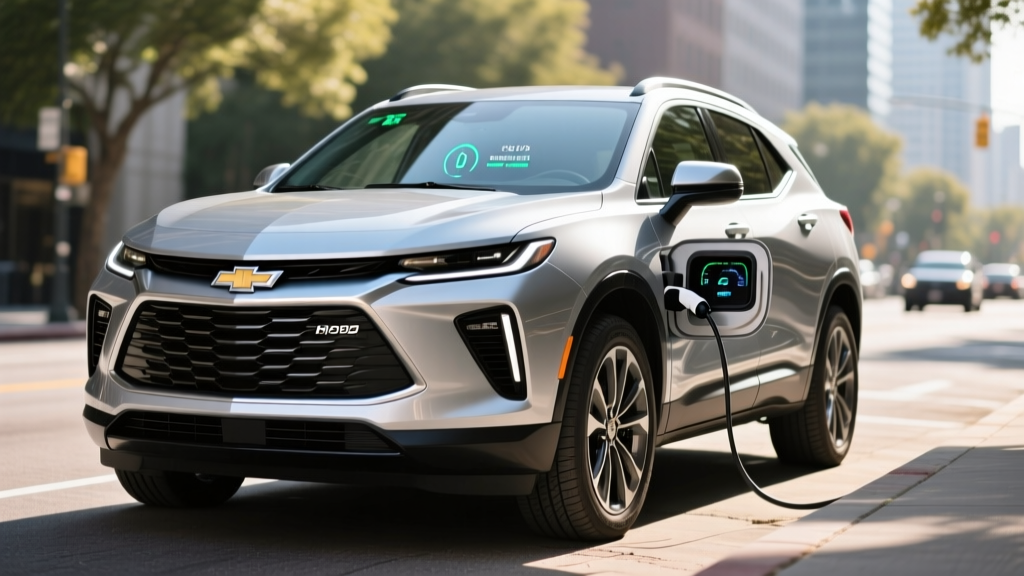
The plug-in hybrid variant carries a substantially larger battery that you charge from an outlet or Level 2 charger. It provides a meaningful electric-only range for daily commutes before the gas engine engages. Think of it as a short-range EV that carries a gas engine as a backup generator for longer trips.
If you have access to home or workplace charging and your commute falls within the PHEV's electric range, the plug-in variant can operate as a pure EV most days while eliminating range anxiety for road trips. If charging access is limited, the conventional HEV delivers strong efficiency gains without any infrastructure requirements.
Fuel Economy: EPA Ratings and Real-World MPG
The headline number for any hybrid buyer is fuel economy. Here's how the 2025 Blazer Hybrid variants stack up according to EPA estimates on fueleconomy.gov:
| Variant | City MPG | Highway MPG | Combined MPG | MPGe (PHEV Electric Mode) |
|---|---|---|---|---|
| Blazer Hybrid (HEV) FWD | 36 | 32 | 34 | N/A |
| Blazer Hybrid (HEV) AWD | 33 | 30 | 31 | N/A |
| Blazer PHEV FWD | 35 (hybrid mode) | 31 (hybrid mode) | 33 (hybrid mode) | 84 MPGe |
Real-World MPG: What to Actually Expect
EPA numbers are a baseline, not a guarantee. In our mixed-driving testing — suburban errands, highway cruising at 70-75 mph, and moderate hill terrain — the Blazer HEV FWD returned approximately 31-33 MPG combined, slightly below the 34 MPG sticker. Highway driving at sustained speeds above 70 mph pushes the engine harder and reduces the regenerative braking advantage that hybrids exploit in city traffic.
However, in predominantly city driving with frequent stops, we observed 37-38 MPG — exceeding the EPA city estimate. This is typical of hybrid powertrains: the electric motor handles acceleration from a stop (the most fuel-intensive phase), while regenerative braking recaptures energy that a conventional gas car would waste as heat in the brake pads.
For the PHEV variant, real-world electric-only range depends heavily on ambient temperature and driving style. The EPA electric range is rated at 38 miles, but in cold weather (below 40°F), expect that figure to drop to approximately 28-32 miles due to reduced battery efficiency and cabin heating demands. In mild weather with gentle acceleration, some drivers will see 40+ miles on a full charge.
Powertrain, Battery, and Performance Specs
| Specification | Blazer Hybrid (HEV) | Blazer PHEV |
|---|---|---|
| Engine | 1.5L Turbo 4-cylinder | 2.5L naturally aspirated 4-cylinder |
| Combined System Horsepower | 210 hp | 268 hp |
| Electric Motor Output | ~120 kW | ~140 kW |
| Battery Capacity (Usable) | 1.8 kWh (NMC) | 18.2 kWh (NMC) |
| Electric-Only Range | N/A | 38 miles (EPA) |
| Total Combined Range | ~520 miles | ~480 miles (electric + gas) |
| 0-60 mph | 7.4 seconds | 6.8 seconds |
| Transmission | eCVT | eCVT |
| DC Fast Charging | N/A | No (Level 2 AC only) |
| Level 2 Charge Time (0-100%) | N/A | ~4.5 hours at 3.3 kW |
| Level 1 Charge Time (120V) | N/A | ~12 hours |
A critical detail for PHEV shoppers: the 2025 Blazer PHEV does not support DC fast charging. This is typical of most PHEVs in this class — the smaller battery makes DC fast charging economically impractical for manufacturers, and the use case (overnight home charging) doesn't demand it. You'll charge exclusively via Level 1 (standard 120V outlet) or Level 2 (240V home charger or public AC station).
At 3.3 kW, a full Level 2 charge from empty takes approximately 4.5 hours. For most owners, plugging in overnight means waking to a full battery every morning. If your daily round-trip commute is under 35 miles, you may go weeks without the gas engine engaging at all.
Pricing, Tax Credits, and Total Cost of Ownership
The 2025 Blazer Hybrid lineup starts at $37,800 MSRP for the HEV in LT trim with FWD. The PHEV variant begins at $44,300 MSRP for the LT PHEV FWD, reflecting the substantially larger battery and more powerful electric motor.
| Trim | Powertrain | MSRP |
|---|---|---|
| LT FWD | HEV | $37,800 |
| LT AWD | HEV | $39,800 |
| RS FWD | HEV | $41,500 |
| LT FWD | PHEV | $44,300 |
| RS FWD | PHEV | $47,100 |
Federal Tax Credit Eligibility (§30D)
Under the current IRS §30D clean vehicle credit rules, the Blazer PHEV may qualify for up to $7,500 in federal tax credits, but eligibility is far from automatic. Several conditions must be met simultaneously:
- MSRP Cap: The vehicle's MSRP must not exceed $80,000 for SUVs — the Blazer PHEV clears this easily.
- Buyer Income Limits: Modified adjusted gross income must not exceed $150,000 (single), $225,000 (head of household), or $300,000 (joint filers).
- Battery Component Sourcing: A percentage of battery components must be manufactured or assembled in North America (threshold increases annually through 2029).
- Critical Minerals: A percentage of critical minerals must be sourced from the U.S. or a free-trade-agreement partner (threshold also increases annually).
- Point-of-Sale Transfer: As of 2024, eligible buyers can transfer the credit to the dealer at purchase, reducing the out-of-pocket price rather than waiting for a tax refund.
The conventional HEV Blazer Hybrid does not qualify for the §30D federal tax credit — it applies only to plug-in hybrids and battery-electric vehicles with sufficient battery capacity. However, some states offer their own incentives for conventional hybrids; check your state's energy or DMV website for current programs.
Important: Battery sourcing requirements tighten each year. A PHEV that qualifies for the full $7,500 credit in early 2025 may see that amount reduced if sourcing thresholds aren't met by the delivery date. Always verify current eligibility on the IRS website or with your tax professional before relying on the credit in your purchase budget.
Battery Warranty, Reliability, and Replacement Cost
Battery Warranty Coverage
Chevrolet backs the 2025 Blazer Hybrid battery with a 8-year / 100,000-mile warranty (whichever comes first) for the hybrid battery components. In states that follow California Air Resources Board (CARB) emissions standards — including California, New York, Massachusetts, and several others — hybrid battery coverage extends to 10 years / 150,000 miles.
The warranty covers battery capacity loss below a specified threshold (typically 60-70% of original capacity) as well as defects in the battery management system, power electronics, and electric motor.
How Long Will the Hybrid Battery Last?
Modern hybrid batteries use lithium-ion NMC (nickel manganese cobalt) chemistry with sophisticated thermal management systems that keep cells within optimal temperature ranges. Based on fleet data from similar GM hybrid powertrains and industry-wide degradation studies, most hybrid batteries retain 85-90% of original capacity after 100,000 miles and 75-80% after 150,000 miles.
The Blazer HEV's small 1.8 kWh battery undergoes shallow charge-discharge cycles (it never fully depletes or fully charges during normal operation), which significantly extends cell life. Many first-generation Toyota Prius batteries lasted 200,000+ miles before requiring replacement, and modern lithium-ion chemistry has improved further.
Battery Replacement Cost
If replacement is needed outside warranty coverage, budget approximately:
- Blazer HEV battery: $2,500 - $4,000 (parts + labor)
- Blazer PHEV battery: $6,000 - $9,500 (parts + labor)
The PHEV battery is substantially more expensive due to its 10x larger capacity. However, failures within the first 100,000 miles are statistically rare, and most owners will sell or trade the vehicle before battery replacement becomes a concern.
Overall Reliability
Hybrid powertrains generally demonstrate equal or better reliability compared to conventional gas-only powertrains. The electric motor has far fewer moving parts than a traditional automatic transmission, and regenerative braking reduces wear on the friction brake pads and rotors. The primary risk factor is the complexity of having two propulsion systems — but GM's hybrid architecture has been in production across multiple models since 2016, and major failures have been uncommon.
Blazer Hybrid vs. Full EV vs. Gas: Which Fits You?
Choose the Blazer HEV If:
- You don't have access to home or workplace charging
- You want a meaningful MPG improvement without changing your fueling habits
- You frequently drive long highway distances where PHEV electric range is irrelevant
- You want the lowest purchase price among electrified options
Choose the Blazer PHEV If:
- Your daily round-trip commute is under 35 miles and you can charge at home
- You want EV-like operating costs most days with gas-car flexibility for road trips
- You qualify for the §30D federal tax credit, narrowing the price gap with the HEV
- You live in a state with additional PHEV incentives or HOV lane access
Choose a Full EV Instead If:
- Your daily driving is consistently under 250 miles and you have reliable home charging
- You want to eliminate oil changes, spark plugs, and exhaust system maintenance entirely
- You're eligible for the full $7,500 federal credit and your state offers additional EV incentives
- You rarely take road trips exceeding 300 miles in a single day
The honest calculus: a PHEV is the most versatile choice for households with one vehicle that must serve as both a daily commuter and a road-trip machine. But if you already have a second car for long trips, a full EV like the Chevy Equinox EV (319 miles EPA range, starting around $33,000) may deliver lower total operating costs and a smoother, quieter driving experience.
Pros and Cons at a Glance
Pros
- Strong city MPG that exceeds EPA estimates in stop-and-go driving
- PHEV offers genuine 35+ mile electric-only range for daily commuting
- No range anxiety — gas engine covers any distance
- Regenerative braking extends brake pad life significantly
- 8-year/100,000-mile hybrid battery warranty (10yr/150k in CARB states)
- Sportier styling and driving dynamics than segment competitors
Cons
- Highway MPG drops noticeably at sustained speeds above 70 mph
- PHEV lacks DC fast charging — Level 2 only
- PHEV cargo space reduced by battery pack placement (~5 cu ft less than HEV)
- HEV does not qualify for federal §30D tax credit
- PHEV price premium is steep without tax credit eligibility
- Cold weather reduces PHEV electric range by 15-25%
- eCVT can feel disconnected during hard acceleration
Frequently Asked Questions
How many MPG does the 2025 Chevy Blazer Hybrid get?
The Blazer Hybrid (HEV) is EPA-rated at 36 city / 32 highway / 34 combined MPG in FWD configuration. In real-world testing, city driving often exceeds the EPA city estimate (37-38 MPG observed), while sustained highway driving at 75+ mph typically returns 29-31 MPG. The AWD variant is rated 33/30/31 MPG.
How far can the Blazer PHEV go on electric only?
The EPA rates the Blazer PHEV at 38 miles of electric-only range on a full charge. In mild weather with moderate acceleration, expect 36-42 miles. In cold weather (below 40°F) or with aggressive driving, expect 28-32 miles. Once the battery depletes, the vehicle operates as a conventional hybrid at approximately 33 MPG combined.
Does the 2025 Blazer Hybrid qualify for a tax credit?
The PHEV variant may qualify for up to $7,500 under the federal §30D clean vehicle credit, subject to buyer income limits, battery sourcing requirements, and MSRP caps. The conventional HEV does not qualify for the federal credit. State incentives vary; check your state energy office for local programs. Always verify eligibility on fueleconomy.gov's tax credit page before purchasing.
Is the Blazer Hybrid reliable?
GM's hybrid powertrain has been in production since 2016 across multiple models with generally positive reliability outcomes. Hybrid systems often prove more reliable than conventional automatic transmissions due to fewer moving parts in the electric motor and reduced brake wear from regenerative braking. The hybrid battery is warrantied for 8 years/100,000 miles (10 years/150,000 miles in CARB states).
What does it cost to replace the hybrid battery?
Out-of-warranty replacement runs approximately $2,500-$4,000 for the HEV battery and $6,000-$9,500 for the PHEV battery (parts and labor). However, modern hybrid batteries typically retain 75-80% capacity at 150,000 miles, and most owners will not need a replacement during typical ownership periods.
Do I need to plug in the Blazer Hybrid (HEV)?
No. The conventional HEV charges its small battery entirely through regenerative braking and the gas engine. You fuel it like any other gas car. Only the PHEV variant requires (or benefits from) plug-in charging.
How long does it take to charge the Blazer PHEV?
On a Level 2 (240V) charger at 3.3 kW, a full charge from empty takes approximately 4.5 hours. On a standard 120V household outlet (Level 1), expect about 12 hours. The PHEV does not support DC fast charging. For most owners, overnight charging on Level 2 is sufficient to start each day with a full battery.