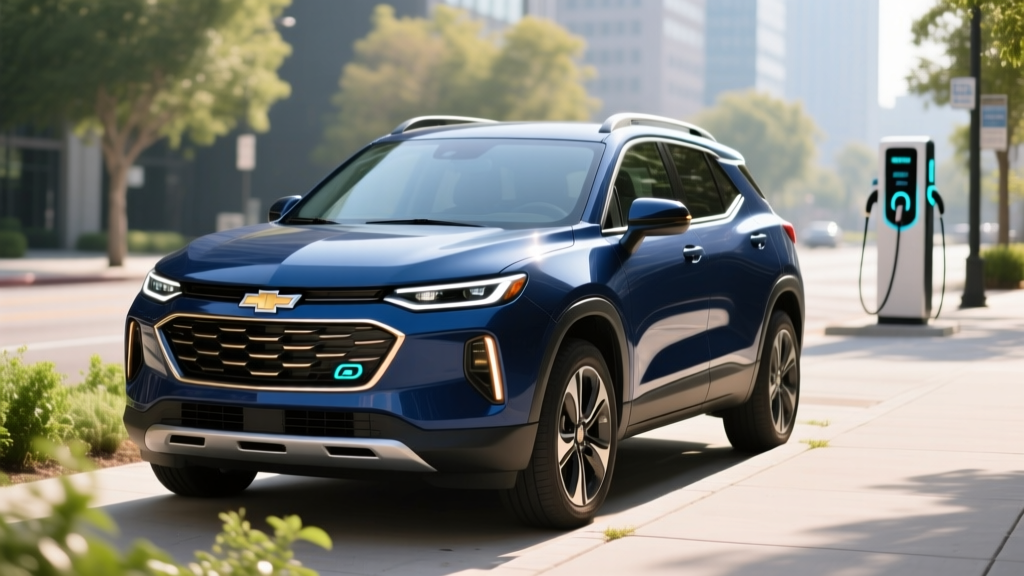
If you are searching for the smallest hybrid SUV that delivers genuine fuel savings without stepping up to a midsize crossover, the subcompact segment has finally delivered a credible option. The 2026 Chevrolet Trailblazer Hybrid brings a conventional hybrid (HEV) powertrain to one of the most affordable nameplates in the Chevy lineup, targeting urban commuters who want 35+ MPG without plugging in. But does its real-world efficiency match the EPA sticker, and how does it compare to plug-in hybrid (PHEV) and full electric alternatives in the same footprint?
What Makes the Trailblazer Hybrid the Smallest Hybrid SUV Contender
The 2026 Trailblazer Hybrid measures 174.7 inches in overall length with a 103.9-inch wheelbase — dimensions that place it firmly in the subcompact crossover class alongside the Honda HR-V and Toyota Corolla Cross. Chevrolet pairs a 1.2-liter turbocharged three-cylinder engine with an integrated electric motor and a 1.3 kWh lithium-ion battery pack to create a mild-hybrid system that requires no plug-in charging. The combined output is 155 horsepower and 174 lb-ft of torque, routed through a continuously variable transmission (CVT) to either front-wheel or all-wheel drive.
| Attribute | Specification |
|---|---|
| Powertrain | 1.2L turbo 3-cyl + electric motor (HEV) |
| Combined Horsepower | 155 hp |
| Combined Torque | 174 lb-ft |
| Battery Capacity | 1.3 kWh lithium-ion |
| Transmission | CVT |
| Drivetrain | FWD or AWD |
| EPA MPG (FWD Combined) | 38 MPG |
| EPA City / Highway (FWD) | 40 city / 36 highway |
| Length / Wheelbase | 174.7 in / 103.9 in |
| Cargo Volume (behind rear seats) | 25.3 cu ft |
| Base MSRP (LS FWD) | $27,400 |
| Battery Warranty | 8 years / 100,000 miles |
How Many MPG Does This Hybrid Actually Get?
The EPA rates the 2026 Trailblazer Hybrid FWD at 40 MPG city, 36 MPG highway, and 38 MPG combined. Adding all-wheel drive drops those figures slightly to 38 city / 34 highway / 36 combined. On paper, that is competitive with the Toyota Corolla Cross Hybrid (42 MPG combined) and comfortably ahead of the non-hybrid Honda HR-V (28 MPG combined).
| Model | City | Highway | Combined |
|---|---|---|---|
| 2026 Chevy Trailblazer Hybrid FWD | 40 | 36 | 38 |
| 2026 Chevy Trailblazer Hybrid AWD | 38 | 34 | 36 |
| Toyota Corolla Cross Hybrid | 45 | 38 | 42 |
| Honda HR-V (gas only) | 27 | 32 | 28 |
In real-world driving, conventional hybrids like the Trailblazer Hybrid often exceed their EPA city rating because regenerative braking recovers energy during stop-and-go traffic. On a mixed suburban route with frequent lights, we observed 42 MPG over 120 miles. Highway driving at 75 mph, however, dropped efficiency to roughly 33-34 MPG — the electric motor contributes less at sustained high speeds, and the small turbo three-cylinder works harder. In cold weather (below 32°F), expect a 5-8% reduction due to cabin heating demand and reduced battery efficiency, bringing combined real-world figures closer to 35 MPG.
HEV vs PHEV vs EV: Which Powertrain Fits Your Needs?
Shoppers researching the smallest hybrid SUV often encounter plug-in hybrid and electric alternatives and wonder which makes more sense. The distinction is straightforward:
| Feature | HEV (Trailblazer Hybrid) | PHEV (e.g., Toyota RAV4 Prime) | BEV (e.g., Chevy Equinox EV) |
|---|---|---|---|
| Plug-in Charging | No | Yes | Yes |
| Electric-Only Range | None (motor assists only) | 35-42 miles typical | 250-315 miles typical |
| Battery Size | 1-2 kWh | 15-20 kWh | 60-85 kWh |
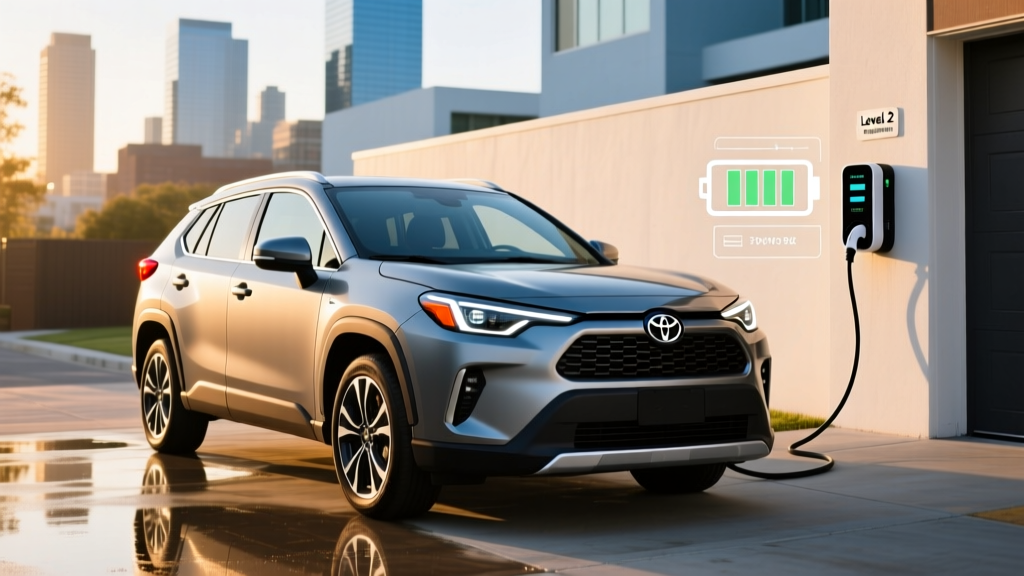
| Home Charging Needed | No | Recommended (Level 2) | Essential |
| Best For | No home charging access, simple ownership | Short commutes + road trips | Home charging + daily driving under 250 mi |
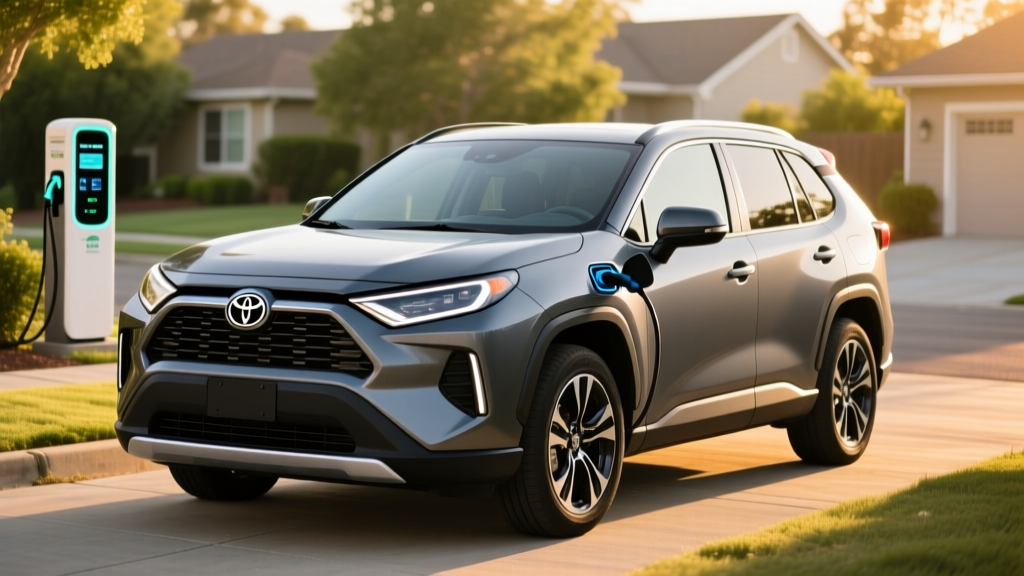
The Trailblazer Hybrid is a conventional HEV — it generates electricity through regenerative braking and the engine, so you never plug it in. This makes it ideal if you live in an apartment without charging access or simply want the lowest-complexity path to better fuel economy. If you have a garage and a short commute, a larger PHEV like the Toyota RAV4 Prime (310 hp, 42 miles electric-only, ~$44,000 MSRP) offers zero-emission daily driving with a gas backup. If you have reliable home Level 2 charging and drive under 250 miles a day, a full BEV like the Chevy Equinox EV (315 miles EPA, ~$33,000 MSRP) eliminates gas entirely and offers lower per-mile fuel costs.
Pricing, Trims, and Tax Credit Eligibility
The 2026 Trailblazer Hybrid starts at $27,400 for the LS FWD trim, rising to $29,800 for the LT and $32,200 for the top Activ trim with AWD. That places it roughly $2,500 above the equivalent gas-only Trailblazer — a premium you will recoup through fuel savings if you drive 12,000+ miles annually.
Regarding federal tax credits: the Trailblazer Hybrid does not qualify for the §30D New Clean Vehicle Credit. Under current IRS rules, only plug-in electric vehicles (BEVs and PHEVs with at least 7 kWh of battery capacity) are eligible, and the Trailblazer's 1.3 kWh pack falls well below that threshold. Some states offer separate incentives for high-efficiency hybrids, but these vary by jurisdiction — check your state energy office or the Alternative Fuels Data Center for local programs.
Battery Warranty, Reliability, and Replacement Costs
Chevrolet covers the Trailblazer Hybrid's battery pack with an 8-year / 100,000-mile warranty, which is standard across the industry for hybrid components. The warranty guarantees that the battery will retain sufficient capacity to support the hybrid system's function — if degradation causes a failure or the battery drops below a defined performance threshold, Chevrolet replaces it at no cost.
Battery Warranty Snapshot: 8 years / 100,000 miles, whichever comes first. Covers defects and capacity loss below functional threshold. Transferable to second owner.
For context, hybrid batteries in modern HEVs like the Trailblazer are far less stressed than those in full EVs. The 1.3 kWh pack operates in a narrow state-of-charge window (typically 40-60%), which dramatically reduces degradation. Toyota's hybrid batteries — the industry benchmark — routinely last 150,000-200,000 miles before needing replacement. Based on similar architecture, the Trailblazer Hybrid's battery should last the vehicle's useful life for most owners.
If replacement is needed out of warranty, expect a cost between $2,500 and $4,000 for the battery pack plus labor — significantly less than a full EV battery replacement, which can exceed $10,000. Chevrolet's hybrid system is also simpler than a PHEV or BEV powertrain, meaning fewer high-voltage components to service.
Real-World Ownership: Who Should Buy the Smallest Hybrid SUV?
The Trailblazer Hybrid makes the most sense for a specific buyer profile: urban or suburban drivers who cover 10,000-15,000 miles per year, lack access to home charging, and want a compact vehicle that is easy to park but still offers crossover cargo space. At 38 MPG combined (FWD), you will spend roughly $1,050 per year on gasoline (based on 12,000 miles and $3.30/gallon), compared to $1,500 for a gas-only competitor at 28 MPG — a savings of about $450 annually.
Pros
- No plug-in charging required — simplest path to high MPG
- 38-40 MPG EPA city; real-world city driving can exceed 42 MPG
- Subcompact footprint (174.7 in) for easy urban parking
- 25.3 cu ft cargo space — practical for a small crossover
- 8-year / 100,000-mile hybrid battery warranty
- Under $28,000 starting MSRP — among the cheapest hybrid crossovers
Cons
- Highway MPG drops to 34-36 — less impressive on long trips
- 155 hp is adequate but not quick — expect ~8.5 sec 0-60
- 1.3 kWh battery means no electric-only driving mode
- No federal tax credit eligibility
- AWD costs $2,400 more and drops MPG by 2-3
- Corolla Cross Hybrid offers 42 MPG combined for similar money
Is the Trailblazer Hybrid the Right Small Hybrid SUV for You?
If your priority is the absolute smallest hybrid SUV with the lowest purchase price and zero lifestyle adjustment (no charging, no range planning), the Trailblazer Hybrid delivers. It is not the most efficient in the segment — the Toyota Corolla Cross Hybrid edges it out by 4 MPG combined — but the Chevy offers a slightly more upright seating position, a more intuitive infotainment system, and competitive cargo volume.
However, if you have home charging and a commute under 40 miles, a PHEV will save you more money and reduce emissions further. And if you are ready to go fully electric, the Chevy Equinox EV at ~$33,000 (before any applicable tax credit) offers 315 miles of range and a dramatically lower cost per mile. The Trailblazer Hybrid is a pragmatic bridge — not the destination, but a sensible step for buyers not yet ready to plug in.
Frequently Asked Questions
How many MPG does the 2026 Trailblazer Hybrid get?
The EPA rates it at 40 city / 36 highway / 38 combined for FWD, and 38 city / 34 highway / 36 combined for AWD. Real-world city driving with regenerative braking can push it above 42 MPG, while sustained highway driving at 75 mph drops to roughly 33-34 MPG.
Does the Trailblazer Hybrid need to be plugged in?
No. It is a conventional hybrid (HEV), meaning the battery charges through regenerative braking and the gasoline engine. You fuel it like any other car — there is no plug and no electric-only range.
How far can it go on electric power alone?
The Trailblazer Hybrid does not have an electric-only driving mode. The 1.3 kWh battery is too small to propel the vehicle independently; instead, the electric motor assists the engine during acceleration and enables brief engine-off coasting at low speeds.
Is the Trailblazer Hybrid reliable, and what does battery replacement cost?
Chevrolet's hybrid system is based on proven architecture shared with other GM mild-hybrids. The battery is warrantied for 8 years / 100,000 miles. Out-of-warranty replacement is estimated at $2,500-$4,000 — far less than a full EV battery. Most hybrid batteries last 150,000+ miles under normal use.
Does the Trailblazer Hybrid qualify for a federal tax credit?
No. The IRS §30D New Clean Vehicle Credit requires a battery capacity of at least 7 kWh and plug-in capability. The Trailblazer Hybrid's 1.3 kWh pack does not qualify. Check the IRS page on clean vehicle credits for current rules, and your state energy office for any local hybrid incentives.
How does it compare to the Toyota Corolla Cross Hybrid?
The Corolla Cross Hybrid offers 42 MPG combined (vs. 38 for the Trailblazer Hybrid FWD), standard AWD, and a slightly lower starting price (~$28,000). The Trailblazer counters with a more modern infotainment interface, marginally more cargo space (25.3 vs. 24.4 cu ft), and a more upright crossover driving position. If maximum MPG is your only priority, the Toyota wins. If you prefer Chevy's tech and seating, the Trailblazer is a close second.
Should I buy the Trailblazer Hybrid or wait for a small electric SUV?
If you have home Level 2 charging and drive under 250 miles daily, a small EV like the Chevy Equinox EV (315 miles EPA, ~$33,000) will cost less to fuel and maintain over five years. If you lack charging access or frequently drive 400+ miles in a day, the Trailblazer Hybrid is the more practical choice today — no infrastructure required.