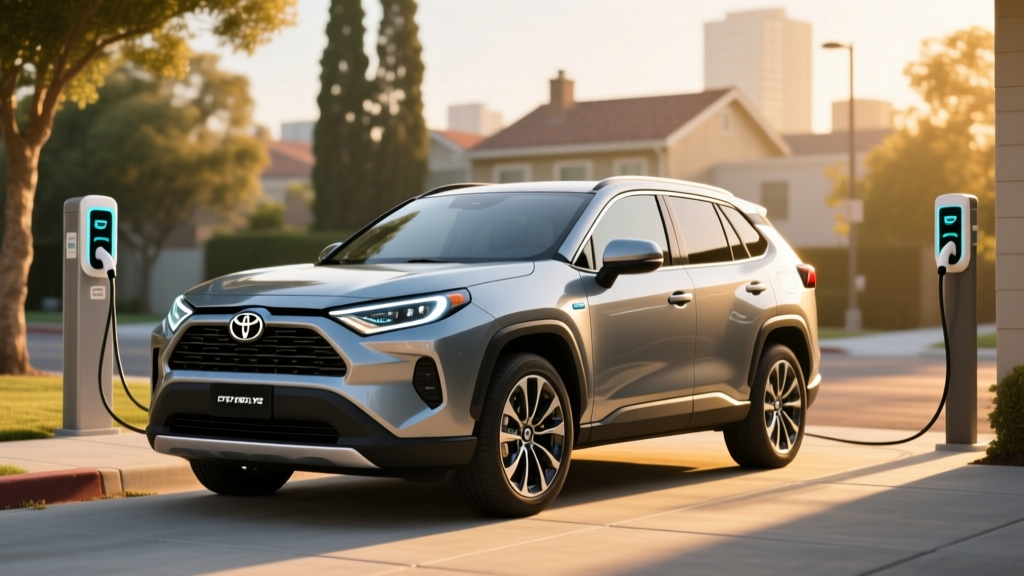
The Real Cost of Leasing a Hybrid in 2026
Hybrid lease payments have stabilized after the post-2022 spike, and several mainstream models now land under $250 per month with modest money-down requirements. For buyers who want to cut fuel costs without committing to a full battery-electric vehicle (BEV), leasing a hybrid or plug-in hybrid (PHEV) offers a lower-risk entry point: you drive the latest powertrain tech during its full warranty window and hand it back before long-term battery degradation becomes your problem.
This guide breaks down the cheapest hybrid lease deals available in early 2026, separates conventional hybrids (HEVs) from plug-in hybrids (PHEVs), and gives you the exact EPA MPG, electric-only range, battery specs, and tax-credit eligibility you need to compare them properly.
HEV vs PHEV: What You're Actually Leasing
Conventional Hybrid (HEV): A small battery (typically 0.5–1.6 kWh) recharges through regenerative braking and the gasoline engine. You never plug it in. It excels in city driving, where the electric motor handles low-speed propulsion and the engine shuts off at stops. Expect 45–57 MPG combined. No federal tax credit, but lease payments and purchase prices are lower.
Plug-In Hybrid (PHEV): A larger battery (10–18 kWh) provides 25–44 miles of electric-only driving before the gasoline engine kicks in. You plug it in overnight on a standard 120V outlet or a 240V Level 2 charger. Total combined range often exceeds 500 miles. Eligible for up to $3,750–$7,500 in federal tax credits under IRS §30D, though the credit applies to purchases, not leases directly — unless the leasing company passes the savings through as a lease cash incentive.
Key lease distinction: Federal EV tax credits under §30D go to the vehicle owner, which in a lease is the leasing company (the lessor). Many automakers pass this savings to you as a capitalized-cost reduction ("lease cash"), effectively lowering your monthly payment. Always confirm with the dealer whether the PHEV credit is being applied to your specific lease deal.
Top 5 Cheapest Hybrid Lease Deals for 2026
Below are five models consistently ranking among the most affordable hybrid leases, based on national advertised lease offers and typical dealer pricing in early 2026. Actual payments vary by region, credit tier, and dealer markup.
| Model | Type | EPA Combined MPG | EV Range (PHEV) | Battery (kWh) | Combined HP | Est. Lease $/mo* | §30D Credit Potential |
|---|---|---|---|---|---|---|---|
| 2026 Hyundai Elantra Hybrid Blue | HEV | 54 MPG | — | 1.3 kWh | 139 hp | $199–$239 | None |
| 2026 Toyota Prius LE | HEV | 57 MPG | — | 0.9 kWh | 196 hp | $219–$259 | None |
| 2026 Kia Niro Hybrid LX | HEV | 53 MPG | — | 1.5 kWh | 139 hp | $209–$249 | None |
| 2026 Hyundai Tucson PHEV SEL | PHEV | 80 MPGe / 35 MPG gas | 33 mi | 13.8 kWh | 261 hp | $229–$269 | Up to $3,750 |
| 2026 Toyota Prius Prime SE | PHEV | 127 MPGe / 48 MPG gas | 44 mi | 13.6 kWh | 220 hp | $249–$289 | Up to $3,750 |
*Estimated lease payments assume $2,500–$3,500 due at signing, 36-month term, 10,000 miles/year, and tier-1 credit. Source: manufacturer national lease programs and aggregated dealer listings. Verify locally.
Fuel Economy Deep Dive: Real-World MPG vs EPA Stickers
Hybrids behave differently from conventional gas cars in a way that often surprises first-time owners: they frequently beat their EPA city estimates in real-world driving, because stop-and-go traffic maximizes regenerative braking and electric-motor use.
| Model | EPA City | EPA Highway | EPA Combined | Real-World Expectation |
|---|---|---|---|---|
| Hyundai Elantra Hybrid Blue | 56 | 51 | 54 | City: 55–60 / Hwy: 48–52 |
| Toyota Prius LE | 57 | 56 | 57 | City: 55–62 / Hwy: 52–57 |
| Kia Niro Hybrid LX | 53 | 54 | 53 | City: 52–57 / Hwy: 50–55 |
| Hyundai Tucson PHEV (gas mode) | 36 | 35 | 35 | City: 34–38 / Hwy: 32–36 |
| Toyota Prius Prime SE (gas mode) | 50 | 47 | 48 | City: 48–54 / Hwy: 44–48 |
PHEV efficiency note: The MPGe figure (miles per gallon equivalent) applies only when you're driving on electricity from a full charge. Once the battery depletes to its gas-engine threshold, you're running on the combined MPG rating above. If you rarely plug in a PHEV, you're carrying dead battery weight and may get worse fuel economy than a lighter HEV. Plug-in discipline is what makes a PHEV worthwhile.
Data from fueleconomy.gov (U.S. EPA). Real-world estimates based on aggregated owner reports and independent testing.
PHEV Electric Range and Charging: What to Expect
If you're considering a PHEV lease, electric-only range and charging logistics determine whether the plug-in premium is worth it.
Electric-Only Range by Model
- 2026 Toyota Prius Prime SE: 44 miles EPA electric-only — enough for most daily commutes round-trip without burning gas.
- 2026 Hyundai Tucson PHEV: 33 miles EPA electric-only — covers shorter commutes and errands; longer trips switch to gas seamlessly.
Total combined range (electric + gas) for both models exceeds 450–600 miles, eliminating range anxiety entirely.
Charging Specs
| Model | Battery (kWh usable) | Level 1 (120V) | Level 2 (240V) | DC Fast Charge |
|---|---|---|---|---|
| Prius Prime SE | 13.6 kWh (NMC) | ~11 hours | ~4 hours (3.3 kW onboard) | No |
| Tucson PHEV | 13.8 kWh (NMC) | ~12 hours | ~2 hours (7.2 kW onboard) | No |
No PHEV in this price range supports DC fast charging. That's standard for the segment — PHEV batteries are small enough that Level 2 overnight charging fully replenishes them. A standard household 120V outlet will work if you drive less than the EV range daily and can plug in for 10+ hours overnight, but a 240V Level 2 home charger is strongly recommended for the Tucson PHEV's larger battery to hit a practical overnight window.
Battery Longevity, Warranty, and Replacement Costs
Hybrid Battery Warranty: What's Covered
Federal law mandates that hybrid and PHEV battery packs carry a minimum warranty of 8 years / 100,000 miles. In California Air Resources Board (CARB) states — which include CA, CO, CT, ME, MD, MA, NJ, NY, OR, RI, VT, and WA — the warranty extends to 10 years / 150,000 miles.
Both Toyota and Hyundai honor these terms, and their hybrid batteries have demonstrated strong longevity in fleet data. Toyota's nickel-metal-hydride and lithium-ion hybrid packs routinely last 150,000–200,000+ miles before significant degradation. Hyundai/Kia's lithium-ion packs show similar durability in long-term owner surveys.
Battery Replacement Cost if Out of Warranty
- HEV battery (Prius, Elantra Hybrid, Niro): $2,000–$4,000 for a new OEM pack; refurbished units available for $1,000–$2,000. Independent hybrid shops can replace individual cells for $500–$1,500.
- PHEV battery (Prius Prime, Tucson PHEV): $4,000–$7,000 for a new OEM pack, given the larger capacity.
Lease advantage: On a typical 36-month lease, you will never approach the battery warranty expiration. The lessor owns the battery risk, not you. This is one of the strongest arguments for leasing a hybrid vs buying if long-term battery cost is a concern.
Tax Credits and Lease Incentives: What Actually Lowers Your Payment
Federal tax credits for hybrids and PHEVs operate under different rules, and understanding them prevents costly assumptions.
Conventional Hybrids (HEV): No Federal Tax Credit
The IRS §30D clean vehicle credit applies only to plug-in electric vehicles with a battery capacity of at least 7 kWh. Standard HEVs with sub-2 kWh batteries do not qualify. Some states offer modest hybrid rebates ($250–$500), but these are uncommon and vary by jurisdiction. Check your state energy office or the Alternative Fuels Data Center for local programs.
Plug-In Hybrids (PHEV): Up to $7,500, With Caveats
- Battery capacity: Must be ≥ 7 kWh (both Prius Prime and Tucson PHEV qualify).
- MSRP cap: Vans/SUVs/pickups ≤ $80,000; sedans ≤ $55,000. All models here clear this threshold.
- Buyer income cap: AGI ≤ $150,000 (single), $225,000 (head of household), $300,000 (joint).
- Battery sourcing: Critical minerals and battery components must meet escalating domestic-content percentages per IRS rules. Check the IRS clean vehicle credit page or ask the dealer for the vehicle's official §30D qualification letter.
- Point-of-sale transfer: Starting 2024, buyers can transfer the credit to the dealer for an instant price reduction. In a lease, the lessor claims the credit; many pass it through as lease cash.
Current 2026 reality: The Tucson PHEV and Prius Prime have historically qualified for $3,750 each (partial credit due to battery-component sourcing rules), though exact amounts shift as automakers adjust supply chains. Confirm the current qualification status with your dealer before signing.
Hybrid vs PHEV vs EV: Which Should You Lease?
Choose a Conventional Hybrid (HEV) If:
- You want the lowest possible monthly payment ($199–$259/mo).
- You don't have reliable access to a plug at home or work.
- You drive a mix of city and highway and want 50+ MPG without behavior changes.
- You want zero charging logistics — just fill up at any gas station.
Choose a Plug-In Hybrid (PHEV) If:
- You have a garage or driveway where you can plug in nightly.
- Your daily commute is under 40 miles round-trip (you'll rarely burn gas on weekdays).
- You want to drive electric locally but need gas flexibility for road trips.
- You can capture the §30D lease-cash incentive to lower your effective payment.
Choose a Full EV If:
- You have Level 2 home charging and your daily driving is under 250 miles.
- You want to eliminate gasoline costs and oil changes entirely.
- You qualify for the full $7,500 §30D credit on a qualifying BEV.
- You're comfortable planning around public DC fast charging for road trips.
Pros and Cons of Leasing the Cheapest Hybrids
Pros
- Monthly payments as low as $199 with modest down payment
- HEVs achieve 50–57 MPG real-world; PHEVs run 33–44 miles gas-free
- Full factory and battery warranty coverage for the entire lease term
- No long-term battery replacement risk — it's the lessor's problem
- Lower fuel cost: ~$1,000–$1,200/year in gas vs $1,800+ for a comparable gas-only sedan
- PHEV lease-cash incentives can offset higher sticker prices
Cons
- HEVs offer no electric-only driving — you're always burning some gas
- PHEVs require nightly plug-in discipline to realize efficiency gains
- Mileage penalties at lease-end (typically $0.15–$0.25/mile over limit)
- You build no equity — the vehicle goes back to the dealer
- Dealer markups and regional pricing variation can inflate advertised payments
- PHEV charging on 120V alone is slow (10–12 hours for a full charge)
Frequently Asked Questions
How many MPG does the cheapest hybrid lease get?
The 2026 Toyota Prius LE leads the segment at 57 MPG combined (57 city / 56 highway) per the EPA. The Hyundai Elantra Hybrid Blue achieves 54 MPG combined (56 city / 51 highway), and the Kia Niro Hybrid delivers 53 MPG combined. In real-world city driving, owners of these models frequently report 55–62 MPG thanks to regenerative braking. Highway mileage tends to run 2–5 MPG below the EPA sticker at sustained 75+ MPH speeds.
How far can a PHEV go on electric only?
The 2026 Toyota Prius Prime SE delivers 44 miles of EPA-rated electric-only range — the longest in the affordable PHEV segment. The Hyundai Tucson PHEV provides 33 miles. Both switch seamlessly to hybrid gas mode once the battery depletes, giving a total combined range of 450–600 miles. For daily commutes under 40 miles with nightly charging, PHEV owners report using gasoline only on weekend road trips.
Hybrid vs PHEV vs EV — which fits me?
If you lack home charging access, a conventional hybrid (HEV) is the practical choice — no plug needed, 50+ MPG. If you can plug in nightly and commute under 40 miles, a PHEV lets you drive electric daily while keeping gas flexibility for longer trips. If you have Level 2 home charging, drive under 250 miles daily, and want to eliminate gas entirely, a full BEV offers the lowest operating cost and strongest tax incentives. The cheapest hybrid lease is usually an HEV; the cheapest path to electric driving without range compromise is a PHEV.
Is the hybrid battery reliable and what does replacement cost?
Hybrid batteries from Toyota and Hyundai/Kia have demonstrated excellent long-term reliability, routinely lasting 150,000–200,000+ miles based on fleet and owner data. Federal law requires an 8-year/100,000-mile hybrid battery warranty (10 years/150,000 miles in CARB states). On a 36-month lease, you'll never approach these limits. If you buy and eventually need a replacement, HEV battery packs cost $2,000–$4,000 new; PHEV packs cost $4,000–$7,000. Refurbished options and individual cell repairs can halve these figures.
Does a hybrid lease qualify for any tax credit?
Conventional hybrids (HEVs like the Prius, Elantra Hybrid, and Niro) do not qualify for the federal §30D clean vehicle credit because their batteries are too small. PHEVs like the Prius Prime and Tucson PHEV may qualify for up to $3,750–$7,500 depending on battery sourcing requirements and your income. In a lease, the leasing company claims the credit, but many pass the savings to you as "lease cash" that reduces your monthly payment. Confirm the exact amount with your dealer and verify current IRS rules at irs.gov.
Can I charge a PHEV on a regular household outlet?
Yes, but slowly. A standard 120V Level 1 outlet delivers roughly 1.2–1.4 kW, meaning a full PHEV charge takes 10–12 hours. That's workable if you park overnight and drive less than the EV range daily. For faster replenishment (2–4 hours), a 240V Level 2 home charger is recommended. Neither the Prius Prime nor Tucson PHEV supports DC fast charging, which is typical for the PHEV segment.
What happens at the end of a hybrid lease?
You return the vehicle to the dealer, pay any excess mileage charges (typically $0.15–$0.25 per mile over your agreed limit) and any wear-and-tear fees. You do not own the vehicle and build no equity. Some leases include a purchase option at a predetermined residual value, which can be worthwhile if the used-hybrid market is strong. Most lessees simply walk away and lease or buy their next vehicle.
Sources: EPA fuel economy data via fueleconomy.gov; IRS clean vehicle credit rules via irs.gov; manufacturer specifications from Toyota and Hyundai press sites. Lease payment estimates based on aggregated national advertised offers as of early 2026; confirm pricing with your local dealer. Tax credit eligibility is subject to change — consult a tax professional for your specific situation.