Quick Verdict: The Luxury PHEV That Actually Makes Sense
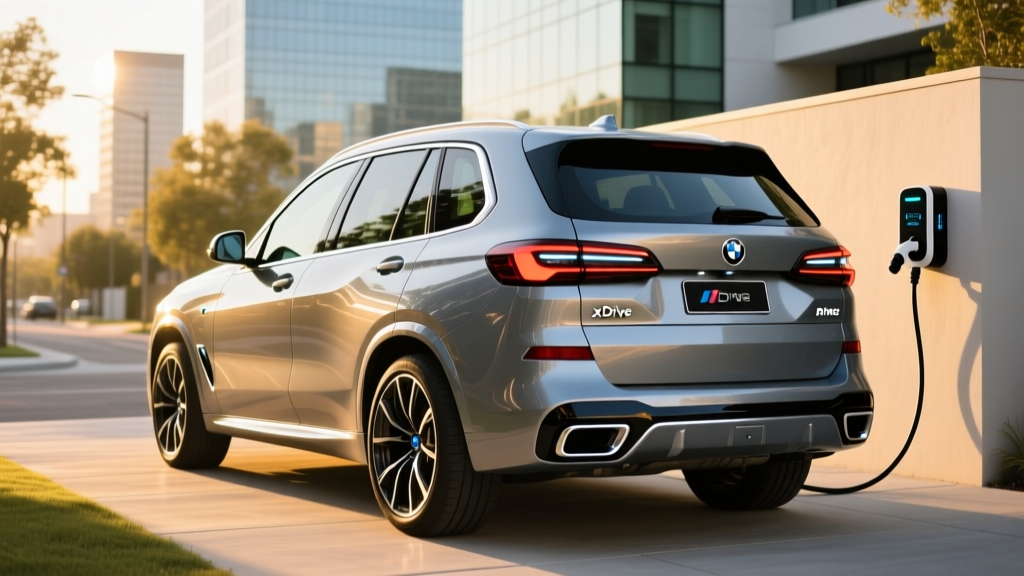
The BMW X5 xDrive50e plug-in hybrid occupies a rare middle ground: it offers genuine electric-only commuting for most daily trips while retaining the flexibility of a turbocharged inline-six for road trips — all wrapped in one of the best-executed luxury midsize SUV cabins on the market. With 483 combined horsepower, a 38-mile EPA electric range, and an MSRP starting at $66,675 for the 2026 model year, it competes directly with the Porsche Cayenne E-Hybrid and Volvo XC90 Recharge. But unlike those rivals, the xDrive50e qualifies for a portion of the federal §30D tax credit, which meaningfully narrows the price gap with the gas-only X5 xDrive40i.
This guide breaks down the xDrive50e's real-world efficiency, charging practicalities, powertrain specs, and whether a plug-in hybrid is the right electrification strategy for your garage — or whether you'd be better served by a full BEV or conventional hybrid.
HEV vs PHEV vs EV: Where the xDrive50e Fits
Before examining the xDrive50e's specs, it's worth clarifying the three electrification paths available to SUV buyers:
| Feature | Conventional Hybrid (HEV) | Plug-In Hybrid (PHEV) | Battery Electric (BEV) |
|---|---|---|---|
| Plug-in charging? | No — charges via regen & engine | Yes — plug in for EV range | Yes — only electricity |
| Electric-only range | 0–2 miles at low speed | 20–50 miles typical | 200–400+ miles |
| Gas engine | Yes — primary power | Yes — backup & highway | None |
| Best for | No home charging; want better MPG | Home charging + road-trip flexibility | Home charging + full electric lifestyle |
| Example | Toyota Highlander Hybrid | BMW X5 xDrive50e | BMW iX |
The BMW X5 xDrive50e is a plug-in hybrid (PHEV). It pairs a sizable high-voltage battery with a gasoline engine, meaning you must plug it in to access its 38 miles of electric-only range. If you never plug it in, it operates as a heavy conventional hybrid with mediocre fuel economy. This is the critical distinction: the xDrive50e rewards owners who have Level 2 home charging and a commute under 40 miles round-trip.
Powertrain, Horsepower, and 0–60 Performance
The xDrive50e uses BMW's fifth-generation eDrive system, pairing a 3.0-liter turbocharged inline-six with an electric motor integrated into the 8-speed automatic transmission.
| Specification | BMW X5 xDrive50e (2026) |
|---|---|
| Engine | 3.0L turbocharged inline-6 |
| Electric motor | 136 kW (182 hp) integrated in transmission |
| Combined system output | 483 hp / 516 lb-ft torque |
| 0–60 mph | 4.6 seconds (manufacturer) |
| Drivetrain | xDrive AWD |
| Transmission | 8-speed automatic (Steptronic) |
| Max EV-only speed | 87 mph |
| Towing capacity | 5,950 lbs (with factory hitch) |
The electric motor fills the torque gap below the turbo's spool-up, delivering seamless acceleration from a stop. In Sport mode with both power sources active, the xDrive50e pulls with authority that belies its 5,400-pound curb weight. In electric-only mode, the 182-hp motor provides adequate city and suburban acceleration, though highway merging demands the gas engine's assistance.
Electric Range, Battery, and Charging Specs
The xDrive50e carries a 25.7 kWh usable lithium-ion battery pack (29.5 kWh gross), mounted beneath the cargo floor. This is significantly larger than the outgoing 45e's 21.5 kWh pack and translates directly to more daily electric miles.
Real-World Expectation: 30–35 miles in mixed driving; 25–28 miles in cold weather (below 40°F) with cabin heat; up to 40 miles in mild conditions at city speeds with preconditioning.
| Charging Level | Power | 0–100% Time | Notes |
|---|---|---|---|
| Level 1 (120V household) | ~1.4 kW | ~18–20 hours | Emergency only; adds ~4 mi/hr |
| Level 2 (240V home/public) | 7.4 kW (max onboard) | ~3.5 hours | Ideal overnight charge; adds ~17 mi/hr |
| DC Fast Charge | Not supported | N/A | No CCS/NACS DC inlet |
The 7.4 kW onboard charger is the xDrive50e's charging ceiling. This means a full charge from empty takes roughly 3.5 hours on a Level 2 home charger — easily accomplished overnight. However, the lack of DC fast charging is a notable limitation. You cannot pull up to a 150 kW Electrify America or Tesla Supercharger station and top off in 20 minutes. For a PHEV with 38 miles of range, this is less of a practical concern than it would be for a full EV — most owners will charge at home nightly — but it does eliminate the possibility of mid-trip electric top-ups.
Preconditioning tip: Use the BMW app or iDrive timer to precondition the battery and cabin while still plugged in. This warms the battery for maximum regen efficiency and uses grid power rather than battery energy, preserving your 38-mile EV range.
Fuel Economy: EPA Ratings vs Real-World MPG
The EPA rates the xDrive50e in two metrics: MPGe (miles per gallon equivalent) when operating on combined electric and gasoline power, and conventional MPG when the battery is depleted.
| Mode | City | Highway | Combined |
|---|---|---|---|
| Charge-sustaining (gas only, battery depleted) | 22 MPG | 26 MPG | 24 MPG |
| Charge-depleting + gas (MPGe) | 56 MPGe combined (EPA) | ||
| Electric-only efficiency | ~38 kWh/100 mi | ||
Real-world MPG observations: PHEVs are uniquely dependent on driving patterns. If your daily commute is under 38 miles round-trip and you charge nightly, you may use gasoline only on weekend road trips — yielding an effective "MPG" in the hundreds. On a 400-mile highway trip with a depleted battery, expect the charge-sustaining 22–26 MPG range, which is unremarkable for a 5,400-lb luxury SUV but competitive within its class. City driving in hybrid mode (battery depleted) often exceeds the EPA 22 MPG estimate thanks to aggressive regenerative braking.
Total combined range: With a full battery and a full 18.5-gallon fuel tank, the xDrive50e can cover approximately 440–480 miles before needing to refuel or recharge.
Pricing, Trims, and Federal Tax Credit Eligibility
The 2026 BMW X5 xDrive50e starts at $66,675 (including $995 destination). Key standard equipment includes the BMW Curved Display with iDrive 8.5, adaptive LED headlights, power panoramic moonroof, and the Driving Assistant Professional suite (Level 2 driver assistance — not self-driving).
Popular option packages push well-equipped examples into the $75,000–$82,000 range. The M Sport package, Executive package (glass controls, soft-close doors, front massaging seats), and 22-inch wheels are the most common additions.
- The xDrive50e's battery sourcing and critical-mineral content qualifies for a partial credit — currently estimated at $3,750 (battery component requirement met; critical-mineral threshold may or may not be met depending on supply-chain updates for the model year).
- MSRP cap: SUVs must be under $80,000 MSRP. A base or moderately optioned xDrive50e qualifies; heavily optioned examples may exceed the cap.
- Income cap: Modified AGI must not exceed $150,000 (single), $225,000 (head of household), or $300,000 (joint filers).
- Point-of-sale transfer: The credit can be applied as a down-payment reduction at the dealer, subject to IRS registration requirements.
Source: IRS §30D guidelines. Eligibility depends on VIN-specific battery sourcing. Verify with your dealer and a tax professional before purchase.
There is no dedicated federal tax credit for conventional (non-plug-in) hybrids. Some states offer additional PHEV incentives — check your state's energy office for current programs, as these vary widely and change annually.
Battery Warranty, Reliability, and Replacement Cost
Powertrain warranty: 4 years / 50,000 miles
Maintenance program: 3 years / 36,000 miles (BMW's complimentary scheduled maintenance)
Reliability assessment: BMW's B58 inline-six engine is widely regarded as one of the most reliable modern turbocharged engines, with a strong track record in the 3 Series, 5 Series, and Supra. The PHEV system adds complexity — the electric motor, inverter, and high-voltage battery are additional failure points — but BMW's fifth-generation eDrive has proven robust since its 2021 debut across multiple models (iX, i4, 330e, 550e).
Battery replacement cost: Out of warranty, a high-voltage battery replacement for the xDrive50e is estimated at $12,000–$18,000 (parts and labor), based on BMW's current PHEV battery pricing. However, PHEV batteries experience far less cycle stress than full EV batteries due to their smaller daily depth of discharge. The 25.7 kWh usable capacity only cycles through a fraction of its total life per day, and BMW's thermal management system keeps the pack within optimal temperature ranges. Realistic expectation: the battery should last the vehicle's usable life under normal conditions.
Conventional hybrid comparison: Unlike a Toyota or Honda conventional hybrid, which never plugs in and uses a much smaller battery (1–2 kWh) charged solely by regenerative braking and the engine, the xDrive50e's PHEV battery is larger and more expensive but also more capable. Conventional hybrid batteries are cheaper to replace ($2,000–$5,000) but offer no electric-only range.
Who Should Choose the X5 xDrive50e — and Who Shouldn't
Choose the BMW X5 xDrive50e if:
- You have Level 2 home charging and a daily commute under 38 miles round-trip
- You want electric weekday commuting but gasoline flexibility for weekend road trips
- You need 5,950-lb towing capacity (boats, horse trailers) that most EVs can't match efficiently
- You value BMW's driving dynamics and cabin quality over maximum efficiency
- You want to reduce fuel consumption without committing to full electrification
Look elsewhere if:
- You don't have access to home or workplace charging — an uncharged PHEV is a heavy, inefficient hybrid
- Your commute exceeds 50 miles daily — you'll burn gas most days, negating the PHEV advantage
- You want DC fast charging for road-trip electric driving — consider the BMW iX (BEV) instead
- Maximum fuel savings are your priority — a Toyota RAV4 Prime ($43,690) offers 42 miles EV range at half the price
- 483 hp with seamless electric/gas power delivery
- 38-mile EV range covers most commutes
- 5,950-lb towing — rare for PHEVs
- Quiet, refined cabin with iDrive 8.5
- Partial §30D federal tax credit eligibility
- Strong B58 engine reliability track record
- No DC fast charging capability
- 22–26 MPG on gas alone is mediocre for the class
- $66,675+ MSRP — heavily optioned examples exceed $80K tax-credit cap
- Cargo space reduced slightly vs gas X5 (battery under floor)
- 7.4 kW Level 2 charge rate is slow vs some rivals
Frequently Asked Questions
How many MPG does the BMW X5 xDrive50e get?
When the battery is depleted and the xDrive50e operates on gasoline alone, the EPA rates it at 22 city / 26 highway / 24 combined MPG. When factoring in electric-only driving, the combined rating is 56 MPGe. Real-world results vary dramatically based on how often you charge: owners who plug in nightly and commute under 38 miles may go weeks without visiting a gas station, while long highway trips yield the 22–26 MPG gas-only figure.
How far can the X5 xDrive50e go on electric only?
The EPA rates the xDrive50e at 38 miles of electric-only range. In real-world conditions, expect 30–35 miles in mixed driving, up to 40 miles in mild city conditions, and as low as 25–28 miles in cold weather (below 40°F) when the cabin heater and battery thermal management draw additional power. The electric motor can propel the SUV to 87 mph in EV mode, so highway driving on electricity is possible for shorter segments.
Hybrid vs PHEV vs EV — which is right for me?
A conventional hybrid (HEV) like the Toyota Highlander Hybrid never plugs in and delivers 35–36 MPG combined — ideal if you lack home charging. A plug-in hybrid (PHEV) like the X5 xDrive50e offers 20–40 miles of electric range when plugged in, plus a gas engine for longer trips — ideal if you have home charging and a short commute. A battery electric vehicle (BEV) like the BMW iX offers 300+ miles of range with zero gasoline but requires reliable charging infrastructure and acceptance of range limitations on long trips. The PHEV is the "have it both ways" option, but only if you'll actually plug it in.
Is the X5 xDrive50e reliable, and what does battery replacement cost?
The B58 inline-six engine has an excellent reliability record, and BMW's fifth-gen eDrive system has proven durable since 2021. The high-voltage battery is warrantied for 8 years / 80,000 miles against defects and capacity loss below 70%. Out-of-warranty battery replacement is estimated at $12,000–$18,000, though PHEV batteries typically experience less degradation than full EV batteries due to smaller daily cycling depth. Most owners will never need a replacement.
Does the BMW X5 xDrive50e qualify for a tax credit?
Yes, partially. Under 2026 IRS §30D rules, the xDrive50e qualifies for an estimated $3,750 federal tax credit (meeting the battery-component sourcing requirement). The full $7,500 credit requires both battery-component and critical-mineral sourcing thresholds to be met, which varies by production batch. The SUV must have an MSRP under $80,000, and buyer income must not exceed $300,000 (joint) / $150,000 (single). The credit can be transferred at the point of sale as a down-payment reduction. Verify VIN-specific eligibility with your dealer and consult a tax professional. Source: IRS Clean Vehicle Credits.
Can I DC fast charge the X5 xDrive50e?
No. The xDrive50e does not support DC fast charging. It is limited to Level 2 AC charging at a maximum rate of 7.4 kW, which fully replenishes the 25.7 kWh usable battery in approximately 3.5 hours. This is standard for most PHEVs, which prioritize home overnight charging over public fast-charging capability. If DC fast charging is a priority, consider a full BEV like the BMW iX, which supports up to 150+ kW DC charging.
Does the xDrive50e sacrifice cargo space vs the gas X5?
Minimally. The high-voltage battery is mounted beneath the cargo floor, reducing underfloor storage but leaving the main cargo area largely intact. BMW rates the xDrive50e at 33.9 cubic feet behind the second row (vs 34.1 for the gas xDrive40i) and 74.9 cubic feet with the rear seats folded. The difference is negligible in practice.
Sources: EPA Fuel Economy — BMW X5 xDrive50e, BMW Group PressClub USA, IRS §30D Clean Vehicle Credits.