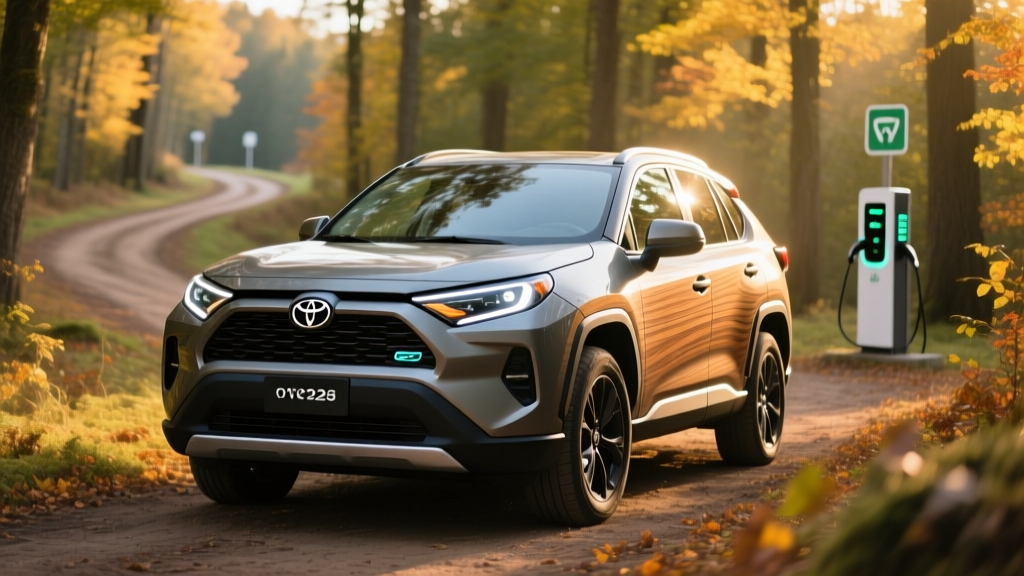
The 2026 Toyota RAV4 Woodland Hybrid targets outdoor-oriented buyers who want a conventional hybrid SUV with genuine trail capability — not just a cosmetic trim package. Built on Toyota's proven hybrid AWD architecture, the Woodland Hybrid pairs a 2.5-liter four-cylinder with dual electric motors for 219 combined horsepower and EPA-rated 39 MPG combined. It's a self-charging hybrid (HEV), meaning no plugs, no charging cables, and no range anxiety — just fill up with regular 87-octane and drive.
But how does the Woodland Hybrid stack up against the RAV4 Prime plug-in hybrid, a full EV like the bZ4X, or even the standard RAV4 Hybrid trims? This guide breaks down every spec that matters: real-world MPG, battery longevity, warranty coverage, and whether you can claim any federal tax incentives in 2026.
RAV4 Woodland Hybrid Powertrain and Performance Specs
| Specification | Value |
|---|---|
| Powertrain Type | Conventional Hybrid (HEV) — no plug-in |
| Engine | 2.5L inline-4 (Atkinson cycle) |
| Electric Motors | Front motor + rear motor (e-AWD) |
| Combined System Horsepower | 219 hp |
| 0–60 mph | 7.4 seconds (est.) |
| Transmission | eCVT (electronically controlled) |
| Drivetrain | Electronic On-Demand AWD (standard) |
| Towing Capacity | 1,750 lbs |
| Ground Clearance | 8.6 inches |
| Battery Type | Lithium-ion hybrid battery (~1.6 kWh) |
| Fuel Tank Capacity | 14.5 gallons |
| Base MSRP | ~$37,500 (est. with destination) |
The Woodland Hybrid's 219 hp comes from Toyota's Hybrid Synergy Drive system: the 2.5L engine produces roughly 176 hp on its own, supplemented by a front electric motor and a dedicated rear motor that activates the electronic AWD system when slip is detected. The rear motor also improves launch torque, which is why the Woodland Hybrid hits 60 mph about a half-second quicker than the non-hybrid RAV4 AWD.
Unlike the RAV4 Prime (PHEV), the Woodland Hybrid carries a small ~1.6 kWh lithium-ion battery — just enough to assist acceleration, capture regenerative braking energy, and enable brief low-speed electric-only driving. You never plug it in; the engine and regen system keep it charged automatically.
Fuel Economy: EPA Ratings vs. Real-World MPG
This is where the Woodland Hybrid earns its keep. Toyota's hybrid system excels in stop-and-go driving, where the electric motor handles low-speed propulsion and the engine kicks in only when needed.
| Driving Cycle | EPA Rating |
|---|---|
| City | 41 MPG |
| Highway | 38 MPG |
| Combined | 39 MPG |
Real-world expectations: Hybrid owners consistently report that city MPG meets or exceeds the EPA sticker — often hitting 42–44 MPG in moderate-weather urban driving. Highway efficiency tends to dip slightly below the EPA estimate at sustained 75+ mph speeds, landing around 35–37 MPG. In cold weather (below 30°F), expect a 5–10% reduction across the board as the engine runs more frequently to heat the cabin and warm the battery.
With a 14.5-gallon tank and 39 MPG combined, total driving range sits at approximately 565 miles between fill-ups — more than enough for weekend trail runs without fuel stops.
HEV vs. PHEV vs. EV: Which RAV4 Electrified Model Fits You?
Toyota offers three electrified RAV4 variants. Choosing the right one depends on your charging access, daily mileage, and budget.
| Attribute | Woodland Hybrid (HEV) | RAV4 Prime (PHEV) | bZ4X (BEV) |
|---|---|---|---|
| Powertrain | Self-charging hybrid | Plug-in hybrid | Full electric |
| Plug Required? | No | Yes (Level 1/2) | Yes (Level 1/2/DC) |
| Combined HP | 219 hp | 302 hp | 201–214 hp |
| EPA Combined MPG / MPGe | 39 MPG | 94 MPGe / 38 MPG (gas) | 114 MPGe |
| Electric-Only Range | N/A (brief low-speed) | ~42 miles | ~252 miles |
| Total Range | ~565 miles | ~600 miles | ~252 miles |
| Base MSRP (est.) | ~$37,500 | ~$45,000 | ~$43,000 |
| Federal Tax Credit (§30D) | Not eligible | Up to $7,500* | Up to $7,500* |
| Best For | No home charging; long trips | Home charging; short commutes | Home charging; zero tailpipe |
Choose the Woodland Hybrid (HEV) if: You don't have reliable access to home or workplace charging, you regularly drive more than 40 miles one-way, or you want the lowest purchase price with no plug-in logistics. It's also the best option for cold-climate buyers who don't want to manage EV range loss in winter.
Choose the RAV4 Prime (PHEV) if: You can install a Level 2 charger at home, your daily commute is under 42 miles round-trip (meaning you'd almost never use gas), and you want the 302-hp performance upgrade. The $7,500 federal credit (if eligible) narrows the price gap significantly.
Choose a full EV if: You have home charging, want zero tailpipe emissions, and your typical trips fit within ~200 miles. Total cost of ownership is lowest for EVs when home electricity rates are under $0.15/kWh.
Battery Warranty, Lifespan, and Replacement Cost
Hybrid battery longevity is the single most common concern among first-time hybrid buyers. Toyota's track record here is among the best in the industry.
Expected battery lifespan: Toyota's lithium-ion hybrid batteries are designed to last the life of the vehicle under normal use. Real-world data from RAV4 Hybrid and Prius fleets shows most hybrid batteries retain adequate capacity well past 150,000 miles. The small ~1.6 kWh battery experiences shallow charge-discharge cycles (never fully depleted or fully charged), which dramatically extends cycle life compared to full EV batteries.
Out-of-warranty replacement cost: If the hybrid battery fails after warranty expiration, expect to pay between $2,500 and $4,000 for a new OEM replacement, including labor. Third-party refurbished batteries are available for $1,500–$2,500. For context, this is substantially less than a full EV battery replacement ($8,000–$20,000+) because the hybrid battery is far smaller.
Reliability: The RAV4 Hybrid powertrain consistently earns above-average reliability ratings. Toyota's hybrid system has been in production since 1997 (Prius) and the e-AWD system since 2019 in the RAV4. There are no timing belts to replace (the engine uses a timing chain), and regenerative braking significantly reduces brake pad wear — many owners report 80,000+ miles on original brake pads.
2026 RAV4 Woodland Hybrid Pricing and Tax Credit Eligibility
The 2026 RAV4 Woodland Hybrid is expected to start at approximately $37,500 including destination charges. This positions it between the RAV4 Hybrid XLE (~$35,000) and the RAV4 Hybrid Limited (~$40,000), with the Woodland's premium going toward its all-terrain tires, matte-black exterior accents, roof rails with integrated crossbars, and unique interior trim.
Federal Tax Credit Status
The RAV4 Woodland Hybrid does not qualify for the federal §30D Clean Vehicle Credit. Under current IRS rules, only plug-in electric vehicles (PHEVs and BEVs) with sufficient battery capacity are eligible. Conventional hybrids (HEVs) like the Woodland do not have a plug and therefore are excluded from the $7,500 credit.
However, some states offer separate incentives for hybrid purchases. Check your state's energy or environmental agency for current programs — these vary significantly by jurisdiction and change frequently.
Total Fuel Cost Savings vs. Gas-Only RAV4
Compared to the gas-only 2026 RAV4 AWD (rated at approximately 29 MPG combined), the Woodland Hybrid saves roughly $450–$550 per year in fuel costs at 15,000 miles/year and $3.40/gallon regular unleaded. Over a typical 5-year ownership period, that's $2,250–$2,750 in fuel savings — effectively offsetting the hybrid premium over the base gas model.
Who Should Buy the RAV4 Woodland Hybrid?
Pros
- 39 MPG combined with standard AWD — no plug required
- ~565-mile total range eliminates refueling stops on long trips
- 8.6 inches of ground clearance for forest roads and snow
- 10-year/150,000-mile hybrid battery warranty
- Strong resale value (RAV4 Hybrid holds value exceptionally well)
- Regen braking extends brake pad life significantly
Cons
- No federal tax credit (HEV exclusion under §30D)
- All-terrain tires slightly reduce MPG vs. standard hybrid trims
- 1,750-lb towing capacity limits utility for boat/camper trailers
- eCVT drone under hard acceleration (common to all Toyota hybrids)
- No DC fast charging capability (not applicable — HEV)
- Higher base price than gas-only RAV4 (~$5,000 premium)
The ideal Woodland Hybrid buyer drives 12,000–18,000 miles per year in a mix of city and highway conditions, doesn't have access to home charging (apartment, street parking, or no garage), and wants an AWD SUV that handles light off-pavement use without the fuel penalty of a body-on-frame truck. It's also an excellent choice for cold-climate owners in northern states where EV range loss in winter is a legitimate concern.
Skip the Woodland Hybrid if: You have a garage with a 240V outlet and a short commute — the RAV4 Prime PHEV will save you more money and deliver 302 hp. Or if you want to tow more than 1,750 lbs, look at the RAV4 gas model or a midsize SUV.
Frequently Asked Questions
How many MPG does the RAV4 Woodland Hybrid get?
The 2026 RAV4 Woodland Hybrid is EPA-rated at 41 MPG city, 38 MPG highway, and 39 MPG combined. Real-world city driving often yields 42–44 MPG thanks to the hybrid system's electric-motor assist at low speeds. Highway driving at 75+ mph typically returns 35–37 MPG.
Does the RAV4 Woodland Hybrid need to be plugged in?
No. The Woodland Hybrid is a conventional hybrid (HEV), not a plug-in hybrid. Its small lithium-ion battery charges automatically through the gasoline engine and regenerative braking. You simply fill the 14.5-gallon tank with regular 87-octane fuel and drive.
Is the RAV4 Hybrid reliable, and what does battery replacement cost?
Toyota's hybrid system has an exceptional reliability record spanning over 25 years of production. The RAV4 Woodland Hybrid battery is warrantied for 10 years/150,000 miles. Out-of-warranty replacement costs $2,500–$4,000 for a new OEM battery — far less than a full EV battery. Most hybrid batteries last well beyond the warranty period.
Does the RAV4 Woodland Hybrid qualify for any tax credit?
No federal tax credit applies to the Woodland Hybrid. The IRS §30D Clean Vehicle Credit requires a plug-in vehicle (PHEV or BEV) with minimum battery capacity. As a self-charging HEV, the Woodland Hybrid is ineligible. Some states may offer separate hybrid incentives — check your local energy agency. If you want the $7,500 federal credit, consider the RAV4 Prime PHEV instead.
How does the Woodland Hybrid compare to the RAV4 Prime PHEV?
The RAV4 Prime is a plug-in hybrid with 42 miles of electric-only range, 302 combined hp, and eligibility for the $7,500 federal tax credit (if you meet income, MSRP, and battery-sourcing requirements). It starts around $45,000 — roughly $7,500 more than the Woodland Hybrid. After the credit, the price gap narrows to nearly zero, making the Prime the better value if you can charge at home. If you can't plug in, the Woodland Hybrid is the smarter buy.
Can the RAV4 Woodland Hybrid go off-road?
The Woodland Hybrid is designed for light off-pavement use — gravel forest roads, snow-covered driveways, and mild trail access. Its 8.6 inches of ground clearance and electronic AWD system handle these conditions well. It is not a rock-crawler or a substitute for a body-on-frame SUV with low-range gearing. Think of it as a capable camping-access vehicle, not a trail rig.