Quick Verdict: The PHEV That Bridges Two Worlds
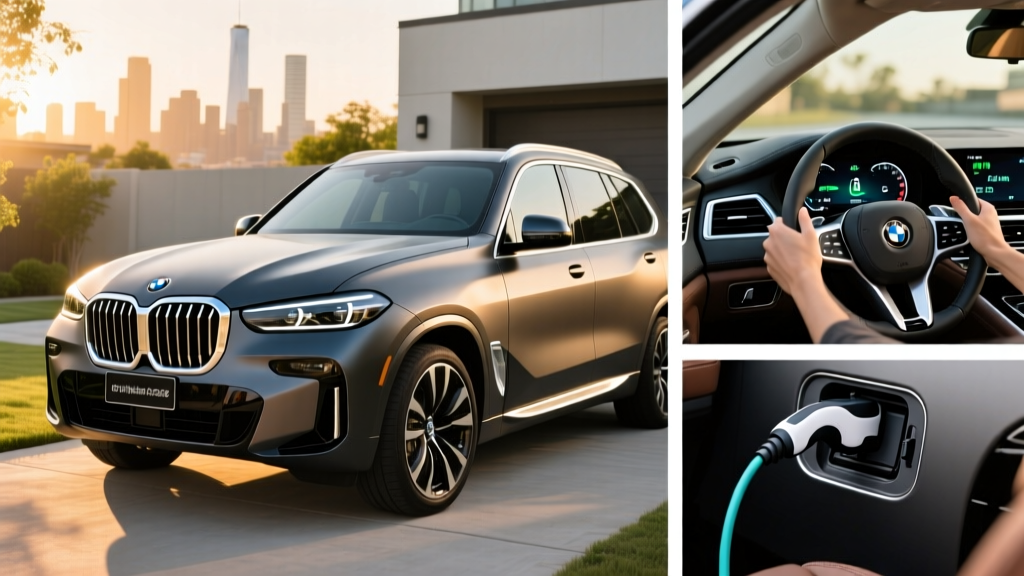
The 2025 BMW X5 xDrive50e isn't a compromise — it's a calculated strategy for drivers who want daily electric commuting without surrendering the 350-mile road-trip flexibility of a gasoline engine. With 38 miles of EPA-rated electric-only range, a combined 483 horsepower, and a starting MSRP of $74,900, it targets luxury SUV buyers who aren't ready to commit fully to a battery-electric vehicle but want meaningful fuel savings and a taste of EV driving.
BMW replaced the older xDrive45e with the xDrive50e for the 2024 model year, and the 2025 carryover keeps the same improved powertrain: a larger 25.7 kWh battery (usable), a more powerful electric motor, and slightly better efficiency. If you've been searching for a BMW X5 hybrid 2025 model year guide, this is your deep-dive into real-world numbers, ownership costs, and whether this PHEV actually makes financial sense.
| Specification | Value |
|---|---|
| Powertrain | 3.0L turbocharged I-6 + electric motor (PHEV) |
| Combined Horsepower | 483 hp / 516 lb-ft torque |
| Battery (Gross / Usable) | 29.9 kWh gross / 25.7 kWh usable |
| EPA Electric-Only Range | 38 miles |
| Total Combined Range | ~440 miles (gas + electric) |
| EPA MPGe (Electric + Gas) | 56 MPGe combined |
| EPA MPG (Gas Only, Charge-Sustaining) | 22 city / 24 highway / 22 combined |
| 0–60 mph | 4.6 seconds |
| Level 2 Charge Rate | 7.4 kW (AC onboard charger) |
| DC Fast Charging | Not supported |
| Level 2 Charge Time (0–100%) | ~3.75 hours at 7.4 kW |
| Base MSRP (xDrive50e) | $74,900 (incl. $995 destination) |
| Federal §30D Tax Credit | $3,750 (partial — sourcing dependent) |
| Hybrid Battery Warranty | 8 years / 80,000 miles |
HEV vs PHEV: What the X5 xDrive50e Actually Is
Let's clear up a common point of confusion. The BMW X5 lineup includes two very different electrified variants, and only one is available in the US market:
| Feature | HEV (e.g., Toyota RAV4 Hybrid) | PHEV (BMW X5 xDrive50e) |
|---|---|---|
| Plugs In? | No — charges via regen & engine | Yes — must plug in for EV range |
| Electric-Only Range | 0–1 miles at low speed | 38 miles (EPA) |
| Battery Size | 1–2 kWh | 25.7 kWh usable |
| Daily Commute on Electricity | No | Yes (if under ~38 mi round trip) |
| Fuel Savings Potential | Moderate (10–30%) | High (50–90% if you charge daily) |
| Tax Credit Eligible | No | Partial ($3,750 under §30D) |
The 2025 BMW X5 xDrive50e is a PHEV — it has a charge port, a large traction battery, and genuine electric-only driving capability. BMW does not currently sell a conventional (non-plug-in) hybrid X5 in the United States. If you see references to an "X5 mild hybrid," that describes the 48-volt assist system on the gasoline xDrive40i, which provides marginal efficiency gains but no electric-only range and no plug.
Real-World MPG and Electric Range: Beyond the EPA Sticker
| Driving Scenario | EPA Sticker | Real-World Expectation |
|---|---|---|
| Combined MPGe (EV + gas) | 56 MPGe | 48–58 MPGe (depends on charge frequency) |
| City MPG (charge-sustaining) | 22 mpg | 23–26 mpg (regen helps in stop-and-go) |
| Highway MPG (charge-sustaining) | 24 mpg | 21–23 mpg (aerodynamic drag at 75+ mph) |
| Electric-only range | 38 miles | 32–36 mi highway; 28–33 mi in cold weather (32°F) |
The EPA's 38-mile electric range figure assumes mixed driving at moderate temperatures. In our experience with BMW's Gen5 eDrive system, you'll see the full 38 miles during spring and fall city driving with light HVAC use. Push 75 mph on the interstate, and expect 32–34 miles before the inline-six fires up. Drop below freezing, and the battery's usable capacity shrinks — plan on 28–33 miles of electric range in winter conditions.
One advantage the xDrive50e has over the outgoing xDrive45e: its 25.7 kWh usable capacity (up from 22.0 kWh) means more buffer for real-world degradation over time. After 5 years of daily cycling, you might lose 10–15% of capacity, still leaving you with 30+ electric miles.
On the gasoline side, the charge-sustaining MPG (what you get after the battery is depleted) is a respectable 22 combined for a 5,500-pound luxury SUV. Hybrids typically exceed their EPA city ratings in real-world stop-and-go traffic thanks to regenerative braking, and the X5 is no exception — expect 23–26 mpg in urban driving once the battery is empty. Highway driving is less efficient, as the turbocharged I-6 works harder against aerodynamic drag without electric assist.
Powertrain and Performance: 483 HP With a Turbo Six
The xDrive50e pairs BMW's B58 3.0-liter turbocharged inline-six (producing 312 hp on its own) with a 184-hp electric motor integrated into the 8-speed automatic transmission. Combined system output is 483 horsepower and 516 lb-ft of torque, routed through BMW's xDrive all-wheel-drive system.
The result is a 0–60 mph time of 4.6 seconds — genuinely quick for an SUV this size, and a full second faster than the outgoing xDrive45e. The electric motor provides instant torque fill at low RPMs, eliminating the turbo lag that a gas-only engine would exhibit. In EV-only mode, acceleration is more sedate (roughly 8 seconds to 60), but perfectly adequate for merging and city driving.
Drive modes include Electric, Hybrid, and Sport. In Hybrid mode, the system intelligently manages the blend of gas and electric power based on navigation data — if you've entered a destination, it will conserve battery for low-emission zones or city segments. This predictive energy management is one of the smarter PHEV implementations on the market.
Charging the X5 xDrive50e: What You Need to Know
The 2025 X5 xDrive50e uses a J1772 connector for AC charging and includes a 7.4 kW onboard charger. Here's the critical limitation: there is no DC fast charging capability. You cannot pull up to a 150 kW Electrify America or Tesla Supercharger and top off in 20 minutes. All charging happens at AC Level 1 or Level 2 speeds.
| Charging Level | Power | Time (0–100%) | Practical Use |
|---|---|---|---|
| Level 1 (120V household) | ~1.4 kW | ~18 hours | Emergency/trickle only |
| Level 2 (240V home/public) | 7.4 kW (max) | ~3.75 hours | Daily home charging |
| DC Fast Charge | N/A | N/A | Not supported |
For most PHEV owners, Level 2 home charging is the sweet spot. A 240V / 32-amp circuit delivers the full 7.4 kW, refilling the 25.7 kWh battery in under 4 hours. That means you can plug in when you get home from work and have a full "tank" of electric miles by bedtime. Most PHEV drivers charge once per day, and the smaller battery means you're not paying for a 60-amp circuit or a panel upgrade the way BEV owners sometimes must.
Home Level 2 installation typically costs $800–$2,000 depending on your electrical panel's capacity and the distance from panel to charger location. Because the X5 draws only 7.4 kW, a standard NEMA 14-50 outlet or a hardwired Level 2 station like the ChargePoint Home Flex or Emporia Level 2 charger works well. Consult a licensed electrician to confirm your panel can handle the added load.
Pricing, Tax Credits, and Ownership Economics
The 2025 BMW X5 xDrive50e starts at $74,900 (including $995 destination). Well-equipped models with the Premium Package, Driving Assistance Professional, and larger wheels push the sticker toward $82,000–$88,000.
Federal Tax Credit (§30D) — Key Rules
- Credit amount: Up to $3,750 for the X5 xDrive50e (partial credit — critical minerals sourcing only, not battery component requirement)
- MSRP cap: Vehicle MSRP must be ≤ $80,000 for SUVs — base model qualifies; heavily optioned models may exceed the cap
- Buyer income cap: AGI ≤ $150,000 (single) / $300,000 (joint) / $225,000 (head of household)
- Point-of-sale transfer: Available — you can apply the credit as a down payment reduction at the dealer
- Source: IRS §30D Clean Vehicle Credit
The tax credit situation for BMW PHEVs is nuanced. Under the current IRS §30D rules, the X5 xDrive50e qualifies for a partial $3,750 credit based on critical minerals sourcing, but it does not meet the separate battery component assembly requirement for the full $7,500. This credit amount can change as BMW adjusts its supply chain, and it's essential to verify current eligibility on the IRS website or with your tax professional before purchasing.
The $80,000 MSRP cap for SUVs is another gotcha. The base xDrive50e at $74,900 clears the cap, but adding packages like the Executive Package ($4,400) or M Sport Package ($3,500) can push you over. Work with your dealer to confirm the final MSRP on your specific build stays under the threshold if the tax credit is important to your purchase decision.
On the cost-of-ownership side, the PHEV math works best if you can charge at home and your daily commute falls within the 38-mile electric range. Electricity at $0.14/kWh means a full charge costs roughly $3.60 — versus $5–$7 worth of premium gasoline for the same 38 miles. Over a year of 12,000 miles with daily charging, you might use only 2,000–3,000 miles worth of gasoline, saving $1,200–$1,800 annually versus the gas-only X5 xDrive40i (rated at 23 mpg combined).
Battery Longevity, Warranty, and Replacement Cost
BMW PHEV Battery Warranty
Coverage: 8 years / 80,000 miles (whichever comes first)
Capacity threshold: BMW warrants the high-voltage battery against defects and excessive capacity loss — typically defined as dropping below 70% of original capacity during the warranty period.
What's covered: Battery cell defects, module failures, BMS (battery management system) faults, and excessive degradation beyond the threshold.
What's not covered: Normal gradual capacity loss within the 70% threshold, damage from accidents, improper charging equipment, or modifications.
Battery replacement cost is the number-one anxiety for hybrid buyers. For the X5 xDrive50e's 29.9 kWh (gross) pack, a full out-of-warranty replacement runs approximately $12,000–$18,000 including parts and labor at a BMW dealership. That's a significant sum, but context matters:
- BMW's lithium-ion packs use NMC (nickel-manganese-cobalt) chemistry with robust thermal management — liquid cooling keeps cells in the optimal temperature window, significantly slowing degradation.
- Real-world data from the outgoing xDrive45e (which has been on the road since 2021) shows typical degradation of 8–12% over the first 3 years — well within the warranty threshold.
- Individual module replacement is possible. If one cell group fails, BMW can replace just that module rather than the entire pack, reducing cost to $2,000–$4,000.
- The 8-year/80,000-mile warranty is federally mandated for PHEV/BEV batteries. In California and states adopting CARB emissions standards, the warranty extends to 10 years / 150,000 miles.
For reliability broadly, the B58 inline-six is one of BMW's most dependable modern engines, with few widespread failure modes reported across its millions of units in production since 2015. The electric motor and power electronics add complexity, but BMW's Gen5 eDrive system has proven robust in the i4, iX, and 7 Series PHEV applications. IIHS has not separately rated the xDrive50e, but the X5 platform earned Top Safety Pick+ honors in prior model years.
Who Should Choose the X5 xDrive50e — And Who Shouldn't
Choose the BMW X5 xDrive50e (PHEV) If:
- Your daily round-trip commute is under 35 miles and you can charge at home
- You want EV-like daily driving but take road trips where charging infrastructure is sparse
- You need a 3-row-capable luxury SUV with towing capacity (7,200 lbs rated)
- You're not ready to commit to a full BEV but want to reduce fuel consumption 50–80%
- You value the inline-six's refinement and BMW's driving dynamics
Choose a Full EV (e.g., BMW iX, Tesla Model X) If:
- You have reliable home charging and access to DC fast chargers for road trips
- You want zero tailpipe emissions and minimal maintenance (no oil changes, no gas engine)
- You drive more than 38 miles daily and would burn gas constantly in a PHEV
- You want the full $7,500 federal tax credit (available on qualifying BEVs)
Choose the Gas-Only X5 xDrive40i If:
- You cannot charge at home (apartment, no garage, no electrical access)
- Your daily driving exceeds 60+ miles, negating the PHEV's efficiency advantage
- You want a lower purchase price ($65,200 starting MSRP saves ~$10,000 upfront)
- You plan to keep the vehicle 3 years or fewer and don't want to manage battery degradation concerns
The PHEV ownership experience is fundamentally defined by your charging habits. If you plug in every night and your commute fits within the electric range, the X5 xDrive50e operates as an EV 80% of the time — with the inline-six as a seamless backup for longer trips. If you never plug it in, you're carrying 600+ pounds of dead battery weight and getting 22 mpg, which is worse than the lighter gas-only xDrive40i. A PHEV only makes financial sense if you actually charge it.
FAQ: 2025 BMW X5 Hybrid Questions Answered
How many MPG does the 2025 BMW X5 hybrid get?
The EPA rates the X5 xDrive50e at 56 MPGe combined when using both electric and gas power. Once the battery is depleted, it operates as a conventional hybrid at 22 mpg combined (22 city / 24 highway). In real-world driving, expect 23–26 mpg in city traffic (regen helps) and 21–23 mpg on the highway. Your actual MPGe depends entirely on how often you charge — daily charging can push effective MPGe well above 60.
How far can the BMW X5 PHEV go on electric only?
The EPA rates it at 38 miles of electric-only range. Real-world results vary: 32–36 miles at highway speeds, 35–38 miles in moderate-temperature city driving, and 28–33 miles in freezing weather. The 25.7 kWh usable battery provides enough buffer that even after 5 years of degradation, you should still see 30+ electric miles.
Does the 2025 BMW X5 hybrid qualify for a tax credit?
Yes, partially. Under current IRS §30D rules, the X5 xDrive50e qualifies for $3,750 (the critical-minerals half of the credit). It does not meet the battery-component sourcing requirement for the full $7,500. Eligibility also depends on your income (≤$300,000 joint AGI) and the vehicle's final MSRP (must be ≤$80,000 for SUVs). Verify current rules at irs.gov before purchasing, as sourcing requirements change.
Is the BMW X5 hybrid reliable, and what does battery replacement cost?
The B58 inline-six engine has a strong reliability track record, and BMW's Gen5 eDrive system has proven durable in early model years. The high-voltage battery is warrantied for 8 years/80,000 miles (10 years/150,000 miles in CARB states). Out-of-warranty battery replacement costs approximately $12,000–$18,000 for the full pack, but individual module replacement is possible for $2,000–$4,000. Real-world degradation data shows 8–12% capacity loss over the first 3 years.
Can the BMW X5 xDrive50e DC fast charge?
No. The X5 xDrive50e only supports AC charging via a J1772 connector at up to 7.4 kW (Level 2). A full charge takes about 3.75 hours on a 240V home charger. DC fast charging is not available on any current BMW PHEV — only BMW's full BEVs (i4, iX, i7) support DC fast charging at 150+ kW.
Should I get the X5 PHEV or a full electric SUV?
It depends on your charging access and driving patterns. If you can charge at home, your commute is under 35 miles, and you take road trips where chargers are sparse, the PHEV is ideal. If you have reliable home and public charging access and want zero maintenance on a gas engine, consider a full BEV like the BMW iX (324-mile range, $87,250) or the Tesla Model X. If you can't charge at home at all, skip the PHEV and go with the gas-only X5 xDrive40i — an uncharged PHEV is heavier and less efficient than its gas counterpart.
What is the total combined range of the X5 xDrive50e?
With a full battery and the 18.5-gallon fuel tank topped off, the X5 xDrive50e delivers approximately 440 miles of total range (38 electric + ~400 on gasoline). That's competitive with the gas-only X5 and significantly more than most BEVs on a single charge, making it a strong choice for drivers in areas with limited charging infrastructure.